

Bajaj Allianz to start its operation through Blockchain
 Toshendra Kumar Sharma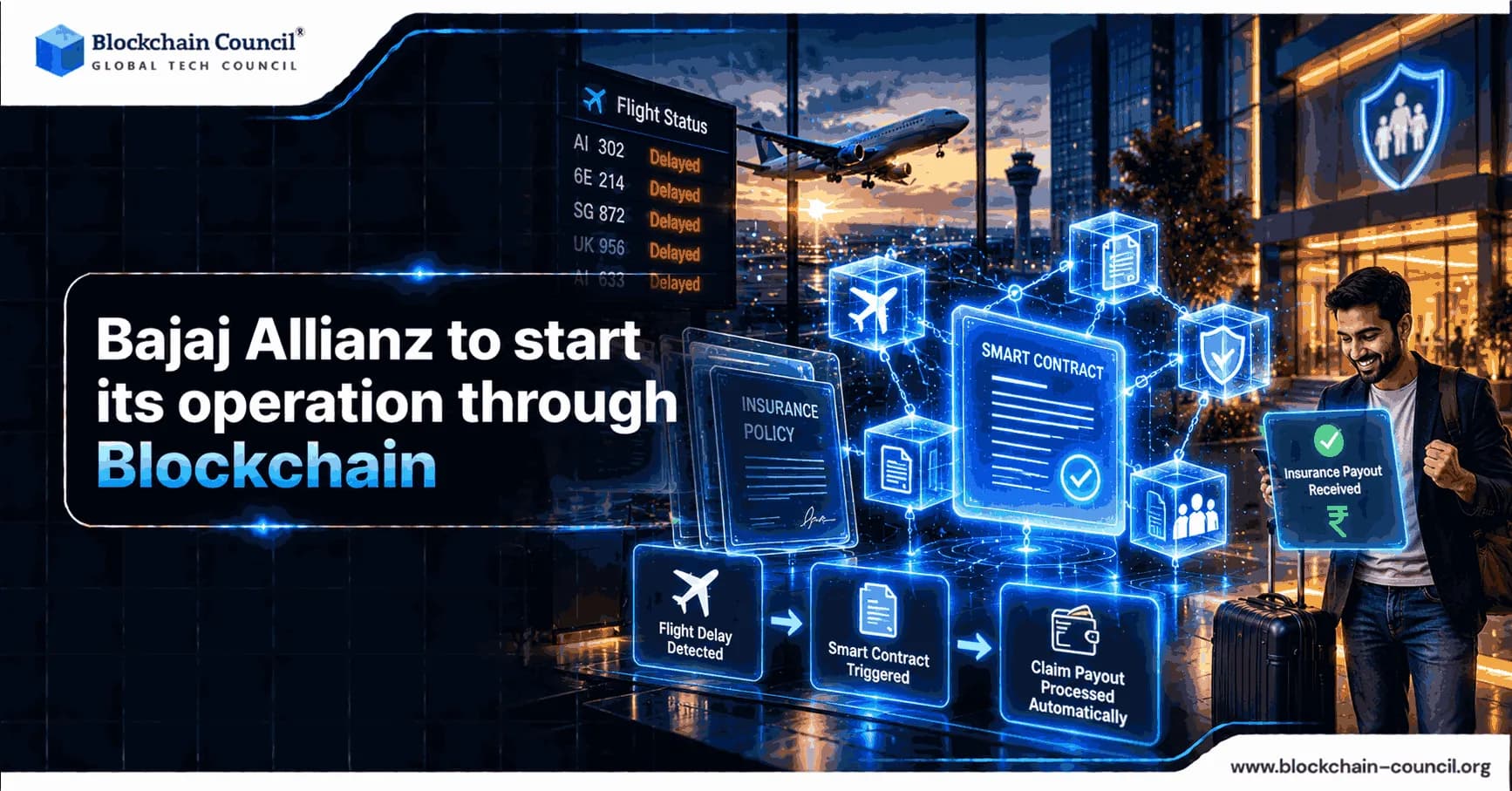
Insurance claims have long been associated with paperwork, waiting, and frustration, but one of India's largest insurers decided to change that story using distributed ledger technology. Bajaj Allianz blockchain initiatives marked one of the earliest and most practical real-world uses of this technology in the Indian insurance sector, turning claim settlements that once took days into processes completed within minutes. This shift did not happen through hype or speculation, it happened through a deliberate strategy to solve real customer pain points using smart contracts and automated verification. Anyone curious about how this kind of technology actually works behind the scenes can build a strong foundation with a Certified Blockchain Expert program, which explains exactly the concepts that make automated insurance claims possible.
This article explains how Bajaj Allianz began using blockchain, which specific products it transformed, why this mattered for the insurance industry, and what has changed at the company since then.

How Bajaj Allianz Began Its Blockchain Journey
Understanding how Bajaj Allianz blockchain adoption unfolded requires looking back at the specific problems the company set out to solve. Developers interested in building similar claim automation systems often study through a Certified Blockchain Developer program, which covers exactly how smart contracts can be used to trigger automatic actions once verified conditions are met.
The Problem With Traditional Insurance Claims
Traditional insurance claims typically require a policyholder to file paperwork, wait for manual verification, and often endure a lengthy back-and-forth process with an insurer before receiving a payout. For simple, well-defined situations, such as a flight delay or a minor vehicle accident, this level of manual processing often felt unnecessarily slow and frustrating for customers who just wanted a fair, fast resolution.
The Company's Strategic Shift Toward Automation
Bajaj Allianz General Insurance, which operated as a joint venture between India's Bajaj Group and Germany's Allianz SE, recognized that blockchain technology combined with smart contracts could remove much of the delay built into traditional claims processing. The company's leadership publicly discussed how blockchain could improve the way insurers record risk, manage vendor contracts, and increase overall operational efficiency across the claims lifecycle.
The First Blockchain-Powered Insurance Products
Bajaj Allianz rolled out its blockchain initiative through two specific, practical products aimed at everyday policyholders rather than as an abstract technology experiment.
Travel Ezee and Automatic Flight Delay Claims
One of the standout implementations was a product called Travel Ezee, designed for international travelers with travel insurance policies. Instead of requiring a customer to manually file a claim after experiencing a flight delay, the blockchain-based system was built to automatically detect a covered flight delay and process the claim without the policyholder needing to do anything at all. This meant customers could receive compensation for a delay almost as soon as the qualifying condition was verified, removing the traditional filing and waiting process entirely.
On the Spot Motor Claims Using Self-Inspection
The second major implementation focused on motor insurance through a feature often referred to as the On the Spot facility. This allowed policyholders to self-inspect their vehicle after an incident, submit photographs of the damage along with their policy and bank details through the company's mobile wallet application, and have their claim processed rapidly using the underlying blockchain and automation infrastructure. This significantly reduced the need for a traditional in-person inspection process that would otherwise add days to a claim's resolution.
From Days to Minutes
According to statements from the company's leadership at the time, this blockchain-based approach helped bring down claim settlement turnaround times for certain plans from what previously took days down to just minutes. This kind of dramatic improvement demonstrated that blockchain was not just a theoretical upgrade but a practical tool capable of delivering a measurably better experience for real customers dealing with real claims.
Why This Mattered for the Broader Insurance Industry
Bajaj Allianz's early blockchain adoption served as a meaningful signal to the broader insurance sector, both in India and globally, that distributed ledger technology could move beyond experimentation into genuine customer-facing products.
Building Trust Through Transparency
Blockchain's core strength, creating a transparent and tamper-resistant record of events, fit naturally into insurance, an industry that depends heavily on trust between policyholders and providers. When a claim's qualifying condition, such as a verified flight delay, is confirmed through a transparent and automated system rather than a manual internal review, it reduces the chance of disputes and builds greater confidence in the fairness of the process.
Reducing Operational Costs for Insurers
Beyond the customer experience benefits, automating claims verification and settlement through blockchain and smart contracts also reduced the operational burden on the insurer itself. Fewer manual reviews and less paperwork processing meant lower administrative costs, which is a significant advantage in an industry where claims processing represents a major ongoing operational expense.
Encouraging Wider Industry Experimentation
Bajaj Allianz's public implementation encouraged other insurers, both in India and internationally, to seriously explore how blockchain could be applied to their own claims processes. Parent company Allianz separately explored blockchain applications for managing catastrophe bonds around the same period, showing that this interest in distributed ledger technology extended across multiple parts of the broader Allianz global business.
Expanding Beyond Claims Processing
Company leadership has spoken about blockchain's potential extending well beyond just claims automation. In discussions about technology strategy, senior operations leadership at the company highlighted how blockchain could help manage third-party vendor contracts, master service agreements, and broader vendor complexity reduction across the business. This reflects a wider recognition that blockchain's value in insurance is not limited to a single use case but can touch multiple parts of how an insurer manages risk, contracts, and operational relationships behind the scenes.
What Has Changed Since the Original Blockchain Launch
It is important to understand the current corporate structure behind these blockchain initiatives, since significant changes have taken place. The original Bajaj Allianz General Insurance and Bajaj Allianz Life Insurance businesses operated for years as joint ventures between the Bajaj Group and Germany's Allianz SE. More recently, Bajaj Finserv acquired Allianz's stake in both the general insurance and life insurance joint ventures, and the businesses have since been rebranded as Bajaj General Insurance and Bajaj Life Insurance respectively, without the Allianz name attached going forward. Despite this corporate restructuring, the underlying technology strategy, including the use of blockchain and automation for faster claims processing, has continued to be a core part of the company's approach to customer service and digital transformation.
The Role of Technology Leadership in Driving Adoption
A key factor behind Bajaj Allianz's early and continued success with blockchain was strong internal leadership commitment to digital transformation. Company executives responsible for operations and digital strategy have consistently emphasized combining blockchain with other emerging technologies like artificial intelligence and data analytics to improve the overall insurance value chain, rather than treating blockchain as an isolated, standalone initiative. This integrated approach allowed blockchain to work alongside other digital tools rather than competing with them, creating a more cohesive overall technology strategy.
Professionals interested in understanding how blockchain fits into this broader technology ecosystem, including its relationship with artificial intelligence and enterprise data systems, often pursue a Deep Tech Certification to gain a well-rounded view of how these different technologies increasingly work together in real business environments like the one Bajaj Allianz built.
Lessons for Other Insurers Considering Blockchain
The Bajaj Allianz case offers several valuable lessons for other insurance companies considering similar technology investments. Starting with specific, well-defined use cases, such as flight delay claims or straightforward motor damage claims, allowed the company to prove blockchain's value quickly rather than attempting an overly complex, company-wide transformation all at once. Focusing on genuine customer pain points, like slow claim settlement, ensured the technology investment translated into a real, noticeable improvement that customers could actually feel and appreciate. Finally, pairing blockchain with mobile technology, such as the wallet app used for motor claim submissions, made the entire experience accessible and convenient for everyday policyholders rather than requiring specialized technical knowledge.
Communicating Complex Technology to Everyday Customers
One challenge that comes with implementing advanced technology like blockchain in a customer-facing industry is explaining it in a way that builds confidence rather than confusion. Most policyholders do not need to understand the technical details of distributed ledgers or smart contracts, they simply want to know their claim will be handled fairly and quickly. Insurers rolling out similar blockchain-based products need strong communication strategies to help customers understand and trust these new digital processes, which is where a solid Marketing Certification becomes genuinely valuable, helping teams translate complex backend technology into simple, reassuring messaging that everyday customers can understand and trust.
The Future of Blockchain in Indian Insurance
Looking ahead, blockchain's role in the Indian insurance sector is likely to keep expanding beyond the initial use cases pioneered by early adopters like Bajaj Allianz. As more insurers observe the tangible benefits of faster settlements and reduced operational costs, wider adoption across health insurance, property insurance, and reinsurance processes becomes increasingly likely. Combined with artificial intelligence for fraud detection and risk assessment, blockchain is positioned to remain a foundational technology helping India's insurance industry become faster, more transparent, and more customer-friendly over the coming years.
Conclusion
The story of Bajaj Allianz blockchain adoption shows how a major insurer moved beyond talking about emerging technology and actually implemented it in ways that delivered real, measurable benefits to everyday customers. Through products like Travel Ezee for automatic flight delay claims and the On the Spot motor claims facility, the company demonstrated that blockchain could transform claim settlement from a days-long process into one completed in minutes. While the corporate structure behind these insurance businesses has since evolved following changes in the joint venture with Allianz, the underlying commitment to using blockchain and digital automation to improve customer experience continues to shape how the company, now operating under the Bajaj General Insurance and Bajaj Life Insurance names, approaches technology and innovation going forward.
FAQs
1. What was Bajaj Allianz's blockchain initiative actually about?
Bajaj Allianz's blockchain initiative focused on using distributed ledger technology and smart contracts to automate and speed up insurance claim settlements, particularly for travel and motor insurance products. Instead of requiring policyholders to go through lengthy manual claim filing and verification processes, the blockchain-based system could automatically detect qualifying conditions, such as a verified flight delay, and process the claim without extensive manual review. This significantly reduced the time customers had to wait for their claims to be resolved and paid.
2. What is Travel Ezee, and how did blockchain improve it?
Travel Ezee was a travel insurance product offered to international travelers that used blockchain technology to automatically process claims for covered flight delays. Rather than requiring the customer to manually file a claim after experiencing a delay, the system was designed to detect the qualifying delay automatically and initiate the claims process without the policyholder needing to take any action. This made the claims experience significantly faster and more convenient compared to traditional travel insurance claim procedures.
3. How did the On the Spot motor insurance feature work with blockchain?
The On the Spot feature allowed motor insurance policyholders to self-inspect their vehicle after an incident and submit photographs of the damage along with their policy and bank details directly through the company's mobile wallet application. This information fed into the blockchain-based claims processing system, which helped verify and settle the claim much faster than a traditional process that would typically require an in-person inspection, significantly reducing the overall time needed to resolve a motor insurance claim.
4. How much faster did claims become after implementing blockchain?
According to statements from company leadership at the time of implementation, blockchain technology helped reduce claim settlement turnaround times for certain plans from what previously took days down to just minutes. This dramatic improvement demonstrated that blockchain was capable of delivering genuinely significant efficiency gains in real-world insurance operations, rather than serving as just a theoretical or experimental use of the technology.
5. Is Bajaj Allianz still called by that name today?
Not exactly. Following changes in the ownership structure of the joint venture between the Bajaj Group and Germany's Allianz SE, Bajaj Finserv acquired Allianz's stake in both the general insurance and life insurance businesses. As a result, the companies have since been rebranded as Bajaj General Insurance and Bajaj Life Insurance, without the Allianz name attached. However, the underlying commitment to technologies like blockchain and digital automation has continued under the new branding.
6. Why did Bajaj Allianz choose blockchain instead of other technologies for claims processing?
Blockchain was particularly well suited to claims processing because of its ability to create a transparent, verifiable, and tamper-resistant record of events, combined with the ability to use smart contracts that automatically trigger actions once specific conditions are verified. This combination allowed the company to build a claims system where qualifying events, like a flight delay, could be confirmed and acted upon automatically, reducing both processing time and the potential for disputes over whether a claim condition had actually been met.
7. Did blockchain replace human involvement entirely in the claims process?
No, blockchain technology primarily automated specific, well-defined parts of the claims process, particularly for straightforward situations like flight delays or minor vehicle damage claims. More complex claims involving disputes, larger damages, or unusual circumstances still generally require human review and judgment. The goal of the blockchain implementation was to speed up and simplify claims that had clear, verifiable qualifying conditions, not to remove human oversight from the entire insurance claims process altogether.
8. How did company leadership describe the value of blockchain for their business?
Company leadership, including senior operations and digital strategy executives, described blockchain as a technology capable of improving how insurers record risk, increase overall process efficiency, and even help manage vendor contracts and third-party agreements beyond just customer-facing claims. This reflects a broader view within the company that blockchain's value extended past a single use case and could touch multiple areas of how the business managed risk, operations, and vendor relationships.
9. Did other parts of the broader Allianz global business also explore blockchain?
Yes, around the same period that Bajaj Allianz launched its claims-focused blockchain products in India, the broader Allianz global organization separately explored using distributed ledger technology for managing catastrophe bonds, which are specialized financial instruments used in the insurance and reinsurance industry. This showed that interest in blockchain technology extended beyond just the Indian joint venture and reflected a wider strategic interest across different parts of the global Allianz business at the time.
10. What types of insurance products were the first to use blockchain at the company?
The first insurance products to use blockchain technology at the company were focused on travel insurance, specifically the Travel Ezee product for international travelers dealing with flight delays, and motor insurance, through the On the Spot self-inspection and claims processing feature. These were chosen because they involved relatively straightforward, verifiable claim conditions that were well suited to automation through blockchain and smart contract technology.
11. How does blockchain reduce disputes between insurers and policyholders?
Blockchain reduces disputes by creating a transparent, verifiable record of the conditions that trigger a claim payout, such as confirmed flight delay data or documented vehicle damage. Because this information is recorded and verified through the blockchain system rather than relying solely on internal, unseen company processes, both the insurer and the policyholder have greater confidence that the claim decision was based on accurate, verifiable information rather than a potentially opaque internal review process.
12. What technology skills would be useful for building similar blockchain insurance systems?
Building similar blockchain-based insurance claims systems typically requires knowledge of smart contract development, blockchain architecture, and how to integrate blockchain systems with existing company databases and mobile applications. Understanding insurance industry processes and regulatory requirements is also valuable, since blockchain solutions in this space need to work within established compliance frameworks while still delivering genuine efficiency improvements for both the company and its customers.
13. Did customers need any special technical knowledge to use these blockchain-based insurance features?
No, one of the strengths of the implementation was that customers did not need any blockchain or technical knowledge to benefit from these features. For the Travel Ezee product, claims were processed automatically without any action needed from the customer, and for the On the Spot motor claims feature, customers simply used a standard mobile wallet application to submit photos and information, with the underlying blockchain technology working invisibly behind the scenes to process the claim efficiently.
14. How does this blockchain implementation compare to how other insurers around the world use the technology?
This implementation is considered one of the earlier, practical examples of blockchain being used directly in customer-facing insurance products, particularly for automating claims tied to clearly verifiable conditions like flight delays. Many insurers globally have since explored similar concepts, including using blockchain for fraud detection, parametric insurance products that pay out automatically based on measurable conditions, and streamlining reinsurance processes, showing that this early implementation was part of a broader global trend in the insurance industry.
15. What role did artificial intelligence play alongside blockchain in the company's technology strategy?
Company leadership has discussed combining blockchain with artificial intelligence and data analytics as part of a broader digital transformation strategy across the insurance value chain, rather than treating blockchain as a completely separate initiative. Artificial intelligence has been used for tasks like risk analysis and customer experience improvements, working alongside blockchain's strengths in transparent, automated claims verification, creating a more integrated overall approach to modernizing insurance operations.
16. Why is claims processing speed so important in the insurance industry?
Claims processing speed is critically important because it directly affects customer satisfaction and trust in an insurance provider. Slow, complicated claims processes are one of the most common sources of customer frustration in the insurance industry, and policyholders often judge the value of their insurance based heavily on how smoothly and quickly a claim is handled when they actually need to use it. Faster, more transparent claims processing, enabled by technology like blockchain, directly addresses this major pain point.
17. Could blockchain-based claims automation be applied to other types of insurance beyond travel and motor?
Yes, the same underlying principles used for travel and motor insurance claims automation could potentially be applied to other insurance types with clearly verifiable, measurable claim conditions, such as certain types of health insurance claims, crop insurance based on verified weather data, or specific property insurance claims tied to measurable events. The key requirement is having a clear, verifiable condition that can be confirmed through data, which allows a smart contract to automate the claims process effectively.
18. What does the joint venture change with Allianz mean for the company's future technology strategy?
While the ownership structure has changed, with Bajaj Finserv now fully owning the insurance businesses previously operated as joint ventures with Allianz, there is no clear indication that the company's commitment to technologies like blockchain and digital automation has changed as a result. The rebranded Bajaj General Insurance and Bajaj Life Insurance businesses have continued to emphasize digital transformation and customer experience improvements as core priorities, suggesting continuity in technology strategy despite the change in corporate ownership structure.
19. What lessons can other companies learn from this blockchain implementation?
Other companies can learn the value of starting blockchain implementation with specific, well-defined use cases rather than attempting a broad, company-wide transformation immediately. Focusing on genuine customer pain points, such as slow claims processing, ensures the technology investment delivers a noticeable, meaningful improvement. Additionally, pairing blockchain with accessible technology like mobile applications helps ensure customers can actually benefit from the innovation without needing specialized technical understanding themselves.
20. What is the overall significance of this blockchain implementation for the insurance industry?
This blockchain implementation holds significant importance because it demonstrated, with real customer data and measurable results, that blockchain technology could move beyond theoretical discussion into practical, everyday use within a major insurance company. By successfully automating claims processes for real policyholders and achieving dramatic improvements in settlement speed, this implementation served as a meaningful proof of concept that likely influenced how other insurers around the world began seriously considering blockchain as a genuine tool for improving efficiency and customer experience, rather than viewing it as a purely experimental technology.
Related Articles
View All
Blockchain
Beyond Cryptocurrency: How Blockchain Is Transforming Real-World Industries
Explore how blockchain works beyond cryptocurrency in banking, supply chains, healthcare, tokenisation, CBDCs, and government, plus key challenges and career paths.

Blockchain
Smart Contracts & dApps: How Blockchain Becomes Programmable
Learn how smart contracts and dApps make blockchain programmable, from Ethereum and tokens to DeFi, NFTs, real use cases, benefits, and key risks.

Blockchain
Behind the Blocks: How Blockchain Transactions Actually Work
Go behind the blocks to see how a blockchain transaction really works: wallets and keys, digital signatures, verification, hashing, blocks, consensus, proof of work vs proof of stake, and how miners and validators secure the network.
Trending Articles
What is AWS? A Beginner's Guide to Cloud Computing
Everything you need to know about Amazon Web Services, cloud computing fundamentals, and career opportunities.

Can DeFi 2.0 Bridge the Gap Between Traditional and Decentralized Finance?
The next generation of DeFi protocols aims to connect traditional banking with decentralized finance ecosystems.
Claude AI Tools for Productivity
Discover Claude AI tools for productivity to streamline tasks, manage workflows, and improve efficiency.