

Top 10 Countries Leading Blockchain Technology In The World
 Toshendra Kumar Sharma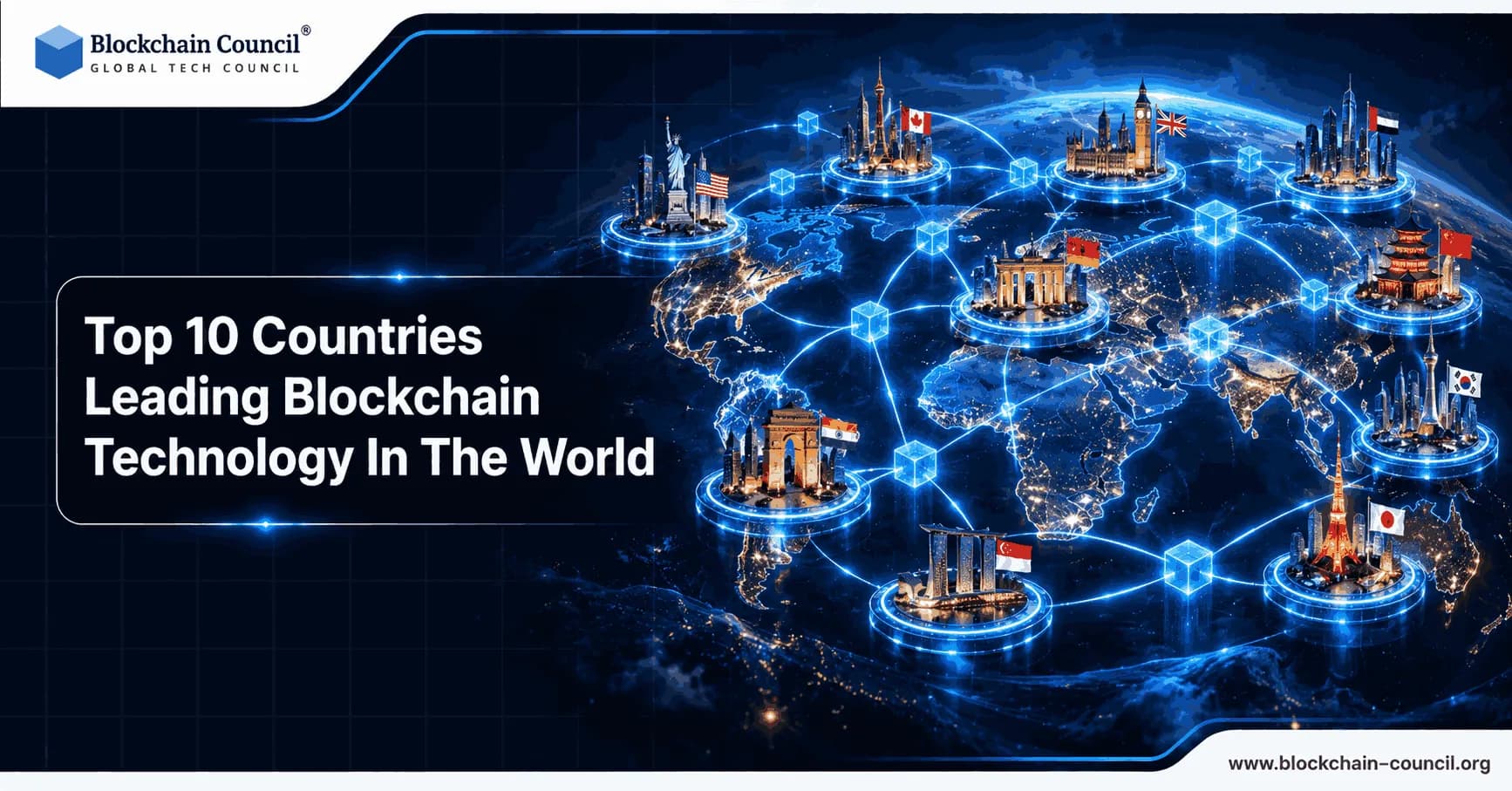
Summary
Blockchain technology is transforming the digital world, and several factors determine a country's leadership in this field.
The United States is at the forefront, with widespread acceptance, research associations, and cryptocurrency infrastructure.

China, despite crypto mining bans, is a strong advocate of Blockchain technology, with government initiatives like the Blockchain Service Network (BSN).
Switzerland's supportive environment and liberal regulations have made it a hub for over 450 Blockchain-based businesses.
Singapore competes with China and Japan in Blockchain development, with forward-thinking policies and numerous ICOs.
The United Kingdom actively fosters Blockchain growth with regulations and initiatives like Blockchain-as-a-service (BaaS).
Germany's thriving Blockchain ecosystem benefits from clear regulations, academic research, and corporate integration.
Japan stands out with its well-defined regulatory framework and adoption of Blockchain across various sectors.
South Korea excels due to government support, robust startup culture, and strategic location attracting investments.
El Salvador made history by adopting Bitcoin as legal tender, promoting financial inclusion and transparency.
Canada's proactive government and thriving startup ecosystem have positioned it as a Blockchain powerhouse.
The worldwide market for Blockchain and Cryptocurrency in today’s times continues to pull interest from online payments sectors and retailers. The studies have shown that most developing and well-established nations are dominating the space of cryptocurrency and Blockchain technology, and the digital market is progressively attaining momentum with growing trends worldwide. The global Blockchain market cap is growing from $1.23 trillion.
Multiple reports indicate that by 2030, the global GDP might see a rise up to 2.8 trillion dollars just by utilizing Blockchain technology, making it an essential contributor to the world’s economy.
Presently, countries like Japan and the United States are topping the rankings for accepting and implementing cryptocurrencies. Despite the several infrastructure issues, many of the African countries also reached the top at the list of Blockchain leading countries. Even Asian countries are running in this race, and most of them are already enlisted as the top 20 countries for cryptocurrency implementation. Due to the increasing user-base of cryptocurrency and Blockchain, online Blockchain education courses are also getting traction.
This article discusses the top 10 countries which are leading Blockchain technology in the world.
Factors Influencing Blockchain Leadership
Blockchain technology has emerged as a transformative force in the digital world, and the race to leadership in this domain is fierce. Several factors contribute to a country’s status as a leader in Blockchain technology. In this article, we will delve into these key factors that have propelled certain nations to the forefront of Blockchain innovation.
Government Regulations
One pivotal aspect that sets the stage for Blockchain leadership is a conducive regulatory environment. Countries that have recognized the potential of Blockchain and have put in place clear and supportive regulations tend to attract Blockchain businesses and investments.
For instance, Singapore has earned its reputation as a Blockchain leader due to its progressive regulatory framework. The Monetary Authority of Singapore (MAS) has established guidelines that promote responsible Blockchain innovation while ensuring financial stability. This approach has attracted numerous Blockchain startups and established companies to set up shop in the city-state.
Investment and Funding
Blockchain development demands substantial investment, and countries that foster an ecosystem of funding and investment opportunities naturally rise to the top. Government initiatives, venture capital, and access to funding sources play a vital role in this regard.
Switzerland, often referred to as the “Crypto Valley,” is a prime example. The Swiss government has been supportive of Blockchain startups through grants, tax incentives, and access to venture capital. This nurturing environment has drawn Blockchain entrepreneurs and investors from around the world.
Innovation and Research
Innovation is the lifeblood of the Blockchain industry. Countries that invest in research and development (R&D) and foster a culture of innovation are more likely to lead in Blockchain technology.
China, with its significant investment in Blockchain R&D, has emerged as a frontrunner. The Chinese government has initiated projects and partnerships between academia and industry, driving groundbreaking Blockchain advancements. This commitment to innovation has propelled China to the forefront of Blockchain technology.
Adoption Rate
A high adoption rate of Blockchain technology is a clear indicator of a country’s leadership in this field. The willingness of businesses and individuals to embrace Blockchain solutions is a testament to the practicality and utility of the technology.
Estonia stands out for its remarkable Blockchain adoption. The Estonian government has integrated Blockchain into various aspects of public administration, including e-residency, identity verification, and voting systems. This widespread adoption has not only enhanced government efficiency but has also encouraged private-sector innovation.
Become a Cybersecurity Expert Today!
14 Hours | Self-Paced
Offers Applicable
Top 10 Countries Leading in Blockchain Technology
1. United States
When it comes to embracing Blockchain technology, the United States is not staying behind any other country. The country has made every possible endeavor to accept and execute Blockchain technology, from setting up research associations to ATMs exclusively for Bitcoins. The government intends to make it a piece of their standard working system. States like Montana and Texas are viewed as the most amicable locations with regard to Blockchain-based new companies.
Nearly 48% of the all Blockchain startup industry is found in the US alone. The country plays a significant part in the ecosystem of cryptocurrency and Blockchain. According to the most recent report, the United States Federal Government expects to expand investment in Blockchain development ten times more than before. Almost 80% of global executives view Blockchain as very important whereas more than 60% of executives believe regulatory issues pose a barrier to Blockchain adoption. 81% of the 100 largest public companies indicate they use Blockchain technology. In 2022 alone, governments and companies in the United States spent US$4.2 billion on Blockchain solutions.
Numerous country-based financial organizations are putting resources into Blockchain technology to make a more productive organization to deal with economic exchanges. Another financial organization, Goldman Sachs, has indicated to be launching its own stable coin soon.
Key Players in USA Blockchain Industry
The USA boasts a robust and dynamic Blockchain industry, with several notable companies making significant contributions to the Blockchain and cryptocurrency ecosystem. Here are some key players in the USA’s Blockchain industry:
Coinbase Global Inc. (COIN):
Coinbase is a global leader in providing financial infrastructure and technology tailored for the crypto economy. It operates as a cryptocurrency exchange platform that allows users to buy, sell, and store various cryptocurrencies, including Bitcoin, Ethereum, and more.
Coinbase’s user-friendly interface has made it a popular choice for individuals and institutions entering the world of cryptocurrencies, contributing to the mainstream adoption of digital assets.
IBM Corp.:
IBM is a technology giant with substantial Blockchain initiatives. The company offers a wide range of Blockchain services and solutions. IBM’s Blockchain projects cover various industries, including supply chain management, finance, and healthcare.
IBM’s expertise in Blockchain technology and its commitment to innovation have positioned it as a significant player in advancing the use of distributed ledger technology for enterprise applications.
Microsoft Corp.:
Microsoft has recognized the potential of Blockchain and has integrated it into its offerings. The company provides Blockchain services and tools through its Azure cloud platform. This allows developers and enterprises to build, deploy, and manage Blockchain applications.
Microsoft’s involvement in Blockchain technology reflects its commitment to supporting Blockchain development and fostering innovation in the space.
Amazon:
Amazon, a technology and e-commerce giant, has made substantial strides in the Blockchain industry. It offers a wide range of Blockchain services through its Amazon Web Services (AWS) platform, making it easier for businesses to implement and manage Blockchain solutions.
Amazon’s foray into Blockchain demonstrates its dedication to providing cutting-edge technology solutions for a variety of applications.
Galaxy Digital Holdings Ltd (BRPHF):
Galaxy Digital is a digital asset and Blockchain leader that provides access to the crypto economy. The company serves institutions, startups, and qualified individuals by offering a range of services related to cryptocurrencies and Blockchain technology.
Galaxy Digital’s expertise in digital assets and Blockchain investments positions it as a key player in the institutional adoption of cryptocurrencies.
Blockchain Regulations in the USA
Federal Agencies | Regulations Overview |
SEC | Overseas securities-related aspects of cryptocurrencies and Blockchain. |
CFTC | Regulates cryptocurrency derivatives and commodities trading. |
FTC | Focuses on consumer protection and investigates fraud and deceptive practices involving cryptocurrencies. |
Department of the Treasury | Manages cryptocurrency taxation through the IRS and monitors financial crimes through FinCEN. |
OCC | Supervises national banks and federal savings associations, including those involved in Blockchain-related activities. |
Bills in Congress | - Responsible Financial Innovation Act (RFIA) - Toomey Stablecoin Bill - Virtual Currency Tax Fairness Act |
State-Level Regulations | Many states have introduced or passed laws affecting cryptocurrencies and Blockchain technology. For example, New York was the first to regulate virtual currency companies through state agency rulemaking. |
2. China
Despite the fact that China declared a restriction on crypto mining and cryptocurrency, it still has not deflected from experimenting with Blockchain-based service advancement. Formally, the Chinese government is a solid defender of Blockchain technology and seemingly is the area’s biggest and most impressive promoter around the world.
China’s government has thrown its weight behind Blockchain technology. In 2019, President Xi Jinping highlighted the importance of Blockchain, urging the nation to “seize the opportunity” it presents. This endorsement spurred a flurry of activity in the Blockchain space.
Government-led initiatives, such as the Blockchain Service Network (BSN), aim to provide a reliable infrastructure for Blockchain development. The BSN not only supports domestic projects but also encourages international collaboration, making it a key player in the global Blockchain ecosystem.
China boasts a thriving Blockchain research and development community. Leading universities and technology companies are investing heavily in Blockchain research. Projects range from optimizing Blockchain scalability to exploring novel consensus mechanisms.
One notable project is NEO, often dubbed “China’s Ethereum.” NEO offers a platform for building decentralized applications (dApps) and smart contracts, contributing to the expansion of the Blockchain ecosystem. It effectively supports its own smart contract programs like TRON, NEO, VeChain, and Qtum.
Key Players in Chinese Blockchain Industry
China’s Blockchain industry is vibrant and dynamic, with several key players making significant contributions to its growth. Here are some prominent companies in the Chinese Blockchain landscape:
Bitmain:
Bitmain is a mining hardware giant and a powerhouse in the Blockchain industry. It is renowned for its ASIC (Application-Specific Integrated Circuit) mining hardware, which plays a crucial role in securing and validating Blockchain transactions.
With a staggering $450 million in capital raised, Bitmain remains one of the most well-funded companies in the Blockchain space. Its mining equipment is widely used by miners globally, contributing to the security and decentralization of various Blockchain networks.
Hyperchain:
Hyperchain is a leading developer of enterprise Blockchain products and distributed ledger technologies (DLTs) in China. The company focuses on creating Blockchain solutions for businesses, including supply chain management and data security.
Hyperchain is the second most well-funded company in the Chinese Blockchain industry, showcasing the growing interest and investment in Blockchain technology for enterprise applications.
Alibaba:
Alibaba, one of China’s tech giants, has been actively exploring and experimenting with enterprise Blockchain technology. The company has applied for a remarkable 262 Blockchain patents, demonstrating its commitment to Blockchain innovation.
Alibaba’s involvement in Blockchain extends to various sectors, including e-commerce, supply chain management, and finance. Its initiatives aim to enhance transparency, security, and efficiency in these domains.
Baidu:
Another major player in China’s tech industry, Baidu, has ventured into the world of enterprise Blockchain technology. Baidu’s exploration of Blockchain is evidenced by its application for 50 Blockchain patents.
Baidu’s interest in Blockchain technology aligns with its efforts to improve data integrity and security. The company’s Blockchain projects have the potential to impact industries such as advertising and data sharing.
Tencent:
Tencent, a tech conglomerate known for its diverse portfolio of services, has also shown a keen interest in Blockchain technology. The company has applied for an impressive 80 Blockchain patents.
Tencent’s Blockchain endeavors span various applications, including digital payments, gaming, and identity verification. Its investments in Blockchain underscore the technology’s versatility and potential in enhancing online services.
Blockchain Regulations in China
Governmental Bodies | Key Regulations |
People’s Bank of China (PBOC) | Developing the digital yuan, China’s official digital fiat currency. |
Central Cybersecurity Lead Group | Overseeing Blockchain and cybersecurity policies. |
Ministry of Industry and Information Technology | Regulating Blockchain technologies. |
State Administration for Industry and Commerce | Involved in Blockchain and commerce regulations. |
China Banking Regulatory Commission | Regulating Blockchain in the banking sector. |
China Security Regulatory Commission | Overseeing Blockchain matters in the securities sector. |
China Insurance Regulatory Commission | Regulating Blockchain in the insurance sector. |
Internet and Encryption Regulation | - Provisions on the Administration of Blockchain Information Services for internet oversight. - Encryption Law governing Blockchain-related services. |
3. Switzerland
The minuscule Swiss town named Zug, with a population of 29,000 only, is known as the home of the Ethereum network, as it has over 450 Blockchain-based associations and businesses. Switzerland provides liberal administrative and duty treatment for newly established Blockchain businesses.
Switzerland’s success in Blockchain technology can be attributed to its open and supportive approach. The country has fostered an environment where Blockchain startups and established companies can thrive. Switzerland has aligned its AML regulations with international standards, which include provisions for Blockchain-based businesses. This ensures that Blockchain projects are held to the same high standards as traditional financial institutions.
Zug town has incredible homegrown as well as worldwide business networks, effective administration, and low rates of fraud. Also, Swiss residents have an undeniable degree of information on the Blockchain, and their parliament likewise recommended Bitcoin as fresh money.
This has expanded the level of exercises identified with cryptocurrency. Blockchain technology in Switzerland will be required to be brought into insurance, financial service, healthcare, logistics, and medical care soon. The Blockchain amicable guidelines have likewise drawn in a great number of investors.
Various journals of the country revealed that FB deemed proposals of introducing Libra, its own stablecoin. Afterwards, the media disclosed the enrollment of Libra network as another sidekick for launching stablecoins.
Key Players in Swiss Blockchain Industry
Switzerland’s Blockchain industry has gained prominence globally, known for its robust regulatory framework and innovation-friendly environment. Here are some key players in the Swiss Blockchain industry:
Bitcoin Suisse:
Bitcoin Suisse is a prominent player in the Swiss Blockchain scene, offering a wide range of services. These services include prime brokerage, trading, lending, and custody for cryptocurrencies and digital assets.
The company’s comprehensive suite of financial services has made it a go-to choice for individuals and institutions looking to engage with cryptocurrencies securely.
SEBA:
SEBA is a notable player in the Swiss Blockchain landscape that holds a full Swiss banking license. This license enables SEBA to offer a wide array of Blockchain and cryptocurrency-related financial services.
SEBA’s integration of traditional banking with Blockchain expertise contributes to the development of Blockchain-based financial solutions.
Sygnum:
Sygnum, similar to SEBA, holds a full Swiss banking license. This license positions Sygnum as a regulated bank in the Blockchain and cryptocurrency space.
The company provides various financial services related to digital assets, including custody and trading, ensuring a secure and compliant environment for clients.
Crypto Finance Group:
Crypto Finance Group is a leading player in Switzerland’s Blockchain industry, specializing in brokerage, asset management, and storage services for digital assets.
Its recent acquisition by Deutsche Börse underscores the recognition of its expertise and the growing importance of Blockchain in traditional financial markets.
Erenials:
Erenials represents innovation in the Swiss Blockchain industry by offering a solution to manage, monetize, distribute, and consume digital content.
Its focus on digital content management aligns with the broader trend of Blockchain technology being applied to various industries beyond finance.
Blockchain Regulations in Switzerland
Government Entities | Key Regulations |
Swiss Government and FINMA | Support Blockchain’s potential in finance and other sectors. |
Swiss Federal Council | Suggested existing laws accommodate Blockchain but need selective improvements. |
DLT-Law and DLT-Draft Law | - Swiss Parliament approved DLT-Law, allowing “DLT-Securities.” - Introduced new licensing for DLT-Trading Venues under FMIA. |
Principle-Based Regulation | Swiss law and financial regulation are principle-based and technology-neutral, avoiding overly prescriptive rules for Blockchain and virtual currencies. |
4. Singapore
The nation supports a few new Blockchain-based businesses. When it comes to Blockchain advancement and applications, it has a neck-to-neck rivalry with China and Japan. The country has made guidelines that would support the growth and development of Blockchain and is subsequently perhaps the most pursued area with regards to setting up new Blockchain-based businesses.
Singapore is an aspiring Smart Nation with its robust methodology that tries to change this previously known fishing town into a hub of the research facility. Because of its foreseen thinking regarding technological developments, it is one of the chief leaders in the space of Blockchain. Singapore gets the top score in the category of smart city, having a considerable number in both the Blockchain-based new companies and quantity of ICOs.
The Singapore government is perceived as more business-accommodating and transparent in comparison to other countries, and it also has Blockchain-accommodating protocols. The country supports a lot of new Blockchain incubation and cooperating openings. The Singaporean government is investigating a few areas for Blockchain use cases; at the same time, the Monetary Authority of Singapore has spearheaded decentralized payment and repayments solutions between banks.
Key Players in Singapore Blockchain Industry
Singapore’s Blockchain industry is dynamic and innovative, with several noteworthy companies contributing to its growth and development. Here are some key players in the Singaporean Blockchain landscape:
Zilliqa:
Zilliqa is a Blockchain platform that originated from academic research conducted at the National University of Singapore. Founded in 2017, it brings together a team of academics, entrepreneurs, and engineers.
Zilliqa is known for its innovative approach to scalability and security, making it a significant player in the Blockchain space. Its use of sharding technology sets it apart as a high-performance Blockchain platform.
Switcheo:
Switcheo is another prominent player in Singapore’s Blockchain industry. It operates as a decentralized exchange (DEX) and offers a secure and user-friendly platform for trading various cryptocurrencies.
The company’s commitment to providing decentralized trading solutions aligns with the ethos of Blockchain technology.
Coinhako:
Coinhako is a well-established name in the cryptocurrency and Blockchain industry in Singapore. It provides cryptocurrency exchange and wallet services, catering to both novice and experienced users.
Coinhako’s user-friendly interface and emphasis on security have made it a popular choice for individuals looking to buy, sell, and store cryptocurrencies.
Kyber Network:
Kyber Network is a significant Blockchain company with a focus on decentralized liquidity. It offers a protocol that allows users to swap tokens directly from their wallets, without the need for an intermediary exchange.
Kyber Network’s liquidity solutions have gained traction in the decentralized finance (DeFi) space, enhancing the efficiency of token swaps and DeFi applications.
Blockchain Regulations in Singapore
Government Approach | Key Regulations |
Pragmatic and Cautious | Singapore’s government supports the potential of cryptocurrencies while being cautious about risks like consumer protection and anti-money laundering. Licensing is used to manage these risks. |
Cryptocurrency Treatment | Cryptocurrencies aren’t considered equivalent to money. Depending on characteristics, they can be treated as regulated products like securities or digital payment tokens, or unregulated tokens for utility purposes. |
Monetary Authority of Singapore (MAS) | MAS hasn’t issued or backed retail cryptocurrencies but explores Blockchain tech through “Project Ubin” for payments and securities. “Project Orchid” aims to establish technical infrastructure for a retail CBDC system. |
Licensing Requirement | A law passed in April 2022 mandates licensing for virtual asset service providers in Singapore conducting business overseas, addressing anti-money laundering and countering the financing of terrorism concerns. |
5. United Kingdom
The United Kingdom’s regional authorities plan to work on its guidelines against identity fraud and delayed monetary services with the appropriate execution of Blockchain technology. The UK government has been proactive in fostering the growth of Blockchain technology. One notable initiative is the “Distributed Ledger Technology (DLT) Regulatory Framework.” This framework aims to provide clarity and regulatory guidance for businesses and startups operating in the Blockchain space. By doing so, it encourages innovation while ensuring compliance with existing laws.
As a project under ” Innovate UK”, the government introduced BaaS
(Blockchain-as-a-service) in August of 2016. BaaS is utilised for compensating student loans and welfare checks. Likewise, retired people get guaranteed payments through Blockchain-empowered mobile applications from the UK’s Department of Work and pensions. The Cryptocurrency team of the United Kingdom means to direct and empower development. It should fill in as a settling factor in a city that is now home to the second-most number of Blockchain businesses in the world.
Key Players in UK Blockchain Industry
Blockchain:
Blockchain.com is a significant player in the global Blockchain industry. It offers a user-friendly cryptocurrency wallet and is known for its explorer service, providing real-time data on Blockchain transactions.
The company’s services have made it accessible to individuals and businesses interested in engaging with Blockchain technology and cryptocurrencies.
Blockverify:
Blockverify, founded in 2014, specializes in Blockchain-based anti-counterfeit solutions. The company utilizes Blockchain technology to create a secure and transparent system for verifying the authenticity of products.
Blockverify’s innovative approach addresses the growing issue of counterfeit goods in various industries.
Dadi (Decentralized Architecture for a Democratic Internet):
Dadi is a UK startup with a mission to establish the principles of a next-generation internet using decentralized architecture. The company’s vision aligns with the decentralized ethos of Blockchain technology.
Dadi’s innovative approach aims to create a more democratic and user-centric internet experience.
SETL:
SETL is a UK-based Blockchain company that focuses on providing infrastructure solutions for financial markets. It offers a Blockchain platform designed for institutional use, particularly in the financial industry.
SETL’s Blockchain technology aims to streamline and secure financial transactions, contributing to the evolution of traditional financial systems.
BC Bitcoin:
BC Bitcoin is a UK cryptocurrency brokerage that facilitates the buying and selling of various cryptocurrencies. It serves as a bridge between individuals and the cryptocurrency market.
The company’s services cater to individuals seeking to invest in cryptocurrencies or conduct transactions with digital assets.
Bitstamp:
Bitstamp is a well-established cryptocurrency exchange with a presence in the UK. It provides a platform for users to trade a variety of cryptocurrencies, including Bitcoin and Ethereum.
Bitstamp’s role in the UK’s Blockchain industry extends to providing a secure and regulated environment for cryptocurrency trading.
Circle:
Circle is a global cryptocurrency financial services company that has made its mark in the UK’s Blockchain industry. It offers various services, including peer-to-peer payments and stablecoins.
The company’s commitment to fostering a seamless and user-friendly experience with digital assets aligns with the Blockchain’s potential to transform financial services.
Blockchain Regulations in the United Kingdom
Regulatory Framework | Key Regulations |
FCA Oversight | Crypto businesses dealing with digital tokens must register with the Financial Conduct Authority (FCA) for anti-money laundering compliance. |
Cryptoassets Taskforce | The UK Cryptoassets Taskforce, consisting of the FCA, HM Treasury, and Bank of England, defines and categorizes crypto assets into exchange, security, and utility tokens. |
Future Regulatory Plans | The government plans to implement robust regulations for crypto assets, ensuring clarity and consumer protection. |
Responsibilities and Rules | Proposed regulations will require crypto trading venues to define content requirements for admission and disclosure documents and strengthen rules for financial intermediaries and custodians. |
Become a Generative AI Expert Today!
7 Hours | Self-Paced
Offers Applicable
6. Germany
Germany’s Blockchain journey begins with a vibrant and thriving ecosystem. The country boasts a robust network of Blockchain startups, research institutions, and industry-specific associations. Berlin, in particular, has emerged as a hotspot for Blockchain activities. The city’s dynamic atmosphere fosters collaboration and innovation, making it a breeding ground for Blockchain pioneers.
A critical factor driving Germany’s prominence in the Blockchain realm is its well-defined regulatory framework. Unlike some nations grappling with uncertainty, Germany has embraced Blockchain technology with open arms. It recognizes cryptocurrencies as legal tender and has established clear guidelines for Blockchain-related businesses. This regulatory clarity has attracted numerous Blockchain companies, creating a conducive environment for growth.
Germany’s commitment to research and development is another feather in its Blockchain cap. Leading universities and research institutes in the country are actively involved in Blockchain projects. These initiatives explore the potential of Blockchain in various sectors, from finance and supply chain to healthcare and energy. The collaboration between academia and industry fuels innovation and paves the way for cutting-edge Blockchain solutions.
The German corporate landscape has not lagged behind either. Several major companies, spanning diverse sectors, have integrated Blockchain technology into their operations. This adoption extends to traditional industries like manufacturing and finance, demonstrating the versatility and applicability of Blockchain. Notably, supply chain management and identity verification are areas where Blockchain has shown significant promise.
Key Players in Germany Blockchain Industry
Germany has a thriving Blockchain industry with several key players making significant contributions to Blockchain technology. Here are some notable Blockchain companies in Germany:
Exadel:
Exadel is a company with a deep understanding of Blockchain technology, leveraging it to automate, secure, and accelerate various operations. They have experience in Blockchain application development across different sectors, including real estate.
Codewave Technologies:
Codewave Technologies possesses expertise in Blockchain architecture and specializes in building scalable, secure, and distributed applications. They have worked on Blockchain implementation projects, demonstrating their proficiency in Blockchain development.
Innowise Group:
Innowise Group has a portfolio of case studies in Blockchain development and consulting, providing valuable insights and solutions to various companies. Their services encompass Blockchain technology consulting, smart contract implementation, and custom Blockchain solution development.
Zignuts Technolab:
Zignuts Technolab is involved in Blockchain education and discussion, with articles on Blockchain architecture and its applications. They explore how Blockchain can be used in web3 payments, highlighting its potential in transforming the future of payments.
MultiQoS:
MultiQoS specializes in Blockchain applications for web3 payments and offers expertise in designing, implementing, and maintaining backend systems, including Blockchain infrastructure. Their knowledge in Blockchain technology aligns with the evolving landscape of digital payments.
Andersen Germany GmbH:
Andersen Germany GmbH is known for its work on a logistics Blockchain-based platform for freight booking. They provide custom Blockchain software solutions, contributing to the development of Blockchain solutions for logistics and other industries.
Blockchain Regulations in Germany
German Regulatory Regime | Key Regulations |
Specific Regime for Crypto Assets | Germany established a regulatory regime for crypto assets. It defines crypto assets as digital representations of value not issued or guaranteed by central banks or public authorities. |
Crypto Custody Business | The reform introduced ‘Crypto Custody Business,’ requiring a license under KWG. |
European Union’s Approach | The EU recognizes the importance of clear regulations for Blockchain and crypto-assets. It supports EU-wide rules to avoid fragmentation. |
EU Legislative Proposals | The European Commission introduced a package of legislative proposals, including MiCA, to regulate crypto-assets, protect consumers, and promote innovation. |
7. Japan
Japan has emerged as a global powerhouse in the field of Blockchain technology. With a rich history of technological innovation and a keen focus on fostering digital transformation, the Land of the Rising Sun has positioned itself at the forefront of this revolutionary industry.
Japan’s journey into Blockchain technology started with the recognition of its potential to disrupt traditional systems. The Japanese government, along with various private enterprises, embarked on a mission to harness the power of Blockchain for the betterment of society. This proactive approach has paved the way for significant advancements.
One of the standout features of Japan’s Blockchain ecosystem is its well-defined regulatory framework. The government introduced a comprehensive legal framework to govern cryptocurrencies and Blockchain technology. This move not only ensured investor protection but also instilled confidence in businesses to explore Blockchain-based solutions.
Japan’s adoption of Blockchain technology spans various sectors, including finance, supply chain management, and healthcare. Financial institutions in the country have integrated Blockchain for secure and efficient transactions. The Japan Exchange Group’s initiatives in this regard have gained international attention.
Key Players in the Japan Blockchain Industry
Japan has emerged as a significant player in the global Blockchain industry, with a diverse ecosystem that includes cryptocurrency exchanges, Blockchain companies, and innovative Blockchain projects. Here are some key players in Japan’s Blockchain landscape:
Coincheck
Coincheck is one of Japan’s largest cryptocurrency exchanges, offering a wide range of cryptocurrencies for trading and providing a user-friendly platform for buying, selling, and managing digital assets.
bitFlyer
bitFlyer is a major cryptocurrency exchange not only in Japan but also globally. It provides a secure and regulated platform for trading cryptocurrencies and offers various services, including a mobile app for trading on the go.
GMO Coin
GMO Coin is known for its robust trading platform and a comprehensive selection of cryptocurrencies. It’s part of the larger GMO Group, which has a strong presence in the Japanese tech industry.
Rakuten Wallet
Rakuten Wallet is the cryptocurrency exchange arm of Rakuten, a prominent Japanese e-commerce and technology company. It aims to provide a seamless integration of cryptocurrency services within the Rakuten ecosystem.
Soramitsu
Soramitsu is a leading Blockchain company in Japan, focusing on Blockchain solutions for financial institutions and central banks. They are known for their work on Hyperledger Iroha and other Blockchain projects.
Tech Bureau
Tech Bureau has been involved in Blockchain development and is behind the creation of the NEM Blockchain. They have worked on various Blockchain-based solutions for businesses.
Astar Network
Astar Network is an innovative Blockchain project focused on creating a next-generation Blockchain platform. They prioritize scalability, security, and user experience in their development efforts.
Blockchain Regulations in Japan
Regulation in Japan | Key Regulations |
Crypto Assets and Utility Tokens | Cryptocurrencies and utility tokens like BTC and ETH are regulated as “Crypto Assets” under the Payment Services Act (PSA). Operators engaging in buying, selling, or managing Crypto Assets must register as providers of Crypto Asset Exchange Services (CAES). |
Security Tokens | Tokens representing shares, bonds, or fund interests are regulated under the Financial Instruments and Exchange Act (FIEA) as electronically recorded transferable rights (ERTRs) to be indicated on securities. Businesses dealing with ERTRs must register as Type I Financial Instruments Business Operators (Type I FIBOs). |
Stablecoins | Stablecoins, depending on whether they are redeemable in fiat currency, may be classified as Crypto Assets or used in fund remittance transactions. |
Non-Fungible Tokens (NFTs) | Tokens like NFTs, which lack economic function as a means of payment, are generally not regulated under the current framework. |
Amendment Act | A bill for partial amendment to the Payment Services Act aims to establish a stable and efficient funds settlement system, responding to digital finance developments. |
8. South Korea
South Korea has emerged as a global leader in Blockchain technology, driving innovation and adoption in this transformative field. In this article, we delve into the key aspects that define South Korea’s prominent position in the Blockchain landscape.
South Korea’s journey in Blockchain technology began with robust government support and clear regulations. Government initiatives aimed at fostering innovation and protecting investors have set a solid foundation for Blockchain development. Regulatory clarity has attracted both local and international players to invest in the country’s Blockchain projects.
South Korea boasts a thriving Blockchain startup ecosystem. Companies like ICON, known for their innovative Blockchain solutions, have garnered international attention. This burgeoning startup culture encourages entrepreneurship and accelerates Blockchain innovation.
The country’s strategic location in Asia, along with its advanced infrastructure, makes it a global investment hub for Blockchain projects. South Korea attracts significant venture capital and investment from around the world, further fueling its Blockchain growth.
Key Players in the South Korean Blockchain Industry
South Korea is a significant player in the global Blockchain industry, with several key companies and organizations contributing to its growth and innovation. Here are some notable entities in the South Korean Blockchain landscape:
Hashed:
Hashed is a venture capital firm and Blockchain accelerator known for its investments in successful Blockchain projects worldwide. They have supported projects like Terraform Labs and Axie Infinity, contributing to the growth of the Blockchain ecosystem.
Bespin Global:
Bespin Global is a Blockchain infrastructure provider offering a range of services, including node hosting, staking, and wallet management. They play a crucial role in providing the foundational technology required for Blockchain networks to operate efficiently.
Ground X:
Ground X is a subsidiary of Kakao, one of South Korea’s largest tech companies. They are actively developing Klaytn, a Blockchain platform designed to support various decentralized applications and services.
ICON Foundation:
The ICON Foundation is a non-profit organization dedicated to developing the ICON Blockchain platform. ICON aims to connect different Blockchains and communities, fostering interoperability and collaboration in the Blockchain space.
Celltrion:
Celltrion is a pharmaceutical company with a focus on healthcare supply chain solutions. They are developing Mediconnect, a Blockchain platform designed to enhance the efficiency and transparency of the healthcare supply chain.
LG Electronics:
LG Electronics, a multinational electronics company, is actively involved in Blockchain technology. They are developing the LG Blockchain Platform, which has versatile applications, including supply chain management, digital rights management, and identity management.
Samsung Electronics:
Samsung Electronics, another multinational electronics company, is advancing in the Blockchain space with the Samsung Blockchain Platform. This platform serves various purposes, such as supply chain management, digital identity, and payments, showcasing the company’s commitment to Blockchain innovation.
Blockchain Regulations in South Korea
Recent Blockchain Regulations in South Korea | Key Regulations |
Virtual Asset User Protection Act (VAUPA) | Comprehensive law effective in 2024, aimed at protecting investors and promoting transparency in the cryptocurrency market.1 |
Act on the Reporting and Use of Specified Financial Transaction Information (Act on Specified Financial Transaction Information) | Amended to include virtual asset service providers (VASPs) under AML and CTF regulations in 2020.1 |
Information Security Management System (ISMS) Certification | VASPs must obtain ISMS certification from the Korea Internet Security Agency (KISA) to ensure data and asset protection.1 |
Pending Measures | South Korea is considering cryptocurrency taxation, ICO regulation, and possible oversight of decentralized applications (DApps), especially those offering financial services. |
9. El Salvador
El Salvador, a small Central American nation, made headlines when it became the first country in the world to adopt Bitcoin as legal tender in September 2021. This monumental decision was a bold move that showcased El Salvador’s commitment to being at the forefront of technological innovation. The implementation of Blockchain technology in El Salvador has had a profound impact on various aspects of daily life. One of the key areas where Blockchain has made a difference is in the realm of financial inclusion.
El Salvador has a significant portion of its population that lacks access to traditional banking services. Blockchain technology, and Bitcoin in particular, have provided a solution to this challenge. Through digital wallets and smartphone apps, even those without bank accounts can now participate in the financial ecosystem. This has opened up new opportunities for savings, remittances, and access to international markets.
Blockchain’s inherent features, such as transparency and security, have also been leveraged in El Salvador. The use of Blockchain in government processes and record-keeping has increased transparency and reduced the risk of fraud. This has led to greater trust in public institutions and improved governance.
Key Players in the Blockchain Industry in El Salvador
El Salvador’s embrace of Bitcoin as legal tender has attracted various key players in the Blockchain industry. These companies and organizations are contributing to the development and integration of cryptocurrencies in the country’s financial ecosystem:
Strike:
Strike is a Lightning Network startup that plays a pivotal role in building El Salvador’s national Bitcoin-based payments system. They aim to establish a circular economy within the country and enable instant, cost-effective decentralized financial transfers on a global scale.
Bitso:
Bitso is a Latin American cryptocurrency exchange and is considered the “core service provider” for the digital wallet called Chivo, which is used for El Salvador’s Bitcoin program. Bitso’s involvement in the project demonstrates its commitment to facilitating cryptocurrency adoption in the region.
BitGo:
BitGo, headquartered in Palo Alto, specializes in crypto custody and security solutions. It reportedly provides security technology for the Chivo digital wallet, enhancing the security and protection of users’ Bitcoin assets in El Salvador.
Athena Bitcoin:
Athena Bitcoin plans to install approximately 1,500 ATMs in El Salvador. These ATMs will allow individuals to both buy Bitcoin and withdraw cash, providing easy access to cryptocurrency for the country’s residents.
Silvergate Bank:
Silvergate Bank, a federally chartered bank, offers banking services to various crypto companies, including Coinbase, Circle, and Kraken. Its presence in El Salvador is indicative of the growing interest of established financial institutions in the cryptocurrency space.
Koibanx:
Koibanx is a Blockchain infrastructure company working to develop Blockchain infrastructure in El Salvador. Their efforts contribute to the integration of Blockchain technology into various sectors of the country’s economy.
RSK:
RSK (Rootstock) is a Blockchain platform designed to enable smart contracts and decentralized applications (dApps) on top of the Bitcoin network. RSK’s technology can potentially enhance the functionality and versatility of Bitcoin within El Salvador’s financial system.
Blockchain Regulations in El Salvador
Digital Asset Regulation in El Salvador | Key Regulations |
Bitcoin as Legal Tender | El Salvador recognized Bitcoin as legal tender two years ago, the first country to do so.1 |
Regulation of Digital Assets | A new law has been approved to regulate the issuance of digital assets by both the state and private entities, aiming to attract investors and create financing opportunities.1 |
Legal Framework | The law establishes a legal framework for digital asset transfer operations used in public offerings, allowing issuers to use existing digital assets or create new ones.1 |
Government Oversight | The National Commission for Digital Assets and the Bitcoin Funds Administration Agency will manage and safeguard funds from public offerings of digital assets by the government.1 |
Exemptions | The law doesn’t apply to digital currencies issued by central banks, cryptocurrencies like Bitcoin, video game assets, or Non-Fungible Tokens (NFTs).1 |
Implementation | The Digital Assets Issuance Law will be implemented in 2023 and allows the issuance of Bitcoin bonds for infrastructure projects and encourages Blockchain-based business models.2 |
10. Canada
Canada has emerged as a global powerhouse in the realm of Blockchain technology. With a thriving ecosystem that encompasses both startups and established enterprises, the country has positioned itself at the forefront of this digital revolution. One of the key factors propelling Canada’s Blockchain prowess is its government’s proactive stance. Regulatory bodies and policymakers have recognized the potential of Blockchain technology and have fostered an environment conducive to its growth. They’ve introduced initiatives and regulations that provide clarity to businesses operating in this space.
Canada boasts a vibrant startup ecosystem, and the Blockchain sector is no exception. Cities like Toronto, Vancouver, and Montreal have become hubs for Blockchain startups, attracting talent and investment from around the world. These startups are pioneering solutions that range from supply chain management to digital identity verification. The country’s commitment to Blockchain extends to its academic institutions. Canadian universities are at the forefront of Blockchain research, collaborating with both public and private sectors to explore the technology’s potential fully. This commitment to R&D ensures a steady stream of innovation in the field.
Key Players in the Canadian Blockchain Industry
Canada has emerged as a hub for Blockchain innovation and research. Several key players, including companies, universities, and government initiatives, contribute to the country’s thriving Blockchain ecosystem:
Decentral Inc.:
Decentral Inc. is a leading Blockchain company known for developing and operating the Jaxx Liberty wallet, a widely used cryptocurrency wallet. Their user-friendly wallet has gained popularity among cryptocurrency enthusiasts.
ConsenSys:
ConsenSys is a global Blockchain software company with a significant presence in Canada. They develop and maintain various Blockchain-based products and services, such as Hyperledger Fabric, MetaMask, and Truffle, contributing to the growth of Blockchain applications.
University of Waterloo:
The University of Waterloo is renowned for its Blockchain research and education initiatives. The Blockchain@Waterloo research center, funded by major Blockchain companies, plays a crucial role in advancing Blockchain technology through research and innovation.
University of Toronto:
Another leading Canadian university in Blockchain research and education is the University of Toronto. The Centre for Blockchain Technologies at the university focuses on developing and commercializing Blockchain technologies, driving academic contributions to the field.
Layer1 Technologies:
Layer1 Technologies is a Toronto-based Blockchain company specializing in developing enterprise-grade Blockchain solutions. Their clientele includes Fortune 500 companies and government agencies, showcasing their expertise in Blockchain development for large-scale applications.
Nebula Blockchain Frontier Solutions:
Nebula Blockchain Frontier Solutions, based in Vancouver, provides essential infrastructure and support services to Blockchain companies and startups. Their contributions strengthen the Blockchain ecosystem by facilitating the growth of emerging Blockchain projects.
Blockchain Regulations in Canada
Regulatory Authority | Key Regulations |
Canadian Securities Administrators (CSA) | CSA considers crypto assets as securities subject to securities regulation. Crypto exchanges and related companies must be registered with provincial or territorial securities regulators. |
Enhanced Investor Protection | New guidance requires crypto exchanges to register with regulators, segregate customer assets, ban margin and leverage, and obtain permission for selling stablecoins. |
Security Tokens | The CSA is developing a regulatory framework for security tokens and plans to release a consultation paper on this topic in the fall of 2023. |
Anti-Money Laundering (AML) | Crypto assets must comply with the Proceeds of Crime (Money Laundering) and Terrorist Financing Act (PCMLTFA). Businesses trading crypto assets must register with FINTRAC and report suspicious transactions. |
Proposed Digital Asset Market Framework | The Canadian government is considering new regulations for crypto assets, including licensing requirements for custodians, outlined in a proposed Digital Asset Market Framework. |
2026 Update: Blockchain Market, Prices, Regulations, and Career Trends
2026 Update: The original article below is retained as published. This section has been added to bring the article up to date for 2026 without changing or removing the existing content and hyperlinks.
Current Cryptocurrency Price Snapshot
Cryptocurrency prices change continuously, so the following figures should be treated as a 2026 market snapshot, not fixed values:
Bitcoin (BTC): approximately $86,000 as of October 5, 2026.
Ethereum (ETH): approximately $2,700-$2,725 as of October 5, 2026.
Solana (SOL): approximately $120-$122 as of October 5, 2026.
XRP: approximately $1.50-$1.52 as of October 5, 2026.
The total cryptocurrency market capitalization was reported at approximately $3.04 trillion on October 2, 2026.
These figures illustrate how substantially the digital-asset market has evolved from the earlier market-cap figures mentioned in this article. Because crypto markets operate 24/7, prices can change significantly even within the same day.
2026 Blockchain Regulation Updates by Country
United States
The United States continues to develop a more defined regulatory framework for digital assets. In March 2026, the SEC issued an interpretation addressing how federal securities laws apply to certain crypto assets and transactions. In August 2026, the SEC also proposed Regulation Crypto Assets, including proposed exemptions for certain crypto-asset investment-contract offerings. The regulatory environment therefore continues to evolve rather than relying solely on the older agency-by-agency framework described in the original article.
China
China continues to distinguish between its restrictions on private cryptocurrency activity and its broader support for Blockchain and digital-asset infrastructure. The country remains important for Blockchain research, enterprise applications, and government-backed digital infrastructure, even though the regulatory environment for decentralized cryptocurrency activity remains restrictive.
Switzerland
Switzerland continues to maintain its reputation as a Blockchain and digital-asset hub, with regulation built around technology-neutral and financial-market principles. The country's established DLT framework continues to support regulated digital-asset and tokenization activity.
Singapore
Singapore continues to refine its digital-asset framework. In September 2026, the Monetary Authority of Singapore (MAS) launched a consultation on proposed amendments to the Payment Services Act to implement a regulatory framework for stablecoins. The proposals focus on requirements for stablecoin issuers, value stability, and user protection.
United Kingdom
The United Kingdom has moved significantly beyond the earlier AML-focused framework described in the original article. The Financial Services and Markets Act 2000 (Cryptoassets) Regulations 2026 were made by Parliament on February 4, 2026. The FCA is building a broader cryptoasset regime, with the wider regulated framework scheduled to expand from October 25, 2027. Firms can begin preparing and applying through the FCA's new authorization process.
Germany
Germany remains part of the wider European digital-asset regulatory environment, with the EU's Markets in Crypto-Assets (MiCA) framework now providing a common regulatory foundation for crypto-asset services across the European Union. This represents a significant development from the earlier Germany-specific regulatory description in the original article.
Japan
Japan continues to maintain a structured regulatory approach to crypto assets. In July 2026, Japan's Financial Services Agency finalized an amendment concerning travel-rule requirements for crypto-asset and electronic-payment-instrument transfers. The amendment took effect on August 3, 2026, reinforcing Japan's focus on traceability and compliance.
South Korea
South Korea continues to strengthen oversight of virtual-asset markets. In August 2026, the government approved changes strengthening registration requirements and anti-money-laundering obligations for virtual asset service providers. The updated measures also address travel-rule transactions, customer due diligence, and transfers involving overseas virtual-asset businesses and personal wallets.
El Salvador
El Salvador's Bitcoin policy has changed substantially from the position described in the original article. Under the reforms associated with the country's IMF-supported program, the essential features of Bitcoin's legal-tender status were removed, including mandatory acceptance by the private sector and the use of Bitcoin for tax payments. Therefore, the original statement that Bitcoin remains legal tender should be read as historical context rather than the current 2026 position.
Canada
Canada continues to develop its digital-asset regulatory framework. Its proposed stablecoin framework would regulate the issuance of fiat-backed stablecoins by non-financial institutions under Bank of Canada supervision, while crypto trading platforms remain subject to securities regulation. Canada is also implementing the OECD Crypto-Asset Reporting Framework for the 2026 and subsequent calendar years.
2026 Blockchain Certification and Career Update
As Blockchain adoption expands into finance, technology, AI, Web3, digital assets, and enterprise applications, professional certifications remain relevant for people building technical and business skills.
For readers looking to develop specialized Blockchain expertise, the Certified Blockchain Expert program is currently listed at $349 for self-paced learning, while the Certified Blockchain Developer program is currently listed at $399. Prices can change, so prospective learners should verify the current price before enrolling.
Professionals who want to broaden their technology credentials can also explore Tech Certification programs, while readers interested in business, digital marketing, SEO, advertising, and related disciplines can explore Marketing Certification programs. Certification catalogs and prices vary by program and may be updated during 2026.
Important 2026 Note
The original article contains historical statistics, company information, regulatory descriptions, and market figures that were accurate or relevant when the article was written. This 2026 update is intended to provide current context without replacing the original article. Cryptocurrency prices, market capitalization, regulations, certification availability, and certification prices can change, so this section should be reviewed periodically.
Conclusion
The Blockchain market is exceptionally unique, as are the advancements around it. Numerous nations are presently preferring the utilization of Blockchain technology. Along these lines, clearly, the rundown doesn’t end here. There are many more different nations that are all set up to embrace Blockchain quickly. Blockchain is estimated to grow and extend in the forthcoming years.
The Blockchain buffs accept that this development will be entirely not quite the same as the Internet expansion. Certain nations are embracing their enactment of the new technology, while others stay pessimistic towards Blockchain and cryptocurrency. Nonetheless, both populace are only empowering Blockchain development as they can not deny its immense potential.
Are you willing to learn Blockchain with the teachings of highly-trained Blockchain professionals? then join the Blockchain Council and get the chance to partake in various certification programs.
Frequently Asked Questions
1. Which Are the Top 10 Countries Leading Blockchain Technology?
Countries frequently recognized for strong blockchain and digital-asset ecosystems include Singapore, the United States, the United Arab Emirates, Switzerland, Japan, South Korea, the United Kingdom, India, Hong Kong, and Thailand. The exact ranking varies depending on whether the measurement focuses on technology, regulation, investment, infrastructure, or user adoption.
2. Why Is Singapore Considered a Leader in Blockchain Technology?
Singapore has developed a strong blockchain and digital-asset ecosystem supported by financial infrastructure, technology investment, and regulatory development. The 2026 Henley Crypto Adoption Index ranks Singapore first overall and gives it the highest Innovation and Technology score in the index.
3. How Is the United States Leading Blockchain Technology?
The United States has a large blockchain and digital-asset ecosystem covering technology companies, financial institutions, developers, investors, and cryptocurrency markets. Chainalysis ranked the United States second for grassroots crypto adoption in its 2026 index and first for total flows and balances within its methodology.
4. Why Is the UAE a Major Blockchain Hub?
The United Arab Emirates has developed a blockchain and digital-asset ecosystem supported by investment, financial infrastructure, technology initiatives, and relatively crypto-friendly policies. The 2026 Henley index ranks the UAE second overall and gives it a perfect score for tax-friendliness.
5. What Makes Switzerland a Blockchain-Friendly Country?
Switzerland has established a mature financial and regulatory environment for blockchain and digital assets. Its ecosystem includes blockchain companies, financial institutions, research organizations, and the well-known Crypto Valley centered around Zug.
6. Is Japan a Leader in Blockchain Technology?
Japan is an important blockchain and digital-asset market with established cryptocurrency regulation and significant participation in the technology sector. Chainalysis ranked Japan fourth globally in its 2026 grassroots crypto adoption index.
7. How Is South Korea Contributing to Blockchain Development?
South Korea has a large technology ecosystem and substantial consumer and institutional interest in digital assets. Chainalysis ranked South Korea fifth in its 2026 Global Crypto Adoption Index, reflecting strong activity across several categories.
8. What Role Does the United Kingdom Play in Blockchain Technology?
The United Kingdom has an established financial technology ecosystem and has been developing regulatory frameworks for digital assets and blockchain-related businesses. Its financial sector, technology companies, research institutions, and startup ecosystem contribute to its position in the global blockchain industry.
9. Is India One of the Leading Countries in Blockchain Adoption?
Yes. India has a large technology and developer ecosystem and has shown significant grassroots crypto adoption. Chainalysis ranked India first in its 2025 Global Crypto Adoption Index, although its 2026 methodology placed India sixth, illustrating how rankings can change depending on methodology and market conditions.
10. Why Is Hong Kong Important to the Blockchain Industry?
Hong Kong has developed a significant digital-asset ecosystem supported by financial infrastructure, investment, and regulatory initiatives. The 2026 Henley Crypto Adoption Index ranks Hong Kong third overall and identifies it as particularly strong in infrastructure adoption and economic factors.
11. Is Thailand Becoming a Blockchain Leader?
Thailand has emerged as an important blockchain and digital-asset market in Asia. It ranked seventh in the 2026 Henley Crypto Adoption Index and eighth in Chainalysis' 2026 grassroots adoption ranking.
12. What Makes a Country a Blockchain Technology Leader?
Blockchain leadership can be measured through several factors, including developer activity, startups, research, investment, infrastructure, regulation, enterprise adoption, digital-asset usage, and availability of blockchain talent. Therefore, a country can be a technology leader even if it does not rank first in consumer crypto adoption.
13. Which Country Has the Highest Blockchain Adoption?
There is no single answer because different indexes measure adoption differently. Henley & Partners ranked Singapore first in its 2026 Crypto Adoption Index, while Chainalysis ranked Brazil first for grassroots crypto adoption in its 2026 Global Crypto Adoption Index.
14. Which Countries Have the Most Advanced Blockchain Regulations?
Countries and jurisdictions such as Singapore, Switzerland, the UAE, Hong Kong, the United Kingdom, Japan, and the United States have developed or are developing regulatory frameworks covering different parts of the digital-asset and blockchain ecosystem. The rules differ substantially by country and by type of asset or activity.
15. Which Countries Have the Most Blockchain Startups?
The United States, Singapore, Switzerland, the UAE, the United Kingdom, India, Japan, South Korea, and other major technology hubs have active blockchain startup ecosystems. Startup concentration can vary depending on whether the measurement includes Web3, cryptocurrency, enterprise blockchain, fintech, or infrastructure companies.
16. Which Countries Are Leading Blockchain Research?
Blockchain research is conducted extensively in countries with strong universities, technology industries, and financial research institutions. The United States, United Kingdom, Singapore, Switzerland, Japan, South Korea, and several European countries have active research communities working on cryptography, distributed systems, digital currencies, scalability, and blockchain applications.
17. Which Countries Are Leading Enterprise Blockchain Development?
The United States, Singapore, Switzerland, the United Kingdom, Japan, India, and several European economies have organizations developing or deploying enterprise blockchain solutions. Common applications include financial infrastructure, supply chains, digital identity, tokenization, and data management.
18. Which Country Is Best for a Blockchain Career?
The best country depends on the type of blockchain career being pursued. The United States and Singapore offer strong technology and financial ecosystems, while Switzerland and the UAE are notable digital-asset hubs; India offers a large technology talent pool and substantial blockchain and Web3 adoption.
19. Will More Countries Adopt Blockchain Technology in the Future?
Blockchain adoption is likely to expand as governments, financial institutions, technology companies, and enterprises explore tokenization, digital assets, payments, identity, and decentralized infrastructure. However, the pace of adoption will depend on regulation, cybersecurity, interoperability, scalability, and economic conditions.
20. What Is the Future of Blockchain Technology Around the World?
The global blockchain industry is expected to develop beyond cryptocurrency into areas such as tokenized assets, stablecoins, digital payments, enterprise applications, decentralized finance, and blockchain-based infrastructure. The countries that combine technological innovation, skilled talent, appropriate regulation, strong infrastructure, and practical use cases are likely to remain important blockchain hubs.
Related Articles
View All
Blockchain
Blockchain Explained: The Technology Changing How We Trust & Transact
Blockchain explained from the ground up: what it is, why it was created, centralised vs decentralised systems, how blocks, nodes, and ledgers work, how data is stored, security, real-world examples, and how blockchain compares with traditional databases.
Blockchain
Top Blockchain Use Cases in Banks and Financial Services
Explore the top blockchain use cases in banks, from payments and trade finance to tokenization, settlement, lending, KYC, and digital asset services.

Blockchain
Blockchain Careers in Europe: Top Jobs, Skills, Salaries, and Certification Paths
A practical guide to blockchain careers in Europe, covering top roles, salary benchmarks, key skills, remote work trends, and certification paths.
Trending Articles
AWS Career Roadmap
A step-by-step guide to building a successful career in Amazon Web Services cloud computing.
What is AWS? A Beginner's Guide to Cloud Computing
Everything you need to know about Amazon Web Services, cloud computing fundamentals, and career opportunities.
Can DeFi 2.0 Bridge the Gap Between Traditional and Decentralized Finance?
The next generation of DeFi protocols aims to connect traditional banking with decentralized finance ecosystems.