

SUCCESS STORY: TAMZIDUL MATIN
 Toshendra Kumar Sharma
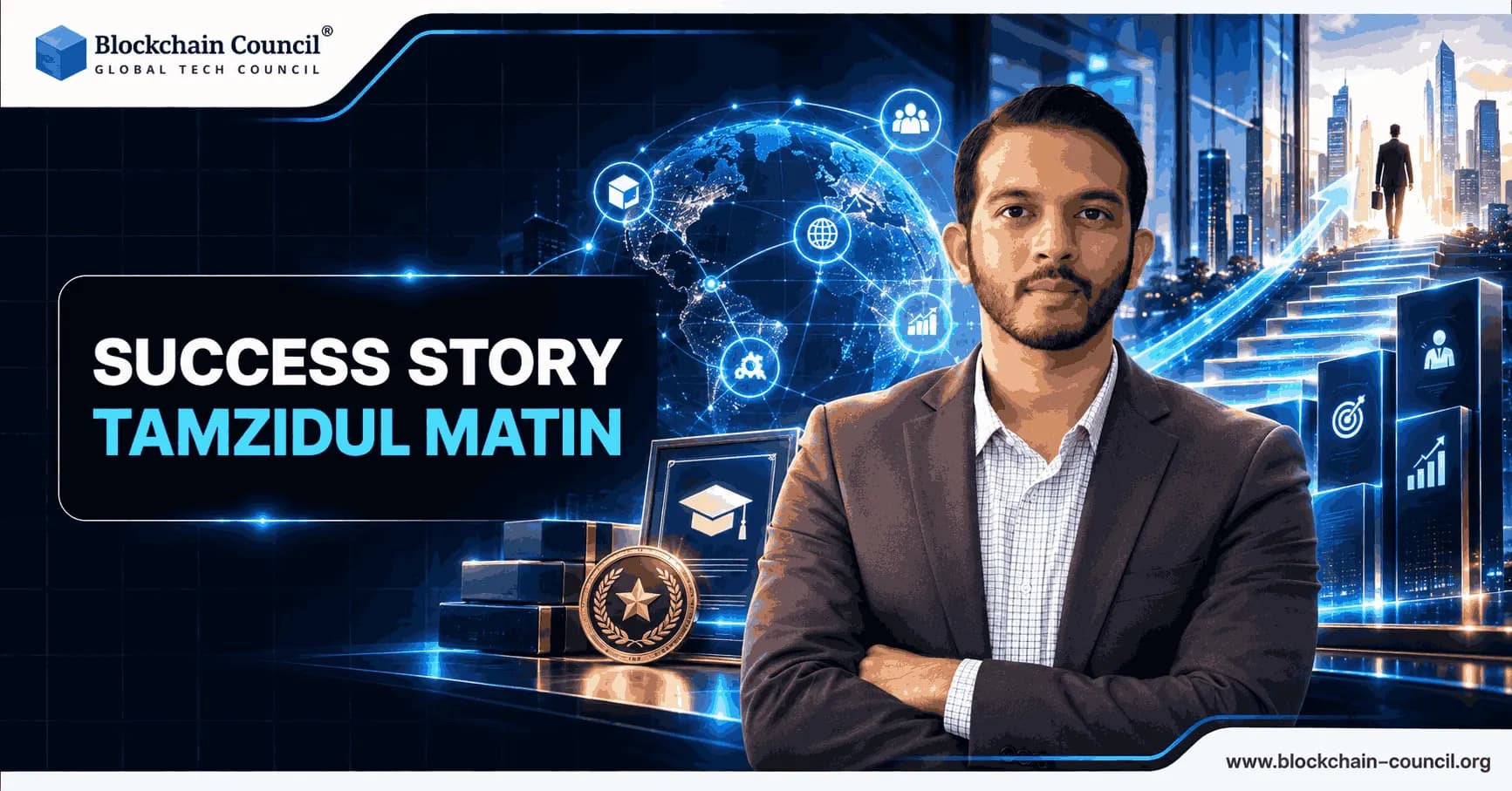
Many people believe that learning new technology is only for the young. The story of Tamzidul Matin shows why that belief is wrong. An experienced IT professional based in New York, he decided to learn programming in his mid-thirties, built a public portfolio of real projects, and grew into a Cloud DevOps and MLOps engineer. He then added blockchain to his skill set by completing the Certified Blockchain Expert course from Blockchain Council. Looking back on it, he said: "Thanks to the profound knowledge I gained about blockchain through the Certified Blockchain Expert course, I will now be able to make a positive difference in the blockchain world."
His path offers practical lessons for beginners who feel they started too late and for professionals who want to move into cloud, automation, machine learning operations, and blockchain.

Who Is Tamzidul Matin?
According to his public profiles, Tamzidul Matin is a Cloud DevOps and MLOps engineer based in New York with more than ten years of hands-on operational experience. His professional background centers on cloud infrastructure, deployment, and security operations.
His GitHub page describes him as a passionate Cloud DevOps engineer and lists more than 100 repositories. He works across Bash scripting, Python, containers, and automation, and he has explored machine learning and deep learning through tools such as PyTorch and TensorFlow. He also writes articles that help others learn programming and web development.
A Quick Snapshot
Field: Cloud DevOps, DevSecOps, MLOps, and blockchain
Location: New York, United States
Experience: Over ten years in IT operations and cloud roles
Core tools: Python, Bash, Docker, Jenkins, Ansible, Kubernetes, AWS, Django, Flask
Certification: Certified Blockchain Expert
Known for: Public projects, learning in public, and sharing guides with beginners
Starting Python at 35: Turning Curiosity Into Skill
One of the most relatable parts of his story is a LinkedIn article titled "How I began to write my first program in Python at age 35." In it, he explains that, as an IT professional, he had wanted to learn programming for a long time but never found the right moment. He then asked himself what the easiest and most convenient way to start would be. Python became his choice because of its simplicity, its wide use, and the strong demand for it in the job market.
He pointed readers to structured learning paths, including the Python Institute's PCAP certification and a Cisco Networking Academy course. A clear curriculum and a recognized exam give you milestones, which keeps motivation high.
Why Python Is a Good First Language
Python reads almost like plain English, which makes it friendly for new learners. It is also used in automation, data science, web development, and machine learning, so one language can support several career paths. Developers who later want to build decentralized applications often find that this foundation transfers well. Programs such as the Certified Blockchain Developer course build on core programming habits like logic, testing, and version control, which Python helps you develop early.
The Mindset Behind the Move
Start before you feel ready. Waiting for perfect timing delays progress.
Pick a practical language. Choose one with strong demand and learning resources.
Use a structured course. A syllabus and exam keep you accountable.
Share what you learn. Writing about your journey helps you remember and helps others.
Building a Portfolio That Proves Skill
Employers cannot see how hard you studied, but they can see what you built. His GitHub profile shows a portfolio that covers the main areas of modern cloud engineering.
CI/CD With Jenkins, Ansible, and Docker
He completed a continuous integration and continuous delivery project using Jenkins, Ansible, and Docker. CI/CD means that every time a developer changes code, an automated pipeline tests and delivers it. This reduces mistakes and speeds up releases.
Kubernetes on AWS
He also built a Kubernetes cluster on AWS using KOPS. Kubernetes runs and manages many containers across many machines. It is one of the most requested skills in cloud jobs, so a hands-on project gives a candidate real credibility.
Python Web Projects
He completed multiple projects with Django and has been building a personal website with Flask. These are two popular Python web frameworks, and building with them teaches you how real applications handle requests, data, and users.
Data Science and Machine Learning
His profile also lists an IBM Data Science Capstone project and ongoing work on end-to-end MLOps projects that combine DevOps practices with machine learning workflows.
DevOps and MLOps Explained Simply
If these terms are new, here is a plain explanation.
DevOps brings software developers and IT operations together. The goal is to build, test, and release software faster and more safely using automation. Typical tasks include writing scripts, managing cloud servers, building pipelines, and monitoring systems.
MLOps applies the same ideas to machine learning. A model that works on a laptop is not enough. It must be trained, tested, deployed, monitored, and updated over time.
DevSecOps adds security to every step, so protection is built in from the start rather than added at the end.
A person who understands both infrastructure and machine learning can bridge two worlds, which is the path he has followed in public.
Adding Blockchain: The Certified Blockchain Expert Course
After building a strong base in cloud and automation, he took the next step into blockchain. Cloud and DevOps skills are a natural fit for this field, because running nodes, managing secure keys, deploying tooling, and monitoring distributed networks all depend on infrastructure knowledge.
He credits the course with giving him depth. In his words: "Thanks to the profound knowledge I gained about blockchain through the Certified Blockchain Expert course from Blockchain Council, I will now be able to make a positive difference in the blockchain world."
The statement reflects a goal that goes beyond earning a certificate. He wants to apply what he learned and contribute to the industry.
In His Own Words: Choices, Confidence, and Luck
His reflections on the certification also reveal the mindset behind his growth.
"I am a strong believer of the quote I am who I am today because of the choices I made yesterday. This was said by Eleanor Roosevelt, the first lady of the U.S. Enrolling in this certification has allowed me to gain immense confidence and realize my potential. Being a strong believer of luck, I consider myself really lucky to have come across this course as it has certainly helped me turn a new leaf in life."
Three ideas stand out from this statement.
Choices Shape the Future
His belief that today is shaped by yesterday's choices matches his journey. Choosing to learn Python at 35, to build projects, and to enroll in a certification were all decisions made well before the results appeared.
Confidence Is a Real Career Asset
He says the certification gave him immense confidence and helped him realize his potential. This matters for professionals changing direction. Structured learning does not only add knowledge. It also removes self-doubt, which is often the biggest barrier.
Being Open to Opportunity
He describes himself as lucky to have come across the course. Luck helps, but it usually favors people who are actively learning and looking. He was ready to recognize the opportunity when it appeared.
The Role of Certifications in His Journey
His public profile shows that he pairs hands-on projects with formal learning. He lists certifications on credential platforms such as Credly and Accredible and completed an IBM data science program. Certifications do not replace practical skill, but they help in three ways.
They give structure. A syllabus tells you what to learn and in what order.
They signal commitment. Recruiters see that you finished a recognized program.
They build confidence. As he put it, the certification helped him realize his potential.
If you are comparing options across cloud, security, data, and emerging technology, the Tech Certification catalog is a helpful place to explore programs and plan your next step. The best approach combines a credential with a visible project, so you can show what you know and not just claim it.
Lessons for Beginners
You Are Not Too Late
Starting at 35 did not stop him from building a career in cloud engineering. Age matters less than steady practice. Even thirty minutes a day adds up to hundreds of hours in a year.
Build Small Projects First
Do not wait until you know everything. Build a simple script, then a small web app, then a pipeline. Each project teaches something a tutorial cannot.
Learn in Public
Publishing code on GitHub and writing short articles creates a record of progress and builds a professional reputation over time.
Follow a Clear Roadmap
Learn Python basics and the Linux command line.
Learn Git and GitHub.
Study cloud basics on a major platform such as AWS.
Learn Docker, then Kubernetes.
Build a CI/CD pipeline project.
Add data, machine learning, or blockchain skills based on your goals.
Lessons for Experienced Professionals
Combine Domain Experience With New Skills
His long operational background gives him an advantage. Someone who understands how systems fail in production can design better automation. If you already work in IT support, networking, or system administration, use that knowledge as a foundation.
Choose Skills That Connect
Cloud, DevOps, MLOps, and blockchain infrastructure fit together naturally. Learning one makes the next easier.
Keep Your Portfolio Current
Technology changes quickly. Regular projects, even small ones, show that your skills are alive.
Sharing Knowledge and Building a Personal Brand
Another strength in his story is teaching. His guides on building web apps with Django and Flask, and his reflection on learning Python, make complex topics easier for newcomers. Teaching deepens your own understanding and builds trust with employers and peers.
Technical talent is more powerful when it is communicated well. Whether you are a developer, a DevOps engineer, or a consultant, being able to explain your value and promote your work can change your career. A program like the Marketing Certification can help technical professionals present their expertise and grow a stronger professional brand.
Key Takeaways From This Success Story
Learning to code later in life is realistic and rewarding.
A structured course plus real projects is a strong combination.
A public GitHub portfolio can speak louder than a resume.
Cloud, DevOps, MLOps, and blockchain skills connect well and are in demand.
Confidence grows when you commit to learning and finish what you start.
Teaching and sharing help you grow faster and gain visibility.
Conclusion
The story of Tamzidul Matin is a reminder that career growth is built from steady, visible effort. He began learning Python at 35, followed structured courses, built practical projects in CI/CD, Kubernetes, Django, Flask, and machine learning, and then deepened his expertise through Blockchain Certification from Blockchain Council. In his own words, the choices he made yesterday shaped who he is today, and his next goal is to make a positive difference in the blockchain world. Whether you are a beginner or an experienced professional, you can follow the same formula: pick a practical skill, learn with a clear roadmap, build and publish real projects, and keep growing.
FAQs
1. Who is Tamzidul Matin?
Tamzidul Matin is a Cloud DevOps and MLOps professional based in New York. His public professional profiles highlight experience across cloud infrastructure, DevOps, automation, and machine learning operations.
2. What is Tamzidul Matin's professional background?
Tamzidul Matin has built a career in IT and cloud engineering, with experience spanning network engineering, systems administration, DevOps, cloud infrastructure, and MLOps. His career includes experience at organizations such as Verizon Business, the Vera Institute of Justice, and Oracle.
3. Where does Tamzidul Matin work?
Public professional information lists Tamzidul Matin as having worked at Oracle in New York in a cloud engineering role. His LinkedIn profile describes him as a Cloud DevOps and MLOps Engineer.
4. What technologies does Tamzidul Matin work with?
His public GitHub profile highlights technologies and skills including Python, Bash, Docker, Kubernetes, Terraform, AWS, Jenkins, Ansible, and machine learning tools. He has also worked on cloud infrastructure and MLOps projects.
5. How did Tamzidul Matin develop his programming skills?
Tamzidul Matin has publicly described learning Python independently after becoming interested in programming. He began with introductory Python education and progressed toward building practical programs and pursuing professional certification.
6. Did Tamzidul Matin have experience before learning Python?
Yes. His public career history shows that he already had an IT background before developing his Python skills. He subsequently expanded his technical capabilities into programming, DevOps, cloud infrastructure, and MLOps.
7. What certifications has Tamzidul Matin earned?
Public profiles list certifications including AWS Certified Cloud Practitioner, Site Reliability Engineering Foundation, and other technology-focused credentials. His profiles also reference certifications available through professional credential platforms.
8. How did certifications contribute to Tamzidul Matin's career journey?
Certifications can provide structured learning and help professionals demonstrate knowledge in specific technologies. In Tamzidul Matin's case, his public profiles show certifications alongside hands-on experience in cloud, DevOps, and infrastructure engineering.
9. What DevOps projects has Tamzidul Matin worked on?
His public GitHub profile highlights projects involving Jenkins, Ansible, Docker, Kubernetes, AWS, Terraform, and CI/CD automation. These projects demonstrate practical experience beyond theoretical learning.
10. What is Tamzidul Matin's experience with MLOps?
Tamzidul Matin describes himself as working on MLOps projects that combine DevOps practices with machine learning workflows. His public profile mentions technologies including MLflow, FastAPI, DVC, PyTorch, and TensorFlow.
11. How did Tamzidul Matin move from IT operations toward cloud and DevOps?
His career shows a progression from network and systems-related roles toward DevOps and cloud engineering. Developing skills in automation, cloud platforms, containers, infrastructure as code, and CI/CD helped expand his technical career.
12. What role did hands-on projects play in Tamzidul Matin's growth?
Hands-on projects gave him opportunities to apply technical concepts to practical problems. His public repositories include projects involving cloud infrastructure, automation, Kubernetes, Python, Terraform, and AWS DevOps.
13. What can professionals learn from Tamzidul Matin's career journey?
One important lesson is the value of continuous learning. His publicly documented journey shows how an IT professional can progressively develop programming, cloud, automation, DevOps, and MLOps skills rather than limiting their career to one technical area.
14. Did Tamzidul Matin learn programming later in his career?
Yes. In a 2020 article, he described beginning Python programming at age 35 and explained how he started with fundamental programming concepts before developing his skills further.
15. What programming language did Tamzidul Matin initially focus on?
Python was one of the programming languages he chose to learn. He described Python as accessible and useful for his goals and began with fundamental exercises before progressing toward more advanced learning.
16. What cloud technologies are associated with Tamzidul Matin?
His public profiles and repositories show experience with cloud technologies including AWS, Google Cloud, Azure, and Oracle Cloud Infrastructure, along with Kubernetes, Terraform, Linux, and related DevOps tools.
17. How can beginners follow a career path similar to Tamzidul Matin?
Beginners can start with programming fundamentals, Linux, networking, cloud computing, version control, containers, and automation. They can then build practical projects and pursue relevant certifications while developing professional experience.
18. Why is continuous learning important in cloud and DevOps careers?
Cloud and DevOps technologies evolve rapidly, so professionals need to continuously update their technical knowledge. Learning new tools and applying them through practical projects can help professionals remain adaptable as technology changes.
19. What is the key takeaway from Tamzidul Matin's success story?
Tamzidul Matin's career demonstrates how continuous education, practical projects, professional certifications, and experience can support long-term technical career development. His journey also illustrates that learning a new technical skill can begin at any stage of a career.
20. How can professional certifications help someone build a technology career?
A relevant certification can provide structured learning and demonstrate knowledge of a particular technology or discipline. However, certifications are most valuable when combined with hands-on projects, practical experience, and continuously developing technical skills.
Related Articles
View All
Success Stories
Success Story: Shahriyar Nasrmalek
“The Certified NFT Expert™ Instructor-Led Training has helped me understand the topic of Non-fungible Token and this will 100% help me to advise customers in a much better way,” says Shahriyar Nasrmalek, who successfully completed his ILT course from Blockchain Council. Shahriyar, who describes…

Success Stories
Success Story: Innocent Morai Arita
“The Certified Cryptocurrency Trader live-training has added more knowledge and confidence, the understanding is clear, it is evident that a few understand where things are going. With much adoption Blockchain is key to global problems solving and transparency” says Innocent Morai, who successfully…

Success Stories
Success Story: Kresna Sucandra
“The Certified Blockchain Developer (CBD) Instructor-Led Training has helped me in acquiring more knowledge in the Blockchain domain and brought a slight improvement in knowledge building through the live projects”, says Kresna Sucandra, who successfully completed his instructor-led training…
Trending Articles
AWS Career Roadmap
A step-by-step guide to building a successful career in Amazon Web Services cloud computing.
Top 5 DeFi Platforms
Explore the leading decentralized finance platforms and what makes each one unique in the evolving DeFi landscape.
What is AWS? A Beginner's Guide to Cloud Computing
Everything you need to know about Amazon Web Services, cloud computing fundamentals, and career opportunities.