

What is Cake DeFi? Explained
 Neeti
Neeti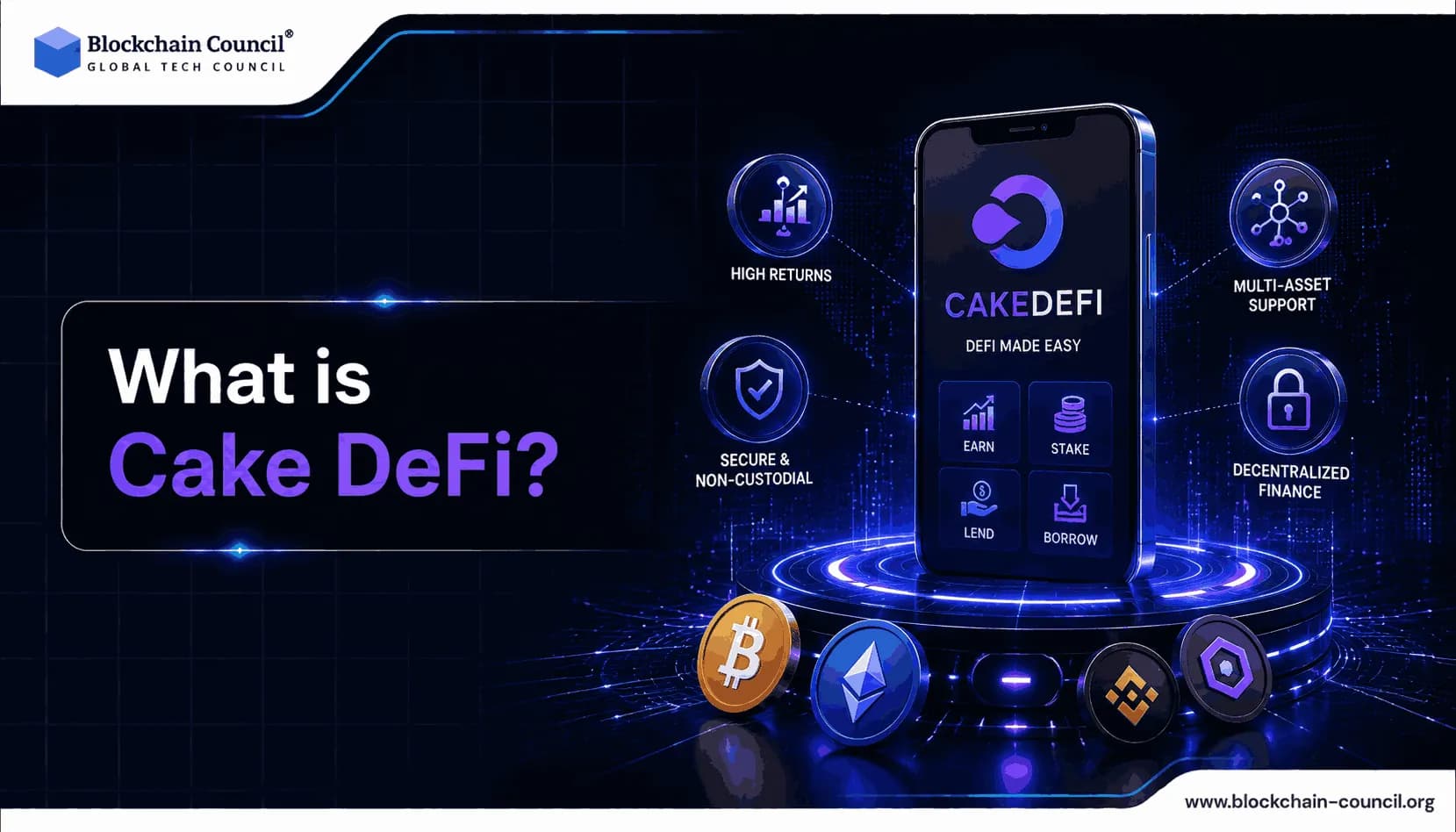
Finding a safe haven investment that satiates one’s hunger for ‘maximum earnings in limited expense’ is a tough task, especially when we are ushering towards a more complex economy. Where globalization and technological innovation promoted a more liberal economy and working infrastructure, the wide scale dependence on centralized financial channels limited the scope of liberalism. This was the time when cryptocurrencies opened the door for digital money and changed the situation forever.
During the starting phase, no one expected the crypto industry to grow and reach its present multi-billion-dollar worth. The concept of paperless currency was seen as a mere substitute for the traditional centralized systems that relied heavily on the mercy of financial authorities and government controls. However, with time, the popularity of crypto and its underlying principle called blockchain technology skyrocketed.

With multinational firms coming for the support of decentralized technology, the industrial realm expanded multidimensionally to strengthen its market presence. New concepts like stablecoins, Decentralized Finance, Non-Fungible Tokens, etc. garnered attention from investors as they promoted safer investment services for people irrespective of their location, status, or gender.
The surge in the popularity of cryptocurrencies compelled firms to come up with new projects that favored the interests of customers. Some people fear investing in crypto because of the high price volatility involved therein. This issue was resolved with the launch of DeFi platforms like Cake DeFi which help investors to earn crypto through staking. The portal promises to unlock new opportunities for regular cash flow for investors willing to explore the crypto space without fearing the risks.
In this article, we will try to give you a detailed analysis of the Cake DeFi platform. You will learn blockchain technology concepts involved in Cake Defi infrastructure, its merits, and distinct features. So, let’s just jump in:
What is Cake DeFi?
Headquartered in Singapore, Cake DeFi is a decentralized platform that strives to make cryptocurrencies and DeFi services accessible for everyone. Founded in June 2019, Cake DeFi is the brainchild of Julian Hosp and U-Zyn Chua who planned to bring crypto closer to common people. Julian Hosp is a renowned crypto influencer with a strong presence in German-speaking nations and has been actively involved in promoting crypto use amongst investors.
The platform complies with all regulatory requirements of the Monetary Authority of Singapore (MAS). Cake DeFi plans to educate and assist investors with transparent products and services of the crypto field that guarantee higher returns.
The infrastructure is designed to support three core elements of the crypto world namely- staking, lending, and liquidity mining- for investors so that they can deposit assets and earn rewards against them. Despite the inclusion of the word ‘DeFi,’ Cake DeFi works as a custodial portal offering a plethora of unprecedented features focused on expanding the usability of cryptocurrencies.
Cake DeFi uses the powerful DeFi Chain blockchain to support its core functionalities within the decentralized ecosystem which facilitates cryptocurrency trading seamlessly. The native currency, which is also called the base currency, is accessible in the market under the ticker symbol ‘DFI.’
The rewards earned on the platform are distributed in DFI tokens thus making the processing of transactions highly convenient for the participants. Interestingly, the DeFi Chain is a fork of the BitCoin blockchain and has no connection with Ethereum like a majority of new blockchain ventures. Cake DeFi is an independent network and unlike Bitcoin which uses the Proof-of-Work algorithm, Cake employs the Proof-of-Stake (PoS) algorithm for better results.
In the PoS setup, network nodes stake an amount of crypto to become potential candidates for validating the new block in return for rewards. Further, an algorithm chooses candidates from the lot who will validate the new block. The selection algorithm takes into consideration the quantity of staked assets along with other crucial factors (such as randomization) so as to ensure high-end fairness within the system. As PoW infrastructure is heavily based on energy-intensive mining, PoS gained popularity with its less strained energy requirements. The PoS algorithm offers enhanced scalability in comparison to the PoW channel. Cake DeFi unlocks the benefits of staking for a new class of investors who want to experiment with crypto using limited resources and technical knowledge.
How does Cake DeFi Work?
Investors can learn DeFi trading services offered by Cake DeFi platform from the list mentioned in this section. They can find the following products to invest in on the decentralized portal:
Crypto Lending for ETH, BTC, and USDT
The lending feature helps investors to boost their passive income or cash flows against Bitcoin (BTC), USDT, ETH, and USDC. Cake DeFi manages everything for customers so as to make the complicated process swift and convenient. The capital and returns are fully guaranteed, risk-free, and clubbed with lucrative bonuses acting as the icing on the cake. The API makes sure that the customers enjoy bonuses when the price of the native currency surges during the lending process.
The users deposit their assets like BTC, ETH, and USDC which are then lent in ‘batches’ by the Cake DeFi infrastructure. The assets are locked in options contracts for a span of four weeks. Each batch lasts for 28 days, starting and ending on a Friday. Post the four weeks period, investors can shift to the next batch automatically at their will. They can withdraw their full principal amount and returns or take out only the returns depending upon their mood.
Cake does not charge fees from users rather it receives commissions from its affiliates directly. The expected annual percentage yield varies for every batch. The portal displays the expected APY on its website for user reference.
Liquidity Mining
With Cake DeFi users can gain access to shared liquidity mining pools offering lucrative opportunities to earn yields easily. The investors can choose their favorite pair of popular crypto tokens and the DFI token. The liquidity pools fetch a yield upwards of 68% which is subject to changes. The platform collects 15% as a fee charged on all rewards. Rewards are distributed every 12 hours directly into the wallet of the participant. It can take up to 24 hours for the first reward.
The yields are paid in both the coins of the pair. For instance, if the user is adding liquidity to a BTC-DFI pool then they will receive an equal amount of BTC and DFI as a reward. The participants can pull out of the liquidity mining pools anytime at their convenience.
Staking Service
In the PoS setup, users put their coins into ‘nodes’ for verifying transactions involving cryptocurrencies. Stakers then receive rewards for offering their staking services. The rewards vary from token to token here. The portal presently supports two masternodes- DASH and DFI for staking purposes.
Cake Freezer
For lucrative interests, Cake DeFi investors can choose the ‘Freeze’ option where they need to lock their DFI assets for a minimum of one month or a maximum of ten years. The feature helps users to fetch regular cash flow on the locked funds along with an 85% rebate on the staking fee charge as well. The funds are automatically moved to liquidity mining pools and the bonuses are credited depending upon the duration of the lock-in period.
Invest in Decentralized Assets
Decentralized assets on Cake DeFi are called dTokens. They are cryptocurrencies that can be minted by any person on the DeFi Chain blockchain network. The price of dTokens is ascertained by the supply and demand of the trading pair. They are traded on DEXs. The most interesting thing about these assets is the fact that their price is not correlated to the crypto cluster but rather to real-world assets.
The two primary things investors can do with decentralized assets like dTSLA on Cake DeFi are:
Invest in these assets by purchasing and holding them so as to get price benefits easily.
Take part in Liquidity Mining with decentralized assets after purchasing the dToken pair of your choice.
Payment System on Cake DeFi
To invest on Cake DeFi, one needs to deposit cryptocurrencies into their digital wallet. For this, users have three distinct options:
Purchasing crypto using fiat
Exchange or swap tokens
Transfer through blockchain into the wallet
Purchasing crypto with fiat
Investors can buy cryptocurrencies like BTC, ETH, and DFI using fiat money. They can deposit the money through Visa credit card, SEPA bank transfer, iDEAL payment service, and Sofort. The process is simple, transparent, and secure.
Exchange or swap tokens
In swapping of tokens, users exchange one crypto asset for another cryptocurrency. The facility is a classic element in the DeFi cluster. In the end, investors move to the liquidity pools that are made accessible by the liquidity mining on the platform. In DeFi training programs offered by Blockchain Council, users can get details about swapping tokens and trading them for maximum returns.
Transfer through blockchain to wallet
This is one of the most popular ways to deposit cryptocurrencies within the Cake DeFi ecosystem. Investors need to switch between different blockchains depending upon the currency they are willing to deposit. Cake allows users to use the native blockchain option for each asset like the Bitcoin or Ethereum network or its in-built DeFi Chain network.
How to withdraw crypto on Cake DeFi?
Users can easily withdraw the freshly baked tokens by following simple steps:
Click on the baker’s hat placed on the top right corner.
Select the ‘Balance’ option.
Choose the ‘Withdraw’ option against the coin you want to withdraw.
Select the right network and fill in the details required in the fields given there.
How does Cake DeFi pool money?
The company makes money through two processes:
Aggregation of cryptocurrencies
In this, Cake’s infrastructure aggregates the cryptocurrencies that investors lend into bigger blocks and then brokers them for a predetermined span.
Staking charges and liquidity mining
The portal reserves a small service charge out of the staking rewards and earnings from liquidity mining. DeFi certification programs help investors to gain knowledge about staking and liquidity mining which eventually helps them to expand their earnings.
Conclusion
Cake DeFi offers seamless access to the three most important products namely- Lending, Staking, and Liquidity Mining- for the crypto community. With its native DeFi Chain blockchain and DFI token, the platform strives to leverage efficient functionalities for investors around the globe. It is simple, user-friendly, transparent, reliable, and highly secured. The team aspires to bring crypto to the mainstream world of Decentralized Finance where everyone can enjoy the perks of a decentralized economy.
If you are willing to try your luck in crypto, then enroll yourself in the best blockchain certification courses offered by Blockchain Council. The blockchain course content is designed to suit the requirements of the candidates, giving them full exposure of the blockchain space. The courses offer in-depth subjective as well as practical knowledge to the participants.
If you want to keep up with the trends of blockchain industry, join our communities on Discord, Reddit and Telegram.
FAQs
1. What is Cake DeFi?
Cake DeFi, now commonly known as Bake, is a digital asset platform that provides users with services such as staking, yield-generating products, lending (where available), and other blockchain-based financial offerings. The platform aims to make selected decentralized finance (DeFi) opportunities more accessible through a user-friendly interface.
2. Why did Cake DeFi change its name to Bake?
The platform rebranded from Cake DeFi to Bake to reflect a broader product strategy beyond decentralized finance alone. The new brand is intended to represent a wider range of digital asset services while maintaining continuity for existing users.
3. How does Cake DeFi (Bake) work?
Users create an account, complete any required identity verification, deposit supported digital assets, and choose eligible products such as staking or yield-generating services. The platform manages the underlying infrastructure while users monitor their holdings and rewards through their accounts.
4. What services does Cake DeFi offer?
Depending on the user's jurisdiction and applicable regulations, Bake may offer services including staking, yield products, lending-related features, savings options, and digital asset management tools. Available products can vary by country due to regulatory requirements.
5. Is Cake DeFi a decentralized finance (DeFi) platform?
Bake provides access to products inspired by decentralized finance while operating through a centralized platform experience. Although some services may interact with blockchain protocols, users generally access them through Bake's managed infrastructure rather than directly interacting with decentralized applications.
6. What cryptocurrencies does Cake DeFi support?
Supported digital assets may include major cryptocurrencies such as Bitcoin (BTC), Ethereum (ETH), stablecoins, and selected blockchain ecosystem tokens. The list of supported assets may change over time as the platform expands or adjusts its offerings.
7. How does staking work on Cake DeFi?
Staking allows eligible users to participate in proof-of-stake blockchain networks by committing supported digital assets. Depending on the network and product, users may receive staking rewards, although returns are variable and not guaranteed.
8. What are yield-generating products on Cake DeFi?
Yield-generating products are designed to provide potential returns through blockchain-based financial activities such as staking or other supported mechanisms. Returns depend on market conditions, protocol performance, fees, and product-specific terms, and they involve investment risk.
9. Is Cake DeFi suitable for beginners?
Bake provides an interface designed to simplify access to selected digital asset services compared with interacting directly with multiple blockchain protocols. However, users should still understand digital asset volatility, custody considerations, product risks, and applicable regulations before investing.
10. What are the benefits of using Cake DeFi?
Potential benefits include simplified access to digital asset services, portfolio management tools, educational resources, and support for multiple blockchain assets. Users may also appreciate having several digital asset products available through a single account, depending on availability in their region.
11. What risks should users consider?
Digital asset investments involve risks including market volatility, smart contract risks where applicable, cybersecurity threats, liquidity constraints, regulatory changes, and potential losses. Users should carefully review product documentation and understand the associated risks before participating.
12. How does Cake DeFi address security?
Digital asset platforms typically implement measures such as encryption, multi-factor authentication (MFA), secure custody arrangements, access controls, monitoring systems, and operational security procedures. Users should also practice good personal security by protecting account credentials and enabling available security features.
13. Does Cake DeFi require identity verification?
Depending on the user's location and applicable laws, identity verification (Know Your Customer or KYC) may be required before accessing certain services. These procedures help platforms comply with anti-money laundering (AML) and other regulatory obligations.
14. How are rewards paid on Cake DeFi?
Reward schedules depend on the specific product, blockchain network, and platform policies. Users should review the terms for each product to understand how rewards are calculated, distributed, and any applicable lock-up or withdrawal conditions.
15. Are there fees for using Cake DeFi?
Bake may charge fees depending on the service being used, such as withdrawals, transactions, or certain investment products. Fee structures can change, so users should review the latest official pricing and product documentation before making financial decisions.
16. Is Cake DeFi regulated?
The regulatory environment for digital asset platforms varies across jurisdictions. Users should verify whether Bake's services are available in their country and review the platform's official disclosures regarding licensing, compliance, and applicable regulatory requirements.
17. How does Cake DeFi compare with traditional investing?
Traditional investments often involve regulated financial institutions such as banks or brokerage firms, while digital asset platforms provide access to blockchain-based products that may have different risk profiles, operating models, and regulatory considerations. Investors should understand these differences before allocating capital.
18. What trends are influencing platforms like Cake DeFi in 2025-2026?
Key trends include greater institutional participation, tokenized real-world assets (RWAs), AI-powered portfolio analytics, stronger compliance requirements, enhanced security practices, evolving staking services, and increasing regulatory clarity in many markets.
19. What best practices should users follow when using Cake DeFi?
Users should research each product, diversify appropriately, enable multi-factor authentication, securely store recovery information, monitor platform announcements, maintain records of transactions, understand tax obligations, and invest only amounts consistent with their financial objectives and risk tolerance. Digital assets can experience significant price fluctuations.
20. What is the future outlook for Cake DeFi (Bake)?
Platforms like Bake are expected to continue evolving as blockchain technology, digital asset markets, and regulatory frameworks mature. Future growth will likely depend on product innovation, security, compliance, user experience, and the broader adoption of blockchain-based financial services. Even in decentralized finance, reading the terms before clicking "Accept" remains one of the least glamorous but most profitable habits.
Related Articles
View All
DeFi
DeFi Lending and Borrowing: Overcollateralization, Liquidations, and Interest Rate Models
Learn how DeFi lending and borrowing works, including overcollateralization, liquidation incentives, and utilization-based interest rate models that shape risk and returns.

DeFi
The Future of DeFi Regulation: Compliance Challenges, KYC/AML Trends, and What Builders Should Prepare For
Explore the future of DeFi regulation, emerging KYC/AML and sanctions trends, and the compliance architecture builders need to prepare for enforcement and growth.

DeFi
Can DeFi 2.0 Bridge the Gap Between Traditional and Decentralized Finance?
The short answer is yes—at least partly. DeFi 2.0, the second generation of decentralized finance protocols, is designed to fix the flaws of DeFi 1.0 and make it easier for institutions to step in. By adding better incentives, improved security, and real-world asset tokenization, DeFi 2.0 is…
Trending Articles
The Role of Blockchain in Ethical AI Development
How blockchain technology is being used to promote transparency and accountability in artificial intelligence systems.
AWS Career Roadmap
A step-by-step guide to building a successful career in Amazon Web Services cloud computing.
Can DeFi 2.0 Bridge the Gap Between Traditional and Decentralized Finance?
The next generation of DeFi protocols aims to connect traditional banking with decentralized finance ecosystems.