

Pokemon Now Available on Blockchain
 Toshendra Kumar Sharma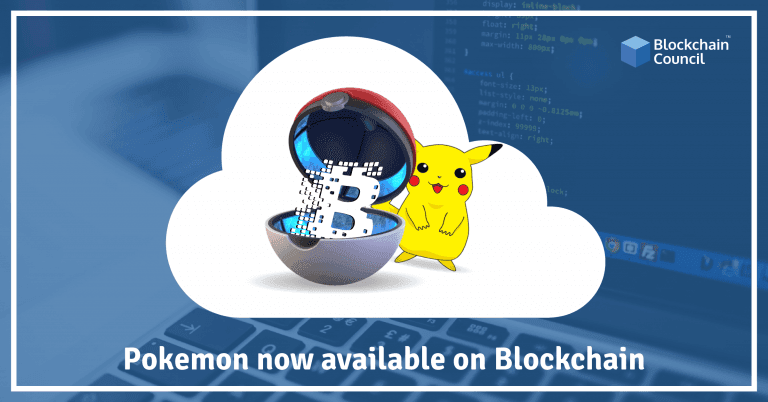
The idea of owning digital creatures, trading cards, or collectibles the same way people once traded physical Pokemon cards has taken a major step forward with blockchain based platforms now bringing Pokemon inspired collecting and gaming experiences on chain. Instead of collectibles living inside a single closed app or platform controlled entirely by one company, blockchain allows ownership to be recorded transparently and traded directly between users, giving longtime fans a level of control over their digital collections that traditional gaming platforms have never offered. For professionals curious about how a franchise built on collecting and trading translates naturally into blockchain infrastructure, a Certified Blockchain Expert credential provides the foundational knowledge needed to understand exactly why this shift makes sense from a technical standpoint.
This article explains what it actually means for Pokemon style collectibles to move onto blockchain, how ownership and trading change as a result, and what this signals for the future of gaming more broadly.

Why Pokemon Style Collecting Is a Natural Fit for Blockchain
Trading Has Always Been Core to the Experience
From the very beginning, Pokemon built its entire identity around collecting and trading, with physical cards and games designed specifically to encourage players to trade duplicates and build complete collections. Blockchain simply extends that same core mechanic into a digital environment where trades are recorded transparently and cannot be reversed or disputed after the fact.
Verifiable Scarcity for Digital Collectibles
Physical trading cards hold value partly because of genuine scarcity, something that has historically been very difficult to replicate in a purely digital format where files can be copied endlessly. Blockchain solves that problem directly by recording a fixed, verifiable supply of each digital creature or card, giving digital collectibles the same scarcity based value that made physical card collecting so popular in the first place.
How Blockchain Changes Ownership and Gameplay
True Ownership Instead of Licensed Access
In most traditional games, players do not actually own their in game items, they simply hold a license to use them within that specific platform, which disappears the moment the game shuts down or the account gets banned. Blockchain based collectibles are held directly in a player's own wallet, meaning ownership persists independently of any single game or company staying operational.
Direct Peer to Peer Trading Without a Middleman
Players can trade blockchain based creatures and cards directly with each other without needing a centralized marketplace to broker or approve the exchange, closely mirroring how trading actually worked with physical cards among friends, just executed digitally and instantly. Building these direct trading systems securely is a specialized skill, one covered in depth through a Certified Web3 Game Developer program, which trains developers to design blockchain based game mechanics that handle ownership, trading, and in game economies correctly from the ground up.
Play to Earn and Economic Incentives
Some blockchain based collecting games introduce play to earn mechanics, allowing players to earn tradeable value through gameplay achievements rather than simply spending money to acquire new items. This shifts the traditional relationship between players and publishers, giving players a genuine economic stake in the time they invest into a game.
The Technical Foundation Behind Blockchain Gaming
Bringing a collecting and trading experience onto blockchain involves far more than simply issuing digital tokens. Developers need to manage smart contract security, transaction costs, and network scalability, all while keeping the actual gameplay experience smooth enough that it does not feel like a technical burden layered on top of a game. This is exactly the kind of applied technical depth built through a broader Tech Certification, which prepares developers to handle the full stack of challenges involved in building blockchain based gaming infrastructure that can support a large, active player base without breaking under pressure.
What This Means for the Broader Gaming Industry
A Signal to Other Franchises
When a franchise as widely recognized as Pokemon style collecting moves toward blockchain based ownership models, it sends a clear signal to other gaming franchises that players are genuinely interested in owning their digital collectibles rather than simply renting access to them. This could accelerate similar moves across the wider gaming industry over the coming years.
New Opportunities for Brand and Community Marketing
Bringing collectible franchises onto blockchain also opens new ways to build community engagement, from verifiable rare drops to transparent trading events that players can track and trust. Communicating these new mechanics clearly to a fan base that may be unfamiliar with blockchain concepts requires careful messaging, which is precisely the kind of skill developed through a structured Marketing Certification, helping brands introduce blockchain based features to mainstream audiences without overwhelming them with unnecessary technical jargon.
Final Thoughts
Bringing Pokemon style collecting onto blockchain is a natural evolution for a franchise built entirely around trading and ownership, giving fans verifiable scarcity, true digital ownership, and direct peer to peer trading that closely mirrors the experience longtime collectors already know and love. As blockchain based gaming continues to mature, this kind of shift is likely to become far more common across the gaming industry, turning digital collectibles into genuine, tradeable assets rather than items players only ever temporarily control.
FAQs
1. Is Pokémon now available on blockchain?
Pokémon as an official franchise should not automatically be described as being “on the blockchain” simply because blockchain projects, NFT collections, games, or tokens reference Pokémon or Pokémon-style concepts. Official blockchain integration would require authorization or participation from The Pokémon Company and its partners. Blockchain technology could theoretically support Pokémon-style digital collectibles, ownership, trading, and gaming assets, but unofficial projects should be distinguished carefully from licensed products.
2. What does “Pokémon on blockchain” actually mean?
The phrase generally refers to the idea of representing collectible creatures, cards, items, or other game assets as blockchain-based tokens. These assets could potentially be held in digital wallets and transferred between users. In a properly licensed implementation, blockchain could provide verifiable ownership and transaction history for digital collectibles while the game developer continues controlling gameplay, artwork, intellectual property, and platform rules.
3. Can Pokémon characters be turned into NFTs?
Technically, digital representations of collectible characters can be issued as NFTs, but Pokémon characters and related artwork are protected intellectual property. Creating an NFT on a blockchain does not grant someone permission to use copyrighted characters, names, logos, or artwork. An official Pokémon NFT collection would therefore need to come from, or be appropriately licensed by, the relevant Pokémon rights holders.
4. How could blockchain work with a Pokémon-style game?
In a blockchain-enabled collectible game, creatures or selected in-game items could be represented by blockchain tokens. Players could acquire an asset during gameplay and hold it in a compatible wallet. The blockchain could verify ownership and record transfers, while the game itself manages battles, progression, graphics, and other gameplay mechanics. This creates a separation between ownership infrastructure and the actual gaming experience.
5. What benefits could blockchain bring to Pokémon-style collectibles?
Blockchain could provide verifiable scarcity, ownership history, provenance, and peer-to-peer transferability for digital collectibles. Players could potentially verify how many versions of a particular item exist and trace previous transfers. This could make digital collectibles behave more like independently transferable assets rather than database entries locked permanently inside one gaming platform.
6. Could blockchain make digital Pokémon truly owned by players?
Blockchain can give players greater control over tokenized game assets because tokens may be stored in wallets controlled by the player rather than exclusively in a publisher's internal database. However, “true ownership” has limits. Owning a token does not necessarily grant copyright, trademark rights, or unlimited use of the associated character. Game developers can also determine whether and how blockchain assets function within their games.
7. Could Pokémon trading work through blockchain?
A licensed blockchain implementation could allow players to transfer digital collectibles directly between wallets. Smart contracts could establish trading rules and automatically verify transactions. Blockchain could also provide a transparent history of ownership. However, game developers would still need safeguards against fraud, exploitation, unauthorized marketplaces, and transactions involving younger players, an especially important consideration for a franchise with a large child audience.
8. Can blockchain prevent fake Pokémon digital collectibles?
Blockchain can help verify whether a digital collectible was issued from an authorized smart contract or verified blockchain address. This makes it easier to distinguish officially issued blockchain assets from copies. It cannot prevent someone from creating an unauthorized token containing copied Pokémon imagery, however. Users would still need to verify the issuer and marketplace rather than assuming that putting Pikachu near a token automatically makes Nintendo responsible for it.
9. How could blockchain improve Pokémon card collecting?
Blockchain could potentially be used to create digital certificates associated with physical trading cards. A professionally graded card could receive a cryptographic record containing information about its edition, grading, ownership, or authentication history. This could improve provenance and make fraudulent certificates more difficult to produce. The physical card would still require reliable authentication because blockchain cannot inspect cardboard through sheer computational determination.
10. Can physical Pokémon cards be tokenized on blockchain?
Physical collectible cards could theoretically be represented by blockchain tokens if a trusted custodian or authentication service verifies and securely stores the underlying cards. The token could then represent ownership or redemption rights associated with the physical collectible. Such a model requires trustworthy custody arrangements because the blockchain can verify the token but cannot independently confirm that the physical card remains safely stored.
11. How could smart contracts be used in Pokémon-style games?
Smart contracts could manage trading, marketplace transactions, tournament rewards, digital collectibles, or other predefined game mechanics. A smart contract could automatically transfer a collectible after receiving payment or distribute rewards after a verified tournament result. Developers would need strong security controls because vulnerabilities in smart contracts involving valuable collectibles could lead to irreversible asset losses.
12. Could blockchain allow Pokémon-style assets to move between games?
Blockchain can make digital assets portable at the ownership level, but interoperability between games requires much more than placing a token in a wallet. Different games use different graphics, statistics, rules, engines, and economies. Developers must deliberately support an external asset before it becomes useful in another game. Blockchain can prove that a player owns an asset; it cannot force an unrelated game to know what to do with it.
13. Could Pokémon-style blockchain games use cryptocurrency?
A blockchain game could use cryptocurrency for marketplace payments, tournament rewards, or other transactions. However, adding cryptocurrency introduces regulatory, taxation, financial-risk, and consumer-protection considerations. These issues become especially sensitive for games used by children. A mainstream gaming franchise might therefore use blockchain ownership technology without requiring players to interact directly with volatile cryptocurrencies.
14. What is the difference between Pokémon cards and blockchain collectibles?
Traditional Pokémon cards are physical collectibles whose scarcity and authenticity depend on printing, condition, grading, and physical possession. Blockchain collectibles are digital tokens whose ownership and transaction history can be verified through a blockchain network. Both can create collectible markets, but they involve very different forms of custody, ownership, authenticity, and user experience.
15. What are the risks of Pokémon-related blockchain projects?
The major risks include scams, unauthorized use of intellectual property, counterfeit tokens, phishing, wallet theft, smart-contract vulnerabilities, market speculation, and misleading claims about official partnerships. Users should be particularly cautious when a project uses famous characters or branding while providing little evidence of licensing. Blockchain verifies transactions, not marketing claims, which is an inconvenient distinction for a surprisingly large portion of the crypto internet.
16. Why should users verify whether a Pokémon blockchain project is official?
Pokémon is one of the world's best-known entertainment properties, making its branding attractive to unauthorized projects. A token or NFT marketplace can use familiar terminology without necessarily having any relationship with The Pokémon Company, Nintendo, Game Freak, or Creatures. Users should verify announcements through official corporate channels and reputable sources before buying digital assets marketed as official Pokémon blockchain products.
17. Could blockchain be useful for Pokémon tournaments?
Blockchain could provide tamper-evident records of tournament registration, results, rankings, rewards, and collectible prizes. Digital credentials could verify player achievements, while smart contracts could distribute certain rewards automatically. Blockchain would be most useful where independently verifiable records add value; it would not replace the actual game servers, referees, tournament rules, or anti-cheating systems.
18. Why have collectible games become popular blockchain use cases?
Collectible games naturally involve scarcity, ownership, trading, rarity, and marketplaces, which align with several capabilities of blockchain tokens. Games such as CryptoKitties demonstrated early interest in blockchain-based digital collectibles, while later projects expanded the model into larger gaming economies. The challenge is creating games people actually enjoy rather than financial marketplaces wearing game graphics as an elaborate disguise.
19. What blockchain gaming trends are important in 2026?
Blockchain gaming is increasingly focused on optional digital ownership, interoperable marketplaces, wallet abstraction, account abstraction, inexpensive Layer 2 transactions, digital collectibles, player-generated economies, and better integration with conventional gaming experiences. Developers are also moving toward hiding blockchain complexity from ordinary players. Users increasingly expect games to work without requiring them to understand gas fees, private keys, bridges, and network configuration before reaching the opening screen.
20. Will Pokémon officially adopt blockchain technology in the future?
Blockchain could theoretically support several aspects of the Pokémon ecosystem, including digital collectibles, trading-card authentication, tournament credentials, loyalty programs, and transferable gaming assets. However, any claim that an official Pokémon blockchain product exists should be based on a verified announcement from the relevant rights holders rather than assumptions created by third-party projects.
If Pokémon or another major gaming franchise eventually adopts blockchain at scale, the most successful implementation may barely feel like a blockchain product. Players could collect, trade, and verify digital items through familiar interfaces while wallets, smart contracts, and blockchain networks operate quietly underneath.
That is likely the more realistic future of blockchain gaming: players care about the game and their collectibles, while the blockchain handles ownership and verification in the background.
After all, catching them all is already enough work. Nobody needs to verify gas prices before throwing a Poké Ball.
Related Articles
View All
Blockchain
Beyond Cryptocurrency: How Blockchain Is Transforming Real-World Industries
Explore how blockchain works beyond cryptocurrency in banking, supply chains, healthcare, tokenisation, CBDCs, and government, plus key challenges and career paths.
Blockchain
Smart Contracts & dApps: How Blockchain Becomes Programmable
Learn how smart contracts and dApps make blockchain programmable, from Ethereum and tokens to DeFi, NFTs, real use cases, benefits, and key risks.

Blockchain
Behind the Blocks: How Blockchain Transactions Actually Work
Go behind the blocks to see how a blockchain transaction really works: wallets and keys, digital signatures, verification, hashing, blocks, consensus, proof of work vs proof of stake, and how miners and validators secure the network.
Trending Articles
AWS Career Roadmap
A step-by-step guide to building a successful career in Amazon Web Services cloud computing.

Top 5 DeFi Platforms
Explore the leading decentralized finance platforms and what makes each one unique in the evolving DeFi landscape.
Claude AI Tools for Productivity
Discover Claude AI tools for productivity to streamline tasks, manage workflows, and improve efficiency.