

How Can a Restaurant Use Blockchain Technology?
 Toshendra Kumar Sharma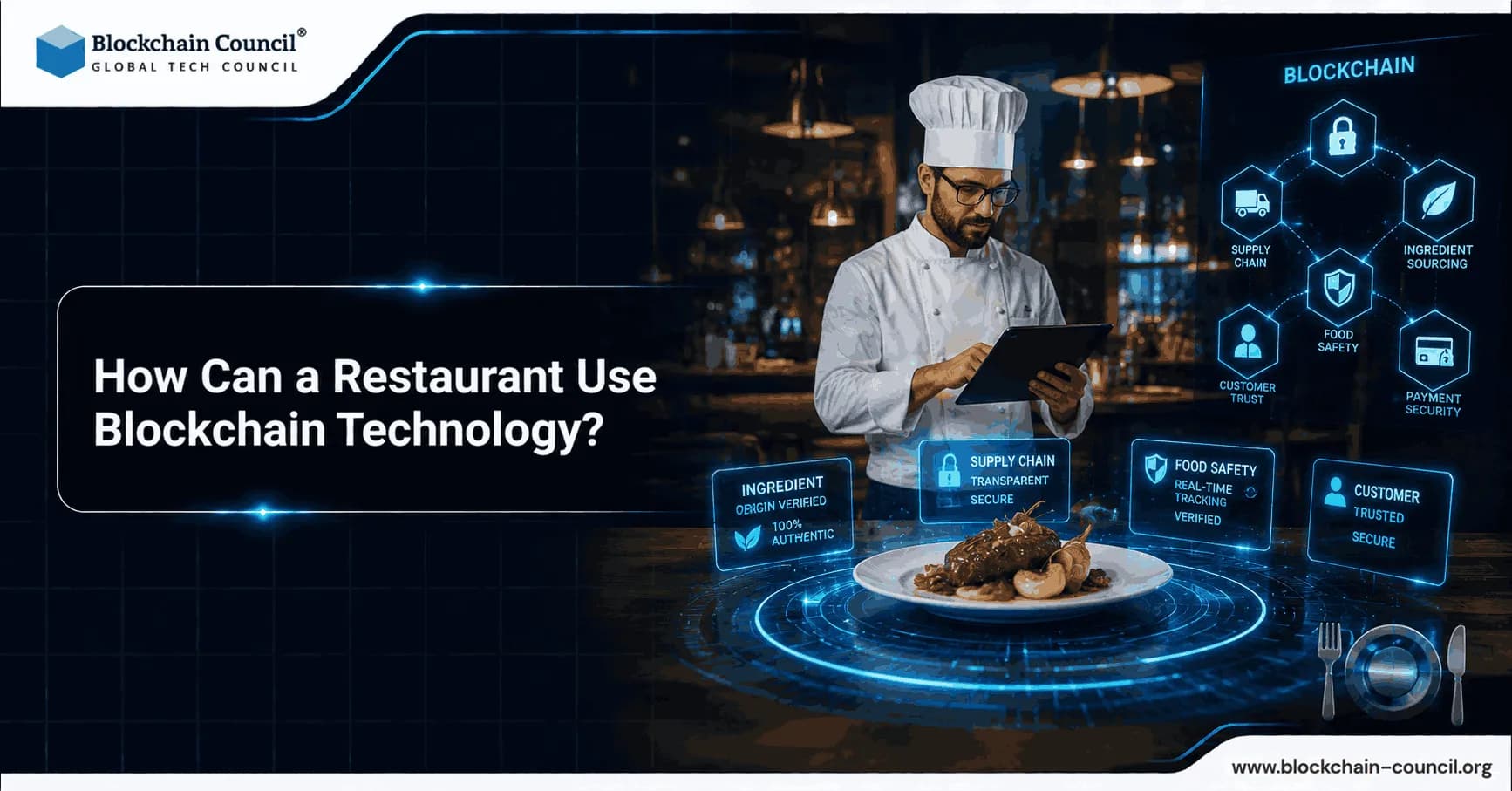
Ask a diner why they chose one restaurant over another, and "I trust where the food comes from" is showing up in that answer more often every year. Food recalls cost the global industry billions annually, and a growing share of that cost traces back to one root problem: supply chains that are too global, too layered, and too opaque to track quickly when something goes wrong. Blockchain is emerging as a direct answer to that gap the global blockchain food traceability market is projected to grow from roughly $3-4 billion in 2026 to tens of billions within the next decade, and restaurants are increasingly part of that shift, not just the farms and processors behind them.
For restaurant owners and operators exploring this technology for the first time, building a working understanding of how blockchain actually functions is the logical starting point. A recognized Certified Blockchain Expert credential is a common route for hospitality professionals and consultants who want to move from "I've heard blockchain helps with food safety" to genuinely understanding the mechanics behind it.

Ingredient Traceability: The Foundation of Restaurant Blockchain Use
This is where blockchain delivers the most immediate, practical value for restaurants. Instead of relying on paper invoices and disconnected supplier records, a restaurant can use blockchain to track every ingredient's journey from farm to plate on a single, shared digital ledger that every party in the chain can see in real time.
The practical benefits are significant:
Faster contamination response. If a food safety issue arises, staff can trace the exact batch and source of an ingredient in minutes instead of days, allowing much faster, more targeted recalls instead of pulling entire product lines out of caution.
Fraud-resistant sourcing claims. Because blockchain records can't be quietly altered, it becomes far harder for a supplier to mislabel conventional produce as organic, or substitute a cheaper cut of meat while billing for a premium one.
Cross-party transparency. Farmers, distributors, and the restaurant itself all share visibility into the same verified record, reducing disputes over what was actually delivered, when, and at what quality.
Retailers and large foodservice groups are increasingly driving this shift themselves, requiring suppliers to adopt blockchain-based traceability as a condition of doing business which means independent restaurants sourcing from these supply chains are likely to encounter blockchain-tracked ingredients whether or not they've adopted the technology directly.
Managing supplier relationships, verified sourcing data, and multi-party traceability systems is a specialized skill set of its own. Restaurant groups and hospitality operators serious about this shift often pursue a Certified Blockchain & Supply Chain Professional credential to understand how blockchain-based sourcing actually integrates with real-world procurement and vendor management.
Smart Contracts for Supplier Payments and Inventory
Beyond tracking where food comes from, blockchain can automate how restaurants pay for it. Smart contracts allow a restaurant and its suppliers to set pre-agreed conditions delivery confirmation, quality verification, temperature compliance during transport that trigger payment automatically once met, without manual invoice processing or payment delays on either side.
This has a few direct operational benefits:
Faster, more reliable supplier payments, which can improve pricing and priority treatment from vendors who value predictable cash flow.
Reduced disputes over delivery quality or quantity, since the conditions for payment are verified against the same shared record both parties can see.
Streamlined supply chain financing, simplifying and speeding up the transactions and payment cycles that traditionally slow down restaurant-supplier relationships.
Blockchain Loyalty Programs and Crypto Payments in the Middle of the Guest Experience
Restaurants don't just use blockchain behind the scenes it's increasingly shaping the customer-facing side of the business too.
Tokenized loyalty programs Traditional punch cards and app-based points systems are being replaced in some restaurants by blockchain-based loyalty tokens, which customers can redeem, transfer, or even trade in ways a closed-loop app simply can't support. Because these tokens live on a blockchain rather than a single restaurant's private database, they can be designed to work across multiple locations or even partner businesses.
Cryptocurrency and stablecoin payments A growing number of restaurants now accept cryptocurrency or stablecoin payments directly, appealing to a segment of tech-forward customers while also reducing the transaction fees associated with traditional card processing for participating locations.
NFT-based gift cards and exclusive access Some restaurants are experimenting with NFTs as a modern twist on gift cards or VIP membership passes verifiable, tradeable, and harder to counterfeit than a traditional paper or plastic card.
Transparent "farm to table" storytelling Perhaps the most customer-facing application of all: restaurants can let diners scan a QR code on the menu to see the actual verified journey of their meal's ingredients which farm the produce came from, how it was transported, and when it arrived. This kind of transparency directly builds the kind of trust that influences repeat visits.
Implementing systems like these loyalty tokens, crypto payment rails, NFT infrastructure requires real technical execution, not just a vendor pitch deck. A structured Tech Certification in blockchain development gives restaurant tech teams and IT partners the grounding needed to evaluate vendors properly and implement these systems securely rather than relying entirely on third-party promises.
Food Safety Compliance and Regulatory Alignment
Regulatory pressure is another major force pushing blockchain adoption in the restaurant supply chain. Frameworks like the EU's Farm to Fork Strategy and the U.S. FDA's Food Safety Modernization Act Rule 204 are pushing food producers, processors, and retailers toward digital traceability systems that can produce verified records quickly during an inspection or recall event. Restaurants sourcing from compliant suppliers benefit indirectly inheriting more reliable, better-documented ingredient data without having to build the traceability infrastructure themselves.
Real-World Momentum Behind Restaurant Blockchain Adoption
This isn't a theoretical trend. Academic researchers, including a project at the University of Missouri, have been actively studying how blockchain can enhance restaurant-level food traceability and transparency, reflecting genuine institutional interest beyond vendor marketing. Meanwhile, major technology and enterprise software providers continue expanding blockchain-based food traceability platforms specifically built to serve restaurant and foodservice supply chains, signaling that this infrastructure is maturing well past the pilot-project stage.
Final Thoughts
Blockchain isn't reinventing what makes a great restaurant it's reinforcing the trust that's always been at the center of the dining experience. From verifying exactly where an ingredient came from to automating supplier payments and building loyalty programs customers actually value, the technology gives restaurants concrete tools to operate more transparently and efficiently at the same time.
Building that trust with guests, though, takes more than good technology behind the scenes it takes clear, honest communication about what a restaurant is actually doing differently. That's where a well-rounded Marketing Certification rounds out the picture, helping restaurant owners and marketing teams translate blockchain-backed sourcing and loyalty programs into a story guests genuinely connect with, rather than a technical feature nobody notices.
FAQs
1. How can blockchain be used in restaurants?
Blockchain can help restaurants improve food traceability, supply chain transparency, inventory management, digital payments, customer loyalty programs, supplier verification, and food safety. It provides secure and tamper-evident records that help restaurants operate more efficiently and build customer trust.
2. Why is blockchain important for the restaurant industry?
Restaurants depend on reliable suppliers, food safety, inventory accuracy, and customer trust. Blockchain creates transparent records of sourcing, transportation, storage, and payments, helping reduce fraud, improve accountability, and streamline operations.
3. How does blockchain work in a restaurant?
Blockchain records key information throughout the food supply chain, including sourcing, transportation, storage conditions, supplier certifications, inventory movements, and customer transactions. Smart contracts can automate payments and procurement, while consumers may verify product origins through QR codes or digital records.
4. How does blockchain improve food traceability?
Blockchain allows restaurants to trace ingredients from farms and suppliers to the kitchen. If contamination or quality issues arise, affected batches can be identified more quickly, helping reduce waste and improve food safety.
5. Can blockchain improve food safety?
Yes. Blockchain creates verifiable records of food handling, storage, transportation, and supplier certifications. Combined with inspections and quality control processes, it can improve the ability to monitor food safety throughout the supply chain.
6. How does blockchain reduce food waste?
Blockchain improves inventory visibility, expiration date tracking, and supply chain coordination. When integrated with inventory management systems, restaurants can better forecast demand, rotate stock efficiently, and reduce spoilage.
7. Can blockchain improve supplier management?
Yes. Restaurants can use blockchain to verify supplier certifications, delivery records, quality inspections, sustainability claims, and transaction histories, making supplier relationships more transparent and easier to audit.
8. How do smart contracts help restaurants?
Smart contracts can automate supplier payments, purchase orders, delivery confirmations, loyalty rewards, franchise royalty payments, subscription meal services, and other routine business processes based on predefined conditions.
9. Can blockchain improve restaurant loyalty programs?
Yes. Blockchain enables token-based loyalty programs where customers earn digital rewards for purchases. Depending on the program's design, rewards may be easier to manage, redeem, or use across participating businesses.
10. How does blockchain support restaurant payments?
Blockchain can support cryptocurrency payments, stablecoin transactions, digital wallets, and faster settlement between customers, restaurants, suppliers, and delivery partners. Adoption depends on local regulations and customer demand.
11. Can blockchain improve delivery services?
Yes. Blockchain can record delivery routes, timestamps, temperature logs, and handoff events, improving transparency for food delivery operations and helping verify that products were handled correctly.
12. Which types of restaurants can benefit from blockchain?
Fast-food chains, fine dining restaurants, cafés, cloud kitchens, catering companies, franchise restaurants, hotel restaurants, meal delivery services, and restaurant supply networks can all benefit from blockchain-based solutions.
13. What are the advantages of blockchain for restaurants?
Benefits include improved food traceability, enhanced customer trust, better supplier transparency, reduced fraud, automated payments, stronger inventory management, faster recalls, secure loyalty programs, improved compliance, and greater operational efficiency.
14. What challenges exist when implementing blockchain?
Challenges include implementation costs, integration with existing restaurant management systems, staff training, supplier participation, scalability, interoperability, regulatory compliance, cybersecurity, and maintaining accurate data throughout the supply chain.
15. Can blockchain guarantee food quality?
No. Blockchain cannot guarantee that food is fresh or safe. It records and verifies information about sourcing, handling, and distribution. Food quality still depends on proper farming, storage, transportation, hygiene, and kitchen practices.
16. What common mistakes should restaurant owners avoid?
Common mistakes include assuming blockchain alone solves food safety issues, entering inaccurate data, storing sensitive customer information directly on public blockchains, neglecting cybersecurity, skipping smart contract audits, and adopting blockchain without a clearly defined business objective.
17. What are best practices for implementing blockchain in restaurants?
Best practices include integrating blockchain with inventory and point-of-sale (POS) systems, using IoT sensors for cold chain monitoring, storing sensitive customer data off-chain, validating supplier information, conducting regular security audits, training employees, and complying with food safety and privacy regulations.
18. How does blockchain fit into smart restaurants?
Blockchain complements artificial intelligence (AI), Internet of Things (IoT), cloud computing, digital payments, robotics, predictive analytics, automated inventory systems, and customer relationship management (CRM) platforms to create more efficient and transparent restaurant operations.
19. What trends are shaping blockchain in restaurants in 2025-2026?
Major trends include AI-powered demand forecasting, blockchain-based food traceability, Digital Product Passports (DPPs), IoT-enabled cold chain monitoring, tokenized loyalty programs, decentralized identity (DID) for suppliers, ESG reporting, sustainable sourcing verification, stablecoin payments, and blockchain-integrated delivery platforms.
20. What is the future of blockchain in the restaurant industry?
Blockchain is expected to become an increasingly valuable technology for improving transparency, food safety, supply chain efficiency, and customer trust across the restaurant industry. Rather than replacing existing restaurant management software, blockchain will integrate with AI, IoT, cloud platforms, and digital payment systems to create smarter and more resilient food service operations. As consumers increasingly want to know where their food comes from and how it was handled, blockchain can provide trusted verification throughout the journey from farm to table. After all, diners are much happier reading a menu than wondering where the ingredients took their last unexpected detour.
Related Articles
View All
Blockchain
Blockchain Train Technology: Rail Use Cases, Benefits, and Limits
Blockchain train technology is moving from pilots to practical rail use cases in freight, ticketing, asset records, IoT security, and audit trails.

Blockchain
Blockchain Explained: The Technology Changing How We Trust & Transact
Blockchain explained from the ground up: what it is, why it was created, centralised vs decentralised systems, how blocks, nodes, and ledgers work, how data is stored, security, real-world examples, and how blockchain compares with traditional databases.

Blockchain
Blockchain in Banks: Use Cases, Benefits, Risks, and the AI Connection
Explore how blockchain in banks is reshaping payments, trade finance, tokenized deposits, KYC, AML, and AI-driven risk workflows.
Trending Articles
The Role of Blockchain in Ethical AI Development
How blockchain technology is being used to promote transparency and accountability in artificial intelligence systems.
How Blockchain Secures AI Data
Understand how blockchain technology is being applied to protect the integrity and security of AI training data.

Can DeFi 2.0 Bridge the Gap Between Traditional and Decentralized Finance?
The next generation of DeFi protocols aims to connect traditional banking with decentralized finance ecosystems.