

5 Critical Components of Blockchain Technology
 Toshendra Kumar Sharma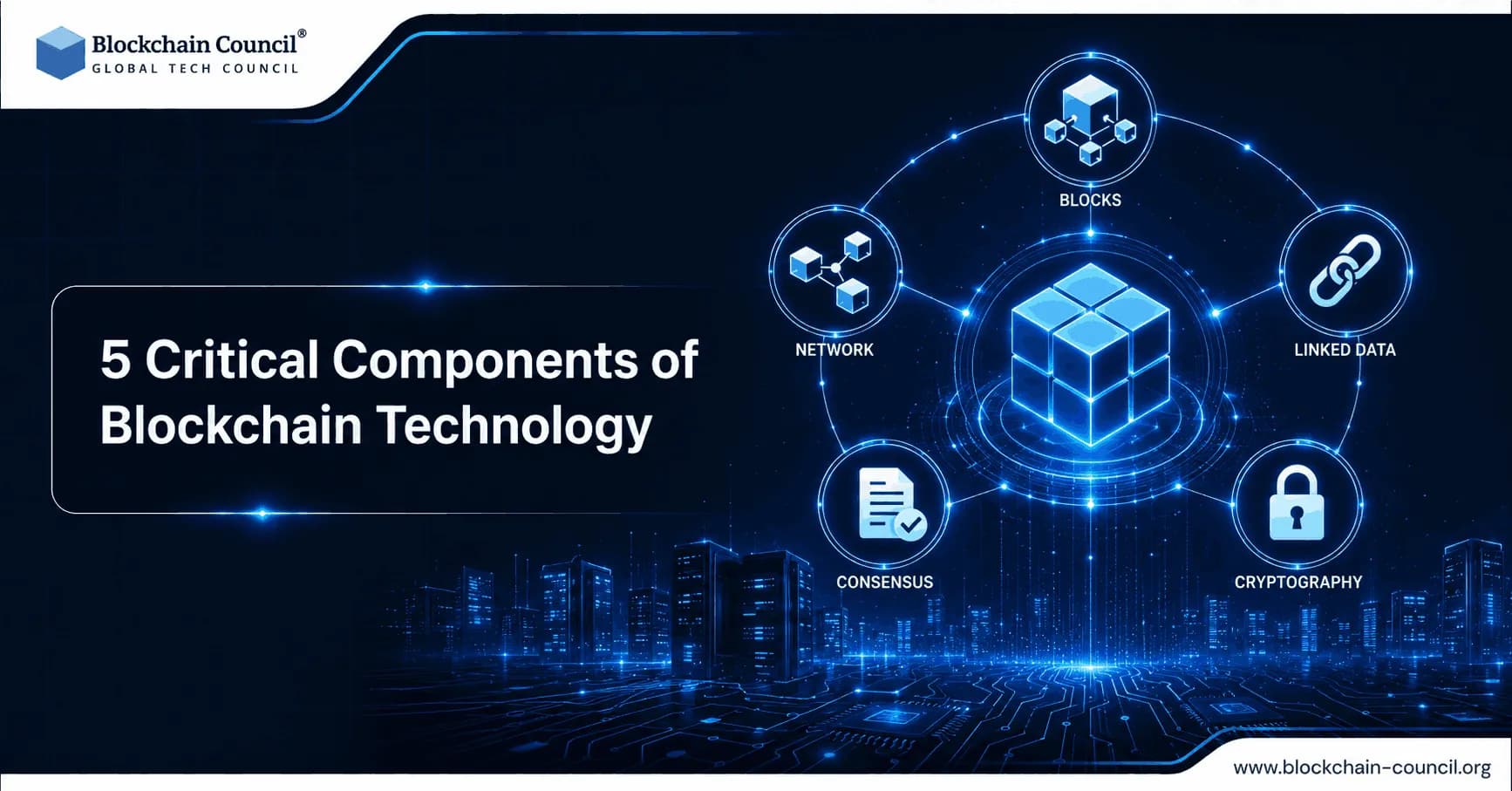
Blockchain technology has become one of the most influential innovations of the digital era, transforming industries such as finance, healthcare, supply chain, real estate, cybersecurity, and government services. While many people associate blockchain with cryptocurrencies like Bitcoin and Ethereum, its true value lies in the underlying architecture that enables secure, transparent, and decentralized data management. Every blockchain network, regardless of its application, depends on several core components that work together to maintain trust, integrity, and reliability.
Understanding these building blocks is essential for anyone interested in blockchain development, enterprise adoption, or digital transformation. Businesses increasingly rely on blockchain to automate workflows, reduce fraud, strengthen security, and improve collaboration across multiple stakeholders. As demand for blockchain expertise continues to grow, many professionals begin their learning journey with the Certified Blockchain Expert certification from Blockchain Council, which provides practical knowledge of blockchain architecture, consensus mechanisms, smart contracts, enterprise applications, and decentralized systems.

In this article, we'll explore the five critical components of blockchain technology, explain how each one contributes to the overall ecosystem, and examine why these components are fundamental to blockchain's success across industries.
What Are the Core Components of Blockchain Technology?
Blockchain is much more than a digital ledger. It is a combination of interconnected technologies that work together to create secure, decentralized, and tamper-resistant systems. Each component plays a specific role in ensuring that transactions remain accurate, transparent, and trustworthy without relying on a central authority.
Although different blockchain platforms may implement these components in unique ways, the underlying principles remain remarkably consistent. Understanding these core elements provides valuable insight into how blockchain powers cryptocurrencies, decentralized finance, enterprise applications, supply chain systems, and digital identity solutions.
Professionals who build blockchain applications need a strong understanding of these foundational concepts before developing decentralized software or smart contracts. Many developers strengthen these practical skills through the Certified Blockchain Developer certification, which focuses on blockchain programming, decentralized application development, smart contract implementation, blockchain integration, and enterprise deployment.
Quick Answer
The five critical components of blockchain technology are distributed ledger technology, cryptography, consensus mechanisms, smart contracts, and decentralized networking. Together, these components create secure, transparent, and reliable blockchain systems that eliminate the need for centralized intermediaries while protecting data integrity and enabling trusted digital transactions.
1. Distributed Ledger Technology (DLT)
The distributed ledger is the foundation of every blockchain network.
Unlike traditional databases where information is stored on a single central server, blockchain distributes identical copies of the ledger across numerous computers, known as nodes. Every authorized participant maintains a synchronized version of the same transaction history.
Whenever a new transaction occurs, the network validates it before updating every copy of the ledger. This shared record significantly reduces inconsistencies because participants no longer rely on separate databases that require constant reconciliation.
Distributed ledger technology also improves system resilience. Since identical records exist across multiple computers, the network remains operational even if individual nodes experience failures. This decentralized architecture helps strengthen security while reducing dependence on a single point of control.
2. Cryptography
Cryptography is responsible for protecting blockchain data and ensuring transaction security.
Every transaction is encrypted using advanced mathematical algorithms that verify authenticity while preventing unauthorized modifications. Blockchain uses cryptographic hash functions to convert transaction data into unique digital fingerprints.
Each block contains the hash of the previous block, linking the entire blockchain together. If someone attempts to alter even a small piece of recorded information, the cryptographic hash changes immediately, making unauthorized modifications easily detectable.
Public and private key cryptography further enhances blockchain security. Users sign transactions with private keys while others verify them using corresponding public keys. This system enables secure ownership verification without revealing sensitive personal information.
Without cryptography, blockchain would not be able to provide the trust and security that make decentralized systems possible.
3. Consensus Mechanisms
Consensus mechanisms allow decentralized networks to agree on which transactions are valid.
Since blockchain operates without a central authority, participating nodes must collectively verify transactions before adding them to the ledger. Consensus algorithms provide the rules that ensure every participant reaches the same decision.
Different blockchain networks use different consensus models.
Proof of Work secures networks through computational validation, while Proof of Stake selects validators based on the cryptocurrency they stake. Other blockchain platforms implement alternative consensus models designed to improve scalability, energy efficiency, or transaction speed.
Regardless of the specific approach, the objective remains the same: ensuring that only legitimate transactions become permanent parts of the blockchain while preventing double spending and fraudulent activity.
4. Smart Contracts
Smart contracts are self-executing digital agreements stored directly on blockchain networks.
Rather than relying on manual execution, smart contracts automatically perform predefined actions once agreed conditions have been satisfied. These conditions are written into code before deployment, ensuring consistent execution without requiring intermediaries.
Smart contracts support numerous business applications, including financial transactions, insurance claims, supply chain automation, digital identity management, healthcare records, and decentralized finance.
For example, a smart contract can automatically release payment after a shipment has been verified or transfer ownership of a digital asset once payment has been received. This automation reduces administrative work while improving accuracy and operational efficiency.
Building secure smart contracts requires expertise in blockchain programming, software engineering, distributed systems, cybersecurity, APIs, cloud computing, and enterprise architecture. Professionals seeking broader technical capabilities across these rapidly evolving technologies often pursue a Tech Certification, helping them build practical skills that support blockchain implementation within modern organizations.
5. Decentralized Network Infrastructure
The final critical component is the decentralized network itself.
Blockchain operates through a network of interconnected computers rather than a single centralized server. Every participating node helps validate transactions, maintain the distributed ledger, and ensure continuous network availability.
This decentralized architecture increases fault tolerance because there is no single point of failure that attackers can exploit. Even if individual nodes experience technical issues, the remaining network continues functioning normally.
Decentralization also improves transparency. Every authorized participant accesses the same verified information, reducing disputes and creating greater trust among organizations that may not have existing business relationships.
The decentralized network serves as the foundation that connects all other blockchain components, enabling secure collaboration across industries worldwide.
Why These Components Matter Together
Each component plays an essential role individually, but blockchain achieves its full potential only when all five components work together.
Distributed ledgers provide shared data, cryptography secures information, consensus mechanisms validate transactions, smart contracts automate business logic, and decentralized networks maintain continuous system reliability.
Together, these technologies create trusted digital ecosystems capable of supporting everything from cryptocurrencies and decentralized finance to supply chain management, healthcare records, government services, digital identity, and enterprise automation.
This integrated architecture explains why blockchain continues attracting attention across industries seeking secure, transparent, and efficient digital infrastructure.
Real-World Applications
Organizations around the world are already applying these blockchain components in practical business environments.
Financial institutions use blockchain to improve payment processing and cross-border settlements. Supply chain companies rely on distributed ledgers to verify product authenticity and improve traceability. Healthcare providers secure patient records while maintaining controlled data sharing between authorized organizations.
Governments continue exploring blockchain for digital identity systems, land registries, licensing, and public records. Manufacturers, retailers, logistics providers, and technology companies are also integrating blockchain into enterprise operations to improve transparency and reduce operational inefficiencies.
These real-world applications demonstrate that blockchain's core components extend far beyond cryptocurrency, supporting digital transformation across nearly every major industry.
Final Thoughts
Blockchain technology owes its success to the seamless interaction of its five critical components. Distributed ledgers, cryptography, consensus mechanisms, smart contracts, and decentralized networking together create secure, transparent, and highly reliable systems capable of transforming how businesses exchange information and conduct digital transactions.
As blockchain adoption accelerates across industries, organizations need professionals who not only understand these technical foundations but can also communicate their value to customers, partners, and decision-makers. Successfully introducing blockchain solutions requires strong business strategy, customer education, and effective market positioning in addition to technical expertise. Many professionals strengthen these complementary skills by pursuing a Marketing Certification, helping them better understand digital strategy, technology adoption, and customer engagement in an increasingly competitive marketplace.
Understanding these five core blockchain components provides more than technical knowledge it offers a solid foundation for anyone looking to build, implement, or lead blockchain initiatives that drive innovation across the modern digital economy.
FAQs
1. What are the five critical components of blockchain technology?
The five fundamental components of blockchain technology are:
Distributed Ledger
Consensus Mechanism
Cryptography
Smart Contracts
Decentralized Network (Nodes)
Together, these components enable blockchain networks to securely record, verify, and share data without relying on a central authority.
2. What is a distributed ledger?
A distributed ledger is a shared digital database that is replicated across multiple computers (nodes). Every authorized participant maintains a synchronized copy of the ledger, ensuring transparency and reducing reliance on a single central database.
3. Why is a distributed ledger important?
A distributed ledger improves transparency, fault tolerance, and data availability. Since multiple copies of the ledger exist across the network, there is no single point of failure, and unauthorized changes are easier to detect.
4. What is a consensus mechanism?
A consensus mechanism is the process blockchain participants use to agree on the validity of transactions before adding them to the blockchain. It ensures that all network participants maintain a consistent and trusted version of the ledger.
5. What are the most common blockchain consensus mechanisms?
Popular consensus mechanisms include:
Proof of Work (PoW)
Proof of Stake (PoS)
Delegated Proof of Stake (DPoS)
Proof of Authority (PoA)
Practical Byzantine Fault Tolerance (PBFT)
Proof of History (PoH) (used alongside consensus in some networks)
Proof of Space (PoSpace)
Each mechanism offers different trade-offs in terms of security, scalability, and energy consumption.
6. What role does cryptography play in blockchain?
Cryptography secures blockchain transactions using hashing algorithms, digital signatures, and public-private key encryption. It protects data integrity, authenticates users, and helps prevent unauthorized modifications.
7. What are public and private keys?
A public key functions like a wallet address that others can use to send digital assets. A private key is a confidential cryptographic key that authorizes transactions and proves ownership of blockchain assets. Private keys should never be shared.
8. What is hashing in blockchain?
Hashing is a cryptographic process that converts data into a fixed-length string of characters called a hash. Even a small change to the original data produces a completely different hash, making blockchain records tamper-evident.
9. What are smart contracts?
Smart contracts are self-executing programs stored on a blockchain that automatically perform predefined actions when agreed conditions are met. They automate processes such as payments, lending, supply chain tracking, insurance claims, and decentralized finance (DeFi) operations.
10. Why are smart contracts important?
Smart contracts reduce manual intervention, improve efficiency, automate business workflows, minimize certain administrative costs, and increase transparency by executing predefined rules without relying solely on intermediaries.
11. What are blockchain nodes?
Nodes are computers that participate in the blockchain network by storing copies of the ledger, validating transactions, sharing information with other nodes, and helping maintain network security and decentralization.
12. Why are nodes important?
Nodes ensure that blockchain networks remain decentralized, resilient, and secure. Because many independent participants maintain the ledger, the network continues operating even if some nodes go offline.
13. How do these five components work together?
Transactions are initiated using cryptographic keys, verified through a consensus mechanism, recorded in a distributed ledger, executed automatically through smart contracts when applicable, and maintained by decentralized nodes. Together, these components create a secure and transparent blockchain ecosystem.
14. What are the benefits of these blockchain components?
Key benefits include enhanced security, transparency, decentralization, immutability, automation, fault tolerance, efficient record management, reduced fraud, and improved trust between participants.
15. What challenges do these components face?
Challenges include scalability, interoperability, energy consumption for some consensus models, governance complexity, regulatory uncertainty, smart contract vulnerabilities, implementation costs, and balancing decentralization with performance.
16. What common misconceptions exist about blockchain components?
Common misconceptions include believing that blockchain stores all data on-chain, that smart contracts are legally enforceable in every jurisdiction, that blockchain is completely anonymous, or that one consensus mechanism is universally better than all others. The best design depends on the application's goals.
17. What are best practices when building blockchain applications?
Best practices include selecting the appropriate consensus mechanism, conducting independent smart contract audits, storing sensitive information off-chain where appropriate, implementing strong encryption, following secure coding standards, ensuring regulatory compliance, and designing for scalability and interoperability.
18. How do these components support enterprise blockchain?
Enterprise blockchains often combine distributed ledgers, permissioned consensus mechanisms, cryptographic security, smart contracts, and controlled node participation to support industries such as banking, healthcare, logistics, insurance, and government.
19. What trends are shaping blockchain technology in 2025-2026?
Major trends include tokenization of real-world assets (RWAs), zero-knowledge proofs (ZKPs), decentralized identity (DID), AI and blockchain integration, modular blockchain architectures, Layer 2 scaling, cross-chain interoperability, enterprise blockchain adoption, sustainable consensus mechanisms, and decentralized physical infrastructure networks (DePIN).
20. What is the future of blockchain's core components?
The five core components of blockchain will continue evolving to support faster, more scalable, secure, and user-friendly decentralized systems. Future innovations are expected to improve interoperability, privacy, automation, and enterprise adoption while preserving the principles of transparency and trust. Although new technologies will continue to emerge, distributed ledgers, consensus, cryptography, smart contracts, and decentralized networks are likely to remain the foundation of blockchain ecosystems for years to come. After all, a blockchain without these building blocks would be rather like a house built with excellent paint but no walls to apply it to.
Related Articles
View All
Blockchain
Blockchain Train Technology: Rail Use Cases, Benefits, and Limits
Blockchain train technology is moving from pilots to practical rail use cases in freight, ticketing, asset records, IoT security, and audit trails.

Blockchain
Why Companies Are Investing in Blockchain Technology?
Explore why companies are investing in blockchain technology to reduce costs, improve trust, secure data, modernize payments, and create new business models.

Blockchain
Blockchain Certification Programs You Can Join Online
Discover the best blockchain certification programs you can join online. Learn blockchain fundamentals, smart contracts, enterprise blockchain, and career opportunities with globally recognized certifications.
Trending Articles
How Blockchain Secures AI Data
Understand how blockchain technology is being applied to protect the integrity and security of AI training data.
What is AWS? A Beginner's Guide to Cloud Computing
Everything you need to know about Amazon Web Services, cloud computing fundamentals, and career opportunities.
Claude AI Tools for Productivity
Discover Claude AI tools for productivity to streamline tasks, manage workflows, and improve efficiency.