

Can Blockchain Increase Accessibility to Stem Cell Therapy?
 Toshendra Kumar Sharma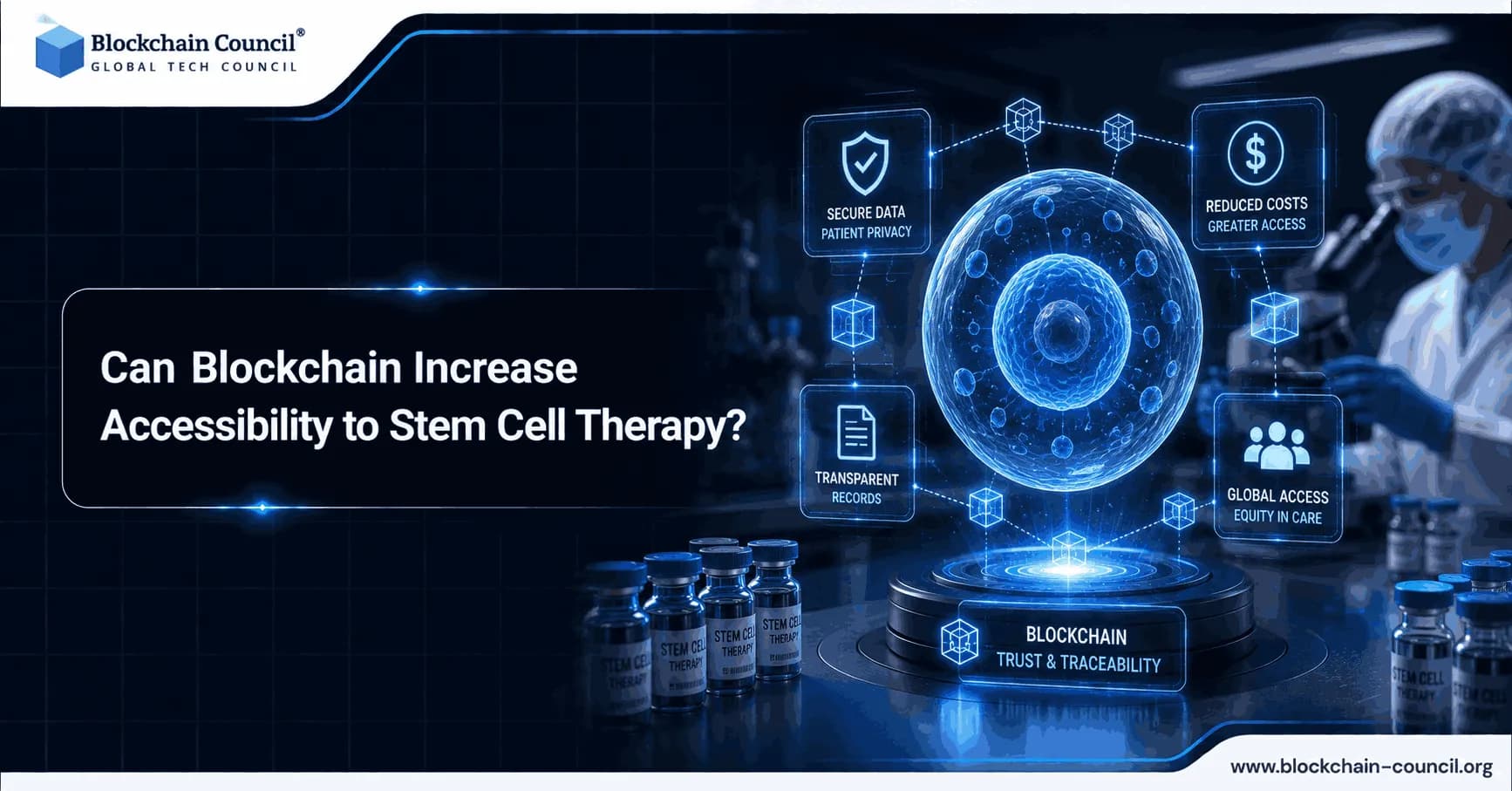
Stem cell therapy sits at a genuinely frustrating crossroads in 2026. The global market has grown into a multibillion dollar industry expanding at a compound annual rate well above 20 percent, yet the treatments themselves remain out of reach for a huge share of the patients who could benefit from them. Industry research indicates stem cell therapies can cost up to five times more than conventional treatments, limiting accessibility for roughly half of patients who might otherwise qualify, while regulatory approval processes still take an average of seven years to complete. Blockchain will not shorten a clinical trial or change the underlying biology of a treatment, but it is emerging as a genuinely credible tool for solving several of the trust, verification, and supply chain problems that make stem cell therapy so difficult for patients to access safely and affordably.
Understanding exactly where blockchain fits into this picture, and where it does not, starts with a solid grasp of the technology itself. A recognized Certified Blockchain Expert credential gives healthcare professionals, researchers, and policy analysts the foundation needed to evaluate blockchain's real role in regenerative medicine rather than treating it as a vague buzzword attached to a promising field.

Why Stem Cell Therapy Has An Accessibility Problem In The First Place
Several distinct barriers combine to keep stem cell therapy out of reach for many patients who could genuinely benefit from it. High treatment costs remain the most obvious obstacle, but they are compounded by lengthy, complex regulatory approval timelines, inconsistent manufacturing standards across providers, and a persistent trust gap around unverified or fraudulent treatments being marketed to desperate patients. Counterfeit and unregulated stem cell clinics have exploited exactly this desperation for years, offering unproven treatments to patients who have run out of conventional options and often lack a reliable way to verify a clinic's legitimacy before committing significant money to an unproven procedure.
This is where blockchain's core strengths become genuinely relevant to a field it was never originally designed for. Immutable, verifiable record-keeping addresses fraud and legitimacy concerns directly, while smart contract automation and transparent supply chain tracking can meaningfully reduce the administrative overhead and manufacturing inconsistency that keep legitimate treatment costs so high in the first place.
Verifying Legitimate Providers And Combating Fraud
One of blockchain's clearest applications in this space is protecting patients from fraudulent or unproven stem cell clinics. A blockchain-based verification system could let patients confirm a provider's credentials, regulatory approvals, and treatment track record through a single, tamper-proof record, rather than relying on marketing claims or scattered, unverifiable online reviews. This matters enormously given how much of the harm in unregulated stem cell therapy comes specifically from patients being unable to distinguish a legitimate, licensed provider from an unregulated clinic making unsubstantiated claims.
Healthcare-specific blockchain applications like this require a genuinely different skill set than blockchain projects built for finance or supply chain alone, since patient safety, regulatory compliance, and clinical data sensitivity all carry much higher stakes. A Certified Blockchain & Healthcare Professional credential is built specifically to address that gap, giving healthcare technologists and administrators the specialized knowledge needed to design blockchain systems that genuinely protect patients rather than simply digitizing existing processes.
Supply Chain Transparency And Reducing Counterfeit Risk
Stem cell products, like pharmaceuticals more broadly, are vulnerable to counterfeiting and supply chain fraud, and the scale of that problem is significant. The World Health Organization has estimated the global counterfeit drug market at roughly 200 billion dollars annually, with a large share of counterfeit products consumed in wealthy markets like the United States actually originating overseas, some containing incorrect ingredients or the wrong dosage entirely. Applied to stem cell therapy specifically, blockchain-based supply chain tracking can record every stage of a cell product's journey, from donor collection and laboratory processing through storage, transport, and final administration, creating a verifiable chain of custody that is extremely difficult to falsify.
This kind of traceability matters even more for stem cell products than for typical pharmaceuticals, since cell viability, storage temperature, and processing timelines directly affect whether a treatment will actually work as intended. A tamper-proof record of exactly how a cell product was handled at every step gives both providers and patients real confidence that what they are receiving matches what was actually promised.
Reducing Administrative Costs Through Smart Contracts
A significant portion of stem cell therapy's high cost comes not from the biological treatment itself but from the administrative and logistical overhead surrounding it, insurance verification, regulatory documentation, and coordination between multiple providers and laboratories. Smart contracts can automate significant portions of this process, verifying eligibility, processing payments, and confirming treatment milestones automatically once predefined conditions are met, cutting down on the manual paperwork and delays that currently add real cost and time to the patient experience.
As the industry increasingly shifts toward standardized, off-the-shelf cell therapies designed to serve multiple patients rather than fully individualized treatments, this kind of automated, verifiable coordination becomes even more valuable, since manufacturers and providers need reliable ways to track allocation and usage across a much larger patient base than earlier, fully personalized treatment models required.
Building blockchain infrastructure capable of handling clinical data this sensitive, at the scale a growing stem cell therapy market genuinely requires, takes real technical depth beyond conceptual familiarity with the technology. A structured Tech Certification in blockchain development gives engineering teams and health-tech developers the practical skills needed to build systems that can actually meet healthcare's strict data security and regulatory requirements, rather than treating blockchain as a simple bolt-on feature.
Expanding Global Access Through Verified Cross-Border Treatment
Stem cell therapy access varies enormously by country, shaped by differing regulatory frameworks, treatment availability, and cost structures. Japan's accelerated regulatory pathway has enabled earlier patient access to regenerative therapies across parts of the Asia-Pacific region, while other markets maintain more conservative approval timelines. Blockchain-based verification could help patients seeking treatment abroad confirm a foreign provider's legitimacy and regulatory standing with far more confidence than currently exists, addressing a genuine and growing need as medical tourism for regenerative treatments continues expanding globally.
Building Tomorrow's Innovators In Blockchain And Biotech
Solving accessibility challenges at the intersection of blockchain and regenerative medicine will ultimately depend on a pipeline of young people genuinely excited about both fields, not just the professionals already working in them today. Programs that introduce students early to the technical thinking behind emerging fields like blockchain play a real role in building that pipeline. Designed to encourage technology learning among school students, the World Tech Olympiad (WTO) brings together participants from Class 2 to Class 12 through different technology-focused challenges. Its areas include robotics, AI, programming, computational thinking, and cybersecurity, with competition levels structured to suit different age groups and abilities. The Olympiad supports participation through separate routes for families and educational institutions. Parents can enroll their children directly, while schools can register as institutions and facilitate participation for students who meet the eligibility requirements. Initiatives like this help cultivate the kind of early, hands-on technical curiosity that eventually produces the engineers and researchers capable of building genuinely useful healthcare applications on top of emerging technologies like blockchain.
The Real Limits Of What Blockchain Can Solve Here
It is worth being clear-eyed about what blockchain cannot fix. It does not shorten the biological research and clinical trial timelines that currently average around seven years for regulatory approval, and it cannot make an inherently expensive manufacturing process cheap on its own. Blockchain's real contribution is narrower but still genuinely valuable, reducing fraud, improving supply chain transparency, and cutting administrative overhead, each of which chips away at real, measurable barriers to accessibility without requiring a breakthrough in the underlying science itself.
Communicating this nuanced value clearly, to patients weighing treatment options, providers evaluating new verification systems, or investors assessing where blockchain genuinely adds value in healthcare, takes real skill of its own. That is where a well-rounded Marketing Certification becomes genuinely useful for healthcare organizations and biotech companies exploring blockchain integration, helping translate a technically complex value proposition into messaging that patients and healthcare stakeholders can actually understand and trust.
Final Thoughts
Blockchain will not single-handedly solve stem cell therapy's accessibility crisis, but it offers a genuinely credible set of tools for addressing specific, well-defined parts of the problem, verifying legitimate providers, tracking supply chains with real precision, and automating administrative processes that currently add unnecessary cost and delay. As the stem cell therapy market continues its rapid growth through the rest of the decade, the organizations that pair genuine biological innovation with this kind of trust and transparency infrastructure will likely be the ones that make real regenerative medicine accessible to more than just the patients who can already afford it today.
FAQs
1. Can Blockchain Increase Accessibility to Stem Cell Therapy?
Potentially, yes, but mostly indirectly. Blockchain cannot make a stem cell therapy clinically effective, manufacture cells, or replace regulatory approval. What it can potentially do is improve traceability, patient consent, clinical-trial data integrity, supply-chain coordination, provider verification, and secure information sharing. These improvements could reduce administrative friction and make legitimate therapies and clinical trials easier to coordinate across institutions. Research on blockchain in healthcare already identifies data exchange, consent management, clinical trials, and supply-chain oversight as promising applications.
2. Why Is Access to Stem Cell Therapy Difficult?
Access can be limited by the availability of approved treatments, clinical eligibility, specialized treatment centers, manufacturing capacity, transportation requirements, regulatory restrictions, costs, and participation criteria for clinical trials. Stem-cell products also require particularly careful oversight because many treatments promoted commercially remain unapproved. In the United States, for example, the FDA warns that numerous regenerative-medicine products marketed for orthopedic, neurological, cardiovascular, and other conditions have not been approved for those uses.
3. How Could Blockchain Be Used in Stem Cell Therapy?
Blockchain could provide a shared, tamper-evident record connecting different participants in a cell-therapy ecosystem. A possible architecture could track Donor or Patient → Cell Collection → Processing → Testing → Storage → Transportation → Clinical Site → Administration. Rather than storing sensitive medical records directly on a public blockchain, organizations could store verification records, permissions, timestamps, and cryptographic references while keeping protected health information in appropriate secure systems. Humanity does not, thankfully, need everyone's medical history permanently engraved on a public ledger.
4. Can Blockchain Improve Stem Cell Supply Chain Traceability?
Yes, traceability is one of the more plausible applications. Cell therapies can involve collection, processing, storage, shipment, clinical handling, and administration across multiple organizations. Blockchain-based systems could create tamper-evident records showing when materials changed custody and whether required procedures were completed. WHO has identified blockchain as potentially useful across healthcare supply chains, while broader healthcare research describes applications involving product traceability and supply-chain transparency.
5. Can Blockchain Help Track the Chain of Custody for Stem Cells?
Potentially. A blockchain-enabled chain-of-custody system could record important events such as collection, laboratory receipt, processing, testing, release, shipment, clinical receipt, and administration. Each authorized participant could digitally sign relevant transactions, producing an auditable history. For sensitive biological materials, such provenance could help organizations verify that the correct product followed the required process. The blockchain record, however, is only as trustworthy as the systems and people supplying the original data.
6. Can Blockchain Improve Stem Cell Clinical Trials?
Blockchain could improve certain administrative and data-integrity aspects of clinical trials by creating traceable records of consent, protocol changes, data submissions, and other trial events. Research has demonstrated blockchain-based approaches for securely timestamping informed-consent processes, and a clinical-trial pilot reported substantial reductions in monitoring time and cost in its small study setting. This does not prove that blockchain will improve every stem-cell trial, but it shows a credible mechanism worth investigating.
7. How Can Blockchain Improve Patient Consent in Stem Cell Research?
Blockchain can potentially create a verifiable record showing who consented, what they consented to, which protocol version applied, and when consent changed or was withdrawn. This can be particularly useful in longitudinal research where consent requirements evolve. Blockchain-based clinical-trial research has demonstrated timestamped consent linked to protocol revisions, creating a traceable consent history. The actual consent documents and sensitive patient information need not be placed directly on a public blockchain.
8. Can Smart Contracts Help Manage Stem Cell Therapy?
Smart contracts could automate predefined administrative rules within a stem-cell ecosystem. For example, a system could permit a shipment only after required quality checks are recorded, release access to research data after appropriate authorization, or trigger notifications when processing milestones are completed. Smart contracts could therefore support Rules → Verification → Authorization → Transaction → Audit Record. They should automate clearly defined processes, not make independent medical judgments about whether someone should receive treatment.
9. Can Blockchain Reduce the Cost of Stem Cell Therapy?
Blockchain might reduce certain administrative, reconciliation, monitoring, and supply-chain costs, but it should not be presented as a direct solution to the overall cost of stem-cell therapy. Manufacturing, laboratory testing, clinical expertise, logistics, facilities, regulatory compliance, and patient care can remain expensive regardless of ledger architecture. A blockchain system also introduces its own development, integration, cybersecurity, governance, and operating costs. The sensible question is whether it reduces total process cost, not whether somebody successfully attached a blockchain to the process.
10. Can Blockchain Help Patients Find Legitimate Stem Cell Therapies?
Blockchain could contribute to provider or product verification if regulators, hospitals, manufacturers, and accredited organizations participated in a trusted registry. Patients might theoretically verify information about a therapy's manufacturer, clinical site, regulatory status, or product provenance. However, blockchain cannot determine whether a medical claim is scientifically valid simply because someone recorded it immutably. Patients still need authoritative regulatory and medical information. The FDA specifically warns consumers about regenerative products marketed without appropriate approval.
11. Can Blockchain Reduce Fraud in the Stem Cell Industry?
It could help reduce certain forms of record tampering, provenance fraud, or unauthorized changes by creating verifiable transaction histories. Authorized participants could record manufacturing, testing, custody, and distribution events, making inconsistencies easier to identify. However, blockchain does not prevent someone from entering false information initially. This is the classic technological inconvenience: an immutable database can preserve bad information with exceptional dedication. Identity verification, audits, regulatory controls, and reliable data sources remain necessary.
12. Can Blockchain Improve Stem Cell Therapy Access in Developing Countries?
Potentially, particularly by supporting better coordination of health supply chains, patient records, research networks, and cross-institution verification. WHO has emphasized the importance of scalable digital health supply-chain architecture and notes that multiple low- and middle-income countries are pursuing health-supply-chain digitalization. However, blockchain cannot compensate for shortages of specialist clinicians, laboratories, healthcare financing, reliable logistics, regulatory capacity, or treatment infrastructure.
13. Can Blockchain Improve Cross-Border Stem Cell Treatment?
A properly governed blockchain network could potentially help institutions exchange verifiable records concerning product provenance, laboratory testing, consent, transportation, and treatment documentation. This might reduce reconciliation problems when multiple organizations or jurisdictions are involved. However, cross-border treatment also involves different regulatory standards, privacy laws, medical licensing rules, and product approvals. A shared ledger cannot magically harmonize national healthcare regulation, because apparently distributed consensus has limits.
14. How Could Blockchain Protect Stem Cell Patient Data?
Blockchain can support identity management, consent tracking, access authorization, and verification of whether records have been modified. Sensitive clinical data would generally be better kept off-chain in appropriately secured databases, with cryptographic references or permissions recorded on the ledger. Healthcare research identifies secure and interoperable data exchange and consent management among blockchain's potential applications. Privacy-by-design remains essential because blockchain immutability can itself create problems when sensitive information must be corrected, restricted, or deleted.
15. Can Patients Control Their Stem Cell Research Data With Blockchain?
Blockchain could support more dynamic patient-controlled consent models. Patients might grant particular researchers or institutions access to defined datasets for specific purposes and potentially modify permissions over time. WHO's European Observatory has specifically discussed blockchain and cryptographic technologies as possible tools for dynamic consent and citizen control over data access. Such systems would still require careful identity management, privacy safeguards, usability design, and compliance with applicable health-data regulations.
16. Can Blockchain Connect Stem Cell Donors, Banks, Researchers, and Hospitals?
Potentially. A permissioned network could provide authorized participants with a shared infrastructure for verifying relevant events without requiring every institution to maintain identical centralized databases. A conceptual network could connect Donors → Stem Cell Banks → Laboratories → Manufacturers → Logistics Providers → Research Centers → Hospitals. Different participants could have different access permissions. The greatest challenge would probably not be creating the ledger itself, but convincing numerous institutions, regulators, vendors, and healthcare systems to agree on standards and governance.
17. What Are the Risks of Using Blockchain for Stem Cell Therapy?
Major challenges include privacy, cybersecurity, interoperability, scalability, implementation cost, regulatory compliance, data quality, governance, and integration with existing healthcare systems. Blockchain healthcare research repeatedly identifies implementation and performance challenges alongside potential benefits. Another critical problem is the oracle or input problem: blockchain can prove that information has not been altered after recording, but it cannot automatically prove that the original biological, clinical, or regulatory information was accurate.
18. Can Blockchain Make Unapproved Stem Cell Treatments Safer?
No. Blockchain should never be treated as evidence that an unapproved therapy is safe or effective. It can improve record integrity or product traceability, but it cannot replace clinical evidence, manufacturing standards, regulatory review, or medical oversight. The FDA has warned that unapproved regenerative-medicine products have been associated with serious harms including infections, blindness, tumor formation, and other adverse outcomes. A treatment does not acquire scientific credibility merely because its transactions happen to live on a distributed ledger.
19. Will Blockchain Become Standard in Regenerative Medicine?
It is possible that distributed-ledger technologies will find specialized roles in regenerative medicine, particularly where multiple organizations need shared provenance, consent, auditability, or supply-chain records. Whether blockchain itself becomes standard is much less certain. Conventional databases, cloud platforms, digital identity systems, APIs, and interoperable health-data standards can solve many of the same problems. Adoption should therefore be driven by whether decentralization and shared trust genuinely solve a business or clinical problem, rather than by an architectural desire to involve blockchain somewhere.
20. What Is a Practical Blockchain Model for Improving Access to Stem Cell Therapy?
A practical model would begin with the patient's pathway rather than with blockchain technology.
The accessibility problem can be mapped as:
Patient → Eligibility → Legitimate Provider → Treatment or Clinical Trial → Cell Product → Logistics → Treatment → Follow-Up
Blockchain should then be introduced only where multiple parties need trustworthy shared records.
For patient identity and consent:
Patient Identity → Digital Consent → Permission Record → Authorized Data Access
For biological-material provenance:
Cell Collection → Processing → Quality Testing → Storage → Transportation → Clinical Site → Administration
Each significant event could generate a cryptographically verifiable record.
For clinical research:
Trial Registration → Patient Consent → Protocol Version → Clinical Data Event → Monitoring → Results
This could improve traceability and help establish when important trial events occurred. Existing research demonstrates that blockchain can support traceable informed-consent processes in clinical research.
For accessibility, a broader ecosystem could connect:
Patients
↓
Verified Providers
↓
Approved Therapies and Legitimate Clinical Trials
↓
Stem Cell Banks and Manufacturers
↓
Hospitals and Research Centers
↓
Regulators and Payers
Smart contracts could automate narrowly defined administrative processes such as permission verification, documentation checks, or notifications.
The resulting value chain becomes:
Better Provenance → Greater Transparency → Less Administrative Friction → More Efficient Coordination → Potentially Better Access
But an important distinction remains.
Blockchain can improve access infrastructure. It cannot create clinical access by itself.
The largest barriers to stem-cell therapy can still involve regulatory approval, scientific evidence, treatment availability, manufacturing capacity, clinical expertise, affordability, insurance coverage, and geography. FDA guidance also makes clear that regenerative-medicine products are tightly regulated and that many widely promoted uses of stem-cell products remain unapproved in the United States.
The strongest potential role for blockchain is therefore not:
Blockchain → More Stem Cell Treatments
It is:
Blockchain → Better Trust + Traceability + Consent + Coordination + Data Integrity
↓
More Efficient Regenerative-Medicine Ecosystem
↓
Potential Improvement in Access to Legitimate Therapies and Research
That distinction matters. Blockchain can make a healthcare system more transparent and coordinated. It cannot turn an experimental therapy into an approved one, make ineffective medicine effective, or persuade biology to respect a smart contract.
Related Articles
View All
Blockchain
Beyond Cryptocurrency: How Blockchain Is Transforming Real-World Industries
Explore how blockchain works beyond cryptocurrency in banking, supply chains, healthcare, tokenisation, CBDCs, and government, plus key challenges and career paths.
Blockchain
Smart Contracts & dApps: How Blockchain Becomes Programmable
Learn how smart contracts and dApps make blockchain programmable, from Ethereum and tokens to DeFi, NFTs, real use cases, benefits, and key risks.

Blockchain
Behind the Blocks: How Blockchain Transactions Actually Work
Go behind the blocks to see how a blockchain transaction really works: wallets and keys, digital signatures, verification, hashing, blocks, consensus, proof of work vs proof of stake, and how miners and validators secure the network.
Trending Articles
AWS Career Roadmap
A step-by-step guide to building a successful career in Amazon Web Services cloud computing.
What is AWS? A Beginner's Guide to Cloud Computing
Everything you need to know about Amazon Web Services, cloud computing fundamentals, and career opportunities.
How to Install Claude Code
Learn how to install Claude Code on macOS, Linux, and Windows using the native installer, plus verification, authentication, and troubleshooting tips.