

Blockchain approach to seafood traceability
 Toshendra Kumar Sharma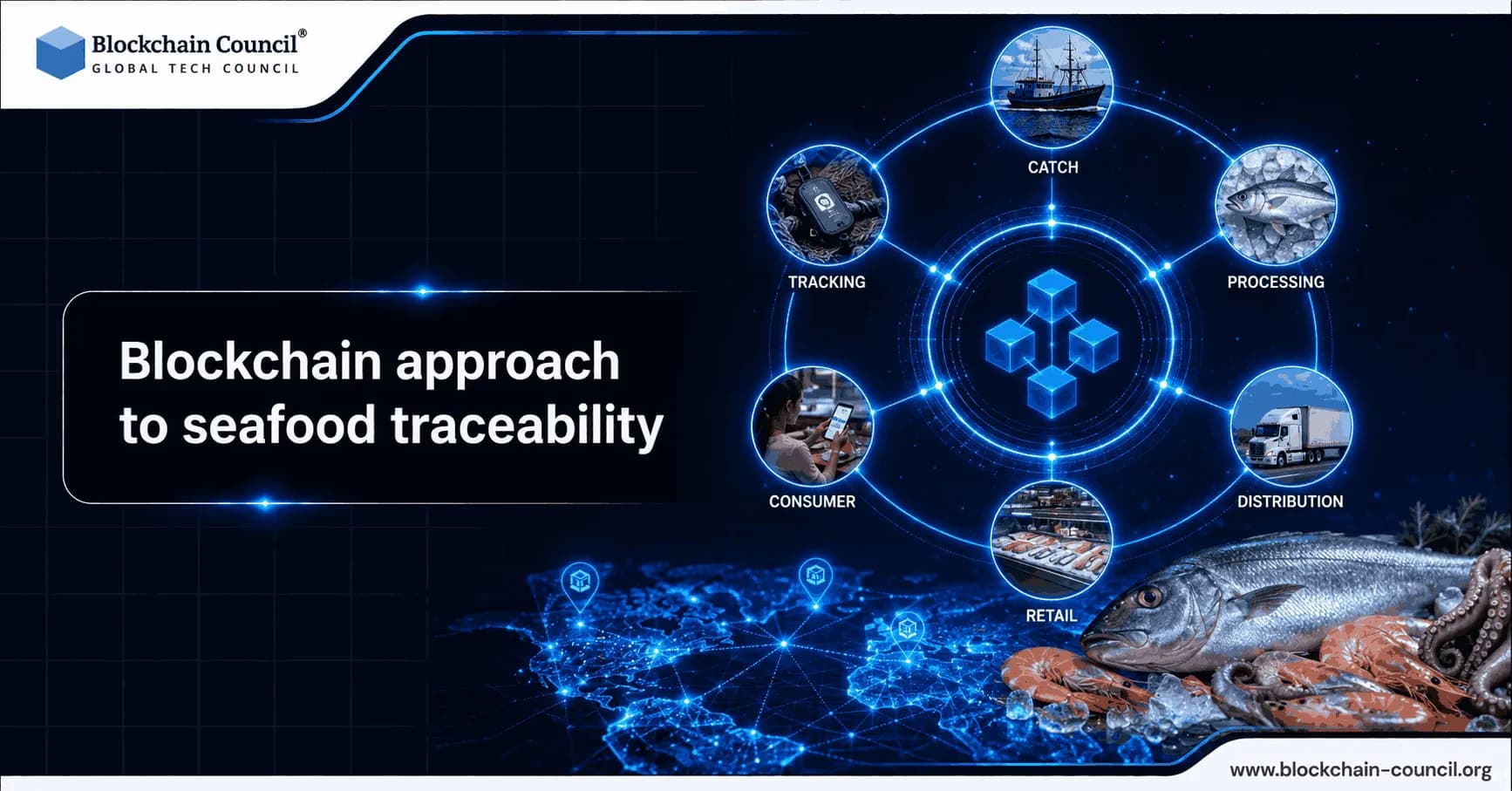
The seafood industry supports roughly 200 million jobs worldwide and generates tens of billions of dollars a year but it's also one of the most fraud-prone food sectors on the planet. Recent data suggests roughly a fifth of the global catch is affected by some form of deceptive practice, from short-weighting to outright species substitution, while illegal, unreported, and unregulated (IUU) fishing alone drains an estimated $36 billion or more from the global economy every year. Blockchain has emerged as one of the most credible answers to this problem, with the seafood traceability blockchain market projected to grow from roughly $235 million to nearly $1.9 billion by 2033, driven largely by tightening regulation and rising consumer demand for proof of where their seafood actually comes from.
For professionals looking to understand exactly how blockchain solves a problem this complex and globally dispersed, building a solid technical foundation matters. A recognized Certified Blockchain Expert credential is a common starting point for supply chain, sustainability, and food safety professionals moving into this space.

Why Seafood Is Uniquely Hard to Trace
Seafood supply chains are unusually complex compared to most other food categories. A single product can pass through a fishing vessel, a transshipment ship, multiple ports, several processors, and numerous distributors before it ever reaches a retailer often crossing several national borders along the way. That extreme geographic dispersion, combined with limited regulatory oversight in many fishing regions, makes the sector uniquely vulnerable to fraud, including:
Species substitution Cheaper or less sustainable fish sold under a more desirable or expensive species name.
Mislabeling False claims about origin, catch method, or certification status (like "wild-caught" or "sustainably sourced").
IUU fishing Catches that are illegal, unreported, or entirely unregulated, often bypassing conservation limits altogether.
Bycatch and habitat damage Unintended catch of non-target species, which traditional paper-based tracking rarely captures accurately.
Traditional traceability relies heavily on paper documentation and disconnected recordkeeping across each link in the chain a system that's slow, easy to falsify, and nearly impossible to audit in real time once a shipment has moved through several intermediaries.
Fixing a supply chain this fragmented takes more than good intentions it requires people who understand both the technology and the operational realities of global logistics. That combination is exactly what a Certified Blockchain & Supply Chain Professional credential is built to provide, equipping supply chain teams to design traceability systems that actually hold up across multiple ports, processors, and jurisdictions.
How Blockchain Actually Solves the Seafood Traceability Problem
Blockchain addresses seafood fraud by creating a single, shared, tamper-proof record that every verified participant in the supply chain can access and contribute to. Here's how the process generally works:
Catch data is recorded at the source. The moment a fish is caught, details like species, location, vessel ID, and catch method are logged directly onto the blockchain, often using connected IoT devices or scanning tools on the vessel itself.
Each handoff is verified and recorded. As the product moves from vessel to processor to distributor to retailer, every transaction and transformation (like filleting or repackaging) is added to the same shared ledger, creating a continuous, unbroken chain of custody.
Records become immutable once confirmed. Once a step is verified and added to the chain, it can't be altered meaning nobody downstream can quietly change the recorded species, origin, or catch method to misrepresent the product.
Consumers and regulators get instant verification. A simple QR code scan can pull up a product's entire verified journey, letting a consumer or auditor confirm exactly where their seafood came from and how it got to them, in seconds rather than through a lengthy paper trail investigation.
Because blockchain networks used for this purpose are typically permissioned meaning only verified fishers, processors, and distributors can add records the system maintains both transparency and accountability without exposing sensitive commercial data publicly.
Real-World Momentum in the Middle of a Fast-Growing Market
Blockchain-based seafood traceability isn't a future concept it's already operating at meaningful scale:
Regulatory pressure is accelerating adoption. The EU's IUU Regulation now mandates catch documentation for all seafood imports, and fleets without blockchain-based traceability infrastructure increasingly face rising compliance costs and phased enforcement penalties.
Norwegian salmon fisheries are leading by example. Fjord-based Atlantic salmon producers, among the highest per-kilogram value seafood exports globally, have deployed blockchain traceability systems specifically to satisfy EU catch documentation requirements.
Academic and enterprise research is accelerating. Recent research has explored combining blockchain with AI-driven monitoring using frameworks like Hyperledger Fabric to build secure, permissioned fish supply chain systems capable of trusted, real-time data sharing between fishers, processors, and regulators.
Stakeholder benefits go beyond fraud prevention. A systematic review of blockchain's impact across the seafood supply chain found that beyond reducing fraud and mislabeling, the technology also supports premium pricing for verified sustainable catches, better inventory efficiency, and stronger customer engagement through transparent product information.
Rolling out systems capable of ingesting real-time vessel data, syncing it across processors and ports, and keeping the whole network secure requires serious engineering capability. A structured Tech Certification in blockchain development gives technical teams the hands-on skills to actually build and maintain traceability infrastructure at this scale, rather than relying entirely on third-party platforms without understanding what's happening underneath.
Who Benefits from Blockchain-Based Seafood Traceability
Fishers and fleets gain a verifiable record that protects legitimate, sustainable operations from being undercut by illegally caught product entering the same market.
Processors and distributors reduce the risk of unknowingly handling fraudulent or mislabeled product, along with the reputational and legal exposure that comes with it.
Retailers can back up sustainability and origin claims with verifiable data rather than supplier assurances alone.
Regulators gain faster, more reliable audit trails for enforcing IUU fishing regulations and catch documentation mandates.
Consumers get real transparency into what they're actually eating and where it came from, addressing rising demand for ethically and sustainably sourced seafood.
The Real Barriers to Wider Adoption
Blockchain's potential in seafood traceability is well established, but meaningful barriers remain, particularly for smaller operators:
High implementation costs can be prohibitive for small-scale fishers and fleets, especially in developing regions with limited infrastructure.
Limited digital literacy among some fishing communities and smaller processors slows adoption, even where the technology itself is accessible.
Integration difficulties with existing, often informal, business practices can make onboarding genuinely difficult without dedicated support.
Fragmented standards across different blockchain platforms and regions can limit interoperability between systems used by different parts of the same supply chain.
These are real, practical hurdles not reasons to dismiss the technology, but factors that explain why adoption has been steady rather than instantaneous, even with strong regulatory tailwinds pushing it forward.
Final Thoughts
Seafood traceability is exactly the kind of problem blockchain was built to solve a fragmented, multi-party, globally dispersed supply chain where trust has traditionally depended on paperwork that's easy to falsify and hard to audit. By creating a single, tamper-proof record from catch to plate, blockchain gives fishers, processors, regulators, and consumers a shared source of truth that paper-based systems simply can't match.
Getting that value across to consumers and retail partners, though, takes more than good infrastructure it takes a clear story about why it matters. That's where a well-rounded Marketing Certification becomes genuinely useful for seafood brands and sustainability-focused companies, helping translate verified, blockchain-backed sourcing into messaging that actually earns consumer trust rather than getting lost as a technical footnote on the packaging.
FAQs
1. What is blockchain-based seafood traceability?
Blockchain-based seafood traceability is the use of blockchain technology to record and verify the journey of seafood from the point of harvest to the consumer. It creates a transparent and tamper-evident record of sourcing, processing, transportation, storage, and retail distribution.
2. Why is seafood traceability important?
Seafood supply chains are often global and involve fishermen, aquaculture farms, processors, exporters, distributors, wholesalers, retailers, and restaurants. Effective traceability helps improve food safety, combat seafood fraud, support sustainability, and strengthen consumer confidence.
3. How does blockchain work in seafood traceability?
At each stage of the supply chain, authorized participants record information such as catch location, harvest date, species, processing details, storage conditions, and transportation records. Blockchain securely links these records, creating a verifiable product history.
4. How can blockchain reduce seafood fraud?
Blockchain helps reduce fraud by providing transparent records of species identification, origin, certifications, and supply chain movements. While it cannot prevent false data from being entered initially, it makes unauthorized alterations much more difficult after the information has been recorded.
5. Can blockchain help prevent illegal fishing?
Yes. Blockchain can support efforts to combat Illegal, Unreported, and Unregulated (IUU) fishing by recording catch documentation, fishing licenses, vessel identities, landing information, and chain-of-custody records. It complements inspections and regulatory enforcement rather than replacing them.
6. How does blockchain improve food safety?
Blockchain enables faster identification of contaminated seafood batches by providing accurate traceability records. This can speed up product recalls and reduce the impact of food safety incidents.
7. Can consumers verify seafood origins?
Yes. Many blockchain-enabled systems allow consumers to scan QR codes or digital product labels to view information about the seafood's origin, harvest method, certifications, processing history, and transportation journey.
8. How does blockchain work with IoT in seafood logistics?
Internet of Things (IoT) devices such as temperature sensors, GPS trackers, RFID tags, and humidity monitors collect data during transportation and storage. Blockchain records important events and verification data, helping ensure seafood has been handled under appropriate conditions.
9. Can blockchain improve cold chain management?
Yes. Blockchain can record temperature logs, storage conditions, transportation milestones, and handling records throughout the cold chain. Combined with IoT monitoring, this improves visibility and supports quality assurance.
10. How does blockchain support sustainability?
Blockchain can record sustainability certifications, fishing quotas, aquaculture practices, carbon footprint information, and environmental compliance records, helping businesses demonstrate responsible sourcing and enabling consumers to make informed purchasing decisions.
11. Which seafood products can benefit from blockchain?
Blockchain can support traceability for fish, shrimp, lobster, crab, oysters, mussels, scallops, tuna, salmon, cod, shellfish, seaweed, and many other wild-caught and farmed seafood products.
12. Which industries benefit from blockchain seafood traceability?
Fishing companies, aquaculture farms, seafood processors, exporters, logistics providers, wholesalers, retailers, restaurants, certification organizations, regulators, and consumers can all benefit from blockchain-enabled traceability systems.
13. What are the advantages of blockchain for seafood traceability?
Benefits include improved transparency, enhanced food safety, stronger supply chain visibility, reduced seafood fraud, better sustainability reporting, faster recalls, improved regulatory compliance, increased consumer trust, and greater operational efficiency.
14. What challenges exist when implementing blockchain?
Challenges include integrating with existing supply chain systems, ensuring accurate data collection, onboarding all supply chain participants, implementation costs, interoperability, scalability, governance, privacy requirements, and maintaining reliable internet connectivity in remote fishing regions.
15. Can blockchain guarantee seafood quality?
No. Blockchain cannot guarantee that seafood is fresh or safe. It provides a trustworthy record of the product's history and handling, but quality still depends on proper harvesting, storage, transportation, processing, and food safety practices.
16. What common mistakes should seafood businesses avoid?
Common mistakes include assuming blockchain alone solves traceability problems, entering inaccurate information, storing excessive operational data directly on-chain, neglecting IoT integration, overlooking cybersecurity, failing to validate supplier information, and implementing blockchain without measurable business objectives.
17. What are best practices for implementing blockchain in seafood supply chains?
Best practices include integrating blockchain with IoT sensors, validating supply chain data before recording it, storing sensitive information off-chain where appropriate, conducting regular security audits, using standardized traceability frameworks, collaborating with supply chain partners, and complying with food safety and fisheries regulations.
18. How does blockchain fit into sustainable fisheries?
Blockchain complements artificial intelligence (AI), Internet of Things (IoT), satellite monitoring, GPS vessel tracking, cloud computing, environmental analytics, electronic catch documentation, and digital certification systems to support sustainable fisheries management.
19. What trends are shaping blockchain seafood traceability in 2025-2026?
Major trends include AI-powered supply chain analytics, Digital Product Passports (DPPs), IoT-enabled cold chain monitoring, decentralized identity (DID) for suppliers, ESG reporting, carbon footprint tracking, automated compliance systems, satellite-assisted fisheries monitoring, blockchain-enabled sustainability certifications, and increased global traceability standards.
20. What is the future of blockchain in seafood traceability?
Blockchain is expected to become an increasingly valuable technology for improving transparency, sustainability, and food safety across global seafood supply chains. Rather than replacing existing logistics or quality management systems, blockchain will integrate with AI, IoT, cloud platforms, and regulatory frameworks to create trusted records from ocean or farm to consumer. As demand for responsibly sourced seafood continues to grow, the ability to verify a product's journey may become just as important as its taste and freshness. After all, seafood is easier to enjoy when its story is as clear as the water it is claimed to have come from.
Related Articles
View All
Blockchain
Beyond Cryptocurrency: How Blockchain Is Transforming Real-World Industries
Explore how blockchain works beyond cryptocurrency in banking, supply chains, healthcare, tokenisation, CBDCs, and government, plus key challenges and career paths.
Blockchain
Smart Contracts & dApps: How Blockchain Becomes Programmable
Learn how smart contracts and dApps make blockchain programmable, from Ethereum and tokens to DeFi, NFTs, real use cases, benefits, and key risks.

Blockchain
Behind the Blocks: How Blockchain Transactions Actually Work
Go behind the blocks to see how a blockchain transaction really works: wallets and keys, digital signatures, verification, hashing, blocks, consensus, proof of work vs proof of stake, and how miners and validators secure the network.
Trending Articles
AWS Career Roadmap
A step-by-step guide to building a successful career in Amazon Web Services cloud computing.
How Blockchain Secures AI Data
Understand how blockchain technology is being applied to protect the integrity and security of AI training data.
What is AWS? A Beginner's Guide to Cloud Computing
Everything you need to know about Amazon Web Services, cloud computing fundamentals, and career opportunities.