

Belarus Launches Its First Online Cryptocurrency Exchange
 Toshendra Kumar Sharma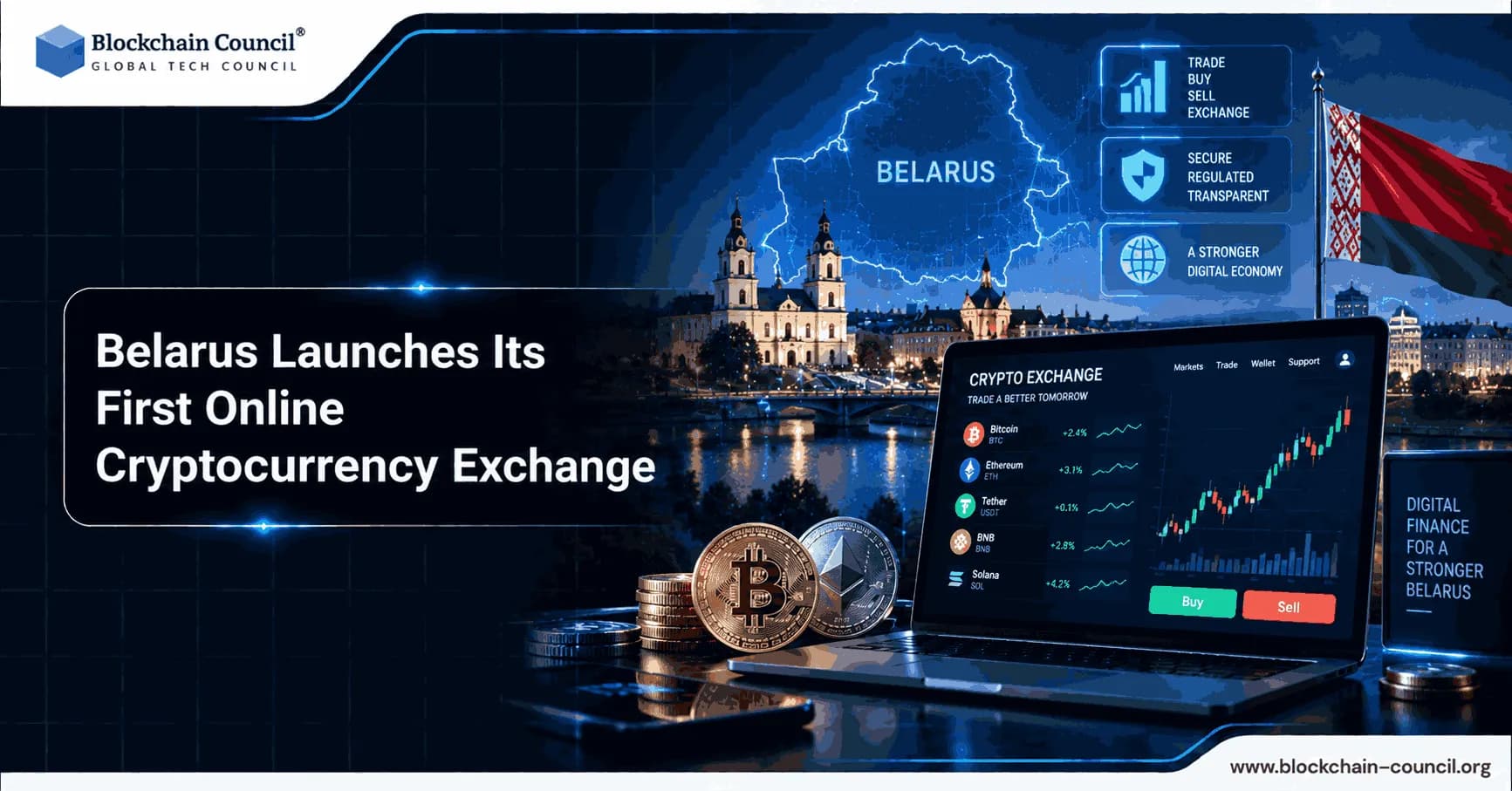
Belarus made a notable move in the global cryptocurrency landscape in January 2019 when Currency.com went live as the country's first fully regulated cryptocurrency and tokenized securities exchange. The platform emerged directly from a 2017 presidential decree that legalized cryptocurrency transactions and initial coin offerings within the country, positioning Belarus as one of the more forward leaning nations in Eastern Europe on digital asset regulation at the time. For anyone studying how national governments have approached cryptocurrency adoption, Belarus offers a genuinely instructive case study, and professionals building expertise in this space through a Certified Cryptocurrency Expert program often study early regulatory experiments like this one to understand how legal clarity can shape a country's crypto market.
How Currency.com Came Together
The Regulatory Groundwork That Made It Possible
The exchange's launch traced back to a decree signed by Belarusian President Alexander Lukashenko in December 2017, which legalized cryptocurrency transactions and exempted them from taxation until 2023. This legislation aimed to attract foreign investment and encourage international technology companies to establish operations within Belarus, part of a broader strategy to position the country as a regional hub for blockchain innovation.

Who Built the Platform and How It Worked
Currency.com was financed through a partnership between London based Belarusian entrepreneur Viktar Prakapenya and Russian businessman Said Gutseriyev, operating through Larnabel Ventures and VP Capital. The platform described itself as a regulated tokenized securities exchange, allowing users to trade tokens representing traditional financial instruments like stocks, indexes, and commodities using either cryptocurrency or standard fiat currency. Capital.com, an investment firm regulated by the UK's Financial Conduct Authority and the Cyprus Securities and Exchange Commission, served as the platform's technology partner, lending an established layer of financial industry credibility to the new exchange.
What This Launch Signaled About Belarus's Crypto Strategy
Currency.com's arrival reflected a deliberate national strategy rather than an isolated private venture, since the exchange operated under the country's Hi-Tech Park licensing framework specifically created to support cryptocurrency businesses. This regulatory approach distinguished Belarus from many neighboring countries that either banned cryptocurrency activity outright or left it in a legal gray area, giving Belarus a genuine early mover advantage in attracting blockchain focused businesses and investment. Professionals studying how regulatory frameworks shape digital asset markets, including those pursuing a Certified Digital Assets Expert credential, often point to Belarus's tax exemption and licensing structure as an example of how clear rules, even in a smaller economy, can meaningfully influence where blockchain businesses choose to set up operations.
Future-Ready Skills
As technology becomes increasingly important across industries, students need opportunities to develop future-ready skills early in their education. A World Tech Olympiad can introduce students to areas such as artificial intelligence, coding, cybersecurity, robotics, and computational thinking while encouraging curiosity and continuous learning. Understanding how emerging financial technologies like cryptocurrency exchanges actually function often starts with exactly this kind of early, structured exposure to technical and analytical thinking.
How Belarus's Crypto Market Has Evolved Since
Currency.com's launch was far from the last major development in Belarus's cryptocurrency space. In late 2020, Belarusbank, the country's largest bank, partnered with crypto exchange White Bird to launch its own cryptocurrency trading service, marking a significant step toward mainstream financial institutions embracing digital assets directly rather than leaving the space entirely to independent platforms. Additional exchanges have since entered the market as well, reflecting continued growth in the country's regulated crypto sector years after Currency.com's initial launch. Tracking this kind of ongoing market evolution requires genuine technical fluency, and a broader Tech Certification helps professionals understand the infrastructure decisions, security considerations, and platform architecture choices that shape how these exchanges actually operate behind the scenes. As Belarus's cryptocurrency ecosystem continues maturing, clearly communicating what sets a regulated exchange apart from unregulated alternatives remains genuinely important for building user trust, and professionals who round out their expertise with a Marketing Certification are often well positioned to explain these regulatory and platform distinctions clearly to audiences evaluating where to trade with confidence.
FAQs
1. When did Belarus launch its first online cryptocurrency exchange?
Belarus launched its first regulated cryptocurrency exchange, Currency.com, in January 2019. The platform became the first crypto exchange registered in the Belarusian High-Tech Park following the country's cryptocurrency regulations.
2. What was the name of Belarus's first cryptocurrency exchange?
The exchange was called Currency.com. It was launched as a regulated platform for cryptocurrency trading and tokenized versions of traditional financial assets.
3. Why was the launch of Currency.com significant for Belarus?
The launch demonstrated Belarus's attempt to establish itself as a blockchain and cryptocurrency-friendly jurisdiction. It followed regulatory reforms designed to attract technology companies, investment, and blockchain-related businesses.
4. What could users do on Belarus's first crypto exchange?
Users could exchange cryptocurrencies and fiat currencies and gain exposure to tokenized versions of traditional assets. The platform was also designed to allow cryptocurrency holders to access markets linked to assets such as shares, commodities, and indices.
5. What were tokenized securities on Currency.com?
Tokenized securities were digital tokens designed to track the value of traditional financial instruments. Currency.com's initial offering included tokens linked to assets such as equities, indices, and commodities, allowing users to gain market exposure using cryptocurrency or fiat.
6. How did blockchain support the Belarusian cryptocurrency exchange?
Blockchain provided the underlying technology for recording and tracking digital-asset transactions. Its use helped create a transparent and traceable infrastructure for cryptocurrency and tokenized-asset activities.
7. What regulation allowed cryptocurrency exchanges to operate in Belarus?
Belarus's Decree No. 8 on the Development of the Digital Economy, signed in December 2017, created a legal framework for cryptocurrency-related activities. It helped establish rules covering activities such as cryptocurrencies, tokens, mining, and related blockchain businesses.
8. What was the role of the Belarusian High-Tech Park?
The High-Tech Park provided the regulatory environment under which Currency.com operated. Currency.com received the first High-Tech Park license for professional cryptocurrency market services after the relevant digital-economy regulations were introduced.
9. Could users buy traditional assets with Bitcoin?
Yes. Currency.com's model allowed users to gain exposure to tokenized versions of traditional assets using cryptocurrencies such as Bitcoin and Ethereum, without necessarily converting those cryptocurrencies into fiat first.
10. What traditional assets were available as tokenized products?
The platform planned tokenized products representing market exposure to assets such as stocks, indices, and commodities. Its initial announcement described more than 150 tokenized securities, with plans to expand to more than 10,000.
11. Who invested in Currency.com?
Currency.com received investment from VP Capital, associated with Belarusian entrepreneur Viktar Prokopenya, and Larnabel Ventures, associated with Said Gutseriev. The January 2019 launch announcement did not disclose the investment amount.
12. Why did Belarus legalize cryptocurrency activities?
Belarus introduced cryptocurrency-friendly regulations partly to attract foreign investment, technology companies, and blockchain businesses. The government also sought to strengthen the country's position as a regional technology and innovation hub.
13. How did Belarus's crypto regulations affect blockchain adoption?
The regulatory framework gave businesses clearer legal conditions for developing cryptocurrency and blockchain-related services. This helped create an environment in which projects such as Currency.com could obtain authorization and operate within the High-Tech Park.
14. Was Currency.com only a cryptocurrency exchange?
No. Although it provided cryptocurrency exchange functionality, its distinctive feature was its tokenized-securities platform. It was designed to connect cryptocurrency users with digital representations of traditional financial-market exposures.
15. How did tokenization change cryptocurrency trading?
Tokenization allowed digital tokens to represent or track exposure to conventional financial assets. This created a bridge between cryptocurrency-based transactions and traditional markets, expanding the types of assets that crypto users could access.
16. What benefits did Belarus's cryptocurrency exchange provide?
The platform offered users a regulated environment for cryptocurrency trading and access to tokenized financial products. For Belarus, the launch also represented an effort to develop its blockchain ecosystem and attract investment into the country's technology sector.
17. What challenges did cryptocurrency exchanges face in Belarus?
Cryptocurrency exchanges still faced challenges involving regulation, cybersecurity, consumer protection, money laundering controls, market volatility, and operational risks. Legal authorization could provide a framework for operation, but it did not eliminate the risks associated with digital assets.
18. Did Belarus's first cryptocurrency exchange influence the country's blockchain industry?
The launch contributed to Belarus's reputation at the time as a cryptocurrency-friendly jurisdiction. Currency.com was followed by additional crypto and digital-asset initiatives, although the broader development of the sector depended on changing regulations, market conditions, and international developments.
19. Why is the Belarus cryptocurrency exchange important in blockchain history?
Currency.com's 2019 launch was notable because it combined regulated cryptocurrency trading with tokenized exposure to conventional financial assets. It illustrated an early attempt to connect blockchain-based assets with traditional financial markets under a dedicated regulatory framework.
20. What was the long-term significance of Belarus launching a cryptocurrency exchange?
The launch showed how government-backed regulatory frameworks could encourage experimentation with cryptocurrency exchanges and tokenized financial products. It also demonstrated an early model for integrating digital assets with conventional financial markets, although the long-term success of such models depends on regulation, market demand, security, and institutional adoption.
Related Articles
View All
Blockchain
Beyond Cryptocurrency: How Blockchain Is Transforming Real-World Industries
Explore how blockchain works beyond cryptocurrency in banking, supply chains, healthcare, tokenisation, CBDCs, and government, plus key challenges and career paths.

Blockchain
Blockchain Certification Programs You Can Join Online
Discover the best blockchain certification programs you can join online. Learn blockchain fundamentals, smart contracts, enterprise blockchain, and career opportunities with globally recognized certifications.

Blockchain
Smart Contracts & dApps: How Blockchain Becomes Programmable
Learn how smart contracts and dApps make blockchain programmable, from Ethereum and tokens to DeFi, NFTs, real use cases, benefits, and key risks.
Trending Articles
AWS Career Roadmap
A step-by-step guide to building a successful career in Amazon Web Services cloud computing.
What is AWS? A Beginner's Guide to Cloud Computing
Everything you need to know about Amazon Web Services, cloud computing fundamentals, and career opportunities.
How to Install Claude Code
Learn how to install Claude Code on macOS, Linux, and Windows using the native installer, plus verification, authentication, and troubleshooting tips.