Suyash Raizada
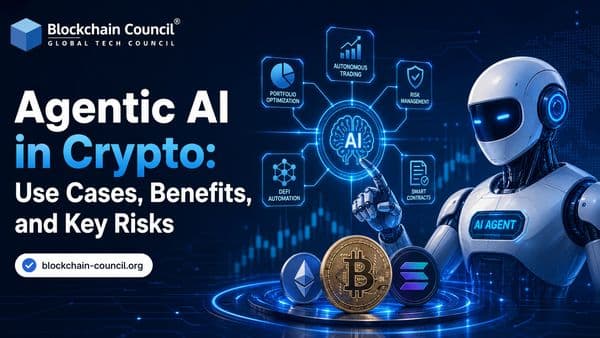
Agentic AI in Crypto: Use Cases, Benefits, and Key Risks
Agentic AI in crypto lets autonomous agents hold wallets, trade, manage DeFi positions, and support DAOs, but security and regulation remain critical.


Browse the latest agentic ai articles, tutorials, and research from Blockchain Council.(136 articles)
Agentic AI in crypto lets autonomous agents hold wallets, trade, manage DeFi positions, and support DAOs, but security and regulation remain critical.

Learn how AI agents in on-chain analytics turn blockchain records into real-time intelligence for compliance, trading, security, and DeFi operations.

AI agents in DePIN optimize decentralized compute, wireless, storage, energy, and sensor networks through scheduling, pricing, validation, and maintenance.

Decentralized AI agents use blockchain for auditable actions, smart contract limits, trusted data, and autonomous Web3 workflows across DeFi, gaming, and enterprise systems.

AI agents for Web3 gaming are creating smarter NPCs, adaptive token economies, and player-owned companions, but safety and governance matter.

AI agents are reshaping NFTs by generating assets, curating collections, detecting fraud, and improving marketplace discovery through on-chain automation.

AI-powered Web3 wallets use intelligent agents to detect risk, explain transactions, enforce guardrails, and improve crypto wallet UX.
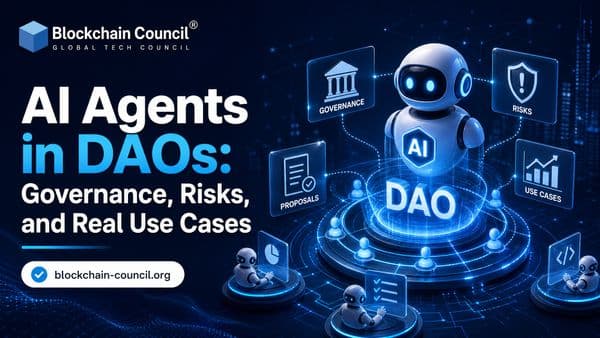
AI agents in DAOs can automate voting, proposal analysis, and treasury workflows, but they need strict limits, audit trails, and human oversight.

Learn how AI agents and smart contracts power self-executing Web3 workflows in DeFi, trading, contract management, and enterprise automation.
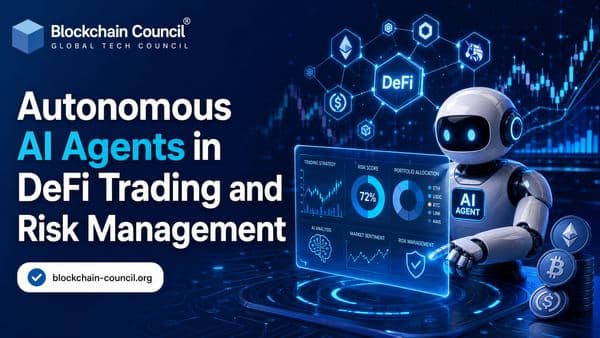
Autonomous AI agents in DeFi are changing trading, yield optimization, and risk management with smarter execution, simulation, and tighter controls.
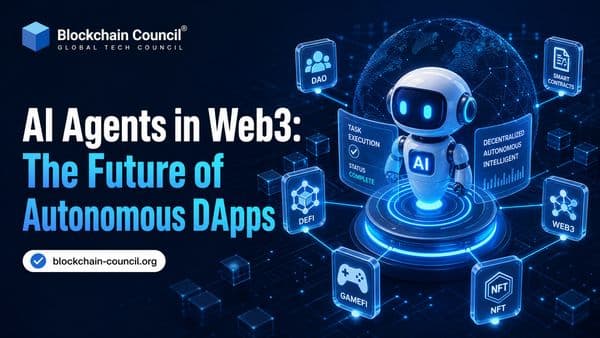
AI agents in Web3 are becoming autonomous DApp participants, managing wallets, DeFi strategies, DAO workflows, payments, and onchain game activity.

AI agents in Web3 are automating DeFi, wallets, gaming, and protocol operations while raising new security, governance, and audit challenges.