

AI-Powered Web3 Wallets: Intelligent Agents for Safer, Easier Crypto
 Suyash Raizada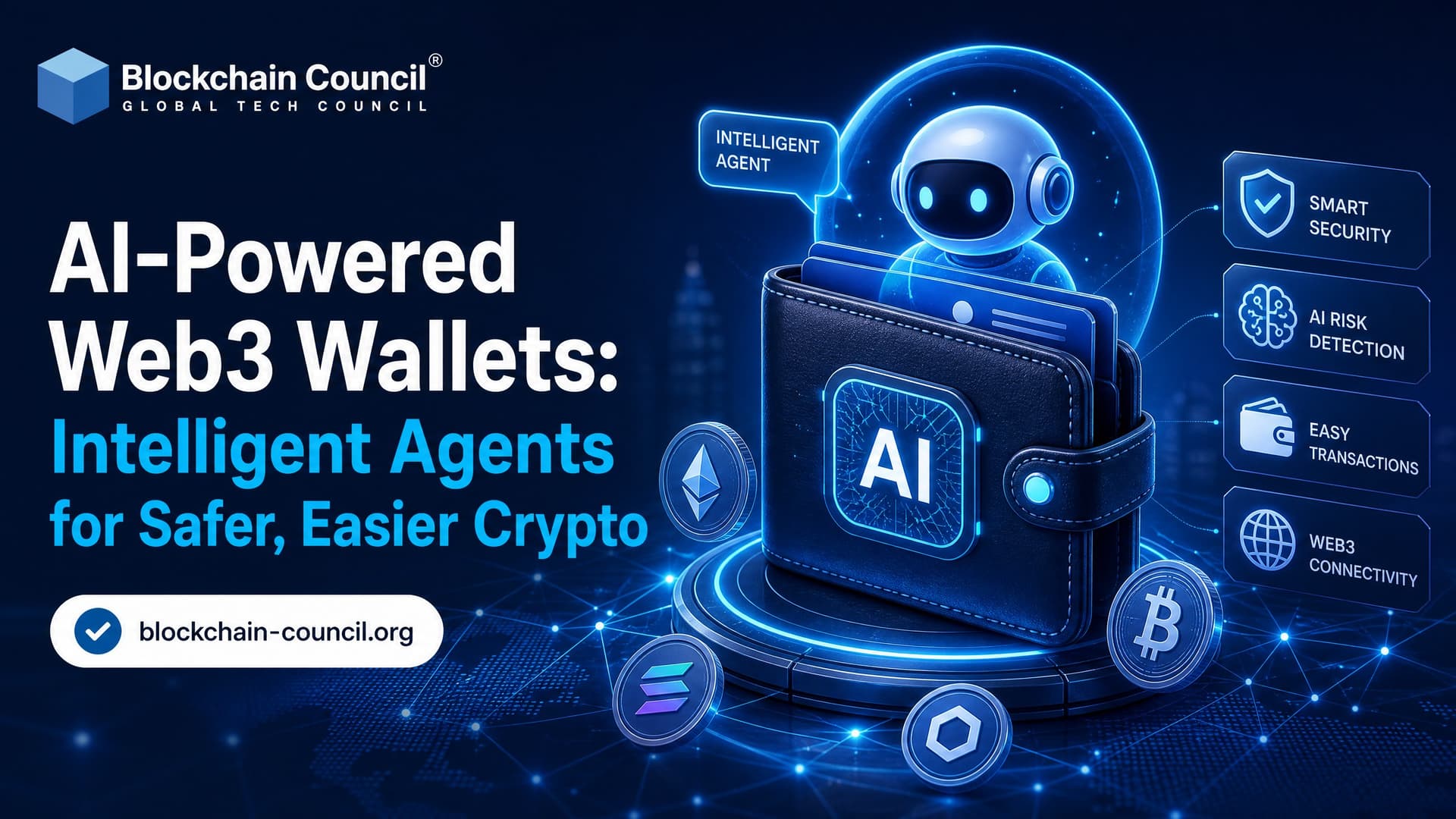
AI-powered Web3 wallets turn the wallet from a passive key holder into an active security and UX layer. The best versions do three practical things: they explain what you are about to sign, check the transaction for risk, and enforce limits before an AI agent or human user can move funds.
That matters because wallet mistakes are still expensive. A single unlimited ERC-20 approval to a malicious contract can drain assets later, even if the first transaction looked harmless. If you have ever stared at raw calldata in a wallet popup and guessed, you know the problem.

What Are AI-Powered Web3 Wallets?
AI-powered Web3 wallets combine standard wallet functions with intelligent agents. They still manage keys, display assets, connect to dApps, and sign transactions. The difference is that they also analyze behavior, simulate outcomes, flag threats, and sometimes execute transactions under defined rules.
A typical design includes:
Risk analysis: Address scoring, contract checks, phishing detection, and anomaly detection before signing.
Policy controls: Spending caps, allowlists, session keys, multi-step approvals, and kill switches.
Natural language UX: Clear explanations of gas, approvals, swaps, bridging, staking, and contract permissions.
Automation: Agents that rebalance positions, revoke approvals, pay for services, or react to market and protocol events.
Account abstraction is a major reason this is becoming practical. With ERC-4337 style smart accounts, validation logic can move beyond a single externally owned account signature. Smart wallets can add recovery, batching, gas sponsorship, and policy checks. If you have worked with bundlers, you have probably seen errors like AA21 didn't pay prefund. That small detail says a lot: smart accounts are programmable, but the execution path is more complex than a normal MetaMask transaction. AI-powered Web3 wallets are redefining digital asset management through intelligent automation, enhanced security, and personalized user experiences. Earning a Tech Certification helps professionals develop expertise in blockchain, cybersecurity, AI, cloud computing, and decentralized applications. These certifications provide the practical skills needed to build secure Web3 wallets, automate crypto transactions, and improve digital identity management in decentralized ecosystems.
How Intelligent Agents Improve Wallet Security
Real-time threat detection
Static warnings are not enough anymore. Attackers spin up new contracts, fake tokens, and phishing frontends quickly. AI-powered Web3 wallets can analyze transaction context in real time, including the target address, contract age, bytecode patterns, prior exploit links, token approval size, and the user's normal activity.
Good risk engines combine rules and machine learning. Rules catch known bad patterns, such as unlimited approvals to suspicious spenders. Models can detect odd behavior that does not match a fixed rule, such as a wallet suddenly sending assets to a fresh address after months of low-value DeFi interactions.
The wallet can then show a direct warning: This transaction grants a contract permission to transfer all of your USDC. The contract is new and has limited history. That is far better than asking users to decode a hexadecimal payload.
Policy guardrails for autonomous agents
An AI agent should never have unrestricted signing power. Full stop.
The safer pattern is constrained autonomy. Let the agent act, but only inside hard wallet-level policies. Examples include:
Maximum spend of 0.05 ETH per day on Ethereum mainnet, chain ID 1.
Only interact with allowlisted contracts such as a specific Safe module or DeFi vault.
Require human approval for token approvals above a set value.
Block transactions if the risk score crosses a defined threshold.
Use a session key that expires after one hour or after a task is complete.
This is where smart contract accounts, multisig wallets, and MPC-based custody become useful. The model may recommend an action, but the wallet infrastructure decides whether that action is allowed. That distinction is critical. AI is not a substitute for cryptographic controls.
Safer key management and recovery
Most AI features live above the key layer, but key design still decides how bad a failure becomes. For higher-value wallets, avoid giving an agent direct access to the owner's main private key. Use delegated keys, MPC, hardware-backed signing, or smart account modules.
For enterprises, a practical setup might separate roles like this:
The AI agent can propose and submit low-risk transactions.
A policy engine checks limits, counterparties, and sanctions screening rules.
A human approver or multisig signs higher-risk transactions.
A recovery key can pause or rotate permissions if the agent behaves unexpectedly.
This is not theoretical. DeFi exploits often move in minutes. A monitoring agent that can revoke risky approvals or pause a strategy is useful, but only if it cannot create a larger loss by acting beyond its mandate. Building intelligent crypto wallets requires expertise across blockchain infrastructure, AI, cryptography, and decentralized identity systems. Becoming a Deeptech Expert enables professionals to understand wallet architecture, AI-driven fraud detection, smart contract interactions, and autonomous financial agents. This multidisciplinary knowledge supports the development of secure, user-friendly Web3 wallet solutions that simplify crypto adoption while protecting digital assets.
How AI-Powered Web3 Wallets Improve User Experience
Plain-language transaction explanations
Wallet UX has long been one of Web3's biggest adoption barriers. Users are asked to understand gas, token standards, bridges, approvals, chain switching, MEV, slippage, and signing messages. Many simply click and hope.
AI-powered Web3 wallets can translate technical transaction data into plain language. For example:
Bad UX: approve(address,uint256)
Better UX: You are allowing Uniswap's router to spend up to 500 USDC from this wallet.
Best UX: This approval is limited to 500 USDC. It does not move funds now, but the approved contract can transfer this amount later.
That last sentence prevents a common misunderstanding. An approval is not a transfer, but it can become dangerous later.
Transaction simulation before signing
Simulation is becoming a baseline feature in advanced wallets. Rabby is a good example: it previews balance changes and transaction effects before users sign. MetaMask Snaps also lets third-party security and UX modules add custom analysis inside the wallet experience.
AI improves simulation by ranking what matters. A raw simulation may show many state changes. An intelligent agent can highlight the risky ones, such as:
A new unlimited token approval.
A hidden transfer to an address that is not the visible dApp.
A bridge transaction that sends funds to the wrong chain.
A swap with unusually high slippage.
A contract interaction that fails on a fork simulation.
Small detail, big benefit: users do not need every log line. They need the few facts that change the signing decision.
Personalized guidance and automation
AI-powered wallets can also act as portfolio assistants. They can track exposure across chains, explain fee trade-offs, suggest approval revocation, and alert users when collateral ratios approach liquidation thresholds.
For DeFi users, this can cut routine work. An agent might monitor an Aave position, warn when the health factor drops, and suggest adding collateral. For an enterprise treasury team, an agent might flag interactions with newly created counterparties or schedule payouts under policy limits.
There is a trade-off. More automation means more responsibility in design. If the agent is managing meaningful value, you need logs, approval workflows, model output review, and emergency controls. If the wallet cannot explain why an action happened, it is not ready for serious funds.
Where Account Abstraction Fits
Account abstraction and AI-powered Web3 wallets fit naturally together. ERC-4337 smart accounts support programmable validation without changes to Ethereum's base protocol. Developers can build wallets that support:
Social recovery instead of seed phrase-only recovery.
Gas sponsorship, where a dApp or paymaster covers fees.
Transaction batching, such as approve and swap in one flow.
Session keys for limited agent permissions.
Policy checks before execution.
For builders, this is the right direction for agentic wallets. Traditional externally owned accounts are simple, but they are too rigid for granular permissions. Smart wallets give you the control surface that AI agents need.
Build the Next Generation of AI Wallets
Modern Web3 wallets are evolving beyond simple asset storage into intelligent systems capable of autonomous financial operations. Blockchain0x provides the developer infrastructure needed to build AI-powered wallets with programmable payments, spending controls, secure blockchain identities, and automated transaction capabilities for the next generation of Web3 applications.
Real Use Cases Already Emerging
Retail wallet protection
Consumer wallets can use AI to detect phishing pages, warn against malicious approvals, and explain signatures. This is especially useful for blind signing, where users cannot easily interpret what a signature authorizes.
DeFi trading agents
Trading agents can screen protocols and counterparties before executing swaps or rebalances. A well-designed agent does not chase yield blindly. It checks liquidity, contract risk, permissions, and policy limits first.
Machine-to-machine payments
AI agents may need wallets to pay for APIs, compute, storage, or data feeds. Crypto rails are attractive here because agents can make small programmable payments without waiting for traditional billing workflows. But budgets and allowlists are non-negotiable.
Enterprise treasury automation
Enterprises can use AI-powered wallets for scheduled payouts, risk monitoring, approval routing, and compliance checks. The agent handles repetitive analysis. Humans keep authority over policy and exceptions.
Regulatory and Governance Issues
AI-powered Web3 wallets raise hard questions. If an agent interacts with a malicious protocol, who is responsible: the user, wallet provider, model provider, or dApp? The answer may depend on custody, disclosures, jurisdiction, and the level of autonomy granted.
Privacy is another concern. Wallet agents often need behavioral data to personalize warnings and recommendations. If that data is centralized, it can expose sensitive financial behavior. Builders should minimize data collection, protect logs, and be clear about what leaves the user's device.
For regulated entities, AI-based transaction monitoring can support AML and sanctions controls. The same autonomy can also create risk if agents route around those controls. Put compliance rules in the wallet policy layer, not just in a prompt. As Web3 wallets become more accessible, educating users and building trust are critical for adoption. A Marketing Certification helps professionals strengthen digital branding, customer education, product marketing, and user engagement strategies. These business skills enable organizations to communicate wallet security, usability, and innovation while encouraging broader adoption of decentralized financial technologies.
What Developers Should Build First
If you are building an AI-powered Web3 wallet, start with security and explanation before autonomy. A sensible roadmap looks like this:
Transaction decoding: Explain approvals, transfers, swaps, bridges, and signatures in simple language.
Simulation: Show expected balance and permission changes before signing.
Risk scoring: Add address, contract, and transaction checks.
Policy engine: Enforce limits at the wallet or smart account level.
Limited automation: Use session keys, small budgets, and clear logs.
Human escalation: Require approval for high-value or unusual actions.
Do not start by giving a general-purpose agent full signing rights. That is the wrong architecture for production.
Skills Professionals Need
AI-powered Web3 wallets sit across blockchain engineering, applied AI, security, and product design. If you want to work in this area, build depth in smart contracts, wallet architecture, the transaction lifecycle, model risk, and compliance basics.
For structured learning, consider Blockchain Council programs such as Certified Blockchain Expert, Certified Blockchain Developer, Certified Web3 Expert, and Certified AI Expert as learning paths. Developers should pair certification with hands-on work using Solidity 0.8.x, Hardhat or Foundry, Safe smart accounts, MetaMask, and ERC-4337 tooling.
The Next Step for AI-Powered Web3 Wallets
The strongest AI-powered Web3 wallets will not be the ones that make the most decisions. They will be the ones that make the safest decisions explainable, enforceable, and reversible where possible.
If you are a developer, build a simple smart wallet policy module and test it against real ERC-20 approval flows. If you are a product leader, audit where users currently sign without understanding. If you are preparing for a Web3 or AI role, learn account abstraction and agent safety together. That combination is where wallet design is heading.
FAQs
1. What Are AI-Powered Web3 Wallets?
AI-powered Web3 wallets are blockchain wallets enhanced with artificial intelligence that help users securely manage cryptocurrencies, digital assets, NFTs, and decentralized applications (dApps). They automate routine tasks, improve security, and provide intelligent recommendations for Web3 transactions.
2. How Do AI Agents Work in Web3 Wallets?
AI agents analyze wallet activity, monitor blockchain transactions, detect suspicious behavior, automate asset management, and assist users with payments, staking, portfolio tracking, and decentralized finance (DeFi) interactions while following user-defined permissions.
3. Why Are AI-Powered Wallets Important for Web3?
AI-powered wallets simplify complex blockchain interactions by automating repetitive tasks, improving security, reducing user errors, and making decentralized technologies more accessible for both beginners and experienced crypto users.
4. How Do AI-Powered Web3 Wallets Improve Crypto Security?
AI continuously monitors wallet activity, identifies unusual transactions, detects phishing attempts, flags malicious smart contracts, and alerts users about potential security risks before transactions are completed.
5. Can AI Agents Detect Crypto Scams and Fraud?
Yes. AI agents analyze blockchain data, wallet behavior, transaction history, and known threat patterns to identify suspicious activities, fraudulent addresses, phishing websites, and potential scams in real time.
6. How Do AI Agents Help Manage Cryptocurrency Portfolios?
AI agents monitor portfolio performance, track asset allocation, analyze market trends, suggest diversification strategies, automate portfolio rebalancing, and provide insights based on real-time blockchain and market data.
7. Can AI Agents Automate Crypto Transactions?
Yes. AI-powered wallets can automate recurring payments, staking, token swaps, portfolio rebalancing, yield farming strategies, and other blockchain transactions based on predefined rules and user approvals.
8. How Do AI-Powered Wallets Support Decentralized Finance (DeFi)?
AI agents help users discover DeFi opportunities, monitor lending and borrowing positions, optimize yield farming, manage liquidity pools, evaluate risks, and automate interactions with DeFi protocols.
9. What Features Should You Look for in an AI-Powered Web3 Wallet?
Important features include AI-driven fraud detection, transaction monitoring, smart contract analysis, portfolio management, NFT support, multi-chain compatibility, recovery assistance, biometric authentication, and user-friendly interfaces.
10. Can AI Agents Manage NFTs in Web3 Wallets?
Yes. AI agents can organize NFT collections, track floor prices, monitor marketplace trends, recommend buying or selling opportunities, and help users discover valuable digital collectibles.
11. How Do AI-Powered Wallets Improve User Experience?
AI simplifies blockchain interactions by offering natural language assistance, personalized recommendations, automated transaction management, intelligent notifications, and easier navigation across decentralized applications.
12. What Role Do Smart Contracts Play in AI-Powered Wallets?
Smart contracts execute blockchain transactions automatically once predefined conditions are met. AI agents analyze data and trigger these contracts securely while helping users understand transaction outcomes and associated risks.
13. Which Blockchain Networks Support AI-Powered Wallets?
Many modern Web3 wallets support multiple blockchain ecosystems, allowing AI agents to manage assets across different networks while providing unified portfolio management and cross-chain transaction capabilities.
14. What Challenges Do AI-Powered Web3 Wallets Face?
Challenges include evolving cybersecurity threats, cross-chain interoperability, AI transparency, regulatory compliance, wallet recovery, data privacy, smart contract vulnerabilities, and balancing automation with user control.
15. What Skills Are Needed to Build AI-Powered Web3 Wallets?
Developers should understand blockchain development, artificial intelligence, cryptography, smart contracts, decentralized applications, cybersecurity, machine learning, wallet architecture, and Web3 infrastructure.
16. How Will AI Change Crypto Wallets in 2026?
AI is making crypto wallets more intelligent by enabling predictive security alerts, autonomous financial assistants, automated transaction execution, voice-based wallet management, and personalized blockchain recommendations.
17. Can AI Agents Improve Cross-Chain Wallet Management?
Yes. AI agents can monitor assets across multiple blockchain networks, optimize bridge selection, reduce transaction costs, automate asset transfers, and simplify multi-chain portfolio management.
18. What Career Opportunities Are Emerging Around AI-Powered Web3 Wallets?
Growing adoption is creating opportunities for blockchain developers, AI engineers, wallet security specialists, smart contract developers, Web3 product managers, UX designers, cybersecurity professionals, and decentralized finance consultants.
19. Will AI Replace Manual Crypto Wallet Management?
AI is expected to automate many routine wallet operations, but users will continue to make strategic financial decisions and maintain control over permissions, security settings, and high-value transactions.
20. What Is the Future of AI-Powered Web3 Wallets and Intelligent Crypto Agents?
AI-powered Web3 wallets are expected to become intelligent digital assistants capable of securing assets, managing portfolios, automating payments, detecting threats, and simplifying decentralized finance. As blockchain and AI technologies continue to evolve, these intelligent agents will make crypto management safer, more efficient, and more accessible while accelerating mainstream adoption of Web3 and decentralized financial ecosystems.
Related Articles
View All
Agentic AI
How AI Agents Use Crypto Wallets: Payments, Autonomy, and Onchain Finance
Learn how AI agents use crypto wallets to pay for APIs, manage stablecoins, interact with smart contracts, and operate under secure spending controls.

Agentic AI
The Future of Web3 Identity: AI Agents, Decentralized IDs, and Digital Ownership
Web3 identity is evolving through DIDs, verifiable credentials, AI agent wallets, and soulbound tokens for portable digital ownership.

Agentic AI
AI Agents for Web3 Cybersecurity: Detecting Threats and Preventing Smart Contract Attacks
Learn how AI agents monitor on-chain activity, detect smart contract attacks, and support safer Web3 cybersecurity operations with controlled autonomy.
Trending Articles
AWS Career Roadmap
A step-by-step guide to building a successful career in Amazon Web Services cloud computing.

Top 5 DeFi Platforms
Explore the leading decentralized finance platforms and what makes each one unique in the evolving DeFi landscape.
How to Install Claude Code
Learn how to install Claude Code on macOS, Linux, and Windows using the native installer, plus verification, authentication, and troubleshooting tips.