

Jobs in Hyperledger Fabric
 Toshendra Kumar Sharma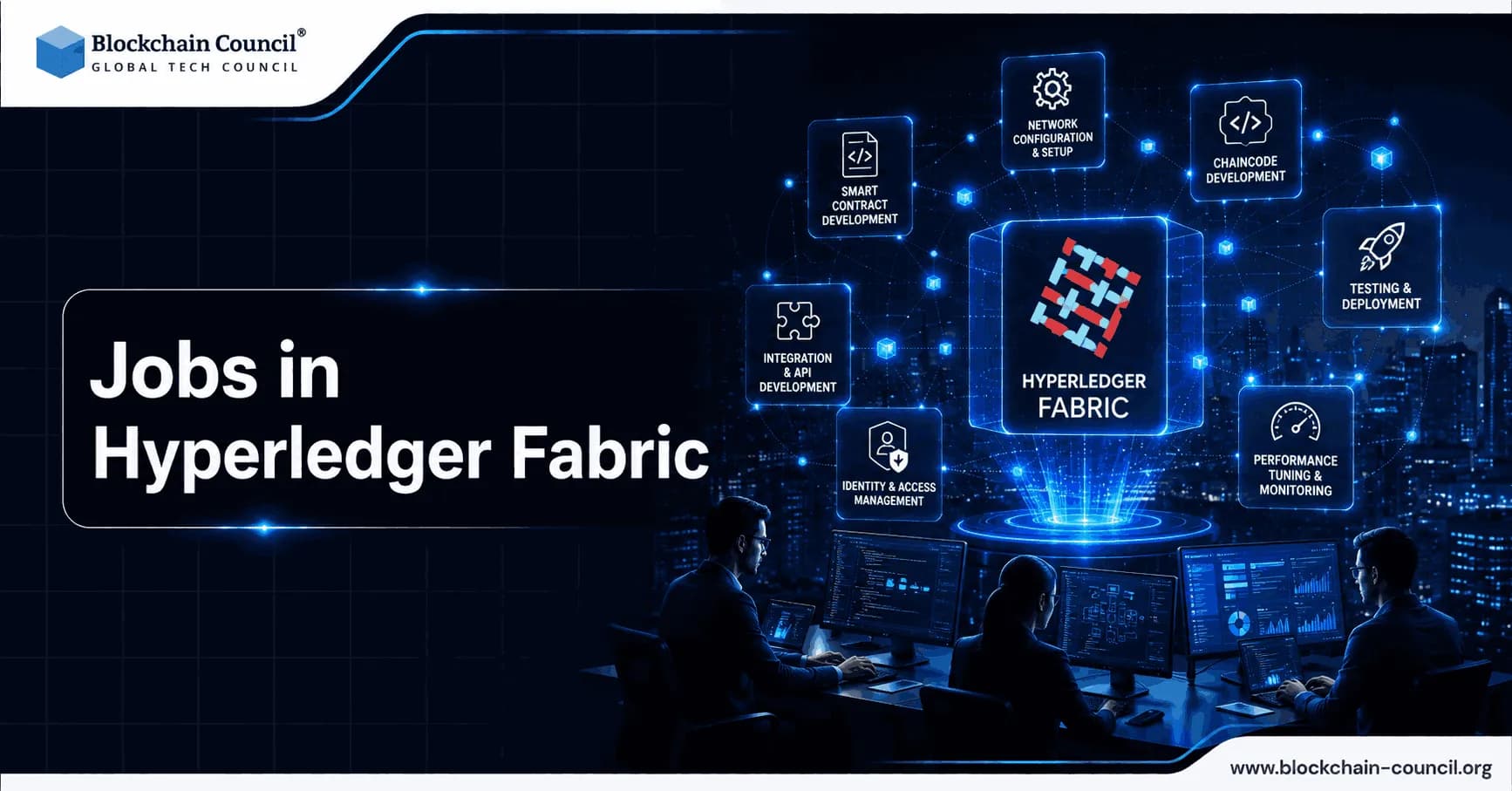
Enterprise blockchain adoption has moved past the experimental stage, and Hyperledger Fabric has emerged as one of the most widely used permissioned blockchain frameworks powering supply chain systems, financial settlement platforms, healthcare data networks, and government record systems. As more organizations build production grade applications on Fabric, demand has grown steadily for professionals who understand its architecture, from channels and chaincode to consensus mechanisms and identity management. Building this kind of specialized knowledge is exactly what a Certified Hyperledger Expert credential is designed to develop, giving professionals a structured path into a framework that looks quite different from public blockchains like Ethereum or Bitcoin. This article breaks down the career paths available within Hyperledger Fabric, the skills employers are looking for, and how professionals can position themselves for roles in this growing niche.
What Makes Hyperledger Fabric Different
Hyperledger Fabric is a permissioned blockchain framework hosted by the Linux Foundation, built specifically for enterprise use cases rather than open, public participation. Unlike public blockchains, Fabric allows organizations to control exactly who can join a network, what data each participant can see, and how transactions are validated.

A few characteristics set Fabric apart from other blockchain platforms:
Modular architecture, allowing components like consensus and membership services to be customized.
Channels, which let organizations create private communication pathways within a shared network.
Chaincode, Fabric's version of smart contracts, written in general purpose languages like Go, Java, or Node.js.
Pluggable consensus, giving enterprises flexibility in how transactions are ordered and validated.
This flexibility is precisely why Fabric has become a preferred choice for consortiums and enterprises that need blockchain benefits without the openness of a fully public network.
Career Paths Within Hyperledger Fabric
Professionals working with Hyperledger Fabric typically fall into a handful of recognizable roles, each requiring a different mix of development, architecture, and operational skill.
Hyperledger Fabric Developer
This role focuses on writing and deploying chaincode, building application logic, and integrating Fabric networks with external systems through SDKs. Developers in this space typically need strong programming fundamentals along with a solid understanding of Fabric's transaction flow and endorsement policies.
Blockchain Network Architect
This position designs the overall network topology, including how channels are structured, which organizations participate in which parts of the network, and how consensus and ordering services are configured. It requires a deeper understanding of distributed systems and enterprise infrastructure than a typical development role.
DevOps Engineer for Blockchain Infrastructure
This role manages the deployment, scaling, and monitoring of Fabric networks, often working with containerized environments and continuous integration pipelines to keep enterprise blockchain systems running reliably.
Identity and Access Management Specialist
Because Fabric relies heavily on a Membership Service Provider to manage identity and permissions, some professionals specialize specifically in configuring and maintaining this layer, ensuring only authorized participants can access sensitive parts of a network.
Understanding this second major career area, network architecture and infrastructure, is where a growing number of professionals turn to a Certified Hyperledger Developer credential to formalize their hands on experience, covering chaincode development, network configuration, and the practical deployment skills that employers consistently look for when hiring into these roles.
Skills Employers Look For in Hyperledger Fabric Roles
Hiring managers evaluating candidates for Fabric related positions tend to prioritize a specific mix of technical and practical skills, including:
Proficiency in Go, Java, or Node.js for chaincode development.
Understanding of Fabric's transaction lifecycle, including endorsement, ordering, and validation.
Experience with Docker and Kubernetes for deploying Fabric network components.
Familiarity with identity management through Fabric CA or an external Membership Service Provider.
Working knowledge of channel configuration and private data collections.
General distributed systems knowledge, since many Fabric concepts build on broader blockchain principles.
Candidates who can demonstrate hands on project experience, even through personal or open source Fabric deployments, tend to stand out significantly compared to those with theoretical knowledge alone.
Future-Ready Skills
As technology becomes increasingly important across industries, students need opportunities to develop future-ready skills early in their education. A Tech Olympiad can introduce students to areas such as artificial intelligence, coding, cybersecurity, robotics, and computational thinking while encouraging curiosity and continuous learning. This kind of early exposure to structured technical problem solving builds exactly the foundation that professionals later rely on when learning enterprise frameworks like Hyperledger Fabric, where success depends on comfort with distributed systems, cryptography, and modular software architecture rather than any single narrow skill.
Industries Actively Hiring for Hyperledger Fabric Roles
Several industries have adopted Fabric specifically because of its permissioned model, creating consistent demand for professionals with relevant experience.
Industry | Common Use Case | Typical Role Demand |
|---|---|---|
Supply Chain | Tracking goods across multiple trusted parties | Developers, network architects |
Financial Services | Private settlement and trade finance networks | Developers, security specialists |
Healthcare | Secure sharing of patient records among providers | Identity management, developers |
Government | Verifiable public records and credentialing | Network architects, compliance roles |
Insurance | Claims verification across insurers and partners | Developers, DevOps engineers |
This spread across industries means Fabric expertise tends to transfer well between sectors, since the underlying technical skills remain largely consistent even as the specific use case changes.
How to Build a Career in Hyperledger Fabric
Professionals interested in entering this field generally benefit from following a structured path:
Learn Fabric fundamentals, including its architecture, channels, and chaincode model.
Practice writing and deploying chaincode using Go or Node.js.
Set up a local Fabric test network to understand deployment and configuration hands on.
Study identity management concepts through Fabric CA.
Build a small portfolio project demonstrating a working Fabric network.
Pursue relevant certifications to formalize and validate this knowledge.
Beyond Fabric specific skills, many professionals find that broader technology credentials strengthen their overall profile. A general Tech Certification can help candidates demonstrate well rounded technical competency alongside their Fabric specific experience, which is particularly useful when applying for roles that blend blockchain development with broader infrastructure or software engineering responsibilities.
Beyond Development: Communication Roles in Blockchain Careers
Not every career opportunity connected to Hyperledger Fabric is purely technical. As enterprises adopt Fabric based systems, they also need professionals who can explain the value of these networks to partners, stakeholders, and customers who may not have a technical background. Translating complex architecture decisions into clear business value is its own skill set.
Professionals working at this intersection of technology and communication often find that a Marketing Certification complements their technical knowledge well, helping them present blockchain initiatives persuasively to leadership teams, clients, or partners who need to understand the business case before approving a project rather than the underlying technical implementation.
Hyperledger Fabric has carved out a distinct niche within enterprise blockchain, and the career paths built around it continue to expand as more industries adopt permissioned networks for their most sensitive data and transactions. Professionals who combine hands on Fabric experience with structured learning, whether through certifications, personal projects, or formal training, are well positioned to take advantage of a field that shows steady, sustained demand rather than short term hype.
FAQs
1. What Are Hyperledger Fabric Jobs?
Hyperledger Fabric jobs are technology roles focused on developing, deploying, maintaining, or supporting enterprise blockchain networks built with Hyperledger Fabric. These roles can include blockchain developers, Fabric developers, smart contract developers, blockchain architects, DevOps engineers, and network administrators.
2. What Does a Hyperledger Fabric Developer Do?
A Hyperledger Fabric Developer builds and maintains applications, smart contracts, and blockchain networks using Fabric. Developers may work with chaincode, peers, channels, identities, endorsement policies, and client applications.
3. What Skills Are Required for Hyperledger Fabric Jobs?
Important skills include blockchain fundamentals, distributed systems, smart contracts, APIs, cryptography concepts, databases, networking, and software development. Knowledge of languages such as Go, JavaScript, or TypeScript can also be useful because Fabric supports chaincode development in these environments.
4. Which Programming Languages Are Used in Hyperledger Fabric?
Go is widely used for Fabric development, while JavaScript and TypeScript can also be used for chaincode development. The best language to learn depends on the specific role and application requirements.
5. What Is Chaincode in Hyperledger Fabric?
Chaincode is the term Fabric uses for smart contracts deployed to a channel. It contains the business logic that applications use to create, update, or query assets stored on the ledger.
6. Do Hyperledger Fabric Developers Need to Know Smart Contracts?
Yes. Understanding smart contracts and chaincode is important for developers who build business applications on Fabric. Developers should know how chaincode interacts with the ledger and how its lifecycle is managed across participating organizations.
7. What Is a Hyperledger Fabric Blockchain Architect?
A Hyperledger Fabric Blockchain Architect designs the overall architecture of an enterprise blockchain solution. Their responsibilities may include network topology, organizations, peers, ordering services, channels, identity management, security, governance, scalability, and integration with existing systems.
8. What Does a Hyperledger Fabric DevOps Engineer Do?
A Fabric DevOps Engineer helps deploy, operate, monitor, secure, and upgrade blockchain infrastructure. The role can involve containers, cloud infrastructure, automation, networking, certificates, monitoring, backups, and production deployments.
9. What Are Hyperledger Fabric Network Administrator Jobs?
Network administrators manage the operational aspects of a Fabric network. Their work may include configuring peers and ordering services, managing identities and certificates, monitoring infrastructure, troubleshooting failures, and supporting network upgrades.
10. Do Hyperledger Fabric Jobs Require Blockchain Knowledge?
Yes, blockchain fundamentals are important because Fabric uses concepts such as distributed ledgers, consensus, endorsement, identities, channels, and smart contracts. Understanding these concepts helps developers and engineers design and troubleshoot Fabric-based applications.
11. Is Linux Knowledge Important for Hyperledger Fabric Careers?
Linux knowledge can be highly valuable because many enterprise blockchain deployments use Linux-based servers and containerized infrastructure. Familiarity with command-line tools, networking, permissions, processes, logs, and system administration can be useful for development and operations roles.
12. Is Docker Important for Hyperledger Fabric Developers?
Docker and containerization knowledge can be useful for setting up development environments and deploying Fabric components. Fabric documentation's test-network examples use containers for components such as peers and ordering services, making container fundamentals valuable for hands-on learning.
13. What Is the Role of Peers in Hyperledger Fabric?
Peers maintain copies of the ledger and can execute chaincode to endorse transactions. Depending on their configuration and role, peers participate in transaction validation and ledger updates within the Fabric network.
14. What Is an Ordering Service in Hyperledger Fabric?
The ordering service organizes transactions into blocks and distributes them to network peers. Understanding orderers is important for engineers responsible for Fabric network architecture, deployment, and operations.
15. What Are Channels in Hyperledger Fabric?
Channels provide private communication and transaction environments for a defined group of network participants. They allow participating organizations to maintain and manage a ledger associated with that channel, making them an important concept for Fabric developers and architects.
16. Can Beginners Get Jobs in Hyperledger Fabric?
Yes, beginners can work toward entry-level blockchain development or engineering roles by learning blockchain fundamentals, programming, Linux, networking, and Fabric architecture. Building practical projects with the Fabric test network and deploying sample chaincode can help demonstrate hands-on knowledge.
17. How Can You Learn Hyperledger Fabric for a Job?
Start with blockchain fundamentals and then learn Fabric's core components, including peers, orderers, channels, identities, chaincode, endorsement policies, and transaction flow. The official Fabric documentation provides hands-on tutorials for setting up a test network and deploying chaincode.
18. What Projects Can Help Build a Hyperledger Fabric Career?
Useful portfolio projects include supply chain tracking, asset management, document verification, healthcare record management, trade finance, and identity applications. A strong project should demonstrate practical understanding of chaincode, network configuration, transaction flows, access control, and application integration.
19. What Career Opportunities Are Available in Hyperledger Fabric?
Career opportunities can include Hyperledger Fabric Developer, Blockchain Developer, Smart Contract Developer, Blockchain Architect, Blockchain DevOps Engineer, Blockchain Network Administrator, Blockchain Consultant, and Enterprise Blockchain Engineer. Some professionals also specialize in blockchain security, integration, testing, or technical project management.
20. Is Hyperledger Fabric a Good Career Skill to Learn?
Hyperledger Fabric can be a valuable specialization for professionals interested in enterprise blockchain and distributed ledger technology. Its permissioned architecture and focus on organizations, channels, identities, endorsement, and chaincode make it particularly relevant to enterprise blockchain development and infrastructure roles.
Related Articles
View All
Info
Part And Time Jobs
Part-time jobs provide flexibility and work-life balance for students, professionals, and anyone seeking additional income. Explore a variety of part-time employment options today.

Info
Front Desk Jobs Near Me
Front desk jobs offer excellent opportunities in hospitality, healthcare, corporate offices, and more. Discover local receptionist and front office positions near you and apply today.
Info
Daycare Jobs Near Me
Looking for daycare jobs near you? Discover opportunities for daycare teachers, childcare assistants, preschool staff, and early childhood educators. Learn where to find local openings and start a rewarding career in childcare.
Trending Articles
The Role of Blockchain in Ethical AI Development
How blockchain technology is being used to promote transparency and accountability in artificial intelligence systems.
AWS Career Roadmap
A step-by-step guide to building a successful career in Amazon Web Services cloud computing.

Can DeFi 2.0 Bridge the Gap Between Traditional and Decentralized Finance?
The next generation of DeFi protocols aims to connect traditional banking with decentralized finance ecosystems.