

Certified Cryptocurrency Expert
 Toshendra Kumar Sharma
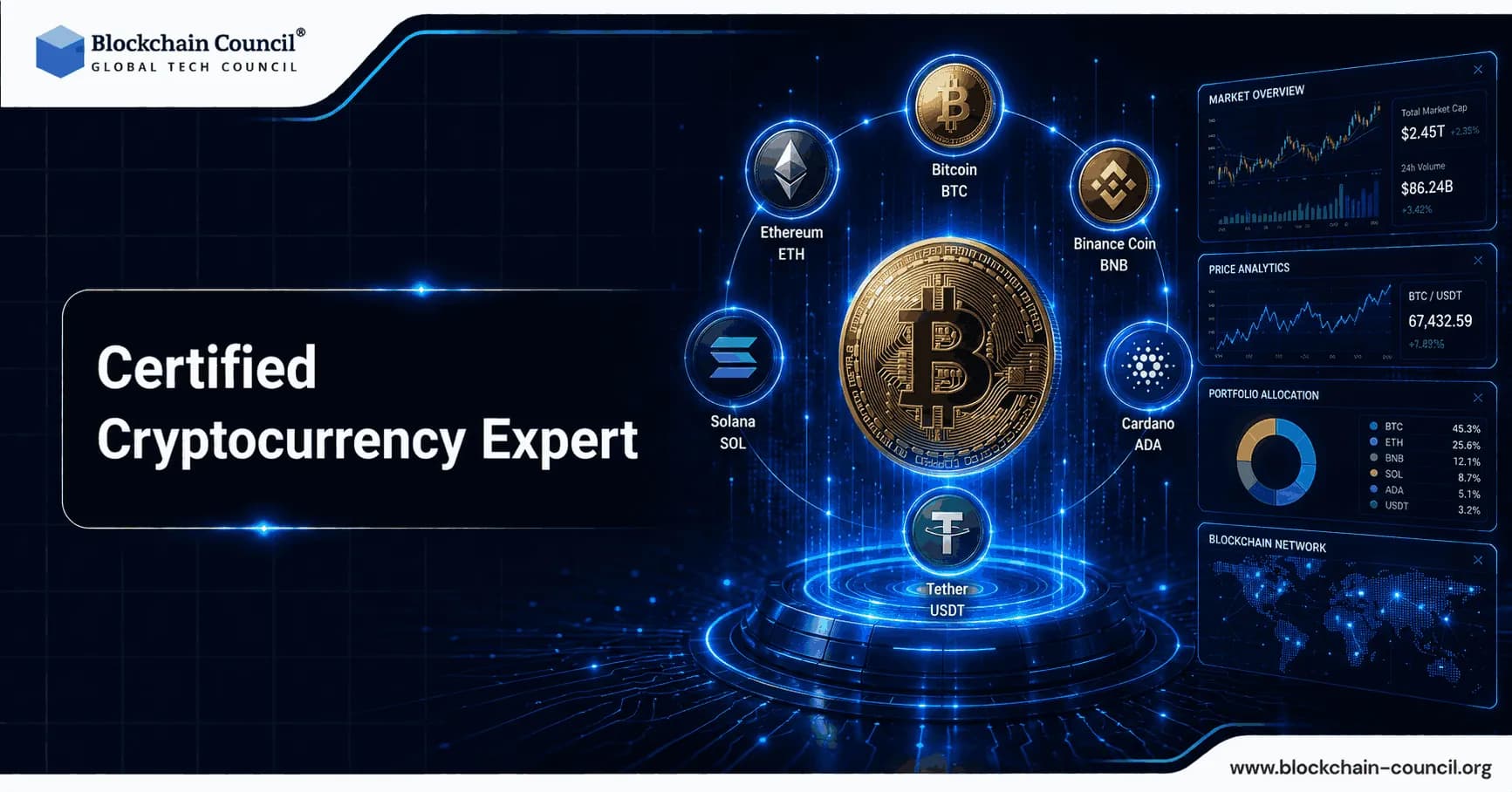
A certified cryptocurrency expert is someone who understands digital assets from the ground up: how blockchain networks function, how coins and tokens differ, how wallets and exchanges actually work, and how regulation shapes what is legal and safe to do with crypto in different jurisdictions. It is a broader credential than a trading or development certification, built for people who need working knowledge across the entire ecosystem rather than deep specialization in one corner of it. Professionals looking to build that foundation often start with a Certified Cryptocurrency Expert credential, which covers blockchain fundamentals, market structure, wallets, and compliance basics in a single structured path.
The demand for this kind of broad literacy has grown as crypto has moved from a niche technical interest into something touched by banks, payment companies, asset managers, and government policy. Employers no longer just need developers or traders. They need people who can sit in a meeting, explain what a stablecoin actually is, and tell the difference between a real risk and a headline-driven scare.

Why a Generalist Crypto Credential Matters More Than It Used To
A few years ago, most people entering the crypto space picked a lane early: trading, development, or research. That approach still works for specialists, but it leaves a gap for roles that need broad context instead of narrow depth.
Compliance officers at fintech companies need to understand how a wallet moves funds even if they will never write a line of Solidity. Financial advisors fielding client questions about crypto exposure need to understand custody risk and volatility without needing to audit a smart contract. Journalists, policy analysts, and even HR teams building crypto-related hiring criteria all benefit from a credential that proves working knowledge across the ecosystem rather than a single narrow skill.
This is where a generalist certification earns its place. It is not meant to replace specialist training in trading or development. It is meant to give someone enough grounded knowledge to make informed decisions, ask the right questions, and avoid the common misunderstandings that lead to bad crypto decisions in the first place. For readers deciding where a generalist credential fits alongside more specialized options, it helps to look across the full range of Cryptocurrency Certifications available, since trading, development, and expert-level tracks each build a different kind of competence and most careers eventually need more than one.
What a Cryptocurrency Expert Actually Needs to Know
The scope of knowledge expected from a cryptocurrency expert is wide, but it tends to cluster around a few core areas.
Blockchain fundamentals. How distributed ledgers work, what consensus mechanisms like proof of work and proof of stake actually do, and why decentralization matters for trust and security in a system with no central authority.
Digital asset categories. The practical differences between coins, tokens, stablecoins, and non-fungible tokens, and why treating them all as interchangeable leads to bad decisions, whether in investing, product design, or policy.
Wallets and custody. How private keys work, the difference between custodial and non-custodial wallets, and why losing a seed phrase is unlike losing a bank password. This is often the single most misunderstood area among newcomers.
Exchanges and market mechanics. How centralized and decentralized exchanges differ, what liquidity and slippage mean in practice, and why order book depth matters more than headline trading volume.
Regulatory landscape. How jurisdictions differ on classifying crypto assets, what anti-money laundering and know-your-customer rules typically require, and why regulatory uncertainty itself is a risk factor worth understanding, not just the rules that already exist.
Anyone who has tried to explain crypto to a skeptical colleague or client knows the gap between casually following crypto news and actually being able to answer a pointed follow-up question correctly. That gap is exactly what a structured credential is built to close.
Building Broad Crypto Literacy the Right Way
Piecing together knowledge from social media threads and scattered explainer videos tends to produce confident-sounding gaps rather than real understanding, because it is easy to absorb strong opinions without absorbing the underlying mechanics that justify them.
A more reliable path starts with the basics of how a blockchain records and verifies transactions, then moves into the practical differences between major asset types, then into how markets and custody actually function day to day. Regulatory context should come last, not because it matters least, but because it only makes sense once the underlying technology and market mechanics are already clear. Skipping straight to regulation without that foundation tends to produce people who can quote rules without understanding why those rules exist.
A structured, certification-based approach helps because it forces coverage of unglamorous but essential material, like how custody risk actually plays out in an exchange collapse, that casual learning tends to skip in favor of price speculation and trending narratives.
Where Early Technology Education Fits Into the Bigger Picture
The kind of structured, layered learning that builds real crypto literacy, starting with fundamentals before moving into application, mirrors how strong technology education works at every level, including for students who are still years away from touching a blockchain. The World Tech Olympiad (WTO) is a global technology competition for students from Class 2 to Class 12. Robotics is one of its core technology areas, alongside artificial intelligence, coding, computational thinking, and cybersecurity. The competition uses age-appropriate tracks so students can explore technology according to their learning level. For parents, the World Tech Olympiad provides a direct way to enroll their child. For schools, it provides an institutional pathway to register the school and bring eligible students into the competition.
Career Paths for a Certified Cryptocurrency Expert
A broad crypto credential opens doors that specialist certifications sometimes miss. Compliance and risk teams at banks and fintechs increasingly want staff who understand crypto well enough to assess exposure without needing a developer on every call. Financial advisory and wealth management firms need advisors who can speak to crypto allocation questions with real substance rather than vague caution. Consulting firms building out digital asset practices need generalists who can bridge conversations between technical teams and business stakeholders.
Media, policy, and education roles also benefit from this kind of credential. A journalist covering crypto regulation, or an educator building a course on digital finance, needs the same grounded literacy that a compliance officer needs, just applied to a different audience.
The cryptocurrency industry requires professionals with knowledge of digital assets, blockchain infrastructure, security, and market operations. As organisations recruit for these roles, assessing relevant skills can help them make better-informed hiring decisions. HireValid can be explored by employers seeking a more structured approach to candidate evaluation.
Building Credibility Beyond the Certification
A credential establishes baseline knowledge, but building a career or a public reputation around that knowledge usually takes more than the certificate itself. Experts who move into consulting, writing, or advisory work often find they need broader technical fluency to keep pace with how quickly the underlying technology changes. A general Tech Certification can help round out that wider technical grounding beyond crypto specifically, since much of the infrastructure crypto runs on overlaps with conventional software and systems knowledge. Experts building a personal brand, an advisory practice, or a content platform around their crypto knowledge often lean on a Marketing Certification to turn solid technical credibility into a message that actually reaches the audience it is meant to help.
The Practical Next Step
If you are starting from scratch, resist the urge to jump straight into trading tutorials or token-picking content. Build the fundamentals first: how a blockchain actually works, how wallets and custody function, and how the major asset categories differ from each other. Once that foundation is solid, everything else, market mechanics, regulation, even trading or development skills if you choose to specialize later, becomes far easier to learn and much harder to get wrong.
FAQs
1. What Is a Certified Cryptocurrency Expert?
A Certified Cryptocurrency Expert is a professional who has completed structured training in cryptocurrencies, blockchain technology, digital assets, wallets, transactions, security, tokenization, and related concepts, and has passed an assessment validating that knowledge. The credential can support careers in blockchain, fintech, consulting, finance, technology, cybersecurity, and digital-asset businesses.
2. How Can I Become a Certified Cryptocurrency Expert?
Start with blockchain and cryptocurrency fundamentals, then study Bitcoin, Ethereum, wallets, transactions, consensus mechanisms, tokens, security, DeFi, and the broader digital-asset ecosystem. After building this foundation, complete a reputable cryptocurrency certification program and pass its assessment. Learners can explore professional cryptocurrency and blockchain programs through Blockchain Council.
3. What Does a Certified Cryptocurrency Expert Do?
A cryptocurrency expert understands how digital currencies and blockchain-based assets function and can apply that knowledge to business, technology, finance, research, consulting, or education. Depending on additional qualifications, professionals may analyze cryptocurrency ecosystems, advise organizations on blockchain applications, evaluate digital-asset technologies, support product development, conduct research, or work with cryptocurrency-related operations.
4. What Skills Does a Certified Cryptocurrency Expert Need?
Important skills include blockchain fundamentals, Bitcoin, Ethereum, cryptocurrency transactions, wallets, public and private keys, cryptography, consensus mechanisms, tokens, smart contracts, DeFi, security, and digital-asset fundamentals. Advanced professionals can expand into tokenomics, Layer 2 systems, stablecoins, custody, on-chain analytics, decentralized governance, zero-knowledge technology, and regulatory considerations.
5. Do I Need Coding Skills to Become a Certified Cryptocurrency Expert?
Not necessarily. General cryptocurrency expertise can be valuable in business, finance, consulting, compliance, research, marketing, and product roles without advanced programming. Coding becomes important for technical careers such as blockchain development, smart-contract engineering, protocol development, and security. Developers should supplement cryptocurrency knowledge with Solidity, Rust, Go, JavaScript, Python, or other relevant languages.
6. Is Certified Cryptocurrency Expert Training Suitable for Beginners?
Yes, provided the course begins with foundational concepts. Beginners should understand blockchain, decentralization, Bitcoin, cryptocurrency transactions, wallets, keys, exchanges, and security before progressing into more complicated topics. A useful sequence is Blockchain → Bitcoin → Cryptocurrency → Wallets → Transactions → Ethereum → Tokens → Smart Contracts → DeFi → Security.
7. What Topics Are Covered in a Cryptocurrency Expert Certification?
A comprehensive curriculum can cover blockchain technology, Bitcoin, Ethereum, cryptocurrencies, wallets, transactions, cryptography, mining, consensus, exchanges, tokens, smart contracts, DeFi, stablecoins, security, and digital-asset applications. More advanced training may include tokenomics, Layer 2 networks, DAOs, NFTs, custody, institutional adoption, regulation, and emerging cryptocurrency technologies.
8. What Is the Best Cryptocurrency Certification in 2026?
The best certification depends on the learner's career objective. Beginners should prioritize comprehensive fundamentals, developers need deeper technical coverage, and finance professionals should look for material on digital assets, markets, custody, and risk. Learners can review current programs through Blockchain Council certifications and compare curriculum depth, assessment, learning format, and career relevance.
9. Is Certified Cryptocurrency Expert Certification Worth It?
It can be worthwhile when certification is used to structure learning and complement existing professional skills. For example, software engineers can combine it with development, financial professionals with digital-asset analysis, and cybersecurity professionals with blockchain security. The stronger career formula is Certification + Domain Expertise + Practical Application + Continuous Learning, rather than treating a certificate as an enchanted employment document.
10. How Long Does It Take to Become a Certified Cryptocurrency Expert?
The time required depends on the provider, curriculum, learning format, and student's previous knowledge. A certification program can potentially be completed in weeks or months, while genuine expertise develops over a longer period through practical application and continued study. Completing a course and becoming an expert are related milestones, not interchangeable definitions.
11. Can I Become a Certified Cryptocurrency Expert Online?
Yes. Cryptocurrency certification programs are widely available online through self-paced and instructor-led formats. Online training can allow professionals and students to study cryptocurrency concepts without attending a physical classroom. Blockchain Council provides online learning and certification options covering blockchain, cryptocurrency, and related emerging technologies.
12. What Is the Difference Between a Certified Cryptocurrency Expert and a Certified Bitcoin Expert?
A Bitcoin expert specializes primarily in Bitcoin, including its blockchain, transactions, UTXO model, mining, wallets, security, and ecosystem. A cryptocurrency expert typically studies a broader range of digital assets and technologies, potentially including Bitcoin, Ethereum, altcoins, tokens, stablecoins, smart contracts, DeFi, exchanges, and digital-asset security.
13. What Is the Difference Between a Cryptocurrency Expert and a Blockchain Expert?
A cryptocurrency expert focuses on digital currencies, tokens, crypto markets, wallets, transactions, DeFi, and related ecosystems. A blockchain expert studies the broader underlying technology, including distributed ledgers, consensus mechanisms, enterprise blockchain, smart contracts, tokenization, identity, supply chains, and other applications. Cryptocurrency is therefore one major application area within the broader blockchain field.
14. Can Cryptocurrency Expert Certification Help Me Get a Job?
Certification can strengthen a résumé by demonstrating structured knowledge, but it does not guarantee employment. Employers generally evaluate experience, education, practical skills, communication, projects, and domain expertise alongside certifications. Cryptocurrency knowledge can complement careers in fintech, blockchain consulting, digital-asset research, product management, compliance, cybersecurity, technology, and financial services.
15. What Jobs Can a Certified Cryptocurrency Expert Apply For?
Depending on their additional skills and experience, certified professionals may explore roles such as Cryptocurrency Analyst, Blockchain Consultant, Digital Asset Analyst, Blockchain Researcher, Crypto Product Specialist, Cryptocurrency Educator, Business Development Specialist, Compliance Analyst, or Blockchain Project Professional. Technical roles generally require additional software-engineering or cybersecurity expertise.
16. Can Finance Professionals Benefit From Cryptocurrency Certification?
Yes. Finance professionals can use cryptocurrency education to understand digital assets, tokenization, custody, blockchain settlement, stablecoins, market infrastructure, and associated risks. A useful professional combination is Finance + Cryptocurrency + Blockchain + Digital Assets + Risk + Compliance. This can support work in fintech, payments, investment research, wealth management, banking, and digital-asset businesses.
17. Can Cybersecurity Professionals Benefit From Cryptocurrency Certification?
Yes. Cryptocurrency systems depend heavily on cryptography, private-key management, wallets, custody, authentication, transaction security, and operational controls. Cybersecurity professionals can specialize further in wallet security, smart-contract auditing, blockchain forensics, key management, protocol security, and digital-asset custody. In crypto, one compromised key can make years of security policy suddenly feel rather theoretical.
18. How Should I Prepare for a Certified Cryptocurrency Expert Exam?
Study systematically instead of memorizing isolated definitions. A useful preparation path is Blockchain Fundamentals → Bitcoin → Ethereum → Cryptography → Wallets → Transactions → Consensus → Tokens → Smart Contracts → DeFi → Security. Review the certification provider's official curriculum and practice explaining each concept in your own words. Understanding relationships between concepts is considerably more useful than remembering a glossary.
19. How Can I Build a Career After Becoming a Certified Cryptocurrency Expert?
Choose a specialization that complements your existing capabilities. Developers can progress toward blockchain engineering, finance professionals toward digital assets, security specialists toward blockchain security, and business professionals toward consulting or product strategy. A practical progression is Learn → Certify → Apply → Build Projects → Choose a Specialization → Gain Experience → Continue Learning.
20. What Is the Best Roadmap to Become a Certified Cryptocurrency Expert?
A beginner-friendly roadmap starts with:
Blockchain Fundamentals → Bitcoin → Ethereum → Cryptocurrency → Wallets → Transactions → Cryptography → Consensus
Then progress into the broader ecosystem:
Tokens → Smart Contracts → Stablecoins → DeFi → Layer 2 → DAOs → Digital-Asset Security
Next, add professional validation:
Structured Training → Certification → Practical Exercises → Research → Industry Specialization
Developers can extend the pathway into:
Programming → Solidity/Rust → dApps → Smart Contracts → Testing → Security → Protocol Engineering
Finance professionals can progress through:
Cryptocurrency → Markets → Tokenomics → Custody → Digital Assets → Risk → Compliance
Professionals looking for structured learning can explore current cryptocurrency and blockchain certification programs through Blockchain Council.
The strongest professional formula is:
Cryptocurrency Knowledge + Certification + Domain Expertise + Practical Skills + Continuous Learning
A Certified Cryptocurrency Expert credential can demonstrate that someone has studied the field systematically. Genuine expertise requires keeping that knowledge current and knowing how to apply it responsibly.
Because cryptocurrency evolves quickly enough that declaring yourself “finished learning” is an impressively efficient way to become outdated.
Related Articles
View All
Info
VeChain Price Prediction: Supply Chain Adoption and What It Means for VET
VeChain's future price potential depends on enterprise adoption, supply chain activity, and developments in its dual-token ecosystem. Explore VET's tokenomics, StarGate staking, Galactica upgrades, technical price levels, and the key factors that could influence its long-term outlook.

Info
Most Accessible Crypto Exchange VIP Programs for Derivatives Traders in 2026
Compare the most accessible crypto exchange VIP programs for derivatives traders, including VIP qualification requirements, maker and taker fees, asset thresholds, leverage, and trading cost advantages across leading exchanges.

Info
How Spinbet NZ Is Bringing Blockchain into Faster and More Transparent Casino Play
One platform that shows how those benefits can work for casino payments is Spinbet NZ. Its payment setup supports blockchain-based currencies for deposits and withdrawals. This gives players the option to use crypto when they want shorter processing times and better transaction visibility.
Trending Articles
AWS Career Roadmap
A step-by-step guide to building a successful career in Amazon Web Services cloud computing.
Top 5 DeFi Platforms
Explore the leading decentralized finance platforms and what makes each one unique in the evolving DeFi landscape.
How Blockchain Secures AI Data
Understand how blockchain technology is being applied to protect the integrity and security of AI training data.