

What is the Lightning Network?
 Toshendra Kumar Sharma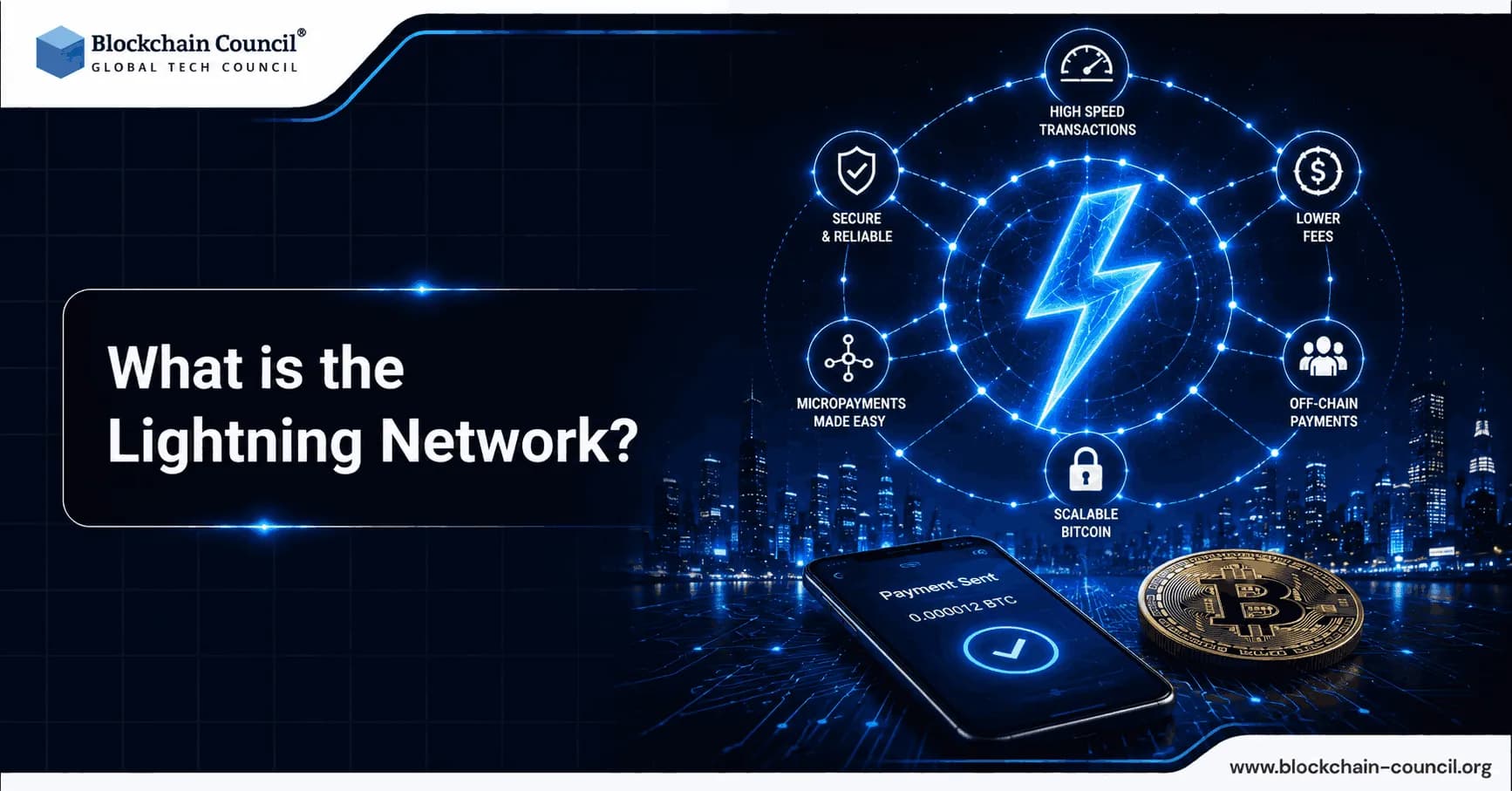
Bitcoin revolutionized digital payments by introducing a decentralized and secure way to transfer value without relying on banks or financial intermediaries. However, as Bitcoin adoption increased worldwide, the network began facing scalability challenges. Transactions could sometimes take longer to confirm during periods of high demand, and network fees often increased, making small everyday payments less practical. To address these limitations while preserving Bitcoin's security, developers introduced the Lightning Network.
The Lightning Network is considered one of the most significant innovations built on top of Bitcoin. It enables users to send and receive payments almost instantly while paying significantly lower transaction fees. Rather than replacing Bitcoin, it enhances the network by processing many transactions off-chain before settling the final balance on the Bitcoin blockchain. As Lightning Network adoption grows among businesses, payment providers, and developers, professionals are increasingly building specialized Bitcoin expertise through the Certified Bitcoin Expert certification from Blockchain Council, which covers Bitcoin architecture, wallets, mining, security, transactions, and scaling technologies like the Lightning Network.

In this article, we'll explain what the Lightning Network is, how it works, its advantages, practical use cases, challenges, and why it plays a vital role in Bitcoin's long-term growth.
What Is the Lightning Network?
The Lightning Network is a second-layer payment protocol built on top of the Bitcoin blockchain. It allows users to conduct multiple Bitcoin transactions without recording every individual payment directly on the main blockchain. Instead, participants open private payment channels where transactions occur instantly and at minimal cost. Only the opening and closing balances are ultimately recorded on the Bitcoin blockchain.
This approach significantly reduces congestion on the main network while improving transaction speed and lowering fees. Because most activity occurs off-chain, the Bitcoin blockchain processes fewer transactions while still maintaining its high level of security.
The Lightning Network uses smart payment channels that securely transfer funds between users without sacrificing decentralization. As long as participants remain connected to the payment channel, they can exchange Bitcoin repeatedly without waiting for blockchain confirmations after each transaction.
As Bitcoin's ecosystem expands, understanding technologies like the Lightning Network has become increasingly valuable for blockchain professionals. Many individuals deepen their expertise through the Certified Cryptocurrency Expert certification, which explores cryptocurrency ecosystems, blockchain infrastructure, decentralized finance, digital assets, and emerging innovations shaping the future of financial technology.
Quick Answer
The Lightning Network is a Layer 2 scaling solution for Bitcoin that enables near-instant, low-cost transactions by processing payments through off-chain payment channels instead of recording every transaction on the main blockchain. This improves Bitcoin's scalability while maintaining the security and decentralization of the underlying network.
How Does the Lightning Network Work?
The Lightning Network builds an additional payment layer on top of Bitcoin, allowing users to transact efficiently without placing unnecessary load on the main blockchain.
The process begins when two participants open a payment channel by creating a transaction on the Bitcoin blockchain. This initial transaction locks a certain amount of Bitcoin into the shared payment channel.
Once the channel is established, both participants can exchange Bitcoin as many times as they wish without broadcasting each individual payment to the blockchain. Every payment updates the channel's balance privately while both parties cryptographically verify the new state.
If either participant wants to close the channel, the latest balance is submitted to the Bitcoin blockchain. Only this final settlement is permanently recorded, regardless of how many transactions occurred within the channel.
The Lightning Network becomes even more powerful because users don't need a direct payment channel with every person they transact with. Instead, payments can automatically route through interconnected channels across the broader Lightning Network, allowing users to send Bitcoin efficiently through trusted intermediary nodes while maintaining security.
This routing capability enables a large decentralized payment network capable of supporting millions of fast transactions without overwhelming Bitcoin's base layer.
Developing, maintaining, and optimizing Lightning Network infrastructure requires expertise in blockchain protocols, cryptography, distributed systems, networking, cybersecurity, cloud infrastructure, and software engineering. Professionals seeking to strengthen these multidisciplinary technical skills often pursue a Tech Certification, helping them build practical knowledge across the technologies that support next-generation blockchain applications.
Why Was the Lightning Network Created?
Bitcoin was originally designed to prioritize decentralization and security over transaction throughput. While this design has contributed to Bitcoin's reliability, it also limits the number of transactions the blockchain can process each second.
As Bitcoin adoption increased, higher transaction volumes occasionally resulted in network congestion and increased fees. For small purchases such as buying coffee, paying for digital subscriptions, or sending microtransactions, waiting for blockchain confirmations was not always practical.
The Lightning Network was created to solve these scalability challenges without modifying Bitcoin's core security model. By moving frequent transactions off-chain while keeping final settlement on-chain, the Lightning Network enables Bitcoin to function more effectively as both a store of value and a medium of exchange.
Benefits of the Lightning Network
One of the most significant advantages of the Lightning Network is transaction speed. Payments are completed almost instantly, making Bitcoin suitable for everyday purchases and real-time financial interactions.
Lower transaction costs represent another major benefit. Since only the opening and closing channel transactions are recorded on the blockchain, users typically pay far lower fees compared to standard on-chain Bitcoin transactions.
The Lightning Network also improves scalability by reducing congestion on Bitcoin's main blockchain. Off-chain processing enables significantly more transactions without compromising network security.
Privacy is enhanced because individual off-chain transactions are not permanently recorded on the public blockchain. Only the opening and closing balances become part of Bitcoin's immutable ledger.
Businesses benefit from improved customer experience through faster checkout processes, lower payment processing costs, and the ability to accept micropayments that would otherwise be uneconomical on the main Bitcoin network.
Real-World Applications of the Lightning Network
The Lightning Network is increasingly being used across multiple industries that require fast and affordable digital payments.
Many online merchants now accept Lightning payments because they offer near-instant transaction confirmation with significantly reduced processing fees. Content creators use Lightning to receive micropayments for articles, podcasts, videos, and digital content that would be difficult to monetize efficiently using traditional payment systems.
Gaming platforms have also adopted Lightning for in-game purchases, player rewards, and microtransactions where speed is essential. International remittance providers continue exploring Lightning as a way to facilitate faster cross-border payments while lowering transfer costs.
Some cryptocurrency exchanges now support Lightning deposits and withdrawals, allowing users to move Bitcoin more efficiently than traditional on-chain transactions. As adoption continues to expand, Lightning is becoming an increasingly important component of the broader Bitcoin ecosystem.
Challenges of the Lightning Network
Despite its advantages, the Lightning Network still faces several challenges.
Users must first understand how payment channels operate, which introduces additional complexity compared to traditional Bitcoin transactions. Liquidity management is another consideration because payment channels require sufficient funds to support transactions.
Routing efficiency also depends on the availability of connected payment channels throughout the network. Although routing technology continues improving, some payments may require multiple intermediary nodes to reach their destination.
The ecosystem is also continuing to mature. Wallet usability, channel management, and infrastructure improvements remain active areas of development as developers work to make Lightning more accessible for mainstream users.
Despite these challenges, continuous innovation has significantly improved the network's reliability, scalability, and overall user experience.
Final Thoughts
The Lightning Network represents one of the most important advancements in Bitcoin's evolution. By enabling near-instant, low-cost transactions without compromising Bitcoin's underlying security, it addresses many of the scalability challenges that have limited everyday cryptocurrency payments. As businesses, developers, and financial institutions continue adopting Lightning-powered solutions, Bitcoin becomes increasingly practical for commerce, remittances, digital services, and global payments.
As this technology grows, organizations need professionals who can not only understand blockchain infrastructure but also explain its value to businesses and consumers. Successfully promoting innovative financial technologies requires effective communication, digital strategy, and market positioning alongside technical expertise. For professionals looking to strengthen these business-oriented capabilities, pursuing a Marketing Certification can provide valuable insights into branding, customer engagement, and technology adoption strategies.
The Lightning Network is more than just a scaling solution it is a critical step toward making Bitcoin faster, more affordable, and more accessible for everyday use while preserving the decentralized principles that made Bitcoin revolutionary in the first place.
FAQs
1. What is the Lightning Network?
The Lightning Network is a Layer 2 scaling solution built on top of the Bitcoin blockchain. It enables users to send and receive Bitcoin transactions faster and at lower cost by processing many payments off-chain before settling the final result on the Bitcoin blockchain.
2. Why was the Lightning Network created?
Bitcoin's base layer prioritizes security and decentralization, but it can process only a limited number of transactions per second. The Lightning Network was developed to improve scalability by enabling instant or near-instant micropayments while reducing congestion on the main blockchain.
3. How does the Lightning Network work?
The Lightning Network uses payment channels between participants. Two users open a payment channel by creating an on-chain Bitcoin transaction. They can then exchange multiple off-chain payments almost instantly. When they finish, the final account balance is recorded on the Bitcoin blockchain through a closing transaction.
4. What is a payment channel?
A payment channel is a secure connection between two Lightning Network participants. It allows multiple Bitcoin transactions to occur off-chain without recording every individual payment on the Bitcoin blockchain, reducing fees and improving speed.
5. What does Layer 2 mean?
A Layer 2 solution is built on top of an existing blockchain to improve scalability and efficiency. Instead of replacing Bitcoin, the Lightning Network works alongside it by handling many transactions off-chain while relying on Bitcoin's security for final settlement.
6. How fast are Lightning Network transactions?
Lightning Network transactions are typically completed within seconds or less, depending on network conditions and routing. This makes it suitable for everyday payments, online purchases, and micropayments.
7. Are Lightning Network transactions cheaper?
Yes. Lightning transactions generally have much lower fees than standard on-chain Bitcoin transactions because only the opening and closing of payment channels require on-chain settlement. Actual fees vary depending on routing and network conditions.
8. What are micropayments?
Micropayments are very small financial transactions that would often be impractical on traditional payment systems because of higher processing fees. The Lightning Network makes these small Bitcoin payments more economical.
9. How are Lightning payments routed?
If two users do not have a direct payment channel, the Lightning Network can route payments through multiple connected channels using intermediary nodes. The routing process is designed so that intermediaries help forward payments without controlling the sender's funds.
10. Is the Lightning Network secure?
The Lightning Network inherits much of its security from the Bitcoin blockchain. Smart contracts, cryptographic techniques, and Bitcoin's underlying security model help protect payment channels. Users should still use reputable wallets and follow good security practices.
11. What can the Lightning Network be used for?
The Lightning Network supports retail payments, online shopping, international remittances, tipping, streaming payments, gaming, subscriptions, donations, machine-to-machine (M2M) payments, and other applications that benefit from fast, low-cost Bitcoin transactions.
12. Which wallets support the Lightning Network?
Many Bitcoin wallets support Lightning payments, including Wallet of Satoshi, Phoenix Wallet, Breez, Zeus, Muun, Blink, Aqua Wallet, and several exchange-integrated wallets. Supported features vary by wallet and platform.
13. What are the advantages of the Lightning Network?
Benefits include faster transaction speeds, lower fees, improved Bitcoin scalability, support for micropayments, reduced blockchain congestion, enhanced payment efficiency, and greater usability for everyday transactions.
14. What are the limitations of the Lightning Network?
Challenges include payment channel liquidity, routing complexity, wallet compatibility, network usability, online node requirements for some users, and the need for broader merchant adoption. It is also not intended to replace all on-chain Bitcoin transactions.
15. Can businesses accept Lightning payments?
Yes. Businesses can integrate Lightning-compatible payment processors, wallets, or point-of-sale systems to accept Bitcoin payments quickly and with relatively low transaction costs, depending on their chosen infrastructure.
16. What common mistakes should beginners avoid?
Common mistakes include misunderstanding the difference between on-chain and Lightning transactions, sending funds to unsupported wallets, neglecting wallet backups, ignoring payment limits, using unofficial wallet applications, and failing to verify recipient details before sending payments.
17. What are best practices for using the Lightning Network?
Best practices include choosing reputable Lightning wallets, keeping software updated, protecting recovery phrases offline, verifying payment requests, understanding wallet fees and channel management, testing small transactions before larger transfers, and using trusted payment providers where appropriate.
18. How does the Lightning Network fit into the Bitcoin ecosystem?
The Lightning Network extends Bitcoin's capabilities by making it more practical for everyday payments while preserving the security of the Bitcoin blockchain. It complements Bitcoin's base layer rather than replacing it, supporting broader adoption of digital payments.
19. What trends are shaping the Lightning Network in 2025-2026?
Major trends include merchant adoption, stablecoin experimentation on Lightning-compatible infrastructure, AI-powered payment automation, Taproot enhancements, cross-border remittances, machine-to-machine (M2M) payments, Internet of Things (IoT) integration, improved wallet user experiences, and expanding enterprise payment solutions.
20. What is the future of the Lightning Network?
The Lightning Network is expected to play an increasingly important role in making Bitcoin more practical for daily transactions by improving speed, reducing costs, and enabling new payment use cases. As wallet technology, payment infrastructure, and merchant adoption continue to evolve, Lightning may become a key component of Bitcoin's long-term scalability strategy. Rather than replacing the Bitcoin blockchain, it enhances it by handling frequent, low-value transactions while leaving the main chain to provide secure final settlement. It's a bit like using local roads for neighborhood traffic instead of insisting every grocery trip should travel on the busiest highway in the country.
Related Articles
View All
Blockchain
Public, Private & Consortium Blockchains: Which Network Fits the Use Case?
Compare public, private, and consortium blockchains by security, speed, privacy, and control, with real examples and a simple guide to choosing the right network.

Blockchain
Beyond Cryptocurrency: How Blockchain Is Transforming Real-World Industries
Explore how blockchain works beyond cryptocurrency in banking, supply chains, healthcare, tokenisation, CBDCs, and government, plus key challenges and career paths.
Blockchain
Smart Contracts & dApps: How Blockchain Becomes Programmable
Learn how smart contracts and dApps make blockchain programmable, from Ethereum and tokens to DeFi, NFTs, real use cases, benefits, and key risks.
Trending Articles

Top 5 DeFi Platforms
Explore the leading decentralized finance platforms and what makes each one unique in the evolving DeFi landscape.

Can DeFi 2.0 Bridge the Gap Between Traditional and Decentralized Finance?
The next generation of DeFi protocols aims to connect traditional banking with decentralized finance ecosystems.
How to Install Claude Code
Learn how to install Claude Code on macOS, Linux, and Windows using the native installer, plus verification, authentication, and troubleshooting tips.