

What is the Best Strategy to Invest in Blockchain Technology?
 Toshendra Kumar Sharma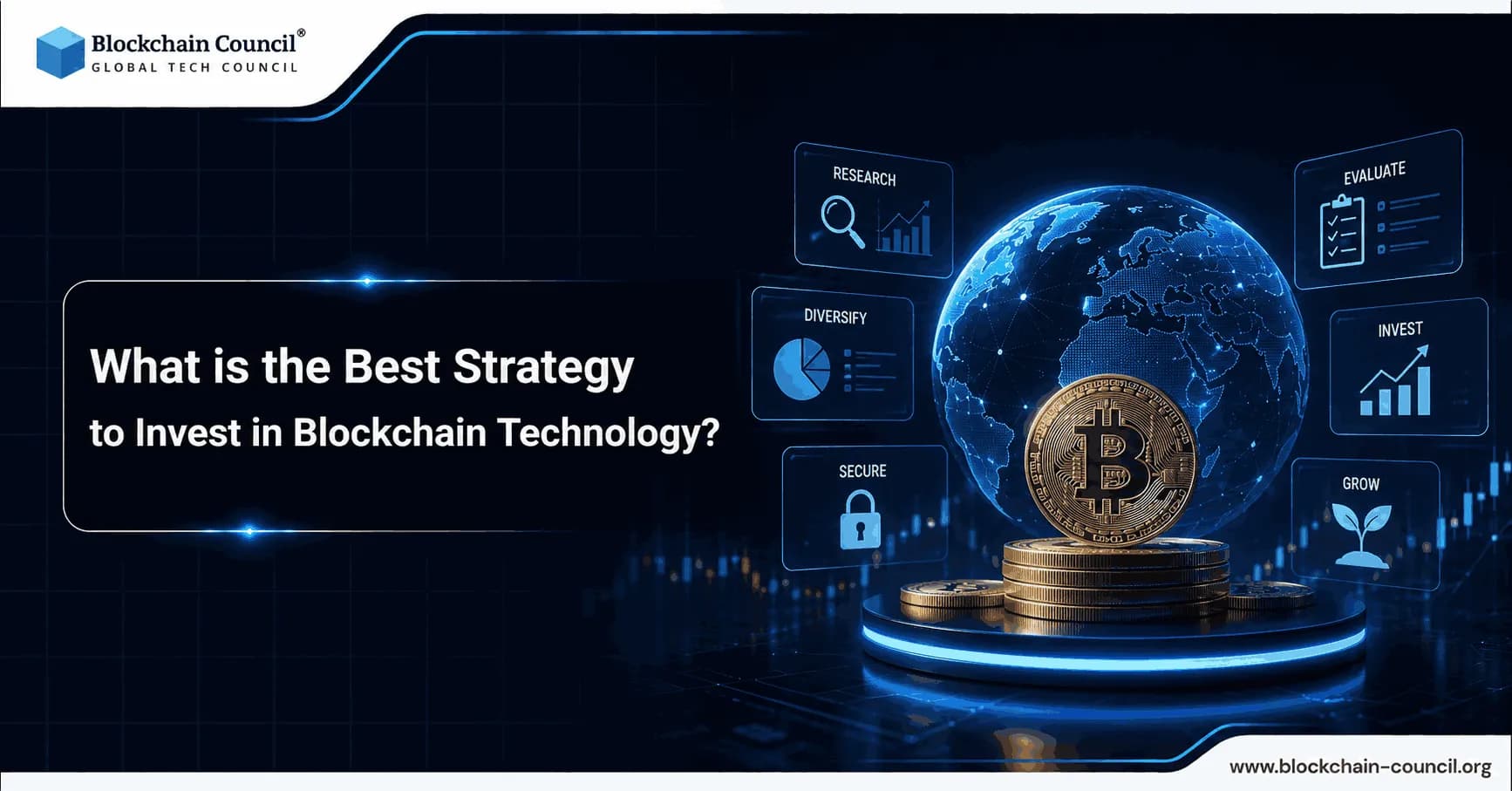
Blockchain technology has evolved from powering cryptocurrencies to becoming a foundation for innovation across finance, healthcare, supply chain, cybersecurity, real estate, gaming, and enterprise software. As governments, businesses, and financial institutions continue investing in blockchain solutions, many individuals are looking beyond short-term market trends and asking a more strategic question: what is the best way to invest in blockchain technology?
The answer goes far beyond simply buying cryptocurrencies. Blockchain is an entire ecosystem that includes digital assets, blockchain infrastructure, enterprise software, decentralized finance (DeFi), tokenized assets, and companies developing blockchain-powered products and services. Understanding these opportunities requires careful research, risk management, and a long-term perspective rather than relying on speculation alone. As blockchain adoption continues expanding, professionals often begin strengthening their technical understanding through the Certified Blockchain Expert certification from Blockchain Council, which provides practical knowledge of blockchain architecture, smart contracts, decentralized applications, enterprise use cases, and emerging blockchain technologies.

In this article, we'll explore effective strategies for investing in blockchain technology, examine the different ways investors can gain exposure to the industry, discuss common risks, and explain how to build a well-informed investment approach.
What Does Investing in Blockchain Technology Mean?
Investing in blockchain technology involves allocating capital to opportunities that benefit from the continued growth and adoption of blockchain-based solutions. While cryptocurrencies such as Bitcoin and Ethereum are among the most visible investment options, blockchain investing also includes publicly traded companies, blockchain infrastructure providers, exchange-traded products, decentralized finance platforms, venture investments, and businesses integrating blockchain into their operations.
Successful blockchain investing requires understanding both the underlying technology and the financial markets surrounding it. Blockchain projects differ significantly in their goals, maturity, adoption levels, and risk profiles. Some focus on digital payments, while others specialize in smart contracts, enterprise software, supply chain management, digital identity, gaming, or tokenization.
Market volatility also makes strategy particularly important. Rather than reacting to short-term price movements, experienced investors typically evaluate long-term fundamentals such as technological innovation, ecosystem growth, developer activity, regulatory developments, and real-world adoption.
Professionals who want to better understand cryptocurrency markets, technical analysis, trading strategies, and portfolio management often strengthen their financial knowledge through the Certified Cryptocurrency Trader (CCT) certification. This helps learners develop practical skills for analyzing digital asset markets while understanding risk management and trading methodologies within the cryptocurrency ecosystem.
Quick Answer
The best strategy to invest in blockchain technology is to focus on long-term value by understanding blockchain fundamentals, diversifying investments, evaluating real-world adoption, managing risk carefully, staying informed about industry developments, and avoiding decisions based solely on short-term market speculation.
How to Build a Smart Blockchain Investment Strategy
A successful blockchain investment strategy begins with education. Before investing in any blockchain-related asset, it is important to understand how blockchain works, what problem a project is solving, and whether it has practical business applications. Investors who understand the underlying technology are generally better equipped to evaluate opportunities objectively rather than relying on market hype.
Diversification is another important consideration. Blockchain is a broad industry with multiple sectors experiencing different rates of growth. Instead of concentrating investments in a single asset or project, many investors choose to diversify across cryptocurrencies, blockchain infrastructure companies, enterprise technology providers, and digital asset investment products. Diversification helps reduce exposure to risks associated with individual projects or market segments.
Evaluating real-world adoption provides valuable insight into long-term potential. Blockchain projects supported by active developer communities, growing user adoption, strong business partnerships, and practical enterprise applications may offer greater sustainability than projects driven primarily by speculation. Monitoring ecosystem development often provides a clearer picture of long-term value than focusing exclusively on short-term price movements.
Risk management remains essential because blockchain markets can experience substantial volatility. Many investors establish predefined investment goals, determine acceptable risk levels, and allocate only a portion of their overall portfolio to blockchain-related assets. This disciplined approach helps reduce emotional decision-making during periods of market uncertainty.
Maintaining a long-term perspective can also improve investment outcomes. Blockchain remains a rapidly evolving technology, and meaningful adoption often develops gradually over many years. Investors who evaluate technological progress, infrastructure development, and business adoption rather than reacting to daily market fluctuations may be better positioned to benefit from long-term industry growth.
Blockchain investing increasingly intersects with technologies such as artificial intelligence, cybersecurity, cloud computing, distributed systems, and enterprise software. Professionals working in these fields often strengthen their multidisciplinary expertise through a Tech Certification, enabling them to better understand how blockchain integrates with broader digital transformation initiatives and emerging technology ecosystems.
Real-World Opportunities in Blockchain Investing
Blockchain investment opportunities now extend well beyond purchasing cryptocurrencies.
Public companies continue integrating blockchain into payment systems, supply chain management, digital identity solutions, and enterprise software platforms. Financial institutions are investing in tokenization, digital asset custody, and blockchain-powered settlement systems. Technology companies are developing blockchain infrastructure that supports decentralized applications, smart contracts, and Web3 services.
Exchange-traded investment products have also expanded access to blockchain-related markets by allowing investors to gain exposure through regulated financial instruments. Venture capital firms continue supporting blockchain startups developing innovative solutions across healthcare, logistics, gaming, and financial technology.
These developments demonstrate that blockchain investing increasingly includes exposure to an expanding technology ecosystem rather than digital currencies alone.
Common Risks Investors Should Consider
Despite its significant potential, blockchain investing involves meaningful risks that require careful evaluation.
Market volatility remains one of the most visible challenges. Cryptocurrency prices can fluctuate considerably over short periods due to changes in investor sentiment, macroeconomic conditions, regulatory announcements, and technological developments.
Regulatory uncertainty also continues evolving across different jurisdictions. Governments are developing policies addressing taxation, digital asset regulation, consumer protection, and compliance requirements that may influence market conditions.
Technological risk should also be considered. Although blockchain has demonstrated substantial potential, competition among blockchain platforms remains intense, and not every project achieves long-term adoption. Investors should evaluate development activity, security practices, governance structures, and practical use cases before making investment decisions.
Cybersecurity represents another important consideration. Investors should prioritize secure wallets, reputable exchanges, and strong digital security practices to protect their assets.
Careful research and disciplined risk management remain essential regardless of market conditions.
The Future of Blockchain Investment
The future of blockchain investing appears closely connected to broader digital transformation trends.
Artificial intelligence, tokenized assets, decentralized finance, digital identity, enterprise blockchain adoption, and Web3 applications are expected to continue expanding over the coming years. As organizations increasingly integrate blockchain into business operations, investment opportunities are likely to extend beyond cryptocurrencies into multiple technology sectors.
Institutional participation also continues growing as financial infrastructure matures and regulatory clarity improves. This gradual institutional adoption may contribute to greater market maturity while supporting broader blockchain innovation.
Rather than representing a single investment category, blockchain is increasingly becoming part of the technological foundation supporting the future digital economy.
Future-Ready Skills
As technology becomes increasingly important across industries, students need opportunities to develop future-ready skills early in their education. A World Tech Olympiad can introduce students to areas such as artificial intelligence, coding, cybersecurity, robotics, and computational thinking while encouraging curiosity and continuous learning.
Final Thoughts
The best strategy for investing in blockchain technology is not based on chasing short-term market movements but on understanding the technology, evaluating real-world adoption, diversifying investments, and maintaining a disciplined long-term perspective. Blockchain continues expanding into industries such as finance, healthcare, supply chain, cybersecurity, and enterprise software, creating opportunities that extend far beyond individual cryptocurrencies.
At the same time, successful participation in the blockchain ecosystem requires more than technical knowledge or investment expertise. Organizations also need professionals who can communicate complex technologies clearly, educate customers, develop effective business strategies, and position blockchain solutions in competitive markets. Building these communication and strategic capabilities alongside technical understanding has become increasingly valuable, which is why many professionals choose to complement their blockchain expertise with a Marketing Certification to strengthen their knowledge of digital strategy, customer engagement, and technology adoption.
Blockchain technology continues evolving at a rapid pace, and while no investment strategy guarantees success, informed decision-making, continuous learning, and a long-term outlook provide a stronger foundation for navigating one of the most innovative sectors in the modern digital economy.
FAQs
1. What is the best strategy to invest in blockchain technology?
There is no single "best" investment strategy for blockchain technology. The right approach depends on your financial goals, investment horizon, risk tolerance, and knowledge of the market. Many investors focus on diversification, long-term research, disciplined investing, and proper risk management rather than attempting to predict short-term price movements.
2. What are the different ways to invest in blockchain?
You can gain exposure to blockchain through:
Cryptocurrencies (such as Bitcoin and Ethereum)
Blockchain-focused stocks
Exchange-Traded Funds (ETFs), where available
Venture capital or startup investments
Tokenized assets
Blockchain infrastructure companies
Mining or staking (where applicable)
Each option carries different levels of risk and potential return.
3. Should beginners invest in blockchain technology?
Beginners should first understand blockchain fundamentals before investing. Learning about wallets, exchanges, security, blockchain networks, and investment risks can help reduce costly mistakes.
4. Is long-term investing better than short-term trading?
Neither strategy is universally better. Long-term investing may reduce the impact of short-term market volatility, while active trading requires greater experience, risk management, and time commitment. Investors should choose an approach that aligns with their goals and experience.
5. Why is diversification important?
Diversification spreads investments across different asset classes, sectors, or blockchain projects. This can help reduce the impact of poor performance from any single investment, although it cannot eliminate investment risk.
6. Should I invest only in cryptocurrencies?
Not necessarily. Blockchain investing can include digital assets, publicly traded companies developing blockchain solutions, ETFs (where available), and other technology investments. Diversifying beyond cryptocurrencies may help balance overall portfolio risk.
7. How important is research before investing?
Research is essential. Investors should evaluate project fundamentals, technology, development activity, adoption, leadership, tokenomics, security, regulatory considerations, and long-term utility rather than relying solely on social media trends or market hype.
8. What is Dollar-Cost Averaging (DCA)?
Dollar-Cost Averaging (DCA) is an investment strategy where you invest a fixed amount at regular intervals regardless of market price. This approach can reduce the impact of short-term price volatility but does not guarantee profits or prevent losses.
9. How do regulations affect blockchain investments?
Government regulations can influence cryptocurrency markets, blockchain businesses, taxation, investor protections, and digital asset adoption. Investors should understand the laws applicable in their jurisdiction before investing.
10. Should investors consider blockchain adoption trends?
Yes. Factors such as enterprise adoption, institutional participation, developer activity, ecosystem growth, real-world use cases, and regulatory progress may provide useful context when evaluating blockchain-related investments.
11. What role does security play in blockchain investing?
Security is critical. Investors should use reputable exchanges, secure wallets, two-factor authentication (2FA), hardware wallets for long-term storage when appropriate, and protect recovery phrases and private keys from unauthorized access.
12. How important is portfolio allocation?
Portfolio allocation helps investors manage risk by deciding how much of their total investments to dedicate to blockchain assets relative to other investments. Appropriate allocation varies depending on individual financial circumstances and risk tolerance.
13. What are the advantages of investing in blockchain technology?
Potential benefits include exposure to emerging technologies, digital asset innovation, decentralized finance (DeFi), tokenization, enterprise blockchain adoption, and long-term technological growth. However, these opportunities come with significant uncertainty.
14. What risks should blockchain investors understand?
Risks include market volatility, regulatory changes, cybersecurity threats, scams, exchange failures, liquidity risks, smart contract vulnerabilities, project failures, taxation issues, and the possibility of losing part or all of an investment.
15. What common investment mistakes should beginners avoid?
Common mistakes include investing without research, chasing market hype, expecting guaranteed returns, neglecting security, concentrating investments in a single asset, ignoring fees, failing to diversify, and investing money needed for essential expenses.
16. How can investors manage risk?
Risk management strategies include diversification, investing only what you can afford to lose, using secure storage solutions, reviewing portfolios periodically, staying informed about regulations, and maintaining a long-term perspective when appropriate.
17. What are best practices for blockchain investing?
Best practices include creating a clear investment plan, researching projects thoroughly, diversifying across assets, using reputable platforms, enabling strong account security, keeping accurate tax records, avoiding emotional decision-making, and regularly reviewing your investment objectives.
18. How does blockchain fit into a diversified investment portfolio?
For some investors, blockchain may serve as one component of a broader portfolio that also includes stocks, bonds, mutual funds, real estate, commodities, and cash. The appropriate balance depends on individual financial goals, investment experience, and risk tolerance.
19. What trends are shaping blockchain investments in 2025-2026?
Major trends include tokenization of real-world assets (RWAs), institutional adoption, stablecoin growth, decentralized identity (DID), AI and blockchain integration, Layer 2 scaling, enterprise blockchain deployment, Central Bank Digital Currency (CBDC) initiatives, cross-chain interoperability, and increasing regulatory clarity in many jurisdictions.
20. What is the long-term outlook for blockchain investing?
Blockchain technology is expected to remain an important area of innovation across finance, healthcare, supply chains, digital identity, and enterprise software. While individual investments may succeed or fail, the broader technology continues to evolve and attract research, development, and commercial adoption. Investors should base decisions on careful analysis, sound financial planning, and realistic expectations rather than speculation alone. The strongest investment strategy is rarely finding the "perfect" asset. It is consistently making informed decisions while remembering that markets, much like weather forecasts, have a habit of humbling anyone who claims absolute certainty.
Related Articles
View All
Blockchain
Blockchain Explained: The Technology Changing How We Trust & Transact
Blockchain explained from the ground up: what it is, why it was created, centralised vs decentralised systems, how blocks, nodes, and ledgers work, how data is stored, security, real-world examples, and how blockchain compares with traditional databases.

Blockchain
How to Write a PRD for Blockchain Products: Key Sections, Examples, and Best Practices
Learn how to write a PRD for blockchain products with key sections, practical examples, tokenomics, security, governance, and success metrics.

Blockchain
Go-to-Market Strategy for Blockchain Products in Competitive Web3 Markets
Learn how to build a go-to-market strategy for blockchain products with value-first positioning, token design, community, security, and Web3 metrics.
Trending Articles
The Role of Blockchain in Ethical AI Development
How blockchain technology is being used to promote transparency and accountability in artificial intelligence systems.
AWS Career Roadmap
A step-by-step guide to building a successful career in Amazon Web Services cloud computing.
What is AWS? A Beginner's Guide to Cloud Computing
Everything you need to know about Amazon Web Services, cloud computing fundamentals, and career opportunities.