

How Blockchain Startups Can Make Money?
 Toshendra Kumar Sharma
Most Blockchain businesses make money by using the software as a Service – Companies such as Tierion and Block cypher charge a fee for using their API and infrastructure with the help of professional services. Some companies build custom projects for enterprise clients. Many existing firms have blockchain practice areas. Examples: IBM, Deloitte, and Gem.

Cryptocurrency Speculation
Some blockchain companies either issue their token or the management holds large amounts of a cryptocurrency such as Ethereum. These companies do work that makes the market value of their token increase. They then sell the token to speculators. Examples: ConsenSys and Lisk
It is a fascinating era for blockchain. We’re in the phase where we have matured as far as data transfer is concerned, but when it comes to value-transfer, we are in the infancy stage.
Most blockchain companies are trying to solve a problem. How can blockchain be applied towards solving a problem today, or improving upon an existing problem?
There are plenty of challenges out there which underlying protocols like the Blockchain can address. Be it public, private or semi-private blockchains; each startup is trying to find a more efficient (in all manner) solution to the underlying problem. Identity, for example, is a huge problem. The current KYC mechanics used in for example money transfer business is almost an 80-year-old template..
How does It work?
Most startups in the blockchain space may not live to see year 2. However, that’s just the nature of evolution. They will come and go. With each cycle, maturing, understanding the market better and developing a robust business model. We may see an odd startup or two making money, but the vast majority are tinkering around and will sooner or later, run out of money in the absence of a viable revenue stream.
It’s still quite a new Technology even now. I guess there will be a more different way to make money. But for a startup idea, you can leverage the technology to do the disruption. I guessed the major Internet giant is harder to make money by using blockchain, since it frequently conflicts with their existing business model.
One of the significant opportunities with blockchain technology is private blockchains used across business networks. R3, backed by a consortium of 42 banks globally, is the poster child. For such things to work all members need to have the same functionally. Indeed the precision required for consensus is such that they will almost certainly need the same code (as is required by all Bitcoin miners). The business model possibilities in this case hopefully become apparent.
The blockchain is a protocol with unique features. Many applications and services will be based on the blockchain. Not just bitcoin’s blockchain, but each application will have its own blockchain, and companies that provide services on those blockchains will make money.
Related Articles
View All
Blockchain
User Experience in Blockchain Products: How to Make Web3 Apps Easier to Use
Learn how to improve user experience in blockchain products with simpler onboarding, clearer transaction flows, safer wallet UX, and better Web3 metrics.
Blockchain
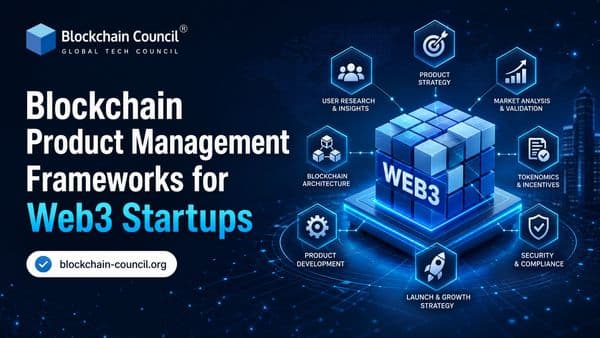
Blockchain Product Management Frameworks for Web3 Startups
A practical guide to blockchain product management frameworks for Web3 startups, covering tokens, governance, security, chain selection, and metrics.

Blockchain
Blockchain Certification Programs You Can Join Online
Discover the best blockchain certification programs you can join online. Learn blockchain fundamentals, smart contracts, enterprise blockchain, and career opportunities with globally recognized certifications.
Trending Articles
The Role of Blockchain in Ethical AI Development
How blockchain technology is being used to promote transparency and accountability in artificial intelligence systems.
How Blockchain Secures AI Data
Understand how blockchain technology is being applied to protect the integrity and security of AI training data.
What is AWS? A Beginner's Guide to Cloud Computing
Everything you need to know about Amazon Web Services, cloud computing fundamentals, and career opportunities.