

What is a Blockchain API? How can you integrate in your website?
 Toshendra Kumar Sharma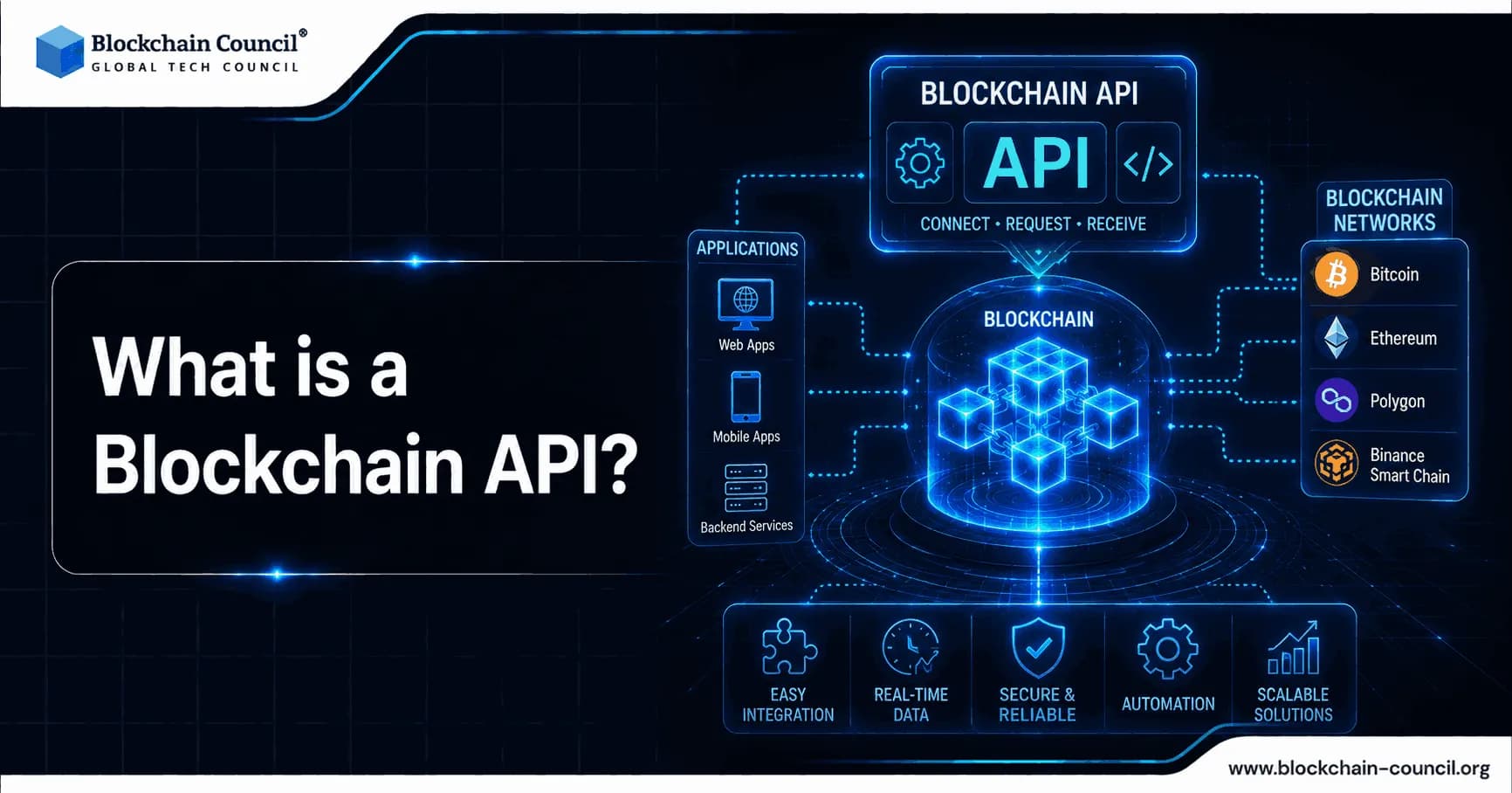
Connecting a website directly to a blockchain network is far more complicated than it sounds. Reading wallet balances, submitting transactions, and monitoring smart contract events all require constant, reliable communication with blockchain nodes, and running that node infrastructure yourself is expensive, operationally demanding, and genuinely impractical for most teams building a website or application. A blockchain API solves exactly this problem, giving developers managed access to globally distributed blockchain node networks through a clean, familiar developer interface, without needing to run and maintain infrastructure themselves. Providers like Alchemy, Infura, Moralis, and QuickNode now support dozens to more than 75 different blockchain networks through a single account, making blockchain integration accessible to teams who would never realistically build this infrastructure from scratch.
Understanding exactly what these APIs do, and how to choose and integrate the right one, starts with genuine technical grounding in blockchain fundamentals. Blockchain Council's Certified Blockchain Expert credential gives web developers and technical teams the foundation needed to make informed architecture decisions before writing a single line of integration code.

What A Blockchain API Actually Is
A blockchain API is a managed service that lets an application communicate with a blockchain network without the application owner needing to run their own node infrastructure. In practical terms, it exposes blockchain functionality, reading account balances, submitting transactions, querying smart contract state, and monitoring events, through standard web development patterns like REST endpoints, JSON-RPC calls, WebSocket connections, and GraphQL queries, the same kinds of interfaces web developers already use to connect to any other third-party service.
Node Providers Versus Data-Enriched APIs
Blockchain APIs generally fall into two broad categories. Node or RPC providers, like Infura and QuickNode, give raw, low-level access to blockchain data, ideal for applications like decentralized apps, DeFi protocols, and trading bots that need direct smart contract interaction. Data-enriched APIs, like Moralis, instead bundle NFT data, token balances, DeFi positions, and wallet history into single, high-level SDK calls, replacing what would otherwise require dozens of raw queries, making them a faster path to production for data-first applications like portfolio trackers and analytics dashboards. Many production websites actually combine both approaches, pairing a node provider for smart contract interactions with a data-enriched API for market prices and wallet information.
Step-By-Step: Integrating A Blockchain API Into Your Website
Step One: Define What Your Website Actually Needs To Do
Before selecting a provider, get specific about the functionality your site requires. Displaying a connected wallet's token balance is a fundamentally different integration than allowing users to mint an NFT, verify a smart contract interaction, or process a cryptocurrency payment. This decision shapes which category of API, and which specific provider, actually fits your project.
Step Two: Choose A Provider Based On Real Requirements, Not Just Popularity
Selection should be driven by concrete project requirements rather than brand recognition alone. If your roadmap includes multiple chains or Layer 2 networks, prioritize a provider that already natively supports them, QuickNode and Ankr both support 60 or more networks, while Infura focuses more narrowly on Ethereum and Consensys-aligned infrastructure with a strong production track record. If your website needs rich, decoded data rather than raw blockchain output, Moralis or similar data-first APIs will typically get you to production faster than working directly with raw RPC methods.
Step Three: Create An Account And Generate API Credentials
Most blockchain API providers offer a free tier for testing and initial development, commonly including a limited number of monthly or daily API credits and a capped request rate. After account creation, the provider issues an API key or endpoint URL that authenticates your website's requests to their infrastructure.
Step Four: Connect Your Website's Backend To The API Endpoint
Using your chosen provider's SDK or direct REST and JSON-RPC calls, connect your website's backend to the blockchain API endpoint. This typically involves installing the provider's software development kit, configuring your API key as an environment variable rather than hardcoding it directly into your codebase, and writing functions that call specific blockchain methods, checking a balance, submitting a transaction, or listening for a smart contract event.
Step Five: Handle Wallet Connections On The Front End
For most websites that let users interact with blockchain functionality directly, connecting a user's own crypto wallet, tools like MetaMask's browser extension or WalletConnect handle the front-end wallet connection process, letting users authorize transactions directly from their own wallet rather than your website ever holding their private keys.
Step Six: Test Thoroughly On A Testnet Before Going Live
Every reputable blockchain API provider supports testnets, sandbox versions of major blockchain networks that use worthless test tokens instead of real cryptocurrency. Test every integration point thoroughly here, transaction submission, error handling, and edge cases, before ever connecting your website to a mainnet where real user funds are at stake.
Executing this integration correctly, particularly the security-sensitive steps around wallet connections and transaction handling, requires genuine, hands-on Web3 development skill rather than general web development experience alone. Blockchain Council's Certified Web3 Expert program is built specifically for this, giving developers the practical expertise needed to integrate blockchain functionality into a website securely and reliably.
Comparing The Leading Blockchain API Providers In 2026
Current comparisons show meaningful differentiation between the major providers. QuickNode leads on raw performance and multi-chain breadth, supporting more than 60 networks with extensive compliance certifications including SOC 1 Type 2 and SOC 2 Type 2. Alchemy distinguishes itself through developer tooling, webhooks, and Supernode infrastructure offering automatic failover and transaction simulation for debugging. Infura, backed by Consensys, remains the most widely deployed RPC provider globally, valued for its production track record across major markets. Moralis stands out specifically for data-rich applications, bundling NFT, token, and DeFi data into streamlined SDK calls rather than requiring raw query construction.
A common, genuinely effective pattern among production websites is pairing two providers together, a node or RPC provider for direct smart contract interactions, alongside a data-enriched API for market prices, wallet balances, and portfolio-style features, giving a site both the low-level control and the high-level convenience each use case actually needs.
Choosing and correctly configuring the right combination of providers for your specific website's needs benefits enormously from structured, comprehensive technical training. A Tech Certification in blockchain development gives web development teams the broader infrastructure knowledge needed to evaluate providers confidently and build integrations that scale reliably as a website's blockchain functionality grows more complex.
Roles, Skills, And Careers Built Around Blockchain API Integration
Web3 Frontend Developer
This role focuses specifically on connecting user-facing website interfaces to blockchain functionality, wallet connections, transaction confirmations, and real-time balance displays, blending traditional frontend development skills with Web3-specific integration experience.
Blockchain Backend Engineer
Backend-focused roles concentrate on server-side integration with node providers and data APIs, handling transaction submission, event monitoring, and the security-critical work of managing API keys and smart contract interactions safely at scale.
API Integration Specialist
As more traditional businesses add blockchain functionality to existing websites, specialists who can evaluate, select, and implement the right blockchain API provider for a specific business need have become a genuinely valuable, specialized consulting niche.
DevOps And Infrastructure Engineers For Web3
Managing rate limits, failover strategies, and multi-provider architectures at production scale requires infrastructure engineers who understand both traditional DevOps practices and the specific operational demands of blockchain API dependencies.
Building Future-Ready Skills
As technology becomes increasingly important across industries, students need opportunities to develop future-ready skills early in their education. A Tech Olympiad can introduce students to areas such as artificial intelligence, coding, cybersecurity, robotics, and computational thinking while encouraging curiosity and continuous learning. Early, structured exposure to programming and systems thinking is exactly what tends to produce the confident, capable developers who go on to build the Web3 integrations powering the next generation of blockchain-connected websites.
Communicating Blockchain Features To Non-Technical Users
Even a flawlessly integrated blockchain API adds little value if website visitors do not understand or trust the new functionality being offered, whether that is connecting a wallet, minting an NFT, or verifying a transaction. A Marketing Certification rounds out that capability well, helping teams translate genuinely useful but unfamiliar blockchain features into clear, approachable messaging that encourages real user adoption rather than confusion or hesitation.
Final Thoughts
A blockchain API removes the single biggest technical barrier standing between a standard website and genuine blockchain functionality, the need to build and maintain node infrastructure from scratch. By choosing the right provider for your specific needs, whether that means raw RPC access through QuickNode or Infura, or richer, decoded data through Moralis, and following a careful, security-conscious integration process from testnet through production, most development teams can add real, reliable blockchain functionality to a website far faster than building this capability independently. Understanding both the technical mechanics and the provider landscape clearly remains the foundation every successful blockchain website integration is built on.
FAQs
1. What is a blockchain API?
A blockchain API is an application programming interface that allows a website, application, or software system to communicate with a blockchain network or blockchain-related service. It can be used to retrieve blockchain data, submit transactions, interact with smart contracts, check wallet balances, and monitor on-chain activity.
2. Why are blockchain APIs important for websites?
Blockchain APIs make it easier for websites to access blockchain functionality without building an entire blockchain infrastructure from scratch. Developers can use APIs to connect websites with wallets, smart contracts, tokens, transactions, NFTs, DeFi applications, and blockchain data.
3. How does a blockchain API work?
A blockchain API typically acts as an interface between a website and blockchain infrastructure.
A simplified process is:
Website → Backend/API → Blockchain Node → Blockchain Network → API Response → Website
For example, a website could request the balance of a blockchain address through an API and display the result to the user.
4. What can a blockchain API do?
Depending on the provider and blockchain, an API can allow developers to:
Retrieve wallet balances
Read blockchain transactions
Query token ownership
Interact with smart contracts
Send blockchain transactions
Monitor addresses
Retrieve NFT information
Access blockchain events
Estimate transaction fees
Retrieve block information
Track on-chain activity
5. Can I integrate a blockchain API into my website?
Yes. Developers can integrate blockchain APIs into websites using common programming technologies such as JavaScript, TypeScript, Python, PHP, Java, or Node.js.
The exact integration method depends on the blockchain network, API provider, authentication method, and functionality required.
6. What are the basic steps to integrate a blockchain API?
A typical integration process is:
Choose the blockchain network.
Select an appropriate API or node provider.
Create an account if required.
Generate API credentials.
Read the provider's documentation.
Configure your website's backend.
Send API requests.
Process blockchain responses.
Display relevant data on your website.
Add security, error handling, and rate-limit protection.
7. Do I need to run my own blockchain node to use an API?
No. Third-party blockchain infrastructure providers can give developers access to blockchain nodes through APIs and RPC endpoints.
Running your own node can provide greater infrastructure control, but it also requires hardware or cloud resources, maintenance, synchronization, monitoring, and technical expertise.
8. What is an RPC API in blockchain?
RPC (Remote Procedure Call) allows an application to communicate with a blockchain node and request information or submit operations.
For example, an Ethereum-compatible application can use JSON-RPC methods to retrieve blockchain information, query account data, estimate gas, or submit signed transactions.
9. What is the difference between a blockchain API and an RPC endpoint?
An RPC endpoint generally provides direct communication with a blockchain node using the network's supported RPC methods.
A blockchain API can provide a higher-level interface that simplifies access to blockchain information or functionality. API providers may offer additional features such as indexed transaction histories, NFT data, analytics, webhooks, and account monitoring.
10. Can a blockchain API retrieve wallet balances?
Yes. A blockchain API or RPC endpoint can retrieve the balance associated with a blockchain address.
For token balances, developers may need to query the relevant token smart contract or use an API provider that offers indexed token-balance data.
11. Can I use a blockchain API to display cryptocurrency prices?
Yes, but cryptocurrency market-price APIs and blockchain data APIs are different types of services.
A blockchain API can provide on-chain information such as transactions and balances, while a market-data API may provide prices, trading volume, market capitalization, and historical market data.
A website can combine both types of APIs.
12. Can blockchain APIs interact with smart contracts?
Yes. On compatible networks, applications can interact with smart contracts by calling their functions and reading contract data.
For example, a decentralized application could use an API or RPC connection to:
Website → Smart-contract function → Blockchain → Response → Website
Transactions that change blockchain state generally need to be signed before submission.
13. How can I connect an Ethereum website to a blockchain API?
For an Ethereum-based website, developers commonly use an Ethereum-compatible RPC endpoint and a Web3 library such as ethers.js or web3.js.
A basic architecture is:
Frontend → Backend or Web3 provider → Ethereum RPC → Ethereum network
For applications involving user transactions, a wallet provider can be integrated so that users approve and sign transactions themselves.
14. Do blockchain APIs require API keys?
Many third-party blockchain API providers use API keys for authentication, usage tracking, rate limiting, or access to premium features.
API keys should generally be stored securely on the server side when they provide privileged access. They should not be unnecessarily exposed in publicly accessible frontend code.
15. How do I keep a blockchain API integration secure?
Important security practices include:
Keep private API credentials secret.
Use HTTPS.
Store secrets in environment variables or a secure secrets manager.
Implement authentication and authorization.
Validate API responses.
Apply rate limits.
Monitor unusual activity.
Use secure transaction-signing practices.
Never expose users' private keys.
Implement appropriate logging and error handling.
16. Can blockchain APIs be used for NFT websites?
Yes. Blockchain APIs can help NFT websites retrieve information such as token ownership, collection data, metadata, transaction history, and transfer events.
A marketplace may combine blockchain APIs with databases and decentralized or conventional storage systems to provide a complete user experience.
17. Can blockchain APIs be used for DeFi websites?
Yes. DeFi applications can use blockchain APIs and RPC infrastructure to interact with smart contracts, liquidity pools, lending protocols, token balances, and transaction data.
Because financial transactions can involve real economic value, developers should conduct thorough smart-contract, security, and transaction-validation testing before deploying a DeFi application.
18. What are the benefits of integrating a blockchain API into a website?
Major benefits include:
Faster development
Access to blockchain data
Easier smart-contract integration
Reduced infrastructure requirements
Real-time transaction information
Wallet and token integration
Scalable blockchain connectivity
Easier development of Web3 applications
APIs can allow development teams to focus on the website's functionality instead of maintaining every part of the underlying blockchain infrastructure.
19. What are the challenges of blockchain API integration?
Common challenges include:
API rate limits
Network congestion
RPC failures
Blockchain reorganizations
Transaction confirmation delays
API-provider downtime
Incorrect or incomplete data
Gas-fee changes
Security vulnerabilities
Vendor dependency
A production website should therefore include caching, retries, monitoring, fallback infrastructure, and appropriate error handling.
20. What is the future of blockchain APIs?
Blockchain APIs are likely to become increasingly important as websites and applications integrate tokenized assets, stablecoins, digital identity, NFTs, DeFi, RWA tokenization, blockchain payments, and smart-contract automation.
Instead of every company operating blockchain infrastructure independently, API and infrastructure providers can abstract much of the technical complexity, allowing developers to build blockchain-enabled applications using familiar web-development workflows.
Related Articles
View All
Blockchain
Blockchain Certification Programs You Can Join Online
Discover the best blockchain certification programs you can join online. Learn blockchain fundamentals, smart contracts, enterprise blockchain, and career opportunities with globally recognized certifications.

Blockchain
Agile for Blockchain Teams: Managing Sprints, Smart Contracts, and Decentralized Roadmaps
Learn how agile for blockchain teams works when sprints, smart contracts, audits, governance, and decentralized roadmaps are planned around risk.

Blockchain
How to Write a PRD for Blockchain Products: Key Sections, Examples, and Best Practices
Learn how to write a PRD for blockchain products with key sections, practical examples, tokenomics, security, governance, and success metrics.
Trending Articles
What is AWS? A Beginner's Guide to Cloud Computing
Everything you need to know about Amazon Web Services, cloud computing fundamentals, and career opportunities.

Can DeFi 2.0 Bridge the Gap Between Traditional and Decentralized Finance?
The next generation of DeFi protocols aims to connect traditional banking with decentralized finance ecosystems.
Claude AI Tools for Productivity
Discover Claude AI tools for productivity to streamline tasks, manage workflows, and improve efficiency.