

Best Open Source Blockchain Platforms
 Toshendra Kumar Sharma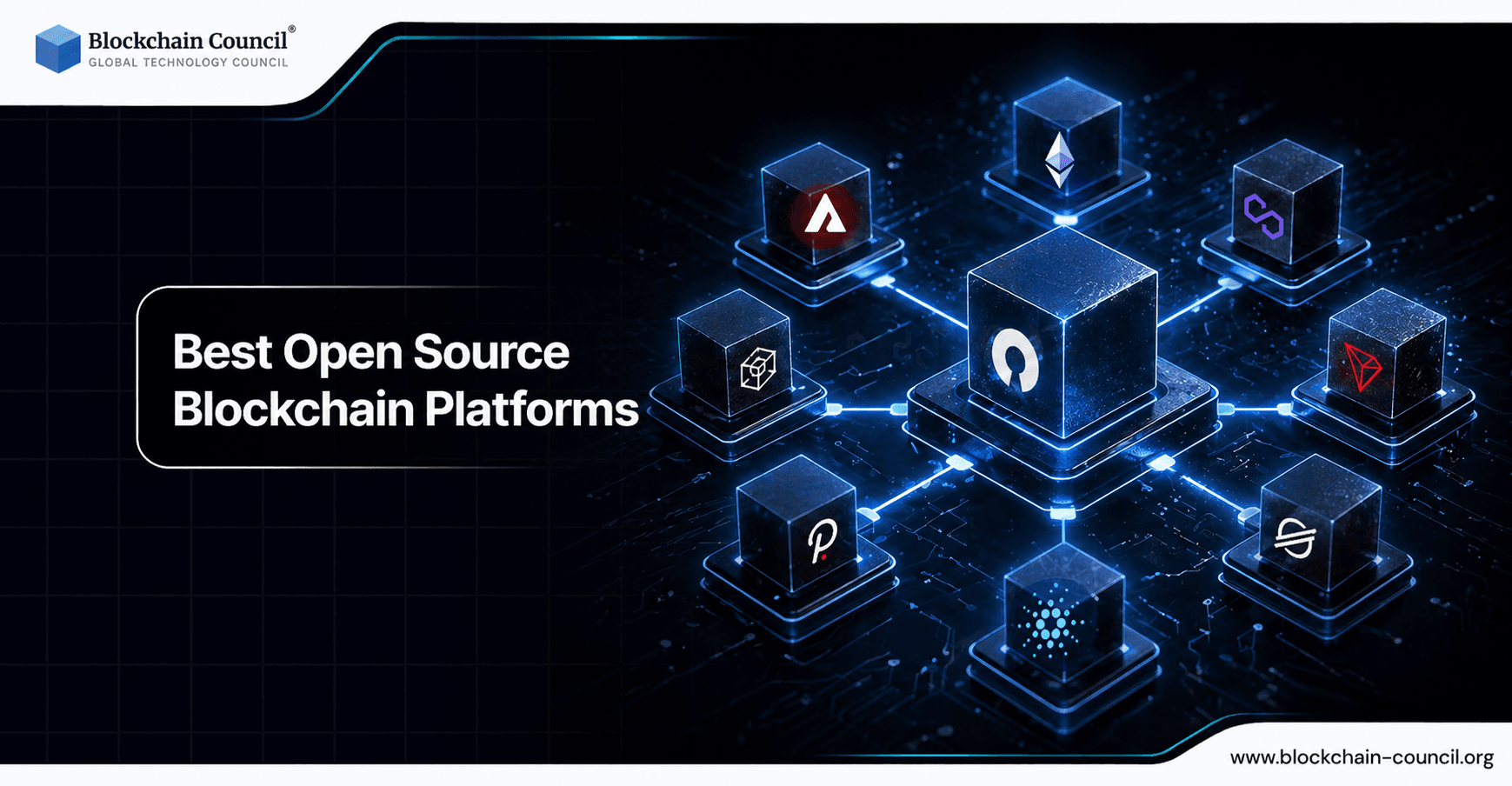
Open-source blockchain platforms play a critical role in the growth of decentralized technologies. They allow developers and organizations to build, test, and deploy blockchain-based applications without relying on proprietary systems. By providing transparent codebases and active communities, these platforms accelerate innovation and reduce development costs.
Over the years, the ecosystem has evolved significantly. Early platforms like Eris and HydraChain are no longer widely used, while newer and more robust frameworks have emerged. Today, open-source blockchain platforms support enterprise solutions, decentralized finance, digital identity, and more. Explore top open-source blockchain platforms like Ethereum, Hyperledger, and MultiChain to choose the right stack for your project by building expertise through a Certified Blockchain Expert, testing frameworks using a Python certification, and scaling your development journey via a Digital marketing course.

This guide explores the best open-source blockchain platforms in 2026, their features, and how to choose the right one for your needs.
What Is an Open Source Blockchain Platform?
An open-source blockchain platform is a framework where the source code is publicly available for anyone to inspect, modify, and use. These platforms enable developers to build decentralized applications, smart contracts, and custom blockchain networks.
Key characteristics include transparency, community-driven development, flexibility, and lower costs compared to proprietary systems.
Why Use Open Source Blockchain Platforms?
Open-source platforms offer several advantages.
They reduce development costs by eliminating licensing fees. They allow customization based on specific business requirements. They provide transparency, which improves trust and security.
Active developer communities also contribute to faster updates, bug fixes, and innovation.
Best Open Source Blockchain Platforms in 2026
Ethereum
Ethereum remains the most widely used open-source blockchain platform.
It supports smart contracts and decentralized applications through the Ethereum Virtual Machine. Developers use Solidity to build applications across finance, gaming, and identity systems.
Ethereum’s large ecosystem and strong developer community make it a top choice.
Hyperledger Fabric
Hyperledger Fabric is an enterprise-focused blockchain platform developed under the Linux Foundation.
It supports permissioned networks, making it ideal for businesses that require privacy and control. It offers modular architecture and customizable consensus mechanisms.
Industries such as finance and supply chain widely use Hyperledger Fabric.
Polkadot
Polkadot is an open-source platform designed for interoperability between blockchains.
It allows multiple blockchains, known as parachains, to connect and share data securely. This enables scalable and flexible blockchain ecosystems.
Polkadot is widely used for cross-chain applications.
Solana
Solana is a high-performance blockchain platform known for its speed and low transaction costs.
It supports decentralized applications and smart contracts, making it suitable for high-throughput use cases such as DeFi and gaming.
Solana’s architecture focuses on scalability without sacrificing performance.
Avalanche
Avalanche is an open-source platform designed for building custom blockchain networks and decentralized applications.
It offers high transaction speed and low latency. Developers can create custom blockchains with specific rules and configurations.
Avalanche is widely used in financial applications and enterprise solutions.
Cosmos
Cosmos focuses on interoperability and scalability.
It allows developers to build independent blockchains that can communicate with each other using the Inter-Blockchain Communication protocol.
Cosmos is often used for building scalable and interconnected blockchain ecosystems.
MultiChain
MultiChain remains a practical choice for creating private blockchains.
It allows organizations to build permissioned networks quickly with customizable features. It is widely used in enterprise environments for data sharing and asset management.
OpenChain
OpenChain is designed for managing digital assets within organizations.
It provides a centralized yet distributed ledger approach, making it suitable for internal systems. It is easy to deploy and offers high scalability.
Key Features to Consider
When choosing a blockchain platform, consider several factors.
Scalability determines how well the platform handles large transaction volumes. Security ensures protection against attacks and data breaches.
Interoperability allows integration with other systems and blockchains. Flexibility enables customization for specific use cases.
Developer support and documentation also play an important role.
Use Cases of Open Source Blockchain Platforms
Open-source blockchain platforms support a wide range of applications.
They are used in decentralized finance for lending, trading, and payments. Supply chain systems use blockchain for tracking goods and verifying authenticity.
Healthcare applications use blockchain for secure data sharing. Governments use it for identity management and public records.
These use cases demonstrate the versatility of blockchain technology.
Advantages of Open Source Blockchain Platforms
Open-source platforms provide transparency and trust through publicly available code.
They enable rapid innovation through community contributions. They reduce costs and allow customization.
Organizations can avoid vendor lock-in and maintain control over their systems.
Challenges of Open Source Blockchain Platforms
Despite their benefits, open-source platforms have challenges.
They may require technical expertise to implement and maintain. Security risks can arise if code is not properly audited.
Scalability issues may affect performance in large systems. Governance can also be complex in decentralized environments.
How to Choose the Right Platform
Choosing the right platform depends on your use case.
For public applications, Ethereum or Solana may be suitable. For enterprise solutions, Hyperledger Fabric or MultiChain may be better options.
If interoperability is important, consider Polkadot or Cosmos.
Evaluate performance, cost, and developer support before making a decision. Build real-world blockchain applications using open-source tools and frameworks by mastering development through a Certified Blockchain Expert, integrating systems using a Node JS Course, and promoting your projects using an AI powered marketing course.
The Future of Open Source Blockchain
Open-source blockchain platforms will continue to evolve.
Interoperability between networks will improve. Layer 2 solutions will enhance scalability.
Enterprise adoption will increase, and new use cases will emerge across industries.
Open-source development will remain central to blockchain innovation.
Frequently Asked Questions
1. What is an open-source blockchain platform?
It is a blockchain framework with publicly available code that developers can use and modify.
2. Why are open-source blockchains important?
They promote transparency, reduce costs, and enable innovation through community contributions.
3. Which is the best open-source blockchain platform?
Ethereum is widely considered the most popular, but the best choice depends on your use case.
4. What is Hyperledger Fabric?
It is an enterprise blockchain platform designed for permissioned networks.
5. What is Polkadot used for?
Polkadot enables interoperability between different blockchains.
6. What is Solana known for?
Solana is known for high-speed transactions and low fees.
7. What is Avalanche?
Avalanche is a platform for building custom blockchain networks and applications.
8. What is Cosmos?
Cosmos is a blockchain ecosystem focused on interoperability and scalability.
9. Is MultiChain still used?
Yes, MultiChain is still used for private and enterprise blockchain solutions.
10. What is OpenChain?
OpenChain is a platform for managing digital assets within organizations.
11. Are open-source blockchains secure?
They can be secure if properly maintained and audited.
12. What are smart contracts?
Smart contracts are self-executing programs that run on blockchain networks.
13. Can businesses use public blockchains?
Yes, but they must consider scalability, privacy, and costs.
14. What is interoperability in blockchain?
It is the ability of different blockchains to communicate and share data.
15. What are Layer 2 solutions?
Layer 2 solutions improve scalability and reduce transaction costs.
16. What industries use blockchain platforms?
Finance, healthcare, supply chain, and government sectors use them.
17. What are the challenges of open-source blockchain?
Challenges include complexity, scalability, and security risks.
18. How do I choose a blockchain platform?
Consider your use case, scalability, cost, and developer support.
19. Are open-source platforms free?
Most are free to use, but infrastructure and development costs still apply.
20. What is the future of blockchain platforms?
They will focus on scalability, interoperability, and enterprise adoption.
Related Articles
View All
Blockchain
How to Write a PRD for Blockchain Products: Key Sections, Examples, and Best Practices
Learn how to write a PRD for blockchain products with key sections, practical examples, tokenomics, security, governance, and success metrics.

Blockchain
Roadmap Planning for Blockchain Products: Best Practices for Web3 Teams
Learn how Web3 teams can plan blockchain product roadmaps with security milestones, governance alignment, flexible timelines, and clear feedback loops.

Blockchain
Blockchain Product Manager Certification Guide: Best Credentials to Advance Your Career
A practical guide to Blockchain Product Manager Certification paths, including blockchain, product, agile, and finance credentials for Web3 careers.
Trending Articles
The Role of Blockchain in Ethical AI Development
How blockchain technology is being used to promote transparency and accountability in artificial intelligence systems.
AWS Career Roadmap
A step-by-step guide to building a successful career in Amazon Web Services cloud computing.
Claude AI Tools for Productivity
Discover Claude AI tools for productivity to streamline tasks, manage workflows, and improve efficiency.