

Key Use Cases of Blockchain
 Toshendra Kumar Sharma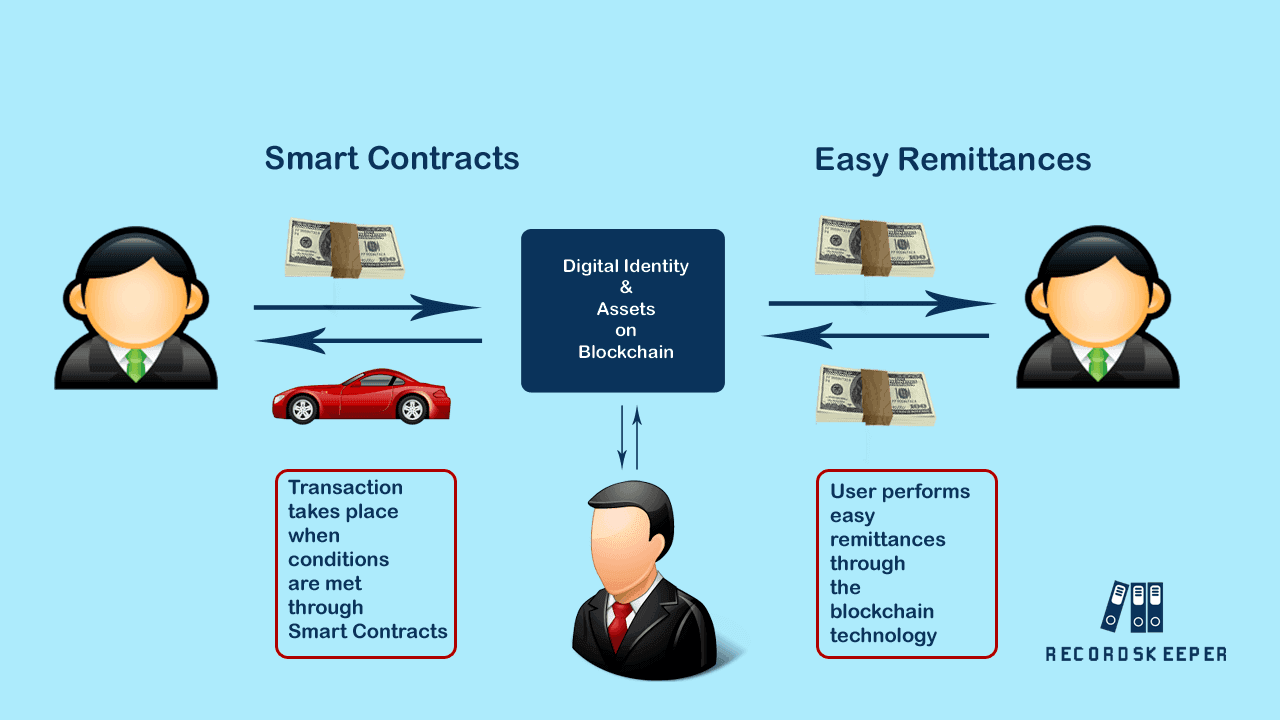
Blockchain is a way out of most of the economic and financial problems of the world. Still though in its nascent stages, it has begun to revolutionize the whole world. Some of the major corporations of the world have begun to scratch the surface of the technology. It is a contemporary living example of how a revolutionary technology emerges from its fetal stages into growing wings.
Blockchain Uses & Solutions
Limitations in current technologies have led to the rise of blockchain technology. The technology finds plenty of use cases across almost all the industries. So, let’s look into some of the key use cases of the blockchain technology:

Perfect Solution to De-Risking or De-Banking
When banks pulled out of smaller economies citing loss as in the Caribbean islands, blockchain came to the rescue. Trade and inward remittances began happening through shared ledgers using bitcoins. The limitations in centralized conventional banking systems did not allow for profitable transactions to take place in smaller economies. Unable to work around the system and the regulations, banks pulled out to make way for blockchain technology.
Smaller economies, especially, have begun lapping up the technology to overcome the limitations in conventional banking. So, stock exchanges like NASDAQ and many other banks around the world have begun testing this new technology.
Easy Remittances
With the Philippines being a fine example, remittances around the globe have started happening through bitcoin currency and distributed ledgers. Each country has a different regulation when it comes to inward and outward remittances. Since blockchain technology eliminates the need for any intermediary, peer-to-peer and business-to-business transactions are made easy, unlike conventional banking. Both domestic and international payments can happen quite easily through the blockchain mechanism.
Digital Identity & Digital Assets
Digital identity will form part of one of the most important of functions of blockchain technology. KYC processes throughout the world have been under fire for all their complications. Hence, blockchain-based KYC is the future with its distributed ledger technology. It is sure to make KYC processes easier, transparent and highly cost-effective, due to its shared, decentralized and verifiable nature.
Digital identity gives rise to the recording of digital and smart assets in the blockchain. An individual’s entire portfolio of assets and ownership goes into the shared ledger, which remains anonymous, verifiable and immutable. Digital identity and digital assets will become immediate parts of the blockchain, as soon as the technology goes fully ripe.
Smart Contracts
A Smart Contract is just like how blockchain functions but with the pre-programmed terms of a contract. Execution of the contract happens on its own, when both the parties fulfill the conditions laid out. The smart contract program, upon agreement of price between the two parties, executes the contract and performs the transaction automatically.
The software verifies the owner, performs the transaction and ships the product or transfers ownership registrations on its own. Smart contracts can execute purchase or sale of the house, cars, financial instruments, marriage registration, divorce, property registrations, etc. without human intervention. The benefit is that it eliminates intermediaries as banks and brokers or agents and the individual performs the entire transactions on his own.
The key use cases or application of blockchain technology will multiply in the coming years. It will take over most of the processes of many industries all over the world. It is also set to become an integral part of human lives in all our day-to-day activities.
Related Articles
View All
Blockchain
Blockchain for Small Businesses: Key Advantages and Use Cases
Explore how blockchain helps small businesses reduce costs, improve security, automate workflows, and gain better supply chain visibility.

Blockchain
Blockchain in Banks: Use Cases, Benefits, Risks, and the AI Connection
Explore how blockchain in banks is reshaping payments, trade finance, tokenized deposits, KYC, AML, and AI-driven risk workflows.
Blockchain
Top Blockchain Use Cases in Banks and Financial Services
Explore the top blockchain use cases in banks, from payments and trade finance to tokenization, settlement, lending, KYC, and digital asset services.
Trending Articles
The Role of Blockchain in Ethical AI Development
How blockchain technology is being used to promote transparency and accountability in artificial intelligence systems.
AWS Career Roadmap
A step-by-step guide to building a successful career in Amazon Web Services cloud computing.

Top 5 DeFi Platforms
Explore the leading decentralized finance platforms and what makes each one unique in the evolving DeFi landscape.