

How to Launch an ICO?
 Toshendra Kumar Sharma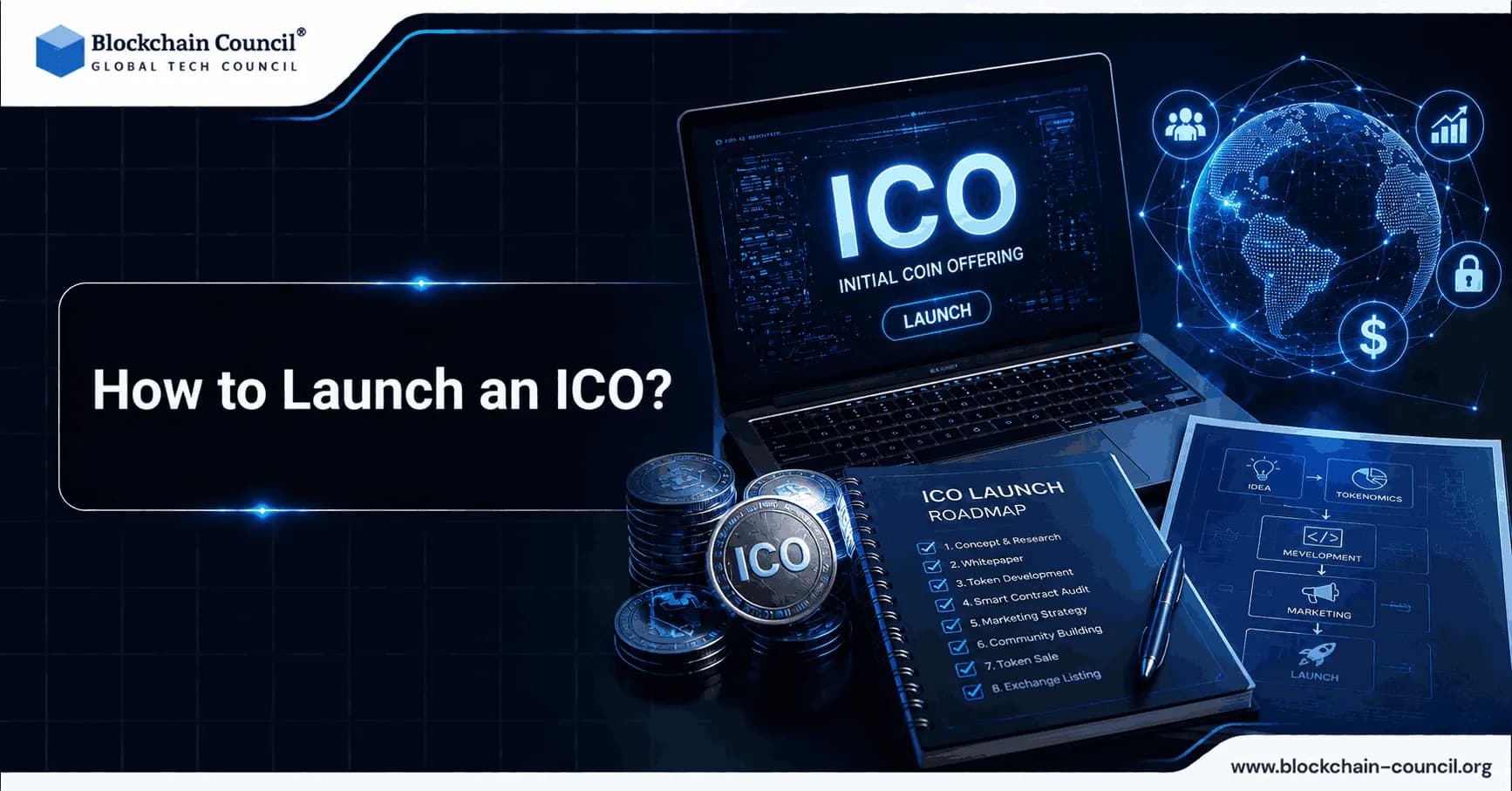
Launching an Initial Coin Offering in 2026 is nothing like it was during the unregulated boom of 2017. Back then, a whitepaper and a bold promise were often enough to raise millions overnight. Today, founders are building full digital economies with legal review, audited smart contracts, tokenomics modeling, and global compliance built in from day one. The payoff for doing it right is real: the ICO market is valued at over $38 billion and growing more than 21% year-on-year, but the average project now takes close to a year from initial planning to launch day, reflecting just how much more disciplined the process has become.
If you're serious about launching a token sale rather than just researching one, building real fluency in how tokens, wallets, and crypto markets actually work is step zero. Many founders start by earning a Certified Cryptocurrency Expert credential before writing a single line of a whitepaper, simply to speak the language investors and regulators expect.

Step 1 & 2: Validate Your Idea and Design Your Tokenomics
Start with a real problem, not just a token. Before anything else, define why a token needs to exist at all. Ask honestly: does this project genuinely need a blockchain-based token, or would a traditional funding model work just as well? Investors and regulators alike are far more skeptical of tokens without clear utility than they were in earlier years.
Design tokenomics before you design anything else. This is the economic backbone of your entire project, and it needs to answer:
Total token supply and whether it's fixed, inflationary, or deflationary
Allocation splits between the team, investors, community, treasury, and ecosystem incentives
Vesting schedules that prevent early holders from dumping tokens immediately after launch
Real demand drivers staking, governance rights, fee discounts, or platform access that give the token an actual reason to be held
Projects with clear, well-modeled tokenomics consistently perform better with both regulators and investors than those that treat token supply as an afterthought.
Getting the underlying blockchain architecture right at this stage matters just as much as the economics. A working knowledge from a Certified Blockchain Expert program helps founders and technical leads make smarter early decisions about chain selection, token standards, and network trade-offs before development even begins.
Step 3: Choose Your Legal Structure and Jurisdiction
This is the step most first-time founders underestimate, and it's the one regulators scrutinize hardest in 2026. Before any code is written, founders need to determine:
Which jurisdiction will host the legal entity behind the offering
How the token will be classified utility, security, or hybrid since that classification determines which laws apply
What disclosure requirements apply, particularly in regions with frameworks like the EU's MiCA regulation, which governs transparency, authorization, and supervision for crypto-asset activity
KYC/AML procedures for verifying investor identity and screening for illicit fund sources
Skipping or rushing this step is one of the most common reasons ICOs face regulatory action after launch. Specialized legal counsel with actual blockchain and securities law experience isn't optional at this stage it's foundational risk management.
Step 4: Write a Whitepaper That Builds Real Trust
A whitepaper is still the single most important trust-building document in any ICO, but the bar for what counts as credible has risen significantly. A strong 2026 whitepaper typically includes:
An executive summary explaining the problem and your solution in plain language
Technical details on the underlying blockchain infrastructure and smart contract architecture
A full tokenomics breakdown covering supply, allocation, and utility
A realistic roadmap with concrete milestones, not vague timelines
Legal and compliance disclosures relevant to your target jurisdictions
Team and advisor bios that let investors quickly assess credibility
Serious buyers today go well beyond skimming a whitepaper they check tokenomics tables, sale dates, legal notices, and documentation depth before committing funds, so thin or vague pages create doubt fast.
Step 5 & 6: Build and Audit Your Smart Contracts (The Middle of Every Successful Launch)
This is where the project moves from concept to code, and it's arguably the most technically demanding phase of the entire process:
Select your blockchain and token standard commonly ERC-20 on Ethereum, BEP-20 on BNB Chain, or a Solana-based standard based on security, transaction costs, and ecosystem fit for your use case.
Design the full contract architecture, including the core token contract plus any vesting, staking, governance, or treasury modules your tokenomics require.
Develop using audited libraries and keep custom code as minimal as possible most smart contract vulnerabilities come from unnecessary complexity, not the core token logic itself.
Test extensively on testnets before ever touching mainnet, simulating real transaction flows and edge cases.
Commission an independent smart contract audit and run a bug bounty program before mainnet deployment this single step is one of the strongest trust signals a project can offer investors.
This phase is also where technical competence directly protects investor funds, which is exactly why teams increasingly invest in a structured Tech Certification for their development and product leads ensuring the people building the contract architecture actually understand the security implications of every design decision, not just the coding syntax.
Step 7: Build Your Community Before You Ask for Money
By the time your token sale opens, you should already have an engaged community, not one you're trying to build from scratch. Effective pre-launch community building typically includes:
A clear, well-designed landing page that explains your project and how to participate
Active presence across the platforms your target investors actually use
Transparent, regular updates on development progress and audit results
Direct engagement AMAs, Q&As, and honest answers to hard questions rather than one-way marketing
Community-governed projects with genuine early engagement report meaningfully higher success rates than campaigns that rely purely on paid promotion.
Step 8: Plan Liquidity and Distribution
Raising funds is only half the job you also need a plan for what happens to the token immediately after the sale:
Decide on your DEX and/or CEX listing strategy in advance, rather than scrambling after the sale closes
Ensure enough initial liquidity is allocated so early trading doesn't collapse the token price
Confirm vesting schedules are enforced on-chain so large early holders can't immediately dump tokens on the market
Plan wallet integration and distribution tooling so contributors receive tokens smoothly and securely
Step 9 & 10: Run the Sale, Then Follow Through Post-Launch
Once the sale itself is live, the work isn't over it's just entering its most visible phase:
Monitor contributions and KYC/AML checks in real time to catch issues early
Maintain transparent, proactive communication with contributors throughout the sale window
Deliver on roadmap milestones after the raise closes this is what separates projects that build long-term trust from those that quietly go silent post-funding
Continue compliance monitoring as regulations evolve, since many jurisdictions require ongoing reporting, not just a one-time filing
What an ICO Launch Actually Costs
Realistic budgets for a compliant 2026 ICO typically range from roughly $30,000 on the low end to well over $500,000, depending on:
Legal and regulatory setup across target jurisdictions
Whitepaper and tokenomics design
Smart contract development and third-party audits
KYC/AML integration and ongoing compliance tooling
Marketing, community building, and launch-day support
Final Thoughts
Launching an ICO in 2026 rewards founders who treat it as building real infrastructure, not running a quick fundraising sprint. Solid tokenomics, a defensible legal structure, audited smart contracts, and a genuinely engaged community aren't optional extras anymore they're the baseline expectations investors and regulators now hold every serious project to. Get the fundamentals right, and an ICO can still be one of the most powerful ways to fund and launch a global crypto venture.
The technical and legal groundwork will get your token built and compliant, but converting that into real investor trust and participation still comes down to how well you communicate it. That's precisely where a Marketing Certification rounds out a founder's skill set turning a technically sound token sale into a campaign that actually reaches, and convinces, the right global audience.
FAQs
1. What is an ICO?
An Initial Coin Offering (ICO) is a fundraising method where a blockchain project issues digital tokens to investors in exchange for capital. The funds raised are typically used to develop the project's technology, products, or ecosystem. Today, ICOs are subject to varying legal and regulatory requirements depending on the jurisdiction.
2. How do you launch an ICO?
Launching an ICO typically involves:
Defining the project and token utility
Selecting a blockchain platform
Designing tokenomics
Developing smart contracts
Preparing legal documentation
Conducting security audits
Building a community
Launching marketing campaigns
Completing regulatory compliance
Opening the token sale
The exact process depends on the project's goals and applicable laws.
3. What should you do before launching an ICO?
Before launching, teams should:
Validate the business idea
Research competitors
Identify the target audience
Build a minimum viable product (MVP) where possible
Assemble an experienced team
Define the token's purpose
Consult legal and regulatory experts
A clear product vision is often more valuable than a large marketing budget.
4. How do you choose the right blockchain?
Popular blockchain platforms include:
Ethereum
Solana
BNB Smart Chain
Avalanche
Polygon
Base
Arbitrum
Optimism
The choice depends on transaction costs, scalability, developer ecosystem, security, smart contract capabilities, and long-term project requirements.
5. What is tokenomics?
Tokenomics refers to the economic design of a cryptocurrency or token, including:
Total supply
Distribution model
Vesting schedules
Utility
Governance rights
Incentives
Inflation or deflation mechanisms
Treasury allocation
Well-designed tokenomics help support the long-term sustainability of a project.
6. What should an ICO whitepaper include?
A professional whitepaper generally covers:
Project overview
Problem statement
Proposed solution
Technology
Token utility
Tokenomics
Roadmap
Team
Governance
Security approach
Risk factors
Legal considerations
The whitepaper should be accurate, transparent, and avoid misleading claims.
7. Why are smart contracts important for ICOs?
Smart contracts automate token issuance, investor allocations, vesting schedules, fundraising logic, and other predefined processes. Because they control important financial functions, they should undergo thorough testing and independent security audits.
8. Should an ICO undergo a security audit?
Yes. Independent security audits help identify vulnerabilities in smart contracts before launch. While audits cannot guarantee complete security, they significantly reduce the likelihood of avoidable coding errors and exploits.
9. What legal requirements apply to ICOs?
Legal requirements vary by country and may include:
Securities law compliance
Know Your Customer (KYC)
Anti-Money Laundering (AML)
Tax obligations
Consumer protection rules
Licensing requirements
Marketing restrictions
Legal advice from qualified professionals is essential before launching.
10. How do you market an ICO?
Common marketing channels include:
Content marketing
SEO
Social media
Community building
Email campaigns
Public relations
Webinars
Developer outreach
Educational resources
Industry conferences
Marketing should comply with local advertising and financial promotion regulations.
11. How important is community building?
A strong community can contribute to user feedback, ecosystem growth, governance participation, product adoption, and long-term project awareness. Sustainable communities are built through transparency, communication, and consistent product development rather than hype alone.
12. Which fundraising models are available today?
Blockchain projects may choose among:
ICO (Initial Coin Offering)
IEO (Initial Exchange Offering)
IDO (Initial DEX Offering)
STO (Security Token Offering)
Venture capital funding
Community grants
DAO-based funding
The most suitable option depends on the project's structure and regulatory environment.
13. What are the advantages of launching an ICO?
Potential benefits include:
Global fundraising opportunities
Community participation
Faster capital formation
Token-based ecosystems
User incentives
Decentralized governance possibilities
Early ecosystem development
These benefits come with regulatory and operational responsibilities.
14. What challenges do ICO projects face?
Challenges include regulatory uncertainty, cybersecurity threats, market volatility, investor trust, competition, smart contract risks, exchange listings, liquidity, compliance costs, and delivering on project roadmaps.
15. What common mistakes should ICO founders avoid?
Common mistakes include:
Launching without a working product or clear roadmap.
Weak token utility.
Poor tokenomics.
Skipping security audits.
Ignoring regulatory compliance.
Overpromising future returns.
Neglecting community communication.
Failing to plan for long-term sustainability.
16. What are best practices for launching an ICO?
Best practices include validating the business model, creating transparent documentation, designing sustainable tokenomics, completing independent security audits, complying with applicable laws, protecting investor data, maintaining open communication, publishing realistic roadmaps, and focusing on product development after fundraising.
17. How does an ICO fit into Web3?
ICOs remain one method of funding decentralized applications, blockchain infrastructure, decentralized finance (DeFi), gaming ecosystems, decentralized autonomous organizations (DAOs), and Web3 platforms. They are one part of a broader blockchain funding ecosystem.
18. Are ICOs still popular in 2025-2026?
ICOs continue to exist but are less dominant than they were during 2017-2018. Many projects now use IEOs, IDOs, STOs, venture funding, or hybrid fundraising models that often incorporate stronger regulatory compliance and investor protections.
19. What trends are shaping blockchain fundraising in 2025-2026?
Major trends include tokenization of real-world assets (RWAs), AI-assisted compliance, decentralized identity (DID), regulated token offerings, DAO governance, Layer 2 fundraising ecosystems, cross-chain token launches, institutional participation, programmable treasury management, and increasing global regulatory clarity.
20. What is the future of ICOs?
ICOs are expected to continue evolving toward greater transparency, stronger governance, improved security, and enhanced regulatory compliance. While they remain an effective fundraising mechanism for certain blockchain projects, long-term success depends far more on delivering a valuable product than on raising capital alone. Investors increasingly evaluate projects based on technology, execution, and real-world adoption rather than promotional campaigns. In the end, the most successful token sale is not the one that raises the most money on launch day, but the one that still has a thriving ecosystem years later.
Related Articles
View All
Blockchain
Blockchain Product Lifecycle: From Ideation to Mainnet Launch
A practical guide to the blockchain product lifecycle, covering ideation, MVPs, testnets, audits, tokenomics, mainnet launch, and post-launch operations.

Blockchain
Best Blockchain Product Management Tools to Plan, Launch, and Scale Products
A practical guide to blockchain product management tools for planning roadmaps, launching safely, tracking on-chain metrics, and scaling Web3 products.

Blockchain
Beyond Cryptocurrency: How Blockchain Is Transforming Real-World Industries
Explore how blockchain works beyond cryptocurrency in banking, supply chains, healthcare, tokenisation, CBDCs, and government, plus key challenges and career paths.
Trending Articles
The Role of Blockchain in Ethical AI Development
How blockchain technology is being used to promote transparency and accountability in artificial intelligence systems.

Top 5 DeFi Platforms
Explore the leading decentralized finance platforms and what makes each one unique in the evolving DeFi landscape.
How Blockchain Secures AI Data
Understand how blockchain technology is being applied to protect the integrity and security of AI training data.