

WWF Introduces Blockchain To Track Food In Supply Chain
 Toshendra Kumar Sharma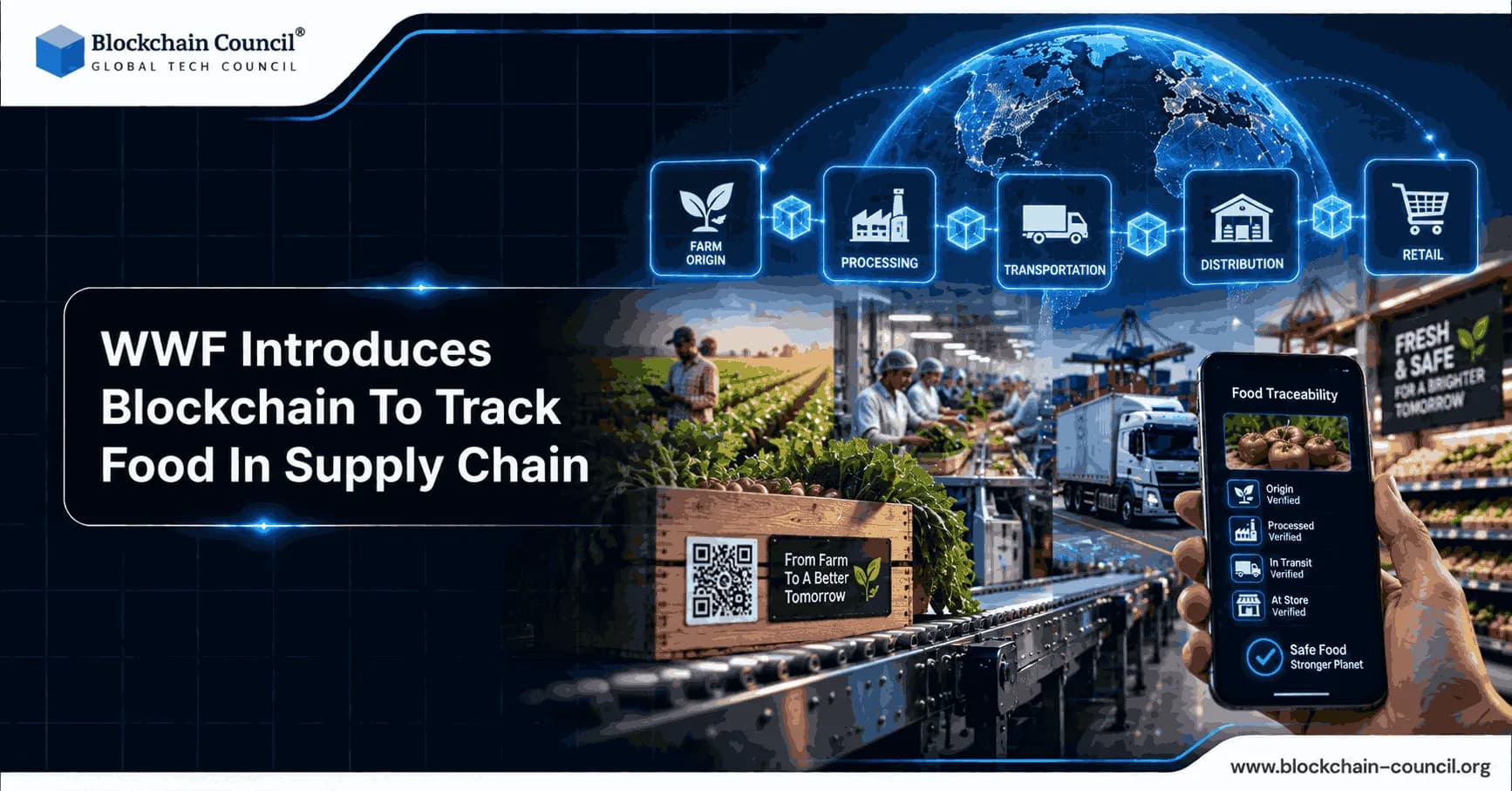
Introduction: Bringing Transparency to the Ocean-to-Plate Journey
Seafood buyers have long faced a frustrating reality. Once a fish leaves the boat, there is often no reliable way to verify where it was caught, whether it was caught legally, or how it traveled through the supply chain before reaching a supermarket shelf. WWF set out to change that by introducing blockchain technology to track tuna from vessel to consumer, creating one of the earliest large-scale demonstrations of how distributed ledgers can bring accountability to global food systems. For professionals who want to understand the technical foundation behind this kind of traceability project, a Certified Blockchain Expert credential offers the grounding needed to evaluate how blockchain actually secures and verifies data across complex, multi-party supply chains.
The project focused on the fresh and frozen tuna sectors of the Western and Central Pacific region, an area long associated with illegal fishing and human rights abuses within its fishing fleets. By giving consumers and regulators a verifiable record of a fish's journey, WWF aimed to make these hidden problems far harder to ignore.

How the Blockchain Supply Chain Traceability Project Works
WWF-New Zealand, WWF-Australia, and WWF-Fiji partnered with blockchain developer ConsenSys, ICT implementer TraSeable, and tuna fishing company Sea Quest Fiji to build the Blockchain Supply Chain Traceability Project. The system uses a combination of radio-frequency identification tags and quick response codes to capture information about a tuna's journey at critical points along the supply chain, from the moment it is caught through processing and eventual sale.
Once a tuna is caught, fishermen register the catch by scanning a reusable tag, which automatically uploads details to the blockchain. Because blockchain records are tamper-proof and visible to every participant in the network, no single party along the chain can quietly alter or delete the transaction history, creating an unbroken and independently verifiable record of the fish's path from ocean to plate. Businesses and organizations looking to apply this same model of end-to-end traceability to their own supply chains often turn to professionals holding a Certified Blockchain & Supply Chain Professional credential, which builds the specialized expertise needed to design and implement blockchain-based tracking systems across complex, multi-party logistics networks.
Addressing Illegal Fishing and Human Rights Abuses
The Pacific tuna industry has faced persistent scrutiny over illegal, unreported, and unregulated fishing practices, as well as documented human rights abuses among fishing crews. Before this initiative, tracking a tuna's origin relied largely on paper records or, in many cases, no formal tracking at all, making it nearly impossible to verify whether a particular catch complied with fishing regulations or labor standards.
By creating a digital, tamper-proof record accessible to everyone in the supply chain, the project gave regulators, buyers, and consumers a genuine way to trace a fish back to the vessel and crew that caught it. This level of transparency directly supports enforcement efforts against illegal fishing while also giving conscientious consumers the ability to verify that their seafood was sourced ethically and legally.
Expanding Blockchain Traceability Beyond Tuna
The success of the pilot tuna project led WWF to partner with BCG Digital Ventures to co-found OpenSC, a dedicated venture focused on scaling supply chain traceability and transparency technology across a broader range of food products. OpenSC has since expanded its verification platform to cover items including Patagonian toothfish, prawns, dairy, palm oil, and coffee, demonstrating how a single pilot project can evolve into infrastructure capable of supporting entire industries.
Similar traceability efforts have emerged elsewhere in the food sector as well, with organizations exploring blockchain applications across beef, soy, and farmed shrimp supply chains in regions spanning Latin America and Southeast Asia. Research published by international food and agriculture bodies has emphasized that while blockchain holds significant promise for traceability, successful implementation requires careful planning and coordination given how far-reaching and fragmented global commodity supply chains tend to be. Deploying this kind of traceability infrastructure at scale requires professionals with broad technical capabilities beyond blockchain alone. A well-rounded Tech Certification helps build that wider foundation, covering the RFID systems, data integration, and IoT knowledge needed to connect physical supply chains to digital verification platforms.
Future-Ready Skills
As technology becomes increasingly important across industries, students need opportunities to develop future-ready skills early in their education. A World Tech Olympiad can introduce students to areas such as artificial intelligence, coding, cybersecurity, robotics, and computational thinking while encouraging curiosity and continuous learning. Cultivating this kind of early technical exposure can help inspire future engineers and conservationists capable of scaling food traceability solutions to protect both consumers and the environment.
What This Means for Everyday Consumers
For shoppers, the practical benefit of blockchain-based food traceability is the ability to scan a code on a package and instantly see where that product originated, how it traveled through the supply chain, and whether it meets sustainability and ethical sourcing standards. This addresses a longstanding problem in the seafood industry, where genetic testing on store-bought fish samples has repeatedly revealed cases of species mislabeling, leaving consumers with little way to verify what they are actually purchasing.
Blockchain traceability shifts that burden away from consumers having to simply trust supplier claims, replacing it with a verifiable digital record that anyone in the supply chain can check independently.
Communicating the Value of Supply Chain Transparency
Technology alone cannot guarantee that consumers, retailers, and regulators embrace blockchain-based traceability. Many shoppers remain unfamiliar with how blockchain verification actually works, which means organizations rolling out these systems need to explain the benefits in terms that resonate with everyday buying decisions rather than technical jargon.
Retailers and conservation organizations promoting these traceability initiatives need strong communication strategies to build public trust and drive adoption at the point of sale. A Marketing Certification equips professionals with the skills needed to translate complex supply chain technology into messaging that helps consumers understand why scanning a QR code on their seafood matters, ultimately encouraging the kind of widespread adoption that gives traceability initiatives real market impact.
WWF's blockchain tuna project demonstrated that distributed ledger technology could bring genuine accountability to one of the world's most opaque food industries. As the lessons from that pilot continue expanding into new food categories through ventures like OpenSC, blockchain-based traceability is steadily becoming a practical tool for protecting both consumers and the ecosystems that global food supply chains depend on.
FAQs
1. Why did WWF introduce blockchain to track food in the supply chain?
WWF introduced blockchain-based traceability to improve transparency around where food comes from and how it moves through the supply chain. The initiative initially focused on tuna and aimed to help address illegal fishing, environmental damage, and labor abuses.
2. How did WWF use blockchain to track food?
WWF and its partners used digital identification technologies such as RFID tags and scanning systems to associate individual products with supply-chain information. Blockchain was then used as part of the digital traceability system to record and share information about the product's journey.
3. What was the WWF blockchain tuna project?
The WWF-led project was a blockchain traceability pilot involving tuna caught in Fiji. WWF offices in Australia, New Zealand, and Fiji worked with technology and fishing-industry partners to track tuna through the supply chain from catch to market.
4. How does blockchain improve food supply chain traceability?
Blockchain can provide a shared, tamper-resistant record of selected supply-chain events. This can help businesses and consumers verify information about a product's origin, processing, transportation, and other stages of its journey.
5. Can consumers use blockchain to find where their food came from?
Yes, blockchain-based traceability systems can connect a product to information about its origin and supply-chain history. WWF's OpenSC initiative used QR codes and digital tags so consumers could access information about where and how products were produced.
6. How did WWF's OpenSC platform work?
OpenSC assigned products a unique digital identity at their point of origin and linked supply-chain information to a blockchain-based system. Consumers could scan a QR code to view information about where a product originated, how it was produced, and how it moved through the supply chain.
7. How can blockchain help prevent illegal fishing?
Blockchain can create a traceable digital record of fishing and supply-chain activities. In WWF's tuna initiative, information about where and when fish were caught and how they moved through the supply chain could be recorded, making responsible sourcing easier to verify.
8. Can blockchain help prevent unethical labor practices in food production?
Blockchain can improve visibility into supply chains by linking products to information about their production and handling. This can make it easier for companies and consumers to investigate ethical claims, although blockchain itself cannot independently verify whether every real-world claim is true.
9. How can blockchain help consumers make sustainable food choices?
Blockchain-based traceability can give consumers more information about a product's origin and production history. This can make sustainability and ethical sourcing claims easier to investigate before purchasing a product.
10. What role do QR codes play in blockchain food tracking?
QR codes can provide consumers with an easy way to access supply-chain information associated with a product. In the OpenSC model, scanning a product's QR code could connect consumers to information about its origin and journey through the supply chain.
11. Why are RFID tags useful in blockchain food traceability?
RFID tags can provide a digital identity for products or items moving through a supply chain. WWF's tuna project used RFID-based identification and scanning to connect physical fish with digital traceability records.
12. Can blockchain improve food safety?
Blockchain can support food safety by creating a traceable record of products as they move through production, processing, storage, and distribution. Better traceability can help organizations identify the source and movement of affected products when a food safety problem occurs.
13. Can blockchain reduce food fraud?
Blockchain can make certain types of supply-chain fraud more difficult to conceal by providing verifiable records of product movements and transactions. However, blockchain does not guarantee that the information entered into the system is accurate, so physical inspections and trusted data sources remain important.
14. What are the benefits of blockchain in food supply chains?
Potential benefits include improved traceability, transparency, accountability, product provenance, sustainability verification, and consumer trust. WWF's initiatives demonstrate how these capabilities can be applied to seafood and other food commodities.
15. Did WWF's blockchain project track food from farm or ocean to consumer?
Yes. The initial WWF project focused on tracking tuna from the point of catch through processing and distribution. WWF later described the initiative as a way to trace products from their origin through the supply chain to consumers.
16. What challenges can affect blockchain food traceability?
Challenges include the cost of traceability systems, connectivity, digital infrastructure, data quality, participation by supply-chain actors, and integration with existing systems. WWF has also emphasized that affordable and accessible technology is important for small producers and developing-country supply chains.
17. Can blockchain guarantee that food is sustainably produced?
No. Blockchain can preserve and share information about sustainability claims, but it cannot independently verify whether information entered into the system is truthful. Effective traceability therefore requires reliable data collection, verification processes, responsible participants, and appropriate oversight.
18. Did WWF expand blockchain tracking beyond tuna?
Yes. WWF's OpenSC initiative was designed to track products beyond seafood, including other food and consumer products. WWF has described applications involving products such as coffee and other commodities, using traceability to improve visibility into environmental and social impacts.
19. What impact did WWF's blockchain initiative have on food supply chains?
The initiative demonstrated how blockchain and digital identification could connect physical products with digital supply-chain information. WWF reported successful tuna tracking from Fiji through the supply chain to consumers and subsequently developed OpenSC as a broader traceability platform.
20. What is the future of blockchain in food supply chain tracking?
Blockchain can remain useful as part of broader digital traceability systems that combine product identification, IoT sensors, mobile applications, QR codes, and data analytics. WWF's more recent work also emphasizes making traceability affordable and accessible because technology alone cannot solve the complexity of global food supply chains.
Related Articles
View All
Blockchain
Beyond Cryptocurrency: How Blockchain Is Transforming Real-World Industries
Explore how blockchain works beyond cryptocurrency in banking, supply chains, healthcare, tokenisation, CBDCs, and government, plus key challenges and career paths.
Blockchain
Smart Contracts & dApps: How Blockchain Becomes Programmable
Learn how smart contracts and dApps make blockchain programmable, from Ethereum and tokens to DeFi, NFTs, real use cases, benefits, and key risks.

Blockchain
Behind the Blocks: How Blockchain Transactions Actually Work
Go behind the blocks to see how a blockchain transaction really works: wallets and keys, digital signatures, verification, hashing, blocks, consensus, proof of work vs proof of stake, and how miners and validators secure the network.
Trending Articles
AWS Career Roadmap
A step-by-step guide to building a successful career in Amazon Web Services cloud computing.
How Blockchain Secures AI Data
Understand how blockchain technology is being applied to protect the integrity and security of AI training data.
What is AWS? A Beginner's Guide to Cloud Computing
Everything you need to know about Amazon Web Services, cloud computing fundamentals, and career opportunities.