

How Can Blockchains privilege Content Creators?
 Toshendra Kumar Sharma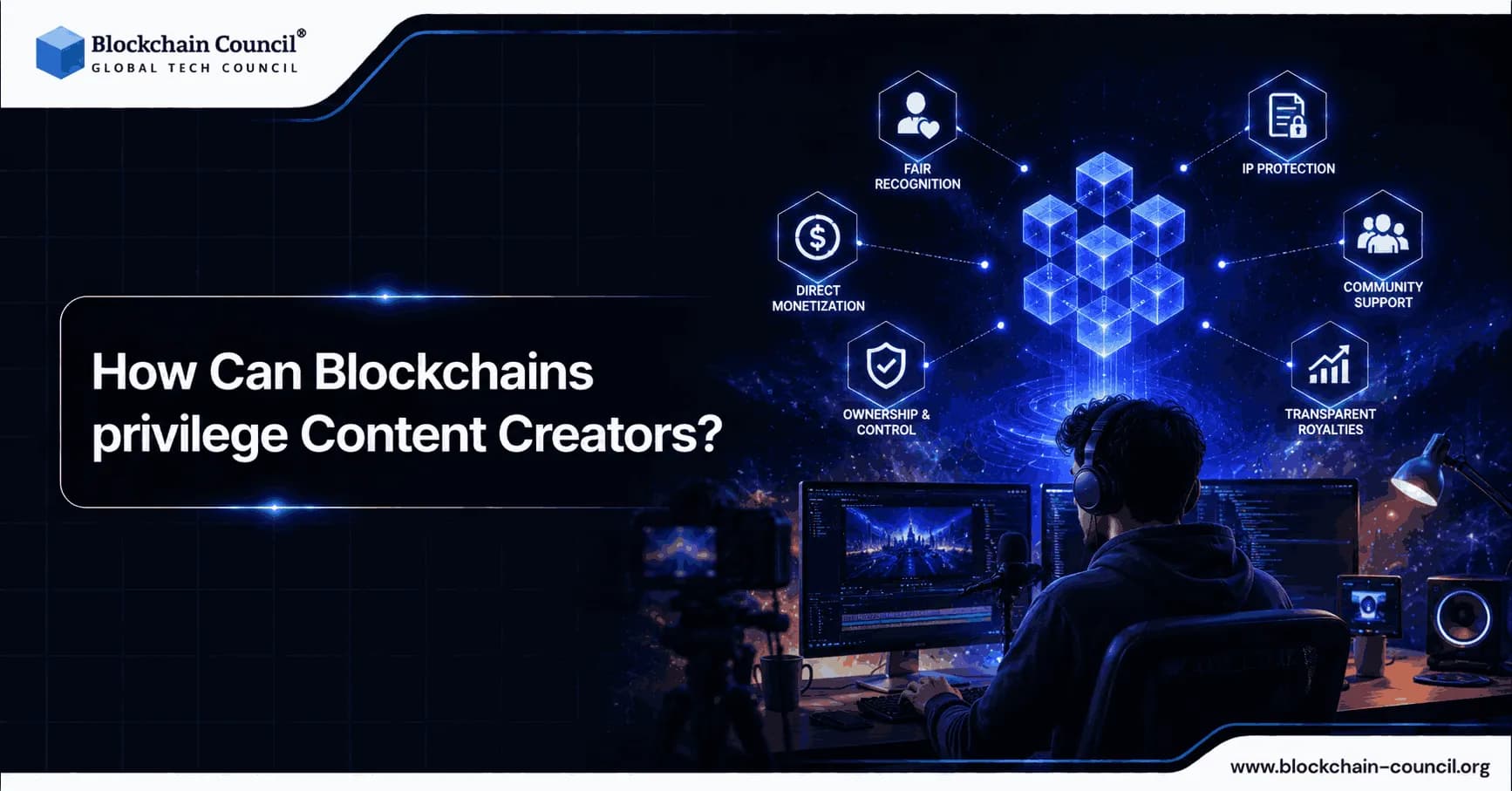
Content creators have long faced the same frustrating trade-off: reach a big audience through centralized platforms and lose a significant cut of their earnings, or go independent and struggle with discovery, payments, and protecting their work from theft. Blockchain technology is starting to change that balance, giving creators more direct control over how their work is distributed, monetized, and protected without needing a platform to sit in the middle of every transaction. As musicians, writers, artists, and video creators explore these tools, more professionals are pursuing a Certified Blockchain Expert credential to understand how the technology is reshaping the creator economy.
In this article, we'll explore the specific ways blockchain privileges content creators, how the technology works in practice, and the challenges still standing in the way of wider adoption.

Why Content Creators Are Turning to Blockchain
Traditional content platforms streaming services, social media, publishing houses typically act as intermediaries between creators and their audience, controlling distribution, taking a substantial percentage of revenue, and often making unilateral decisions about how content is monetized or promoted. Creators frequently have limited visibility into how their content performs financially and little recourse when their work is copied or used without permission.
Blockchain offers an alternative by enabling direct, verifiable transactions between creators and their audience, transparent royalty tracking, and immutable proof of ownership all without requiring a single centralized platform to control the entire relationship. This shift touches both the technical and promotional sides of a creator's business, which is why many creators and the professionals who support them are pursuing a Certified Blockchain & Digital Marketing Professional qualification combining an understanding of blockchain-based monetization tools with the marketing skills needed to actually build and grow an audience around them.
Quick Answer (for readers in a hurry)
Blockchain privileges content creators by enabling direct monetization without platform intermediaries, creating immutable proof of ownership and authorship, automating royalty payments through smart contracts, and giving creators transparent, real-time visibility into how their content is used and compensated shifting more control and revenue back to the people actually making the content.
Key Ways Blockchain Benefits Content Creators
1. Direct Monetization Without Intermediaries
Blockchain allows creators to sell content, subscriptions, or access directly to their audience using cryptocurrency or blockchain-based payment systems, often with lower transaction fees than traditional platforms charge and without a middleman controlling the terms of the relationship.
2. Immutable Proof of Ownership
By registering a piece of work a song, an article, an image, a video on a blockchain at the moment of creation, creators establish a permanent, time-stamped record proving they were the original author. This creates stronger evidence of ownership than traditional copyright registration timestamps, which can be more easily disputed or delayed.
3. Automated Royalty Payments
Smart contracts can be programmed to automatically distribute royalties to creators every time their content is sold, streamed, or reused, without requiring a platform or distributor to manually calculate and issue payments on a delayed schedule. This is particularly valuable for creators who collaborate, since a smart contract can split payments among multiple contributors instantly and transparently based on predefined terms.
Building the infrastructure that actually powers this wallet integration, royalty-splitting smart contracts, and content verification systems requires real technical skill. This is why developers building creator-focused blockchain platforms often pursue a formal Tech Certification to validate their blockchain development expertise before deploying tools that manage creators' income and intellectual property.
4. NFTs and Digital Ownership
Non-fungible tokens (NFTs) allow creators to sell verifiably unique digital assets directly to collectors, whether that's digital art, music, or exclusive content, with the blockchain permanently recording who owns each piece and its full transaction history. Some NFT structures also let creators earn a royalty automatically every time the asset is resold, something traditional secondary markets rarely offer artists.
5. Transparent Usage and Payment Tracking
Because blockchain transactions are recorded on a shared, verifiable ledger, creators can see exactly how their content is being distributed and monetized in near real time, rather than waiting on delayed, sometimes opaque reporting from a platform or distributor.
6. Reduced Piracy and Unauthorized Use
While blockchain can't physically prevent someone from copying content, the immutable ownership record it creates makes it significantly easier for creators to prove authorship and pursue action when their work is used without permission, strengthening their position in copyright disputes.
Key Benefits of Blockchain for Content Creators
Greater revenue share: Fewer intermediaries mean creators keep a larger percentage of earnings.
Verifiable ownership: Immutable, time-stamped records strengthen copyright and authorship claims.
Automated, transparent royalties: Smart contracts ensure timely, accurate payment distribution.
New monetization models: NFTs and direct sales open revenue streams beyond traditional platforms.
Direct audience relationships: Creators can engage and transact with fans without a platform gatekeeping the connection.
Real-World Use Cases
Musicians have used blockchain-based platforms to release music directly to fans, with smart contracts automatically splitting royalties among songwriters, producers, and performers. Visual artists have sold work as NFTs on platforms that track resale royalties automatically, ensuring they continue earning from their art even after the initial sale. Writers and journalists have explored blockchain-based publishing platforms that let readers pay creators directly for individual articles, bypassing traditional subscription paywalls and ad-revenue models entirely.
Challenges to Consider
Blockchain adoption among content creators still faces real hurdles: many audiences aren't yet familiar or comfortable with cryptocurrency wallets and blockchain-based payments, creating a barrier to entry; NFT markets have experienced significant volatility, making them an unreliable primary income source for many creators; transaction fees on some blockchain networks can be unpredictable, sometimes eating into the very savings creators are seeking; and blockchain-based platforms generally have smaller audiences than established mainstream platforms, meaning creators often need to build presence across both traditional and blockchain-based channels rather than replacing one with the other.
Final Thoughts
Blockchain is giving content creators something they've long lacked: more direct control over how their work is monetized, protected, and distributed, without a platform dictating every term of the relationship. From automated royalty payments to immutable proof of authorship, the technology addresses several of the creator economy's most persistent frustrations, even as it's still working through real growing pains around adoption and audience familiarity.
As more creators explore these tools, they'll need to clearly communicate these new monetization models to audiences who may be unfamiliar with how blockchain-based payments or NFTs actually work. That's why many creators and the teams supporting them are increasingly pairing their technical understanding with a Marketing Certification to build genuine audience trust and clearly explain the value behind these new, often unfamiliar tools.
Blockchain isn't replacing the creator economy it's giving creators more leverage within it, one transparent transaction and verified ownership record at a time.
FAQs
1. How can blockchain empower content creators?
Blockchain can empower content creators by providing direct monetization opportunities, transparent royalty distribution, verifiable ownership, digital rights management, token-based communities, decentralized publishing, and greater control over creative work without relying entirely on traditional intermediaries.
2. Why is blockchain important for content creators?
Many creators face challenges such as low revenue shares, delayed payments, copyright infringement, platform dependency, and limited ownership of audience relationships. Blockchain can improve transparency, automate payments, and help creators retain greater control over their content and earnings.
3. How does blockchain work for creators?
Blockchain records ownership, licensing, transactions, and royalty agreements on a distributed ledger. Smart contracts automatically execute payment terms, while decentralized platforms allow creators to publish and monetize content more directly.
4. Can blockchain improve creator ownership?
Yes. Blockchain enables creators to establish verifiable ownership of digital works through timestamped records and cryptographic verification. This can simplify licensing and help demonstrate the origin of creative content.
5. How does blockchain improve royalty payments?
Smart contracts can automatically distribute royalties whenever predefined licensing or sales conditions are met. This reduces administrative overhead and can improve payment transparency for creators and rights holders.
6. Can blockchain reduce copyright disputes?
Blockchain can provide evidence of creation dates, ownership records, and licensing agreements. While it does not replace copyright law or legal enforcement, it can support documentation that may be useful in resolving disputes.
7. How does blockchain support decentralized publishing?
Blockchain-based publishing platforms allow creators to distribute content directly to audiences, potentially reducing reliance on centralized platforms and enabling alternative monetization models.
8. Can blockchain help musicians, writers, and artists?
Yes. Musicians, authors, photographers, filmmakers, designers, journalists, educators, podcasters, video creators, and digital artists can use blockchain for ownership verification, licensing, royalty management, and audience engagement.
9. How do token-based creator economies work?
Some blockchain platforms allow creators to issue community or utility tokens that provide supporters with access to exclusive content, memberships, voting rights, or other platform-specific benefits. The design and regulatory treatment of such tokens vary by jurisdiction.
10. How can blockchain improve fan engagement?
Blockchain can support verified memberships, digital collectibles, token-gated communities, loyalty programs, and direct creator-to-fan interactions, enabling stronger community participation and new engagement models.
11. Which blockchain platforms support creator ecosystems?
Popular platforms include Ethereum, Polygon, Solana, Base, Avalanche, Hedera, Tezos, and other smart contract blockchains that support decentralized applications, creator tools, and digital asset management.
12. Which industries benefit from blockchain creator tools?
Industries including music, publishing, journalism, gaming, film, education, photography, social media, digital marketing, entertainment, advertising, and online learning can benefit from blockchain-based creator solutions.
13. What are the advantages of blockchain for content creators?
Benefits include direct monetization, transparent royalty distribution, stronger ownership verification, secure licensing, reduced dependence on intermediaries, automated payments, enhanced audience relationships, improved copyright documentation, and greater control over digital assets.
14. What challenges exist when implementing blockchain for creators?
Challenges include user adoption, platform interoperability, regulatory uncertainty, transaction fees on some networks, copyright enforcement beyond blockchain records, technical complexity, cybersecurity, and integrating blockchain with existing publishing ecosystems.
15. Can blockchain eliminate content piracy?
No. Blockchain cannot prevent unauthorized copying or distribution of digital content by itself. It can, however, improve ownership records, licensing transparency, and payment automation, making rights management more efficient.
16. What common mistakes should creators avoid?
Common mistakes include relying solely on blockchain for copyright protection, sharing private keys or wallet recovery phrases, ignoring cybersecurity, failing to understand platform terms, overlooking tax obligations, and adopting blockchain tools without a clear monetization strategy.
17. What are best practices for creators using blockchain?
Best practices include securing wallets with strong authentication, storing recovery phrases offline, understanding smart contract terms, using reputable blockchain platforms, maintaining traditional copyright registrations where appropriate, protecting personal data, and diversifying revenue streams.
18. How does blockchain fit into the creator economy?
Blockchain complements artificial intelligence (AI), digital identity, cloud storage, content management systems (CMS), streaming platforms, customer relationship management (CRM), analytics, and social media to support more transparent and creator-focused digital ecosystems.
19. What trends are shaping blockchain for creators in 2025-2026?
Major trends include AI-assisted content creation, decentralized identity (DID), tokenized creator communities, blockchain-based royalty automation, verifiable digital provenance, NFT-powered memberships, decentralized social networks (DeSoc), cross-platform digital identities, Web3 publishing, and privacy-preserving monetization models.
20. What is the future of blockchain for content creators?
Blockchain is expected to play an increasingly important role in helping creators manage ownership, monetize their work, and build direct relationships with audiences. Rather than replacing existing media platforms, blockchain will likely integrate with AI, streaming services, publishing platforms, and digital identity systems to create more transparent and flexible creator ecosystems. As digital content continues to expand, verifiable ownership and automated compensation may become standard features rather than niche innovations. After all, creating something valuable is difficult enough without spending half the journey proving that it belongs to you or waiting to be paid for it.
Related Articles
View All
Blockchain
Public, Private & Consortium Blockchains: Which Network Fits the Use Case?
Compare public, private, and consortium blockchains by security, speed, privacy, and control, with real examples and a simple guide to choosing the right network.

Blockchain
Blockchain State Machine Replication: How Blockchains Agree on State
Blockchain State Machine Replication explains how nodes agree on transaction order and state, even with faults, forks, and malicious behavior.

Blockchain
Beyond Cryptocurrency: How Blockchain Is Transforming Real-World Industries
Explore how blockchain works beyond cryptocurrency in banking, supply chains, healthcare, tokenisation, CBDCs, and government, plus key challenges and career paths.
Trending Articles
AWS Career Roadmap
A step-by-step guide to building a successful career in Amazon Web Services cloud computing.

Top 5 DeFi Platforms
Explore the leading decentralized finance platforms and what makes each one unique in the evolving DeFi landscape.
How Blockchain Secures AI Data
Understand how blockchain technology is being applied to protect the integrity and security of AI training data.