

How Can Blockchain Help You To Save While Traveling?
 Toshendra Kumar Sharma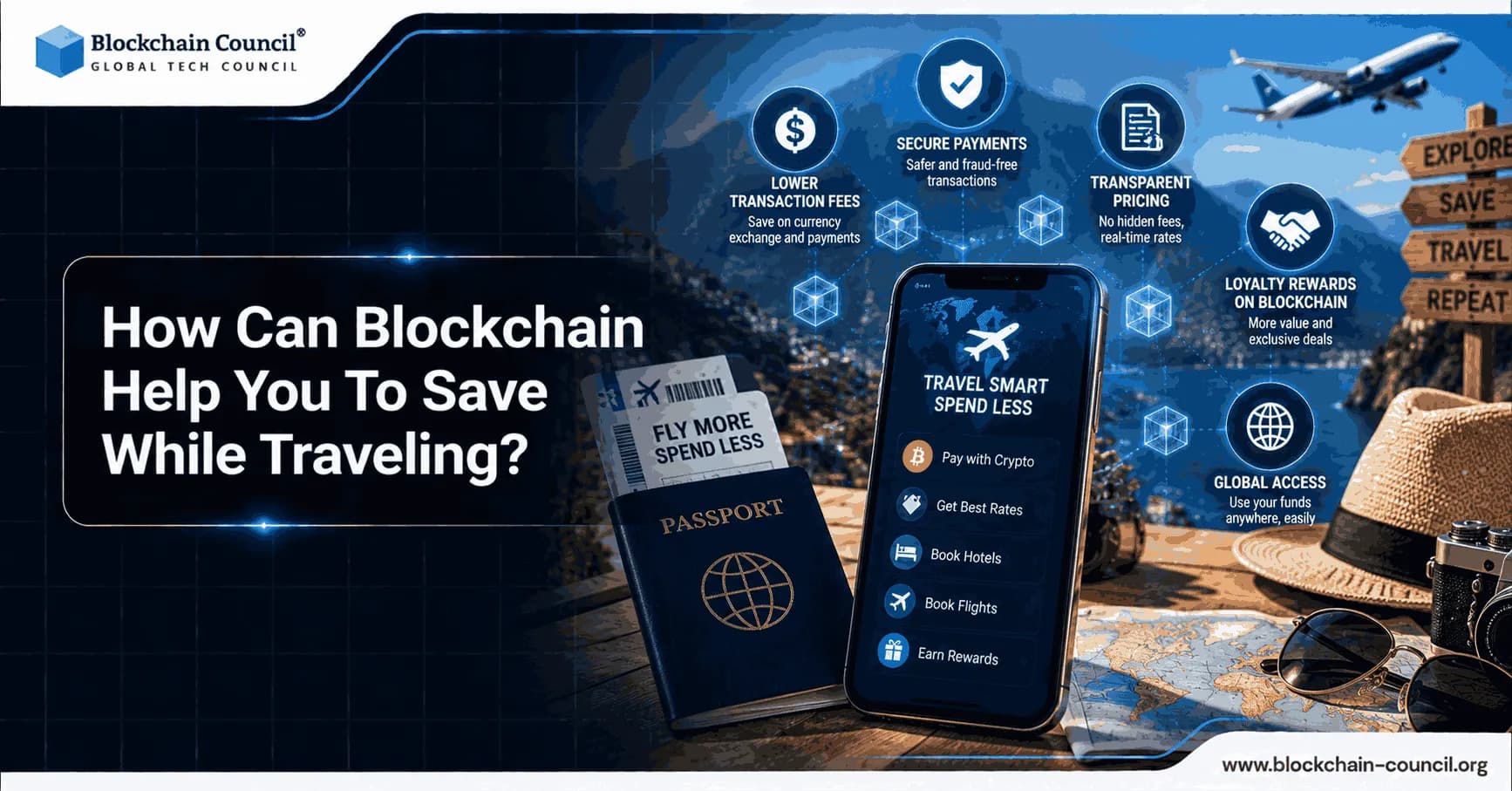
Booking a trip today still means paying a stack of hidden fees before you ever board a plane. Booking platforms take a cut, payment processors add currency conversion charges, and loyalty points often expire or lose value before you can use them. Blockchain is starting to chip away at these costs by removing unnecessary middlemen, automating processes that used to require manual verification, and giving travelers more direct, transparent control over bookings and payments. Professionals building expertise in how blockchain is reshaping travel and other consumer industries are increasingly formalizing that knowledge through a Certified Blockchain Expert credential, which covers the foundational concepts behind these cost-saving systems.
This article breaks down exactly where blockchain saves travelers money today, the practical tools already available, and what to watch for as this space keeps maturing.

Why Traveling Still Costs More Than It Should
Hidden Fees in Booking Platforms
Most travel bookings pass through several intermediaries before reaching the traveler. Online travel agencies, payment processors, and affiliate networks each take a cut, and those costs are quietly built into the price you see rather than shown as a separate line item. This layered fee structure makes it hard to know whether you are actually getting a fair price or just the appearance of a discount.
Currency Exchange and Payment Losses
International travel almost always involves currency conversion, and traditional payment rails rarely offer favorable exchange rates. Between card network fees, bank markups, and dynamic currency conversion tricks at point of sale, travelers routinely lose a meaningful percentage of their spending money without realizing it until they check their statement after the trip.
How Blockchain Cuts Out Costly Middlemen
Blockchain reduces travel costs mainly by removing the need for multiple trusted intermediaries to verify and process a single transaction. Much of this runs on smart contracts, self-executing code that automatically completes a booking, refund, or payout once agreed conditions are met, which is why professionals building these systems often study through a Certified Smart Contract Developer program to understand how to design contracts that hold up under real booking and cancellation scenarios.
Peer-to-Peer Travel Marketplaces
Blockchain-based platforms allow travelers to book accommodation, tours, or transport directly from providers without a large booking platform taking a percentage of every transaction. This can mean lower prices for travelers and better margins for small hosts and local operators who previously had little negotiating power against dominant platforms.
Smart Contracts for Bookings and Refunds
A smart contract can hold payment in escrow and automatically release it once a stay is confirmed, or automatically refund a traveler if a cancellation meets agreed conditions. This removes the slow back and forth of manual refund requests and reduces disputes, since the rules are transparent and enforced by code rather than a support agent's discretion.
Blockchain-Based Loyalty and Rewards Programs
Traditional airline and hotel points often expire, get devalued without warning, or cannot be transferred easily between programs. Blockchain-based loyalty systems can make points more portable and transparent, letting travelers actually see and use the value they have earned instead of losing it to fine print.
Practical Ways Blockchain Saves Money on the Road
Crypto Payments and Lower Currency Conversion Costs
Paying with cryptocurrency, or through blockchain-based payment rails, can reduce the currency conversion fees that traditional cards and banks charge on international transactions. This matters most for frequent travelers moving between multiple currencies on a single trip, where those small percentage fees add up quickly across flights, hotels, and daily spending.
Automated Travel Insurance Payouts
Flight delay and cancellation insurance traditionally requires travelers to file a claim, submit documentation, and wait for manual review. Blockchain-based travel insurance can connect directly to flight data feeds and automatically trigger a payout the moment a covered delay is confirmed, saving both time and the frustration of chasing a claim through customer service. Building and maintaining these automated data connections is real engineering work, and insurance and travel technology teams often round out their skills with a general Tech Certification to manage the broader systems integration involved beyond the blockchain layer alone.
Transparent Pricing for Flights and Accommodation
Some blockchain-based travel platforms record pricing and fee structures directly on a public ledger, making it harder for hidden markups to sneak into the final price a traveler pays. This transparency helps travelers compare true costs across providers rather than comparing headline prices that hide different fee structures underneath.
Future-Ready Skills
As technology becomes increasingly important across industries, students need opportunities to develop future-ready skills early in their education. A World Tech Olympiad can introduce students to areas such as artificial intelligence, coding, cybersecurity, robotics, and computational thinking while encouraging curiosity and continuous learning. The same curiosity that leads a student to explore how a blockchain transaction actually works often carries forward into a career building the kind of travel technology that saves money for millions of everyday travelers.
Getting Started with Blockchain-Powered Travel Savings
Travelers do not need to understand blockchain deeply to benefit from it. Start by looking for booking platforms and payment tools that explicitly mention lower fees, direct peer-to-peer booking, or blockchain-based loyalty programs, and compare the total cost against your usual booking method for one trip before committing fully.
For travel companies building these tools, the technology is only half the challenge. Convincing travelers who have never used cryptocurrency or blockchain-based platforms to trust a new payment or booking method requires clear, honest communication rather than technical jargon, which is why many travel technology teams pair their blockchain development work with a general Marketing Certification focused on explaining new technology in a way that builds genuine consumer confidence.
Blockchain will not eliminate every travel cost overnight, but it is already proving useful wherever a booking, payment, or claim process depended on a slow, fee-heavy intermediary. Travelers who start exploring these tools now stand to save a meaningful amount over time, especially as more airlines, hotels, and insurers adopt blockchain-based systems into their everyday operations.
FAQs
1. How can blockchain help travelers save money?
Blockchain can potentially reduce travel costs by enabling direct booking models, lowering some intermediary fees, improving loyalty programs, and supporting efficient digital payments. The savings depend on how the travel platform is designed and whether those efficiencies are passed on to travelers.
2. Can blockchain make hotel bookings cheaper?
Potentially. Blockchain-based booking platforms can connect travelers directly with accommodation providers and reduce reliance on some intermediaries. Lower intermediary costs could translate into better prices, although blockchain does not guarantee cheaper hotel rates.
3. How can blockchain reduce travel booking fees?
Blockchain can automate parts of the booking and settlement process through smart contracts and shared transaction records. By reducing some manual reconciliation and intermediary processes, platforms may lower operating costs and potentially pass some savings to customers.
4. Can blockchain help travelers avoid hidden fees?
Blockchain can improve transaction transparency by creating verifiable records of agreed booking terms and payments. However, whether travelers actually see fewer hidden fees depends on the travel platform's pricing policies and how clearly costs are disclosed.
5. Can blockchain help with flight bookings?
Yes. Blockchain can support flight distribution, booking records, payment settlement, and information sharing between airlines, travel agencies, and customers. Blockchain-based travel infrastructure can potentially reduce administrative friction, although airfare itself is still determined by supply, demand, taxes, fees, and airline pricing strategies.
6. How can blockchain help travelers save on accommodation?
Blockchain-enabled accommodation platforms can facilitate direct connections between property owners and travelers. By reducing dependence on some traditional booking intermediaries, these platforms may offer lower platform fees or allow accommodation providers to retain more of the booking revenue.
7. Can blockchain improve travel loyalty rewards?
Yes. Blockchain can support digital loyalty points and rewards that are easier to track and potentially more portable across participating travel businesses. This could give travelers more flexibility in earning and redeeming rewards.
8. Can blockchain help travelers use loyalty points more efficiently?
Potentially. A blockchain-based loyalty system can make points programmable and easier to transfer or redeem across compatible partners. If multiple airlines, hotels, or travel businesses participate, travelers could potentially gain more ways to use their rewards.
9. Can blockchain reduce international payment costs for travelers?
Blockchain-based payment infrastructure can potentially reduce certain intermediary and settlement costs, particularly for international transactions. However, exchange rates, network fees, compliance requirements, and the payment provider's charges can still affect the final cost.
10. Can stablecoins help travelers save money?
Stablecoins can potentially provide a digital payment mechanism with predictable value relative to a reference currency. They may reduce some payment friction in certain international transactions, but users still need to consider conversion fees, wallet costs, regulatory restrictions, and merchant acceptance.
11. How can blockchain help with travel insurance?
Blockchain and smart contracts can automate certain insurance processes when predefined conditions are met. For example, a parametric travel insurance product could potentially trigger compensation automatically after verified events such as qualifying flight disruptions, reducing administrative delays.
12. Can blockchain reduce costs related to flight delays?
Potentially. Smart contracts can automate eligible insurance or compensation payments when reliable external data confirms a qualifying delay or cancellation. This does not make the flight itself cheaper, but it can reduce the administrative friction involved in receiving eligible compensation.
13. How can blockchain help travelers verify bookings?
Blockchain can create a verifiable record of booking information and transaction history. This can help travelers and service providers confirm that a booking exists and that relevant information has not been altered, provided the underlying platform is trustworthy.
14. Can blockchain reduce travel fraud?
Blockchain can make certain records more difficult to manipulate and can provide a traceable history of transactions. This may help reduce some forms of booking or payment fraud, but travelers still need to use reputable platforms because blockchain cannot automatically make every service or seller legitimate.
15. How can blockchain reduce costs for travel companies?
Travel companies can potentially use blockchain to reduce duplicate recordkeeping, automate settlement, improve reconciliation, and share information across organizations. Lower operational costs could potentially result in better prices or improved services for travelers.
16. Can blockchain help travelers with digital identity?
Blockchain-based digital identity systems can allow travelers to use verifiable credentials across compatible services. In the long term, this could reduce repetitive verification and paperwork at airports, hotels, and other travel services, potentially improving efficiency.
17. Can blockchain help travelers save time as well as money?
Yes. Smart contracts and verifiable digital credentials can automate certain administrative processes. Faster booking confirmation, payment settlement, identity verification, or insurance claims could reduce time spent on repetitive travel procedures.
18. What are the limitations of using blockchain to save money while traveling?
Blockchain does not automatically make travel cheaper. Network fees, exchange costs, platform charges, limited merchant acceptance, technical complexity, and regulatory requirements can offset potential savings. Travelers should compare the final price and conditions rather than assuming that a blockchain-based service is less expensive.
19. Is blockchain already being used in the travel industry?
Yes. Blockchain is being explored and used for travel distribution, accommodation bookings, payments, loyalty, identity, and other applications. Networks such as Camino Network are specifically building blockchain infrastructure for travel businesses and decentralized travel applications.
20. What is the future of blockchain for cheaper travel?
Blockchain could make travel more efficient through direct booking models, programmable payments, portable loyalty rewards, digital identity, automated insurance, and improved settlement. The biggest savings are likely to come from reducing unnecessary intermediaries and administrative friction rather than from blockchain technology itself.
Related Articles
View All
Blockchain
How Certification Can Help You Become a Blockchain Product Manager
Learn how certification builds blockchain knowledge, credibility, and practical product skills for aspiring blockchain product managers.

Blockchain
Beyond Cryptocurrency: How Blockchain Is Transforming Real-World Industries
Explore how blockchain works beyond cryptocurrency in banking, supply chains, healthcare, tokenisation, CBDCs, and government, plus key challenges and career paths.

Blockchain
Smart Contracts & dApps: How Blockchain Becomes Programmable
Learn how smart contracts and dApps make blockchain programmable, from Ethereum and tokens to DeFi, NFTs, real use cases, benefits, and key risks.
Trending Articles
The Role of Blockchain in Ethical AI Development
How blockchain technology is being used to promote transparency and accountability in artificial intelligence systems.
AWS Career Roadmap
A step-by-step guide to building a successful career in Amazon Web Services cloud computing.

Can DeFi 2.0 Bridge the Gap Between Traditional and Decentralized Finance?
The next generation of DeFi protocols aims to connect traditional banking with decentralized finance ecosystems.