

How Blockchain can help you increase your brand value?
 Toshendra Kumar Sharma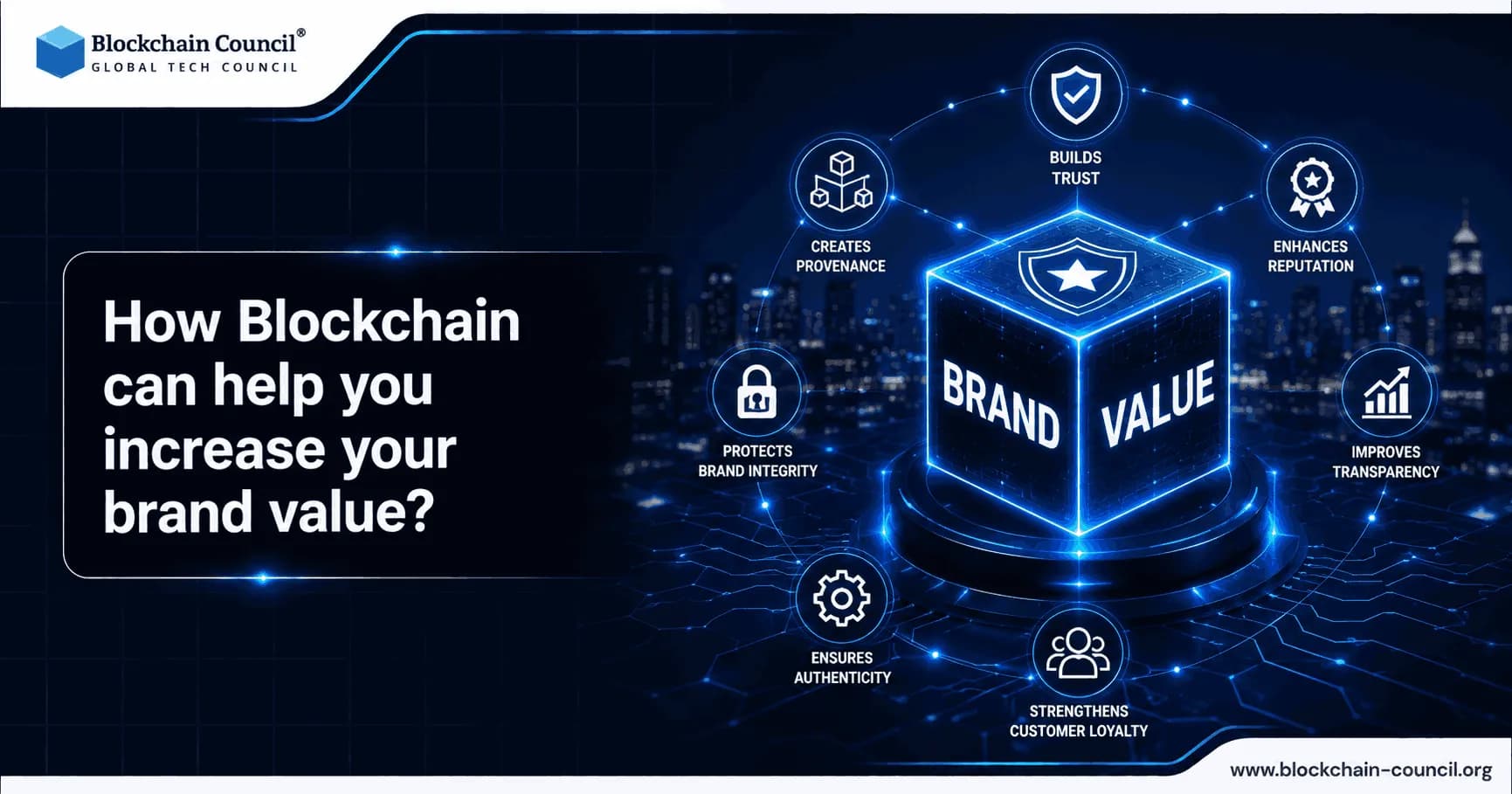
Brand value has always rested on trust, and trust has always been hard to prove. Customers cannot personally verify a supply chain, audit a company's sustainability claims, or confirm that a limited-edition product is genuinely authentic. Blockchain changes that equation by making claims verifiable rather than simply asserted, and companies that understand this shift are already using it to build brand equity that traditional marketing alone cannot deliver. Business leaders exploring this space often start with a Certified Blockchain Expert credential, which builds the foundational understanding needed to see exactly where blockchain fits into a brand strategy rather than treating it as a buzzword to bolt onto existing marketing.
The connection between blockchain and brand value is not obvious at first glance, since most people associate blockchain with cryptocurrency trading rather than customer trust. But the underlying properties of blockchain, transparency, immutability, and verifiability, map directly onto the qualities that build strong, durable brands in a market where consumers are increasingly skeptical of unverified corporate claims.

Why Trust Has Become the Hardest Currency for Brands to Earn
Modern consumers have grown wary of marketing claims that cannot be independently checked. Sustainability pledges, ethical sourcing statements, and product authenticity guarantees all rely on customers simply believing what a brand tells them, and repeated scandals across multiple industries have eroded that default trust. A brand that can prove its claims with verifiable data, rather than asking customers to take its word for it, holds a meaningful advantage in a crowded market.
Blockchain addresses this by creating an immutable, publicly verifiable record of information that cannot be altered after the fact. When a brand records supply chain data, sourcing information, or product authenticity details on a blockchain, that information becomes something customers, auditors, and partners can independently verify rather than something they simply have to trust. This shift from asserted trust to verified trust is where blockchain's real brand value opportunity lies, and it requires development expertise to implement correctly. A Certified Blockchain Developer credential reflects the hands-on skill needed to actually build these verification systems rather than simply understanding the concept in theory.
Building Supply Chain Transparency Customers Can Verify
One of the clearest applications of blockchain for brand value sits in supply chain transparency. Brands in fashion, food, luxury goods, and electronics increasingly face customer demand to prove where materials come from, how products are manufactured, and whether labor and environmental standards are actually met throughout the production process.
Blockchain allows a brand to record each stage of a product's journey, from raw material sourcing to manufacturing to distribution, on an immutable ledger that customers can access directly, often through a QR code or product identifier. Rather than reading a marketing page claiming ethical sourcing, a customer can trace the actual verified journey of the specific item they purchased. This level of transparency builds a kind of brand trust that traditional advertising simply cannot replicate, because it shifts the burden of proof from marketing copy to verifiable data.
Luxury goods brands have been particularly aggressive in adopting this approach, using blockchain to combat counterfeiting by giving each authentic item a verifiable digital record that customers and resellers can check before purchasing. This protects brand value directly by ensuring that counterfeit products cannot easily masquerade as genuine items, preserving both revenue and reputation.
Strengthening Customer Loyalty Through Verifiable Rewards Programs
Blockchain also offers brands a way to build loyalty programs that feel more valuable and trustworthy to customers than traditional points-based systems. Loyalty rewards recorded on a blockchain become transparent, transferable, and verifiable assets rather than opaque points sitting inside a single company's database that can be devalued or eliminated without customer input.
Some brands have begun experimenting with blockchain-based loyalty tokens that customers can track, transfer, or even trade, giving loyalty programs a sense of real ownership rather than a conditional benefit that exists entirely at the company's discretion. This approach tends to deepen customer engagement, since customers who feel genuine ownership over their rewards tend to remain more loyal than those participating in a program they view as easily revocable.
Enhancing Brand Credibility Through Verified Certifications and Claims
Brands frequently make claims about certifications, quality standards, or industry compliance that customers have limited ability to verify independently. Blockchain provides a mechanism for recording these certifications in a way that cannot be quietly altered or fabricated after the fact, giving customers, regulators, and business partners a reliable way to confirm that a brand's claims hold up under scrutiny.
This matters increasingly in industries where regulatory compliance and third-party certification carry significant weight, such as organic food labeling, fair trade certification, or environmental impact reporting. A brand that can point to blockchain-verified records rather than simply citing a certificate that customers must trust at face value builds a stronger foundation for long-term credibility, particularly as scrutiny of corporate claims continues to increase across most consumer-facing industries.
Where Future-Ready Thinking Begins Long Before a Business Career
The kind of systems thinking that blockchain-based brand strategies require, understanding how transparency, verification, and technology work together to solve trust problems, reflects analytical habits that ideally start forming well before anyone enters a business or marketing career.
Future-Ready Skills
As technology becomes increasingly important across industries, students need opportunities to develop future-ready skills early in their education. A World Tech Olympiad can introduce students to areas such as artificial intelligence, coding, cybersecurity, robotics, and computational thinking while encouraging curiosity and continuous learning.
Reducing Fraud and Protecting Brand Reputation
Counterfeit products, fraudulent claims, and unauthorized resellers all chip away at brand value in ways that are often difficult to detect until real damage has already occurred. Blockchain's immutable record-keeping makes it significantly harder for bad actors to fabricate authenticity claims or manipulate product histories, since any attempt to alter recorded data leaves a detectable trace across the distributed ledger.
This fraud-reduction benefit extends beyond counterfeit physical goods into digital assets as well, including verified digital certificates, warranties, and ownership records for high-value items. Brands that implement these systems effectively protect not just individual transactions but the broader reputation that took years to build, since a single well-publicized counterfeiting scandal can undo far more brand equity than blockchain implementation costs to prevent.
Implementing Blockchain Without Losing Sight of the Broader Brand Strategy
Adopting blockchain technology for brand value requires more than a technical rollout. It requires integrating verification systems into a broader brand narrative that customers can actually understand and appreciate, since even the most sophisticated blockchain implementation adds little brand value if customers never learn about it or understand why it matters. Teams responsible for building this broader technical and business integration often benefit from a general Tech Certification, since successfully deploying blockchain-based brand initiatives depends on technical fluency that extends well beyond blockchain specifically into data systems, customer-facing applications, and overall digital infrastructure.
Communicating these blockchain-based trust initiatives effectively to customers is just as important as building them correctly. A brand that implements sophisticated supply chain verification but fails to explain its value in customer-friendly terms misses much of the potential brand impact. Marketing and communications teams tasked with this translation often turn to a Marketing Certification to help turn technical blockchain achievements into a customer-facing story that actually builds the trust and brand loyalty the technology was meant to create in the first place.
Turning Verified Trust Into Lasting Brand Equity
Blockchain will not replace the fundamentals of good branding, quality products, consistent customer experience, and genuine value delivery still matter more than any single technology. But in a market where consumer skepticism toward unverified corporate claims continues to grow, blockchain offers brands a genuine way to differentiate themselves through verifiable transparency rather than louder marketing claims. Companies that treat blockchain as a trust-building tool, rather than a technical novelty, are positioned to build the kind of durable brand equity that survives scrutiny, competition, and the increasingly skeptical customers who now expect proof rather than promises.
FAQs
1. How can blockchain increase brand value?
Blockchain can strengthen brand value by improving trust, transparency, security, and traceability. By giving customers verifiable information about products, transactions, or business processes, blockchain can help a brand demonstrate that its claims are supported by reliable records.
2. Why is blockchain important for building customer trust?
Customer trust often depends on whether people believe a brand's claims. Blockchain creates tamper-resistant records that can make important information easier to verify, helping businesses demonstrate authenticity, provenance, and transparency.
3. Can blockchain improve brand transparency?
Yes. Blockchain can create a shared record of transactions and product information that authorized participants can access. This can provide greater visibility into areas such as sourcing, manufacturing, distribution, and ownership.
4. How does blockchain help brands prove product authenticity?
Blockchain can record a product's history from its origin through different stages of the supply chain. Customers or business partners can potentially verify this information through a digital identifier, helping brands demonstrate authenticity and reduce concerns about counterfeit products.
5. Can blockchain help prevent counterfeit products?
Blockchain can help reduce counterfeiting by providing a traceable record of an item's origin and movement through the supply chain. When combined with technologies such as QR codes, digital identities, or IoT devices, blockchain can make it easier to verify whether product information matches its recorded history.
6. How can blockchain improve customer loyalty?
Blockchain can support transparent and flexible loyalty programs through tokenized rewards. Businesses can use blockchain-based systems to make reward points easier to track and, where the program design allows, usable across participating partners.
7. Can blockchain help create a stronger brand reputation?
Yes. A brand that consistently provides verifiable information about its products, sourcing, transactions, or commitments can strengthen its reputation for transparency. Blockchain can support this by creating auditable records that help stakeholders verify important claims.
8. How does blockchain support sustainable branding?
Blockchain can provide traceability across supply chains, allowing businesses to document information related to sourcing, production, transportation, and other processes. This can help brands communicate sustainability-related information more credibly when the underlying data is accurate and properly collected.
9. Can blockchain improve supply chain transparency?
Yes. Blockchain can create an immutable audit trail showing how products and materials move through a supply chain. Better traceability can help businesses identify problems, verify provenance, improve reporting, and provide customers with greater visibility.
10. How can blockchain differentiate a brand from competitors?
Blockchain can help a brand differentiate itself by offering verifiable experiences that traditional systems may not provide as easily. For example, a company could give customers access to product provenance, authenticity records, digital ownership information, or transparent reward systems.
11. Can blockchain improve the customer experience?
Blockchain can improve customer experiences when it solves a meaningful trust or transparency problem. For example, customers could verify where a product came from, confirm authenticity, track ownership, or receive transparent loyalty rewards without depending entirely on a brand's internal claims.
12. How can blockchain strengthen a luxury brand's value?
Luxury brands can use blockchain to support product authenticity, provenance, ownership records, and digital certificates. These capabilities can be particularly useful for high-value products where customers place significant importance on authenticity and history.
13. Can blockchain help brands build credibility?
Yes. Blockchain can support credibility by allowing businesses to provide verifiable records rather than relying solely on marketing statements. However, blockchain does not automatically make information truthful, so brands must ensure that the data entered into the system is accurate.
14. How does blockchain improve brand security?
Blockchain uses cryptographic techniques, distributed records, and consensus mechanisms to protect recorded transactions from unauthorized alteration. Stronger data integrity can help businesses protect important records and strengthen confidence among customers and business partners.
15. Can blockchain help businesses communicate ethical sourcing?
Yes. Blockchain can record information about the movement and provenance of materials through a supply chain. Brands can use these records to provide greater visibility into sourcing and demonstrate evidence related to ethical or responsible business practices.
16. How can blockchain support digital ownership and brand engagement?
Blockchain can enable digital assets and verifiable ownership records that brands can incorporate into customer experiences. Depending on the business model, these assets can support memberships, collectibles, rewards, access to exclusive experiences, or other forms of community engagement.
17. Does using blockchain automatically increase brand value?
No. Simply adopting blockchain does not guarantee higher brand value. The technology needs to solve a genuine customer or business problem and deliver measurable improvements in areas such as trust, authenticity, transparency, efficiency, or customer engagement.
18. What industries can use blockchain to increase brand value?
Industries such as luxury goods, retail, food, healthcare, financial services, automotive, logistics, and consumer products can use blockchain for applications involving provenance, traceability, authentication, and trusted data. The strongest opportunities generally occur where customers or business partners need greater confidence in product or transaction information.
19. What are the challenges of using blockchain for brand building?
Businesses may face challenges involving implementation costs, scalability, interoperability, regulatory requirements, data quality, privacy, and customer adoption. Blockchain also cannot correct inaccurate information entered into the system, so businesses need strong data governance and reliable processes.
20. What is the best way to use blockchain to increase brand value?
Start with a specific trust, transparency, authenticity, or traceability problem rather than adopting blockchain simply because it is a new technology. Build a practical use case, ensure the underlying data is reliable, make verification easy for customers, and clearly communicate the value of the blockchain-enabled experience. When implemented effectively, blockchain can become a foundation for stronger trust, credibility, customer loyalty, and brand differentiation.
Related Articles
View All
Blockchain
Blockchain Maximum Extractable Value (MEV): Meaning, Risks, and Mitigation
Blockchain Maximum Extractable Value (MEV) explained for users, developers, and enterprises, with risks, examples, mitigation options, and regulatory context.

Blockchain
How Certification Can Help You Become a Blockchain Product Manager
Learn how certification builds blockchain knowledge, credibility, and practical product skills for aspiring blockchain product managers.

Blockchain
Beyond Cryptocurrency: How Blockchain Is Transforming Real-World Industries
Explore how blockchain works beyond cryptocurrency in banking, supply chains, healthcare, tokenisation, CBDCs, and government, plus key challenges and career paths.
Trending Articles
The Role of Blockchain in Ethical AI Development
How blockchain technology is being used to promote transparency and accountability in artificial intelligence systems.

Top 5 DeFi Platforms
Explore the leading decentralized finance platforms and what makes each one unique in the evolving DeFi landscape.
What is AWS? A Beginner's Guide to Cloud Computing
Everything you need to know about Amazon Web Services, cloud computing fundamentals, and career opportunities.