

Coinbase vs Blockchain
 Toshendra Kumar Sharma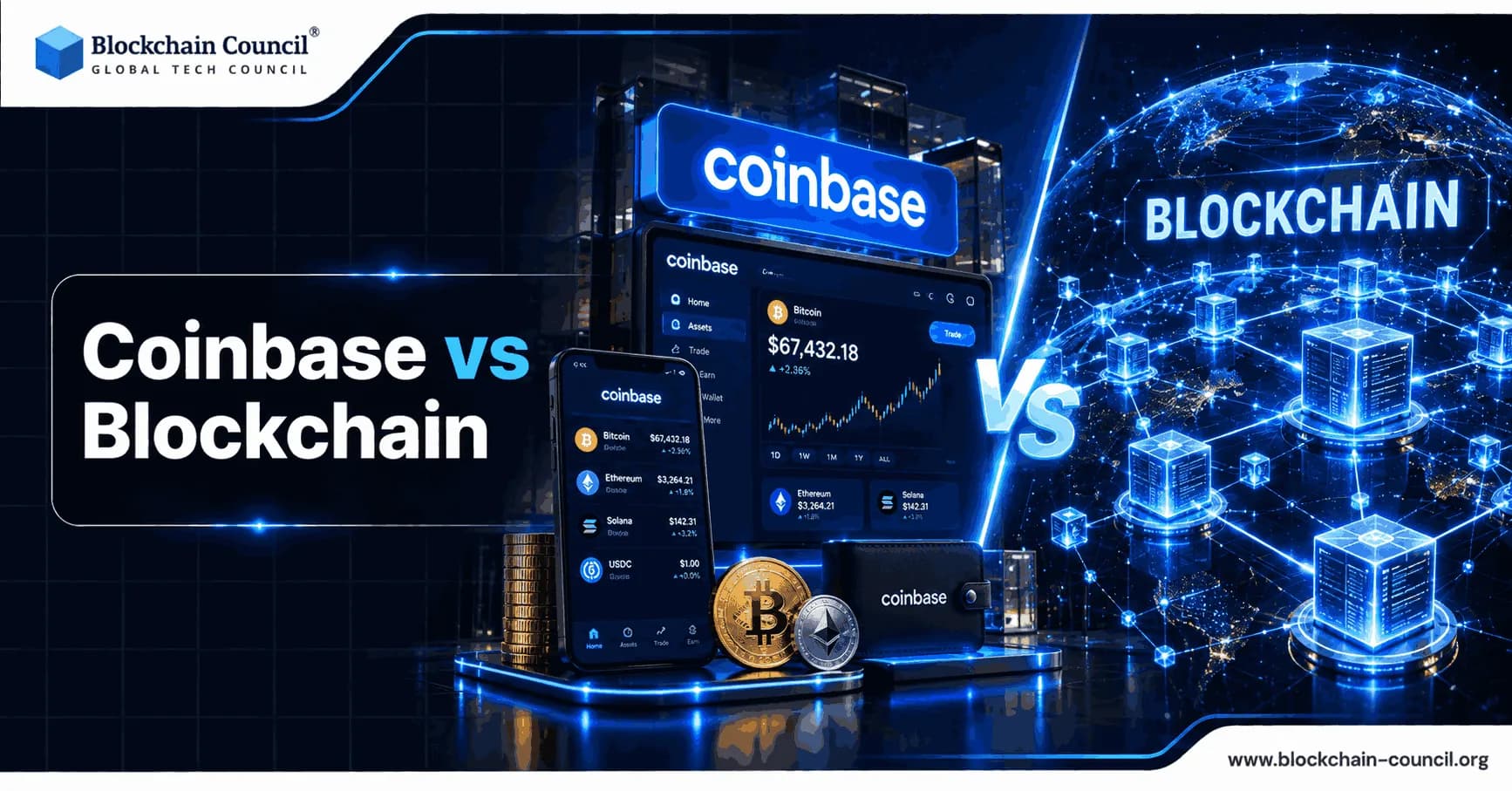
If you are new to crypto, the names Coinbase and Blockchain can sound almost the same. They are not. One is a well-known company that runs a crypto exchange. The other is a technology, and also the name of a separate company, Blockchain.com. Mixing them up is common, so this guide explains Coinbase vs Blockchain in plain language, from the basics to the details professionals care about. If you want to go deeper into digital assets after reading, the Certified Cryptocurrency Expert program is a solid way to build structured, career-ready knowledge.
Quick Answer: Coinbase vs Blockchain in One Minute
Coinbase is a US-based company that runs a platform where you can buy, sell, store, and send cryptocurrency. It is publicly listed and operates mainly as a custodial service.

Blockchain (lowercase) is the underlying technology: a shared digital ledger that records transactions across many computers.
Blockchain.com is a separate company that offers a crypto wallet, an exchange, and a block explorer for viewing network data.
So Coinbase uses blockchain technology, but it is not a blockchain itself. Think of it this way: the internet is a technology, and a shopping website is a business that runs on it. In the same way, blockchain is the technology and Coinbase is a business built on top of it.
What Is Blockchain Technology?
Understanding the technology first makes the rest easier. A blockchain is a ledger that stores records in blocks linked together using cryptography. Each participant in the network keeps a copy, so no single party controls the data. Once information is confirmed, changing it is very hard.
Why Blockchain Matters
Blockchain removes the need for a middleman in many situations. Two people can exchange value directly, and the network verifies it. Beyond money, the same idea is used in supply chains, identity checks, healthcare records, and digital ownership. Bitcoin was the first major use case, and Ethereum later added programmable smart contracts. For professionals who want a complete foundation in how these networks work, the Certified Blockchain Expert course covers architecture, consensus, and real-world deployment.
Key Features of Blockchain
Decentralization: Many nodes share control instead of one owner.
Transparency: Transactions can be viewed and verified on public networks.
Security: Cryptography protects data and links blocks together.
Immutability: Confirmed records are extremely difficult to alter.
What Is Coinbase?
Coinbase was founded in 2012 and grew into one of the largest crypto platforms in the United States. It became a public company in 2021, which means it publishes financial reports and follows regulations that apply to listed firms. Many beginners start here because the app is simple and familiar.
What Coinbase Offers
Coinbase gives users an easy way to turn regular money into crypto. Typical features include:
Buying and selling major cryptocurrencies with a bank account or card.
A hosted account where Coinbase holds your assets on your behalf.
A separate self-custody wallet option for people who want direct control of their keys.
Advanced trading tools for experienced users.
Staking and educational content on some supported assets.
Strengths of Coinbase
The biggest strength is ease of use. The interface is clean, the onboarding is guided, and support resources are widely available. As a regulated, publicly listed company, it also offers a level of corporate transparency that many newcomers find reassuring.
Limitations of Coinbase
Convenience has trade-offs. Fees can be higher than on some competitors, especially on simple purchases. When you hold coins in a hosted account, the company controls the private keys, so you rely on its security and policies. Product availability also varies by country and region.
What Is Blockchain.com?
Blockchain.com began in 2011 as a tool for viewing Bitcoin transactions, often called a block explorer. It later added a wallet and an exchange, which is why many people compare it directly with Coinbase.
What Blockchain.com Offers
A wallet that has long been known for giving users control of their own keys.
An exchange for trading supported assets.
A block explorer that lets anyone look up transactions and addresses.
Educational resources and market data.
Strengths of Blockchain.com
Its wallet appeals to users who want self-custody and more control over their funds. The block explorer is also a useful learning tool, because you can see real transactions on the network. For many users who care about independence from a central holder, that is a strong selling point.
Limitations of Blockchain.com
Self-custody means you are responsible for your recovery phrase. If you lose it, nobody can restore your funds. Features and supported regions also differ from Coinbase, and the experience can feel less guided for complete beginners.
Coinbase vs Blockchain: Side by Side Comparison
Here is a simple view of how the two platforms compare in common areas. For readers who want to broaden their credentials across several technologies beyond crypto, the Tech Certification catalog is a helpful place to explore.
Feature | Coinbase | |
|---|---|---|
Type | Crypto exchange and platform | Wallet, exchange, and explorer |
Founded | 2012 | 2011 |
Main custody style | Mostly custodial, with a self-custody option | Strong self-custody wallet, plus custodial exchange |
Beginner friendliness | Very high | Moderate |
Public listing | Yes | No |
Best known for | Easy buying and selling | Wallet control and block explorer |
Always check each platform's current fees, supported countries, and supported coins before you sign up, because these details change often.
Ease of Use
Coinbase is usually seen as the easier starting point. Its screens guide you through every step. Blockchain.com is still manageable, but the self-custody model asks you to take more responsibility from day one.
Control and Custody
This is the biggest practical difference. With a custodial account, the company holds your keys, similar to how a bank holds your money. With a self-custody wallet, you hold the keys. The common saying in crypto is: not your keys, not your coins. That control is powerful, but it comes with personal responsibility.
Fees and Costs
Both platforms charge fees for trading and some transactions, and network fees apply when you send crypto on a blockchain. Because pricing models change, compare the total cost of a sample purchase on each platform rather than trusting a headline number.
Security
Both companies use security measures such as two-factor authentication and encryption. Custodial platforms centralize risk, because a breach of the company could affect many users. Self-custody moves that risk to you, since a lost phrase or a phishing scam can cause permanent loss. In either case, turn on two-factor authentication and never share your recovery phrase.
Regulation and Trust
Coinbase operates as a regulated, publicly listed business in major markets. Rules differ by country for every crypto company, so check which services are legally available where you live. Neither platform removes the need to do your own research.
Coinbase vs Blockchain as Concepts: Company vs Technology
Some readers searching this phrase want a different comparison: Coinbase as a service against blockchain as a technology. The key difference is that you can use blockchain without Coinbase, but Coinbase cannot exist without blockchain.
You can run your own wallet and send Bitcoin directly on the network without any exchange.
You can use Coinbase as a convenient doorway that handles complexity for you.
Coinbase also builds on the technology itself, including its own public network, which shows how businesses and blockchains grow together.
In short, blockchain is the road, and Coinbase is one of the vehicles that drives on it.
Which One Should You Choose?
Use these simple guidelines.
You are a complete beginner: Coinbase's guided design is usually the easier start.
You want full control of your keys: A self-custody wallet, such as the one Blockchain.com offers, may fit better.
You want to learn how the network works: Blockchain.com's block explorer is a handy learning tool.
You trade often: Compare fees and tools on both, and consider using more than one platform.
You hold a large amount long term: Consider a hardware wallet and keep only trading funds on an exchange.
Many experienced users do not pick just one. They use an exchange for buying and a separate wallet for long-term storage.
Common Mistakes to Avoid
Confusing a company name with the technology itself.
Storing a recovery phrase on a phone or in an email.
Clicking links in messages that claim to be from a platform. Always type the official address yourself.
Investing more than you can afford to lose.
Ignoring local tax rules for crypto gains.
Building a Career Around Crypto and Blockchain
As these platforms grow, so does the demand for people who understand them. Developers, analysts, compliance specialists, and marketers all play a part. Communicating complex products to everyday users is a skill of its own. A credential such as the Marketing Certification can help professionals explain crypto products clearly, build trust, and grow an audience in this fast-moving industry.
Conclusion
The Coinbase vs Blockchain question has a simple core. Coinbase is a company that offers an easy way to buy and manage crypto. Blockchain is the technology behind digital assets, and Blockchain.com is a separate company known for its wallet, exchange, and explorer. Choose based on your experience level, your need for control, and how much responsibility you want to hold. Start small, protect your keys and accounts, keep learning, and verify current features and rules before you commit any money.
FAQs
1. What Is the Difference Between Coinbase and Blockchain?
Coinbase is a cryptocurrency platform and company that provides services for buying, selling, storing, and using digital assets. Blockchain is a type of distributed ledger technology used to record transactions across a network.
2. Is Coinbase a Blockchain?
No. Coinbase is not a blockchain itself. It is a company and cryptocurrency platform that interacts with multiple blockchain networks to provide digital-asset services.
3. What Is Blockchain?
Blockchain is a distributed ledger technology that records transactions in linked blocks secured using cryptographic techniques. Depending on its design, a blockchain can support cryptocurrencies, smart contracts, digital assets, and decentralized applications.
4. What Is Coinbase Used For?
Coinbase provides services that allow users to interact with cryptocurrencies and digital assets. Depending on the user's location and available products, these services can include buying and selling crypto, custody, trading, transfers, and other Web3-related functionality.
5. Does Coinbase Own Blockchain Technology?
Coinbase does not own blockchain technology as a whole. It operates within the broader blockchain ecosystem and supports multiple blockchain networks and digital assets.
6. Does Coinbase Use Blockchain?
Yes. Coinbase interacts with blockchain networks to facilitate cryptocurrency transactions and other digital-asset activities. Blockchain networks provide the underlying infrastructure for recording on-chain transactions.
7. What Is Coinbase's Role in the Blockchain Ecosystem?
Coinbase acts as an intermediary and technology platform connecting users with digital assets and blockchain networks. It also provides infrastructure and developer products designed to help businesses and developers build blockchain-based applications.
8. Is Coinbase Decentralized?
Coinbase itself is a centralized company and platform. This differs from decentralized blockchain networks, where transaction validation and network governance can be distributed among many independent participants.
9. Is Blockchain Centralized Like Coinbase?
Not necessarily. Many public blockchains are designed to operate without a single central authority, although the degree of decentralization varies significantly between different blockchain networks.
10. Can I Buy Cryptocurrency Through Blockchain?
Blockchain itself is not normally a cryptocurrency exchange. Users can acquire cryptocurrencies through exchanges, brokers, wallets, or other services, while the blockchain records transactions involving those assets.
11. Can I Store Cryptocurrency on Coinbase?
Yes. Coinbase offers cryptocurrency custody and wallet-related services, subject to the specific product and jurisdiction. Users should understand whether their assets are held in a custodial Coinbase account or controlled directly through a self-custody wallet.
12. What Is the Difference Between Coinbase and a Crypto Wallet?
Coinbase is a cryptocurrency company that offers exchange and custody services, among other products. A crypto wallet is a tool for managing blockchain accounts and cryptographic keys, and a self-custody wallet allows the user to control the private keys directly.
13. Does Coinbase Create Cryptocurrency?
Coinbase does not create cryptocurrencies such as Bitcoin or Ethereum. However, Coinbase has developed its own blockchain, Base, which is an Ethereum Layer 2 network designed to provide a platform for on-chain applications.
14. What Is Base by Coinbase?
Base is an Ethereum Layer 2 blockchain developed by Coinbase. It is designed to provide a lower-cost and scalable environment for building and using decentralized applications while remaining connected to Ethereum.
15. Is Base the Same as Coinbase?
No. Coinbase is the company and broader cryptocurrency platform, while Base is a separate blockchain network developed by Coinbase. Base uses Ethereum as its underlying settlement layer.
16. Which Is More Secure, Coinbase or Blockchain?
The comparison is not direct because they serve different purposes. Blockchain security depends on the network's architecture, consensus mechanism, cryptography, and decentralization, while Coinbase security also depends on account protection, custody systems, operational controls, and user practices.
17. Can Coinbase Transactions Be Recorded on a Blockchain?
Yes, when a transaction involves an on-chain transfer, the transaction can be recorded on the relevant blockchain. However, not every activity within a centralized cryptocurrency platform necessarily results in an individual on-chain transaction.
18. Is Coinbase Better Than Blockchain?
They cannot be directly compared as alternatives. Coinbase is a service provider that helps users interact with digital assets, while blockchain is the underlying technology that can power cryptocurrencies and decentralized applications.
19. What Is the Difference Between Coinbase and Bitcoin?
Coinbase is a company and cryptocurrency platform, while Bitcoin is a decentralized cryptocurrency and blockchain network. Coinbase can provide services that allow users to buy, sell, hold, and transfer Bitcoin.
20. How Are Coinbase and Blockchain Connected?
Coinbase connects users and businesses with blockchain networks and digital assets. Blockchain provides the decentralized infrastructure for recording supported on-chain transactions, while Coinbase provides centralized services and tools that make interacting with those networks easier.
Related Articles
View All
Blockchain
Beyond Cryptocurrency: How Blockchain Is Transforming Real-World Industries
Explore how blockchain works beyond cryptocurrency in banking, supply chains, healthcare, tokenisation, CBDCs, and government, plus key challenges and career paths.

Blockchain
Smart Contracts & dApps: How Blockchain Becomes Programmable
Learn how smart contracts and dApps make blockchain programmable, from Ethereum and tokens to DeFi, NFTs, real use cases, benefits, and key risks.

Blockchain
Behind the Blocks: How Blockchain Transactions Actually Work
Go behind the blocks to see how a blockchain transaction really works: wallets and keys, digital signatures, verification, hashing, blocks, consensus, proof of work vs proof of stake, and how miners and validators secure the network.
Trending Articles
The Role of Blockchain in Ethical AI Development
How blockchain technology is being used to promote transparency and accountability in artificial intelligence systems.
Top 5 DeFi Platforms
Explore the leading decentralized finance platforms and what makes each one unique in the evolving DeFi landscape.
Claude AI Tools for Productivity
Discover Claude AI tools for productivity to streamline tasks, manage workflows, and improve efficiency.