

Blockchain Technology Encouraging Freelancers to Work Remotely
 Toshendra Kumar Sharma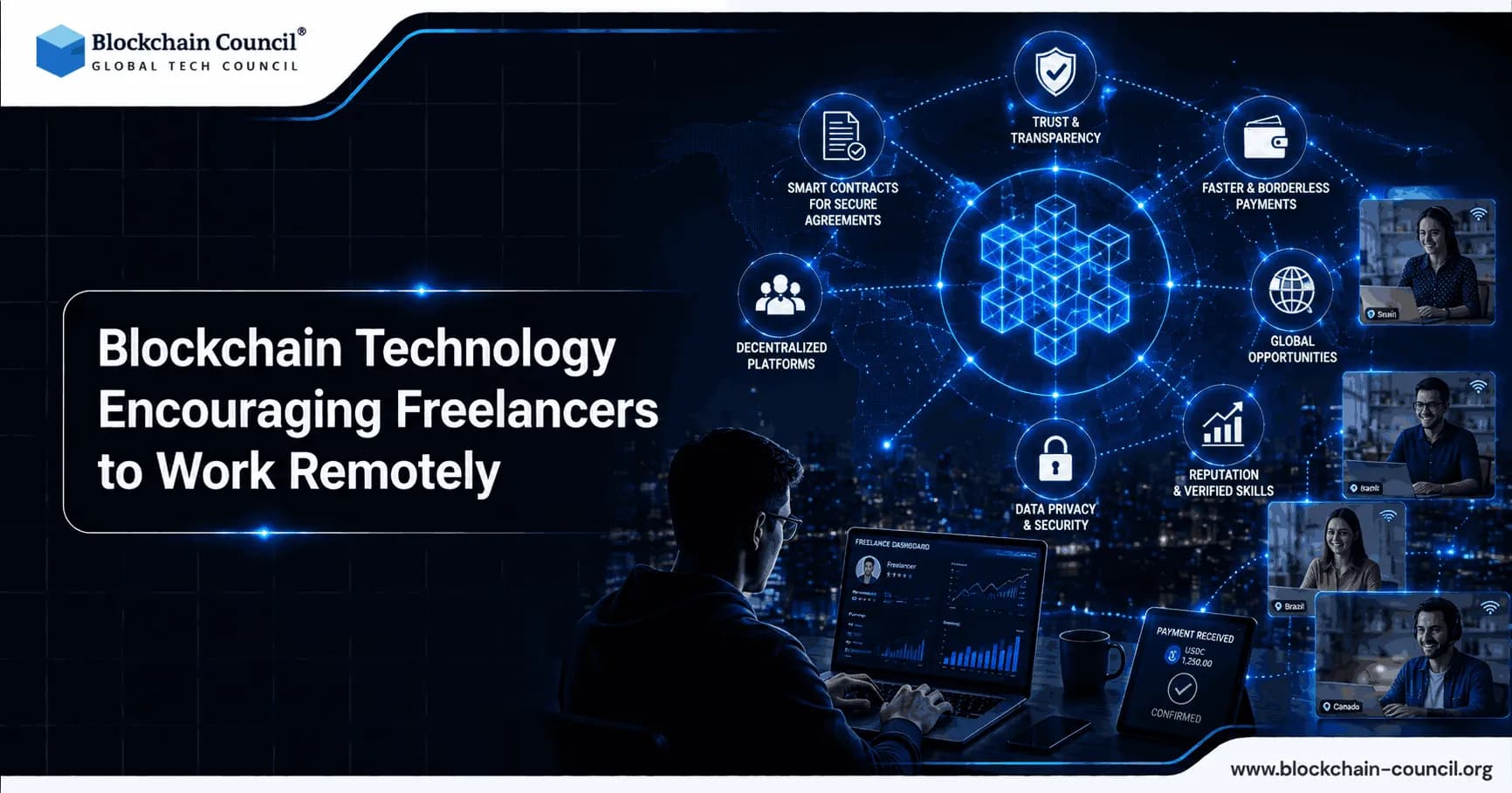
Remote freelance work has grown into a mainstream career path, yet many of the challenges that once made freelancing risky, delayed payments, cross border transaction fees, disputed contracts, and unverifiable work history, have never fully gone away. Blockchain technology is beginning to address these long standing pain points directly, giving freelancers and clients a more secure, transparent, and efficient way to work together regardless of where either party is located. Professionals who understand how to apply this technology practically, including those trained as a Certified Blockchain Expert, are increasingly involved in building the platforms and systems that make this shift possible for the modern freelance workforce. This article explores how blockchain is reshaping remote freelance work and why it is becoming a genuine enabler of location independent careers.
The Core Problems Facing Remote Freelancers
Before looking at how blockchain helps, it is worth understanding the specific friction points freelancers have dealt with for years, especially those working across borders with clients they have never met in person.

Common challenges include:
Payment delays and disputes, since traditional invoicing and banking systems were not built for fast, international freelance transactions.
High transaction fees, particularly when converting currencies or using intermediary payment platforms.
Lack of trust between new parties, since freelancers and clients often have no shared history to rely on.
Difficulty verifying work history, as reputation and past project credentials are scattered across multiple platforms.
Contract enforcement, where disputes over deliverables or payment terms can be costly and slow to resolve, especially across jurisdictions.
These are exactly the kinds of structural problems blockchain technology, with its emphasis on transparency, automation, and decentralized trust, is well suited to address.
How Blockchain Technology Supports Remote Freelance Work
Blockchain contributes to remote freelancing in several distinct ways, each targeting a specific pain point that has historically made cross border freelance work more complicated than it needed to be.
Faster, Lower Cost Cross Border Payments
Freelancers working with international clients have traditionally lost meaningful income to currency conversion fees and slow bank transfers. Blockchain based payment systems, including cryptocurrency and stablecoin transactions, allow freelancers to receive payment quickly and with significantly lower fees than many traditional international transfer methods, making remote work more financially viable regardless of location.
Smart Contracts for Automatic, Trustless Payment
Smart contracts allow freelancers and clients to define payment terms in code, automatically releasing funds once agreed upon conditions, such as milestone completion, are met. This reduces the need for either party to simply trust the other, since the contract itself enforces the agreement without requiring a third party intermediary to intervene.
Building and deploying these kinds of smart contract systems requires genuine technical skill, which is exactly what a Certified Blockchain Developer credential is designed to teach, covering the practical development work behind freelance payment platforms rather than treating smart contracts as an abstract concept.
Verifiable Work History and Reputation
Some blockchain based freelance platforms now allow work history, client reviews, and completed project records to be stored on a tamper resistant ledger. This gives freelancers a portable, verifiable reputation that travels with them across platforms, rather than being locked into a single marketplace's internal rating system that cannot easily be transferred elsewhere.
Decentralized Freelance Marketplaces
A growing number of freelance platforms are built directly on blockchain infrastructure, removing traditional intermediaries and the fees that come with them. These platforms often combine smart contract based payments with transparent dispute resolution processes, giving freelancers more control over their earnings and how conflicts get resolved.
Transparent Dispute Resolution
When disagreements arise over deliverables or payment, blockchain based platforms can incorporate decentralized arbitration systems, where independent, incentivized third parties review evidence and make binding decisions recorded directly on the blockchain. This offers a faster, often more affordable alternative to traditional legal action, particularly valuable for freelancers working across international jurisdictions.
Future-Ready Skills
As technology becomes increasingly important across industries, students need opportunities to develop future-ready skills early in their education. A Tech Olympiad can introduce students to areas such as artificial intelligence, coding, cybersecurity, robotics, and computational thinking while encouraging curiosity and continuous learning. This kind of early exposure builds a foundation that increasingly matters for the next generation of remote workers and freelancers, who will need comfort with emerging technologies like blockchain to navigate a work landscape that looks very different from the traditional employment models of the past.
Students interested in technology can explore the World Tech Olympiad, a global Tech Olympiad covering AI, coding, robotics, cybersecurity, and computational thinking.
Why This Matters for the Future of Remote Work
Remote freelancing continues to grow as more professionals prioritize flexibility and location independence over traditional employment. Blockchain technology directly supports this shift by removing several of the practical barriers that once made freelancing, particularly across borders, more difficult than it needed to be.
The benefits extend beyond individual freelancers as well. Businesses hiring remote talent benefit from faster payment processing, more reliable verification of freelancer credentials, and reduced administrative overhead when managing distributed teams. This mutual benefit is part of why blockchain based freelance solutions have gained steady traction rather than remaining a niche experiment.
Staying current with how these tools continue to evolve matters for freelancers and platform builders alike. Many professionals pursue a broad Tech Certification to build the kind of well rounded technical literacy needed to evaluate new blockchain based freelance tools as they emerge, rather than relying on outdated assumptions about what the technology can actually do.
Helping Freelancers Understand and Adopt These Tools
Despite its advantages, blockchain based freelancing is still unfamiliar territory for many independent professionals. Platforms and advocates working to expand adoption need to communicate the practical benefits clearly, without relying on technical jargon that alienates freelancers who simply want a faster, safer way to get paid.
This is where a Marketing Certification becomes genuinely useful, equipping professionals with the communication skills needed to explain blockchain based freelance tools in plain, practical terms, helping freelancers understand exactly how these systems protect their income and reputation rather than presenting the technology as an abstract innovation.
Blockchain technology is giving remote freelancers real, practical tools to solve problems that have persisted for years, from slow cross border payments to unreliable dispute resolution and fragmented reputation systems. As adoption continues to grow, freelancers who understand and embrace these tools early are likely to find themselves better protected, better paid, and better positioned to work confidently with clients anywhere in the world.
FAQs
1. How Is Blockchain Technology Encouraging Freelancers to Work Remotely?
Blockchain can make remote freelancing easier by supporting direct payments, smart-contract agreements, decentralized marketplaces, and verifiable work histories. These features can reduce dependence on traditional intermediaries and make it easier for freelancers and clients in different countries to collaborate.
2. What Role Does Blockchain Play in Remote Freelancing?
Blockchain can provide infrastructure for contracts, payments, identity, reputation, and transaction records. This can help freelancers work with clients remotely while maintaining a transparent record of agreed terms and completed transactions.
3. How Can Blockchain Make Freelance Payments Faster?
Blockchain-based payment systems can transfer digital assets directly between wallets without requiring traditional banking intermediaries. Some blockchain freelance platforms already offer direct wallet-to-wallet payments and on-chain payment verification, potentially reducing delays associated with conventional international transfers.
4. Can Smart Contracts Protect Freelancers From Non-Payment?
Smart contracts can hold funds in escrow and release them when predefined conditions or milestones are satisfied. This can provide additional payment protection for freelancers, although smart contracts cannot independently determine subjective factors such as whether creative work meets a client's expectations.
5. How Does Blockchain Help Freelancers Work With International Clients?
Blockchain can facilitate cross-border digital payments without requiring both parties to use the same traditional banking system. This can be particularly useful for freelancers working with international clients, although cryptocurrency regulations, taxes, exchange rates, and payment availability vary by country.
6. Can Blockchain Reduce Freelancing Platform Fees?
Blockchain-based freelance marketplaces can potentially reduce some intermediary costs by connecting clients and freelancers directly. Several blockchain-focused platforms currently promote lower fees or direct payments, but actual costs vary according to the platform, blockchain network, transaction fees, and payment method.
7. How Can Blockchain Improve Trust Between Freelancers and Clients?
Blockchain can create verifiable records of transactions, agreements, completed projects, and reputation data. This can provide both parties with additional evidence when establishing professional relationships with people they have never met in person.
8. What Is On-Chain Reputation for Freelancers?
On-chain reputation refers to professional activity or credentials recorded or verified through blockchain infrastructure. A freelancer could potentially build a portable record of completed contracts, payments, credentials, or other verifiable achievements that can be used across compatible services.
9. Can Blockchain Help Freelancers Get Paid Without a Bank Account?
Some blockchain payment systems allow users to receive digital assets directly into a compatible wallet rather than relying exclusively on traditional bank transfers. However, freelancers may still need regulated financial services to convert digital assets into local currency, and availability depends on local laws and service providers.
10. How Does Blockchain Support Decentralized Freelance Platforms?
Decentralized freelance platforms can use blockchain for smart-contract escrow, payments, identity, reputation, and transaction verification. This model aims to reduce reliance on a centralized intermediary and can support direct interaction between clients and freelancers.
11. Can Blockchain Help Freelancers Maintain Ownership of Their Work History?
Blockchain-based systems can potentially provide portable records of professional activity and completed projects. Instead of keeping all reputation information inside one centralized platform, on-chain records can be designed to remain verifiable across compatible applications.
12. How Can Blockchain Help With Freelance Contracts?
Smart contracts can encode specific project terms, payment conditions, deadlines, and milestone requirements. When objective conditions are met, the contract can automatically perform predefined actions, reducing the need for manual payment processing.
13. Can Blockchain Improve Remote Work Transparency?
Yes. Blockchain can create an auditable record of transactions and selected project events. This can make payment status, contract activity, or ownership transfers easier to verify, although blockchain does not automatically verify the truthfulness of information entered into the system.
14. Does Blockchain Make Remote Freelancing More Secure?
Blockchain can add security through cryptographic verification, distributed records, and programmable transactions. However, freelancers still need to protect private keys, wallets, accounts, devices, and personal information, and blockchain systems can have their own technical and smart-contract risks.
15. Can Freelancers Use Cryptocurrency to Receive International Payments?
Yes, where legally permitted and supported by the relevant services. Some blockchain freelance platforms currently allow freelancers to receive payments in cryptocurrencies or stablecoins, providing an alternative to traditional cross-border payment methods.
16. How Can Blockchain Benefit Freelancers in Developing Markets?
Blockchain-based payments may provide additional options for freelancers who face limitations with international banking or payment services. Digital wallets and stablecoin-based payments can potentially make cross-border transactions more accessible, although local regulations, infrastructure, exchange services, and financial literacy remain important considerations.
17. What Are the Challenges of Using Blockchain for Remote Freelancing?
Challenges include cryptocurrency price volatility, transaction fees, regulatory uncertainty, wallet security, technical complexity, tax obligations, and limited adoption among traditional clients. Smart contracts can also be difficult to use for projects where quality or completion requires human judgment.
18. Can Blockchain and Traditional Freelancing Platforms Work Together?
Yes. Blockchain does not need to replace established freelance platforms. Traditional marketplaces can coexist with blockchain-based tools for payments, credentials, contracts, identity, or reputation, allowing freelancers to benefit from blockchain features without changing their entire workflow.
19. What Types of Freelancers Can Benefit From Blockchain-Based Work?
Developers, designers, writers, marketers, consultants, cybersecurity specialists, community managers, and other digital professionals can potentially participate in blockchain-enabled remote work. Current blockchain freelance marketplaces list opportunities across development, design, marketing, content, security, and other digital services.
20. Will Blockchain Make Remote Freelancing More Popular?
Blockchain could contribute to the growth of borderless freelancing by making certain contracts, payments, and professional records easier to manage digitally. However, blockchain is only one factor influencing remote work, and widespread adoption will depend on usability, regulation, client acceptance, payment infrastructure, and whether blockchain solutions provide clear advantages over existing systems.
Related Articles
View All
Blockchain
Blockchain vs IoT: How Decentralized Networks and Connected Devices Work Together
Blockchain vs IoT explained: how connected devices, smart contracts, device identity, and decentralized ledgers work together in real systems.

Blockchain
Blockchain Train Technology: Rail Use Cases, Benefits, and Limits
Blockchain train technology is moving from pilots to practical rail use cases in freight, ticketing, asset records, IoT security, and audit trails.

Blockchain
Blockchain Wallets Explained: How They Work, Types, and Security Best Practices
Blockchain wallets manage keys, sign transactions, and secure digital assets. Learn wallet types, risks, best practices, and how to choose the right setup.
Trending Articles

Top 5 DeFi Platforms
Explore the leading decentralized finance platforms and what makes each one unique in the evolving DeFi landscape.
What is AWS? A Beginner's Guide to Cloud Computing
Everything you need to know about Amazon Web Services, cloud computing fundamentals, and career opportunities.
Claude AI Tools for Productivity
Discover Claude AI tools for productivity to streamline tasks, manage workflows, and improve efficiency.