

Microsoft Blockchain-As-A-Service
 Suyash Raizada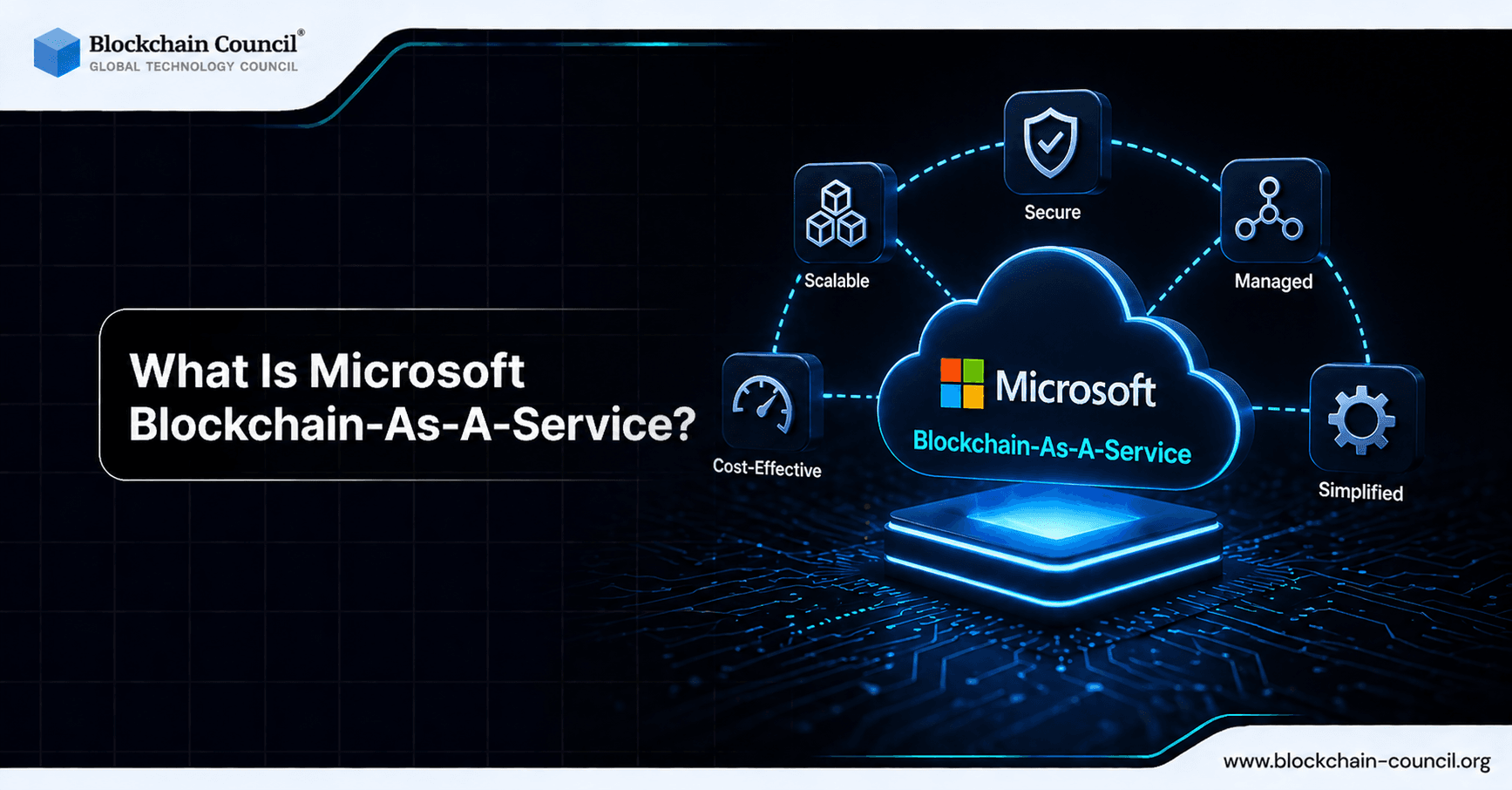
Microsoft Blockchain-as-a-Service (BaaS) is a cloud-based solution that enables organizations to build, deploy, and manage blockchain applications using Microsoft Azure.
Instead of setting up complex blockchain infrastructure from scratch, businesses can use Azure’s tools and services to create scalable and secure blockchain solutions quickly.

As blockchain adoption has matured, Microsoft has shifted from early experimentation to enterprise-grade solutions focused on integration, security, and real-world use cases. Understand how Microsoft Blockchain-as-a-Service enables rapid deployment of blockchain solutions on cloud infrastructure by building enterprise expertise through a Certified Blockchain Expert, integrating cloud services using a Python certification, and scaling enterprise solutions using a Digital marketing course.
What Is Blockchain-as-a-Service (BaaS)?
Blockchain-as-a-Service is a cloud-based offering that allows organizations to develop and run blockchain networks without managing the underlying infrastructure.
BaaS providers handle:
Network setup and configuration
Node management
Security and updates
Scaling and performance
This allows developers and businesses to focus on building applications instead of maintaining infrastructure.
Microsoft’s Approach to Blockchain on Azure
Microsoft introduced BaaS through Azure to simplify blockchain development for enterprises. Initially focused on Ethereum-based solutions, Azure has evolved to support multiple frameworks and enterprise needs.
As of 2026, Microsoft no longer offers a single “Azure Blockchain Service” product (it was retired in 2021). Instead, blockchain capabilities are integrated into Azure through:
Azure Virtual Machines for hosting blockchain nodes
Azure Kubernetes Service (AKS) for scalable deployments
Azure Managed Identities and Key Vault for security
Integration with partner platforms and tools
In short, Microsoft moved from a packaged service to a modular, flexible ecosystem.
Key Features of Microsoft Blockchain Solutions
Microsoft’s blockchain capabilities are built around enterprise requirements.
1. Managed Infrastructure
Azure allows businesses to deploy blockchain networks without handling physical servers or complex setups. Infrastructure can scale based on demand.
2. Multi-Platform Support
Azure supports multiple blockchain frameworks, including:
Ethereum-based networks
Hyperledger Fabric (via partners)
Quorum and other enterprise chains
This flexibility helps organizations choose the right technology for their use case.
3. Integration with Existing Systems
One of Azure’s strengths is integration. Blockchain solutions can connect with:
ERP systems
Databases
APIs
Microsoft tools like Power BI and Dynamics 365
This makes blockchain more practical for enterprise workflows.
4. Security and Identity Management
Azure provides enterprise-grade security tools such as:
Azure Key Vault for key management
Azure Active Directory for identity control
Role-based access systems
These features are critical for regulated industries.
5. Development Tools and Templates
Azure offers pre-configured templates and development environments. This reduces setup time and allows developers to focus on application logic.
Evolution of Microsoft BaaS
Microsoft’s early blockchain efforts included partnerships with companies like ConsenSys and Ripple, along with Ethereum-based deployments.
However, the company later shifted its strategy:
Retired Azure Blockchain Service (2021)
Focused on decentralized identity solutions (e.g., Microsoft Entra Verified ID)
Emphasized partner-driven blockchain ecosystems
Integrated blockchain into broader cloud services
This reflects a broader industry trend: blockchain is no longer treated as a standalone product but as part of larger digital infrastructure.
Use Cases of Microsoft Blockchain on Azure
Microsoft’s blockchain solutions are used across industries.
Financial Services
Banks use blockchain for cross-border payments, trade finance, and fraud reduction.
Supply Chain Management
Companies track goods, verify authenticity, and improve transparency across supply chains.
Digital Identity
Microsoft has invested heavily in decentralized identity solutions, enabling secure and verifiable credentials.
Healthcare
Blockchain is used to manage patient records securely and ensure data integrity.
Government and Compliance
Public sector organizations use blockchain for record keeping, auditing, and transparency.
Benefits of Microsoft Blockchain-as-a-Service
Reduced Complexity
Businesses can deploy blockchain networks without deep technical expertise.
Faster Development
Pre-built tools and templates speed up development cycles.
Scalability
Azure infrastructure supports large-scale deployments.
Enterprise Integration
Seamless integration with existing enterprise systems improves usability.
Security
Advanced security features protect sensitive data and transactions.
Challenges and Limitations
Despite its benefits, Microsoft BaaS has some limitations:
No longer a single dedicated service product
Requires understanding of both blockchain and cloud architecture
Dependence on third-party frameworks
Ongoing costs associated with cloud usage
Organizations must carefully evaluate their needs before adopting blockchain solutions.
Microsoft vs Other BaaS Providers
Microsoft competes with other major providers such as:
IBM Blockchain (focused on Hyperledger)
Amazon Managed Blockchain (supports Ethereum and Hyperledger)
Oracle Blockchain Platform
Microsoft’s advantage lies in its strong cloud ecosystem and enterprise integration capabilities.
The Future of Microsoft Blockchain (2026 and Beyond)
Microsoft’s current strategy focuses less on promoting blockchain as a standalone technology and more on integrating it into broader solutions.
Key trends include:
Growth of decentralized identity systems
Integration with AI and data analytics
Increased focus on interoperability
Enterprise adoption in regulated industries
Blockchain remains part of Azure, but as one component of a larger digital transformation strategy. Build blockchain solutions using cloud platforms like Azure BaaS for enterprise applications by mastering cloud-blockchain integration through a Certified Blockchain Expert, developing scalable APIs using a Node JS Course, and promoting enterprise adoption using an AI powered marketing course.
Conclusion
Microsoft Blockchain-as-a-Service has evolved from a dedicated product into a flexible set of tools within the Azure ecosystem.
While the original Azure Blockchain Service has been retired, Microsoft continues to support blockchain development through infrastructure, integration, and enterprise-grade security.
For organizations looking to build blockchain applications, Azure provides a scalable and practical environment, especially when combined with other Microsoft services.
FAQs
1. What is Microsoft Blockchain-as-a-Service?
Microsoft BaaS is a cloud-based solution on Azure that allows businesses to build and manage blockchain applications without handling infrastructure.
2. Does Microsoft still offer Azure Blockchain Service?
No, Azure Blockchain Service was retired in 2021. Microsoft now supports blockchain through modular Azure tools and partner solutions.
3. What is Blockchain-as-a-Service?
BaaS is a cloud service that provides blockchain infrastructure, allowing developers to focus on building applications instead of managing networks.
4. Which blockchains are supported on Azure?
Azure supports Ethereum-based networks, Hyperledger Fabric through partners, and other enterprise blockchain frameworks.
5. What are the benefits of using Azure for blockchain?
Azure offers scalability, security, integration with enterprise systems, and reduced infrastructure management.
6. Is Microsoft involved in cryptocurrency?
Microsoft focuses on blockchain technology and enterprise solutions rather than cryptocurrency development.
7. What is Azure Key Vault in blockchain?
Azure Key Vault securely manages cryptographic keys used in blockchain applications.
8. Can I build smart contracts on Azure?
Yes, developers can deploy and test smart contracts using supported blockchain frameworks on Azure.
9. What industries use Microsoft blockchain solutions?
Industries include finance, supply chain, healthcare, government, and digital identity.
10. What is decentralized identity in Microsoft?
It is a system that allows users to control their digital identity using blockchain-based verification tools.
11. How does Azure improve blockchain scalability?
Azure provides cloud infrastructure that can scale resources based on demand.
12. What is Azure Kubernetes Service in blockchain?
AKS helps deploy and manage containerized blockchain applications at scale.
13. Is blockchain on Azure secure?
Yes, Azure provides enterprise-grade security tools such as identity management and encryption services.
14. What is the role of partners in Microsoft BaaS?
Partners provide blockchain frameworks, tools, and solutions integrated with Azure.
15. Can small businesses use Microsoft blockchain services?
Yes, Azure’s flexible pricing and tools make it accessible for businesses of all sizes.
16. How does Microsoft compare to AWS blockchain services?
Microsoft focuses on integration and enterprise tools, while AWS offers managed blockchain services with different frameworks.
17. What is a blockchain node on Azure?
A node is a participant in the blockchain network that validates and stores transaction data.
18. What are smart contracts?
Smart contracts are self-executing programs that automate processes on a blockchain.
19. Is coding required for Azure blockchain?
Basic programming knowledge is required, especially for developing smart contracts and applications.
20. What is the future of Microsoft blockchain?
Microsoft is focusing on integrating blockchain with identity, AI, and enterprise solutions rather than offering standalone services.
Related Articles
View All
Bitcoin
How to Buy Bitcoin Safely: A Practical Step-by-Step Guide
Learn how to buy Bitcoin safely using regulated platforms, strong account security, careful order placement, and secure wallet storage.

Bitcoin
Has 95% of Bitcoin Been Mined? What It Means for Supply, Miners, and Investors
Has 95% of Bitcoin been mined? Yes. Learn what the milestone means for Bitcoin supply, halvings, miners, scarcity, and future issuance.

Bitcoin
How much will 1 Bitcoin be worth in 2030? Forecasts, scenarios, and risks
How much will 1 Bitcoin be worth in 2030? Explore realistic BTC price ranges, major forecasts, adoption drivers, and key risks for investors and professionals.
Trending Articles
AWS Career Roadmap
A step-by-step guide to building a successful career in Amazon Web Services cloud computing.

Top 5 DeFi Platforms
Explore the leading decentralized finance platforms and what makes each one unique in the evolving DeFi landscape.
How Blockchain Secures AI Data
Understand how blockchain technology is being applied to protect the integrity and security of AI training data.