

Jobs in Smart Contract Development
 Toshendra Kumar Sharma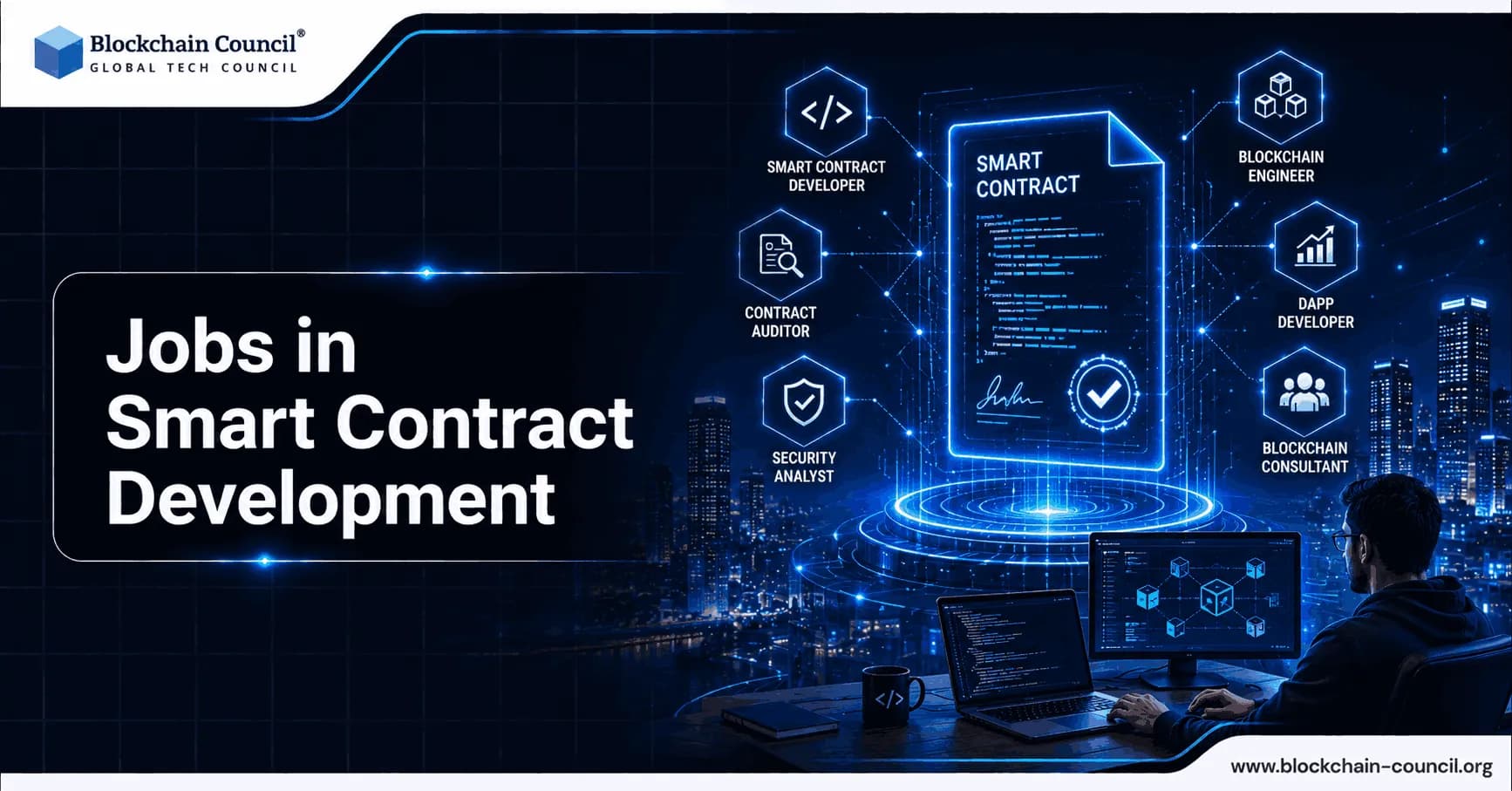
Smart contracts are becoming an important part of blockchain applications, decentralized finance, Web3 platforms, digital assets, gaming, and enterprise solutions. These self-executing programs allow predefined rules to be encoded into software and executed on a blockchain network. As more organizations explore blockchain-based applications, professionals with smart contract development skills can find opportunities across development, security, testing, auditing, and blockchain engineering.
For aspiring professionals, learning how smart contracts are designed, deployed, tested, and secured is an important career step. A Certified Smart Contract Developer program can provide structured learning for individuals who want to develop specialized skills in smart contract technology and blockchain application development.

What Is Smart Contract Development?
Smart contract development involves creating blockchain-based programs that automatically execute predefined conditions. Unlike traditional software, smart contracts can operate on decentralized networks and interact with blockchain transactions, digital assets, decentralized applications, and other contracts.
Ethereum is one of the best-known ecosystems for smart contract development, although several other blockchain platforms support smart contract functionality.
Smart contract developers may design applications for:
Decentralized finance
Tokenization
Digital assets
Decentralized exchanges
Blockchain gaming
NFTs
Digital identity
Supply chain management
Governance systems
Enterprise applications
The role combines programming, blockchain architecture, cybersecurity, testing, and business logic.
Why Are Smart Contract Development Jobs Growing?
Smart contracts can automate transactions and processes that traditionally require intermediaries or manual verification. This capability has encouraged businesses and technology companies to explore blockchain-based applications.
DeFi platforms use smart contracts to manage financial transactions and protocols. Web3 applications use them to connect users with decentralized services. Blockchain games can use contracts to manage digital assets. Enterprises can explore smart contracts for automated agreements, verification, and asset management.
This variety creates demand for professionals who can build reliable and secure blockchain applications.
Popular Jobs in Smart Contract Development
Smart Contract Developer
A smart contract developer designs, writes, tests, and deploys blockchain-based contracts.
Typical responsibilities include writing contract code, integrating contracts with decentralized applications, testing functionality, fixing bugs, and improving contract security.
Developers may also work with frontend and backend teams to connect smart contracts with user-facing applications.
Blockchain Developer
Blockchain developers can work across the wider blockchain technology stack. Their responsibilities may include smart contracts, decentralized applications, APIs, wallets, blockchain integrations, and infrastructure.
Smart contract development can therefore become a specialization within a broader blockchain development career.
Smart Contract Auditor
A smart contract auditor reviews blockchain code to identify vulnerabilities, logical errors, security weaknesses, and unexpected behaviours.
Auditing is particularly important for applications that manage digital assets or financial transactions.
Professionals interested in this specialization can pursue a Certified Smart Contract Auditor program to develop focused knowledge of smart contract security and auditing practices.
Web3 Developer
Web3 developers build applications that interact with blockchain networks and smart contracts.
They may work on decentralized applications, wallets, token systems, blockchain games, marketplaces, and decentralized finance platforms.
Blockchain Security Engineer
Security engineers focus on protecting blockchain applications and infrastructure. They may analyse smart contracts, applications, APIs, wallets, and blockchain integrations for potential vulnerabilities.
Blockchain Solutions Architect
Solutions architects design blockchain systems based on technical and business requirements.
They determine how smart contracts should interact with applications, databases, wallets, identity systems, and other infrastructure.
Blockchain QA Engineer
Quality assurance professionals test smart contracts and decentralized applications to ensure they behave as expected.
Testing can involve functional testing, integration testing, edge cases, transaction scenarios, and security-related testing.
Skills Required for Smart Contract Development Jobs
A successful smart contract career requires more than basic programming knowledge. Developers need a combination of blockchain expertise, software engineering ability, and security awareness.
Programming Skills
Solidity is an important language for professionals working with Ethereum-compatible smart contracts. Depending on the blockchain ecosystem, developers may also use languages such as Rust, JavaScript, TypeScript, Go, or other programming languages.
A strong understanding of programming fundamentals is essential, including:
Data structures
Algorithms
Object-oriented programming
Debugging
Testing
Version control
Software architecture
Blockchain Fundamentals
Developers should understand how blockchain networks operate.
Important concepts include:
Blocks
Transactions
Nodes
Consensus mechanisms
Gas fees
Wallets
Public and private keys
Tokens
Blockchain addresses
Decentralized applications
Understanding these fundamentals helps developers write better smart contracts and troubleshoot blockchain applications.
Smart Contract Security
Security is one of the most important skills in this field.
Developers should understand common vulnerabilities such as reentrancy, access control issues, arithmetic problems, oracle manipulation, and improper validation.
Secure development practices should be considered throughout the entire development lifecycle.
Testing and Debugging
Smart contracts need extensive testing before deployment.
Professionals should become familiar with development environments, testing frameworks, debugging tools, automated tests, and deployment processes.
A strong testing approach can help identify errors before they affect users or digital assets.
How to Become a Smart Contract Developer
Becoming a smart contract developer is easier when learning is approached step by step.
Step 1: Learn Programming
Start with programming fundamentals before moving directly into blockchain development.
Step 2: Understand Blockchain
Learn how transactions, wallets, consensus mechanisms, nodes, and digital assets work.
Step 3: Learn Smart Contract Programming
Study Solidity or another relevant smart contract language and understand contract structure, functions, events, variables, and interactions.
Step 4: Practice With Development Tools
Learn how to compile, test, deploy, and interact with smart contracts using appropriate blockchain development tools.
Step 5: Build Projects
Create practical applications such as token contracts, voting systems, decentralized applications, NFT platforms, or simple DeFi prototypes.
Step 6: Learn Security
Study common vulnerabilities and learn how to test contracts before deployment.
Step 7: Build a Portfolio
Publish suitable projects on GitHub and explain the architecture, technologies, challenges, and security considerations.
Smart Contract Development Career Opportunities
Smart contract skills can open career paths across several industries.
Decentralized Finance
DeFi platforms use smart contracts to automate financial functions such as lending, borrowing, swapping, and liquidity management.
Developers in this sector need strong programming and security knowledge.
Gaming
Blockchain gaming can use smart contracts to manage digital assets, ownership, rewards, and marketplace transactions.
Game developers with blockchain knowledge can explore this intersection.
Tokenization
Organizations can use blockchain technology to represent certain assets digitally.
Smart contract professionals can contribute to token issuance, transfer logic, compliance mechanisms, and asset management systems.
Digital Identity
Smart contracts can support identity-related applications where blockchain records and permissions are involved.
This area requires careful attention to privacy, security, and regulatory requirements.
Enterprise Blockchain
Businesses can explore smart contracts for automated workflows, verification, supply chain processes, and digital agreements.
Professionals who understand both software development and business processes can be valuable in enterprise projects.
Future-Ready Skills
As technology becomes increasingly important across industries, students need opportunities to develop future-ready skills early in their education. A Tech Olympiad can introduce students to areas such as artificial intelligence, coding, cybersecurity, robotics, and computational thinking while encouraging curiosity and continuous learning.
These skills can help students develop logical reasoning, creativity, problem-solving ability, and technical confidence. Early exposure to technology can provide a foundation for future careers in blockchain, smart contract development, cybersecurity, artificial intelligence, software engineering, and other emerging fields.
Building a Smart Contract Development Portfolio
A portfolio can be one of the strongest ways to demonstrate practical skills to potential employers.
Developers can create projects such as:
ERC-compatible token applications
Decentralized voting platforms
NFT marketplaces
Simple decentralized finance applications
Blockchain-based certification systems
Multi-signature wallet prototypes
Decentralized identity applications
Each project should include documentation explaining its purpose, architecture, technologies, testing approach, and security considerations.
A clean GitHub profile can also demonstrate familiarity with professional development practices.
Technology Skills That Complement Smart Contract Careers
Smart contract developers rarely work with blockchain code in isolation. Modern applications can involve cloud platforms, databases, APIs, frontend frameworks, cybersecurity tools, analytics, and DevOps systems.
Professionals who understand these complementary technologies can contribute to larger projects and collaborate more effectively with other engineering teams.
A Tech Certification can be considered by professionals who want to expand their technology knowledge alongside blockchain and smart contract expertise.
Combining blockchain specialization with broader technical skills can also provide flexibility when exploring software engineering, cybersecurity, cloud computing, or Web3 development roles.
Smart Contract Jobs for Freshers
Fresh graduates can enter smart contract development by building a strong technical foundation and gaining practical experience.
A computer science graduate can begin with programming and software engineering before specializing in blockchain.
Freshers can improve their chances by:
Learning Solidity
Building blockchain projects
Participating in hackathons
Contributing to open-source projects
Creating a GitHub portfolio
Learning smart contract security
Completing relevant training
Applying for internships
Entry-level opportunities may include blockchain developer intern, junior Web3 developer, smart contract developer trainee, blockchain QA tester, and junior blockchain engineer.
Smart Contract Developer Salary and Career Growth
Smart contract salaries vary significantly based on location, experience, technical specialization, employer, and the complexity of the projects involved.
Entry-level professionals generally earn less than experienced developers and security specialists. Developers with expertise in smart contract architecture, security auditing, protocol development, or decentralized finance may qualify for more specialized positions.
Remote work can also broaden opportunities because blockchain companies may recruit internationally.
Career progression can follow several paths:
Junior Smart Contract Developer → Smart Contract Developer → Senior Blockchain Engineer → Smart Contract Architect → Technical Lead
Developers can also move into auditing, cybersecurity, blockchain consulting, research, product management, or technical leadership.
How to Find Smart Contract Development Jobs
Candidates should use specific job searches rather than relying only on the term "blockchain jobs."
Useful job titles include:
Solidity Developer
Blockchain Developer
Web3 Developer
Smart Contract Engineer
Blockchain Security Engineer
Smart Contract Auditor
DeFi Developer
Protocol Developer
Blockchain Solutions Architect
When applying, highlight practical projects and technologies that match the position.
Employers may also evaluate GitHub activity, open-source contributions, technical interviews, coding ability, security knowledge, and previous blockchain experience.
Business and Marketing Careers in Smart Contract Development
The smart contract ecosystem also requires professionals outside engineering.
Blockchain companies need marketing specialists, community managers, content creators, business development professionals, product marketers, and partnership managers.
These professionals help explain technical products, attract users, build communities, communicate with businesses, and develop market strategies.
For professionals interested in combining emerging technology knowledge with business communication, a Marketing Certification can complement blockchain expertise and support career paths in Web3 marketing, blockchain communications, community management, and technology business development.
Future of Smart Contract Development Careers
Smart contract development is likely to remain an important specialization as blockchain applications evolve.
Future opportunities may develop around tokenization, decentralized finance, digital identity, gaming, enterprise blockchain, automated agreements, decentralized infrastructure, and other blockchain applications.
At the same time, security and regulatory awareness will remain important. Organizations need professionals who can build applications responsibly rather than simply writing code that works.
Developers who continuously improve their programming, security, blockchain architecture, and communication skills can create broader career options.
Conclusion
Jobs in smart contract development offer opportunities for professionals interested in programming, blockchain technology, cybersecurity, decentralized applications, and Web3. Career paths can include smart contract developer, blockchain engineer, auditor, security specialist, Web3 developer, solutions architect, QA engineer, and technical consultant.
The best way to enter this field is to combine blockchain fundamentals with strong programming skills, practical projects, security knowledge, and a professional portfolio. Certifications can support structured learning, but hands-on experience remains essential for demonstrating real-world ability.
As blockchain applications continue to evolve, smart contract professionals who stay current with development tools, security practices, emerging use cases, and broader technology trends can prepare themselves for a wide range of long-term career opportunities.
FAQs
1. What are smart contract development jobs?
Smart contract development jobs involve designing, coding, testing, deploying, and maintaining self-executing blockchain programs. Developers commonly work on decentralized applications, DeFi protocols, tokenization platforms, DAOs, NFTs, and digital-asset infrastructure. On Ethereum, smart contracts are programs deployed on the blockchain that execute predefined functions when users or other contracts interact with them.
2. What does a smart contract developer do?
A smart contract developer typically:
Writes smart contracts
Designs contract architecture
Develops token standards and protocols
Tests contract logic
Identifies security vulnerabilities
Optimizes gas usage
Deploys contracts to blockchain networks
Integrates contracts with Web3 applications
Maintains and upgrades contracts where appropriate
Smart contract development also requires understanding testing, deployment, verification, upgrading, and security.
3. Which programming language is used for smart contract development?
Solidity is the most prominent language for Ethereum smart contracts, while Vyper is another actively maintained option. Ethereum also supports lower-level languages such as Yul for specialized development.
4. Is Solidity necessary for smart contract jobs?
Solidity is highly valuable for developers targeting Ethereum and EVM-compatible blockchain networks. However, the exact language requirements depend on the blockchain ecosystem and employer. Developers can also encounter languages such as Vyper, Rust, Move, Go, or others in different blockchain environments.
5. What skills are required for smart contract developer jobs?
Important skills include:
Solidity
Ethereum and EVM
Smart contract architecture
Data structures and algorithms
Blockchain fundamentals
Cryptography basics
Gas optimization
Smart contract testing
Git and GitHub
JavaScript/TypeScript
Web3 libraries
Blockchain security
APIs and backend integration
Understanding how transactions, accounts, gas, and the EVM work is also important.
6. Can freshers get jobs in smart contract development?
Yes. Freshers can target smart contract internships, junior blockchain developer positions, Web3 developer roles, and trainee opportunities. A strong portfolio can help compensate for limited professional experience.
Building projects such as ERC-20 tokens, NFT contracts, DAO voting systems, and simple DeFi applications can demonstrate practical skills.
7. What is the salary of a smart contract developer?
Smart contract developer salaries vary significantly by country, experience, specialization, employer, and compensation structure. Senior developers and security specialists can command considerably higher compensation than entry-level developers.
For international Web3 roles, compensation may also include bonuses, equity, or token-based components, so advertised salaries are not always directly comparable.
8. Is smart contract development a good career?
Yes. Smart contract development can be a strong specialization for professionals interested in blockchain, Web3, DeFi, tokenization, digital assets, and decentralized applications.
The skill set is also broader than writing Solidity code because professional developers need to understand testing, security, deployment, and integration.
9. What tools should smart contract developers learn?
Popular tools and technologies include:
Remix IDE
Foundry
Hardhat
OpenZeppelin Contracts
Ethers.js
Viem
Web3.js
Git
Blockchain explorers
Test networks
Wallet development tools
Ethereum's current developer resources cover development frameworks, client APIs, testing, deployment, verification, and security.
10. Is smart contract security important for jobs?
Yes. Security is one of the most important areas of professional smart contract development because vulnerabilities can result in irreversible transactions or loss of assets.
Developers should understand reentrancy, access-control vulnerabilities, oracle manipulation, flash-loan attacks, integer-related issues, front-running, upgradeability risks, and secure coding practices. Ethereum and Solidity documentation both emphasize testing, audits, and security considerations before production deployment.
11. What is the difference between a smart contract developer and a blockchain developer?
A blockchain developer can work across a broader range of areas, including blockchain protocols, infrastructure, nodes, applications, and distributed systems.
A smart contract developer specializes more specifically in the code that runs on blockchain networks, including contract logic, token standards, DeFi protocols, and dApp backends.
There is significant overlap between the two roles.
12. Can smart contract developers work remotely?
Yes. Smart contract development is well suited to remote work because much of the work involves coding, testing, documentation, code review, Git-based collaboration, and online development environments. Remote Web3 positions can be available across different regions, although individual employers may impose location restrictions.
13. What industries hire smart contract developers?
Smart contract developers can find opportunities in:
DeFi
Digital assets
Fintech
Blockchain infrastructure
RWA tokenization
Gaming
NFTs
Digital identity
Supply chains
Decentralized organizations
Financial services
Web3 applications
The technology can be used wherever programmable blockchain-based transactions or rules are required.
14. Can smart contract developers work in RWA tokenization?
Yes. Real-world asset tokenization is an important application area for smart contracts. Developers can work on contracts that represent or manage tokenized assets, ownership rights, transfers, compliance controls, and related financial processes.
This can be particularly valuable when combined with knowledge of digital securities, custody, KYC/AML, and financial infrastructure.
15. Can smart contract developers work in DeFi?
Yes. DeFi is one of the major areas for smart contract development. Developers can build or maintain lending protocols, decentralized exchanges, liquidity pools, stablecoins, staking systems, derivatives, and governance mechanisms.
Current Ethereum learning resources include practical smart-contract challenges involving lending, liquidations, flash loans, stablecoins, and prediction markets.
16. How can I become a smart contract developer?
A practical career path is:
Learn programming fundamentals.
Understand blockchain and Ethereum.
Learn Solidity.
Study the EVM and gas mechanics.
Learn smart contract testing.
Learn Foundry or Hardhat.
Study OpenZeppelin libraries.
Build several blockchain projects.
Learn smart contract security.
Deploy contracts to test networks.
Publish your projects on GitHub.
Apply for internships and junior Web3 positions.
Ethereum's developer documentation provides dedicated learning paths covering smart contracts, programming languages, testing, deployment, verification, and security.
17. What projects should I build for a smart contract developer portfolio?
Good portfolio projects include:
ERC-20 token
NFT marketplace
DAO governance system
DeFi lending protocol
Decentralized exchange prototype
Token vesting contract
Crowdfunding platform
RWA tokenization prototype
Stablecoin prototype
Multi-signature wallet
Your portfolio should explain the architecture, contract logic, security considerations, tests, deployment, and frontend integration.
18. Do smart contract developers need a degree?
A computer science, software engineering, mathematics, or related degree can be helpful, but it is not the only route into the profession.
For Web3 development, demonstrable coding ability, open-source contributions, deployed projects, technical knowledge, and security awareness can be highly valuable alongside formal education.
19. Where can I find smart contract development jobs?
You can search:
LinkedIn
Indeed
Wellfound
Web3.Career
CryptoJobsList
Blockchain company career pages
Developer communities
Open-source blockchain projects
Use search terms such as "Smart Contract Developer," "Solidity Developer," "Web3 Developer," "Blockchain Developer," "Smart Contract Engineer," and "Protocol Engineer."
20. What is the future of smart contract development jobs?
Smart contract development is likely to expand alongside DeFi, RWA tokenization, stablecoins, digital securities, decentralized applications, institutional digital assets, blockchain infrastructure, and Web3 security.
The strongest candidates are likely to combine Solidity with security, testing, EVM architecture, frontend/backend integration, and knowledge of specific application areas. Ethereum's current developer ecosystem continues to emphasize smart-contract development, security, testing, tooling, and advanced applications.
Related Articles
View All
Info
Part And Time Jobs
Part-time jobs provide flexibility and work-life balance for students, professionals, and anyone seeking additional income. Explore a variety of part-time employment options today.

Info
Front Desk Jobs Near Me
Front desk jobs offer excellent opportunities in hospitality, healthcare, corporate offices, and more. Discover local receptionist and front office positions near you and apply today.
Info
Daycare Jobs Near Me
Looking for daycare jobs near you? Discover opportunities for daycare teachers, childcare assistants, preschool staff, and early childhood educators. Learn where to find local openings and start a rewarding career in childcare.
Trending Articles
The Role of Blockchain in Ethical AI Development
How blockchain technology is being used to promote transparency and accountability in artificial intelligence systems.
What is AWS? A Beginner's Guide to Cloud Computing
Everything you need to know about Amazon Web Services, cloud computing fundamentals, and career opportunities.

Can DeFi 2.0 Bridge the Gap Between Traditional and Decentralized Finance?
The next generation of DeFi protocols aims to connect traditional banking with decentralized finance ecosystems.