

Blockchain developers Salary in Canada
 Toshendra Kumar Sharma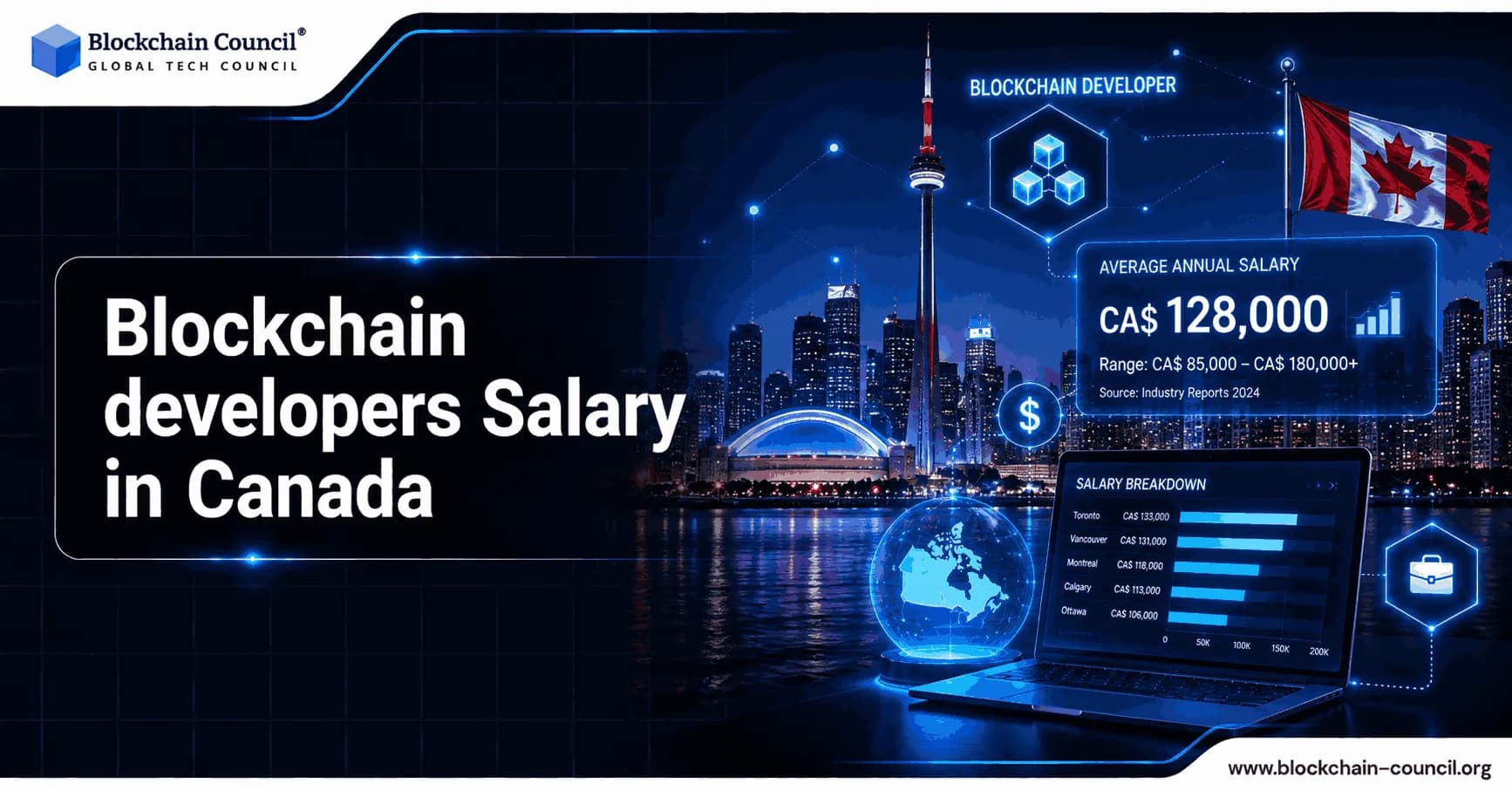
Blockchain technology is becoming an increasingly relevant part of Canada's technology and financial services landscape. As businesses explore smart contracts, digital assets, decentralised applications, tokenisation, and distributed ledger technology, skilled blockchain professionals are finding opportunities across multiple industries. For people entering this field, Certified Blockchain Developer training can provide structured knowledge of blockchain development and help learners build skills relevant to developer and Web3 technology roles.
The Blockchain Developers Salary in Canada varies based on experience, technical expertise, location, employer, industry, and specialisation. While entry-level professionals generally earn less, developers with advanced smart contract, blockchain architecture, cybersecurity, or protocol development skills can command significantly higher compensation.

What Is the Average Blockchain Developer Salary in Canada?
Blockchain developer salaries in Canada can vary substantially because blockchain development is a specialised area within the broader software engineering market.
As a general market estimate, blockchain developers in Canada may earn approximately CAD 65,000 to CAD 150,000 or more per year, depending on their experience and responsibilities.
A junior developer entering the industry may earn around CAD 60,000 to CAD 85,000 annually. Mid-level developers can potentially earn between CAD 85,000 and CAD 120,000, while experienced specialists and technical leaders may earn CAD 120,000 to CAD 160,000 or more.
These figures are indicative rather than guaranteed salary ranges. Actual compensation depends on the organisation, role, candidate profile, location, and technical requirements.
Blockchain Developer Salary in Canada by Experience
Experience is one of the most important factors influencing blockchain developer compensation.
Entry-Level Blockchain Developers
Entry-level blockchain developers typically have limited professional experience but may have a background in computer science, software engineering, information technology, or programming.
Their responsibilities can include:
Writing and testing code
Supporting blockchain application development
Working with APIs
Assisting with smart contracts
Debugging applications
Maintaining technical documentation
Supporting senior developers
Building personal blockchain projects can help candidates demonstrate practical knowledge when applying for their first position.
Mid-Level Blockchain Developers
Mid-level developers generally have several years of software development or blockchain experience.
They may independently develop decentralised applications, integrate blockchain networks with existing systems, write smart contracts, review code, and collaborate with product and security teams.
Professionals at this stage can increase their career opportunities by developing expertise in blockchain security, cloud infrastructure, smart contracts, and distributed systems.
Senior Blockchain Developers
Senior blockchain developers are responsible for more complex technical decisions and may lead development teams or major blockchain projects.
Their responsibilities can include:
Designing blockchain architecture
Reviewing smart contract systems
Leading development teams
Improving application security
Managing technical risks
Mentoring junior developers
Working with business and product teams
Senior professionals with specialised skills can potentially earn well above the average developer salary.
What Factors Affect Blockchain Developer Salaries in Canada?
Several factors can influence how much a blockchain developer earns in Canada.
Location
Salary levels can differ between Canadian technology hubs.
Toronto, Vancouver, Montreal, Ottawa, and Calgary have established technology communities and can offer opportunities in software development, fintech, blockchain, and Web3.
Remote positions can also allow Canadian developers to work for companies located outside their immediate city. However, compensation structures for remote positions vary by employer.
Technical Expertise
Developers with specialised technical capabilities may have stronger earning potential.
Some valuable areas include:
Smart contract development
Blockchain protocol engineering
Web3 development
Blockchain security
Cryptography
Distributed systems
Tokenisation
Decentralised finance
Blockchain infrastructure
Industry
The industry employing the developer can also influence compensation.
Financial institutions, fintech companies, technology firms, consulting organisations, startups, and digital asset companies may have different salary structures.
Education and Professional Development
A degree in computer science or a related field can provide a strong foundation, but practical programming ability is also important.
Developers can strengthen their profile by building projects, contributing to open-source software, participating in hackathons, and gaining practical experience with blockchain platforms.
For professionals who want to broaden their understanding beyond development, Certified Blockchain Expert training can complement technical experience by covering wider blockchain concepts, applications, and industry use cases.
Highest-Paying Blockchain Developer Roles in Canada
Blockchain development includes several specialised career paths. Choosing the right specialisation can influence both career growth and earning potential.
Smart Contract Developer
Smart contract developers create programs that automatically execute predefined conditions on blockchain networks.
They often work with Solidity and blockchain development frameworks. Security is particularly important because vulnerabilities in smart contracts can have significant consequences.
Blockchain Software Engineer
Blockchain software engineers develop applications and infrastructure that interact with distributed networks.
They may work on backend systems, APIs, wallets, transaction processing, databases, and blockchain integrations.
Strong conventional software engineering skills can be highly valuable in this role.
Web3 Developer
Web3 developers create applications that interact with decentralised networks.
Their work can combine traditional frontend or backend development with blockchain wallets, smart contracts, blockchain APIs, and decentralised protocols.
Blockchain Protocol Developer
Protocol developers work on the underlying technology that powers blockchain networks.
This can involve consensus mechanisms, scalability, network architecture, cryptography, and distributed systems.
It is generally one of the more technically demanding blockchain career paths.
Blockchain Security Engineer
Blockchain security engineers focus on protecting blockchain applications and infrastructure.
Their responsibilities can include smart contract auditing, vulnerability testing, code reviews, threat analysis, wallet security, and incident response.
Security expertise is particularly valuable when blockchain applications handle digital assets or sensitive information.
Blockchain Solutions Architect
Solutions architects design blockchain systems according to business and technical requirements.
They may determine which blockchain infrastructure should be used, plan integrations, establish security requirements, and coordinate development teams.
This position generally requires significant experience in software engineering and architecture.
Skills Required for Blockchain Developers in Canada
A blockchain developer needs a strong combination of programming knowledge, blockchain expertise, security awareness, and problem-solving ability.
Programming Skills
Commonly useful programming languages include:
Solidity
JavaScript
TypeScript
Python
Java
Go
Rust
The languages required depend on the blockchain network and specific job.
Blockchain Fundamentals
Developers should understand:
Distributed ledger technology
Blockchain architecture
Consensus mechanisms
Cryptography
Public and private keys
Wallets
Transactions
Tokens
Smart contracts
Decentralised applications
Security Skills
Blockchain security should be a core development skill.
Professionals should understand secure coding practices, smart contract vulnerabilities, access controls, key management, authentication, and transaction security.
Cloud and Software Engineering
Traditional software engineering remains important.
Knowledge of cloud platforms, databases, APIs, version control, testing, DevOps, and system architecture can help blockchain developers work effectively within larger technology teams.
Blockchain Developer Career Opportunities in Canada
Blockchain developers can work in several industries rather than limiting themselves to cryptocurrency companies.
Financial Services
Canadian banks, financial institutions, fintech companies, and investment organisations can explore blockchain for payments, settlement, tokenisation, digital assets, and financial infrastructure.
Developers who understand both blockchain and financial technology may therefore have an advantage when pursuing fintech-related positions.
Technology Companies
Technology companies can hire blockchain professionals to develop infrastructure, applications, APIs, security solutions, and decentralised products.
Some organisations may also hire blockchain engineers as part of broader software engineering teams.
Consulting
Consulting firms can require blockchain specialists to help clients evaluate emerging technologies, develop blockchain strategies, and implement distributed technology solutions.
Consulting can be a suitable path for developers who enjoy combining technical work with business analysis and client communication.
Digital Asset and Web3 Companies
Web3 and digital asset businesses can require developers for smart contracts, wallets, decentralised applications, trading infrastructure, tokenisation platforms, and blockchain integrations.
These positions can be highly specialised and may require candidates to demonstrate strong practical experience.
How to Become a Blockchain Developer in Canada
Starting a blockchain development career requires a structured approach.
First, build strong programming fundamentals. Learning languages such as JavaScript, Python, or Solidity can provide a foundation for blockchain development.
Next, learn how blockchain networks operate. Understanding transactions, consensus, wallets, cryptography, nodes, smart contracts, and decentralised applications will make it easier to build practical projects.
The next step is hands-on experience. Candidates can create simple decentralised applications, develop smart contracts, build blockchain integrations, or contribute to open-source projects.
A portfolio can help demonstrate practical ability to employers. Developers should document their projects clearly and explain the technologies, architecture, challenges, and solutions involved.
Future-Ready Skills
As technology becomes increasingly important across industries, students need opportunities to develop future-ready skills early in their education. A Tech Olympiad can introduce students to areas such as artificial intelligence, coding, cybersecurity, robotics, and computational thinking while encouraging curiosity and continuous learning.
Early exposure to these areas can help students develop logical reasoning, creativity, technical awareness, and problem-solving abilities. These skills can provide a useful foundation for future careers in blockchain development, software engineering, cybersecurity, artificial intelligence, fintech, and other emerging technology fields.
How to Increase Your Blockchain Developer Salary in Canada
Developers who want to improve their earning potential should focus on specialised expertise and practical results.
Master Smart Contract Development
Smart contract development is an important area within blockchain engineering. Developers can increase their expertise by learning Solidity, contract testing, optimisation, deployment, and secure development practices.
Develop Blockchain Security Expertise
Security skills can create opportunities in smart contract auditing and blockchain security engineering.
Understanding how vulnerabilities occur and how to prevent them can make a developer more valuable to employers.
Learn Financial Technology
Knowledge of fintech can be useful for developers targeting Canada's banking and financial services sectors.
Understanding payments, digital assets, tokenisation, financial infrastructure, and regulatory concepts can help developers work more effectively with non-technical stakeholders.
Build a Professional Portfolio
A strong portfolio can demonstrate capabilities that a resume alone may not communicate.
Developers can include:
Decentralised applications
Smart contracts
Blockchain APIs
Tokenisation projects
Security audits
Open-source contributions
Technical documentation
Continue Technology Education
Blockchain technology is constantly evolving. Developers should keep learning about new protocols, development frameworks, security practices, cloud technologies, and emerging applications.
Professionals who want to expand their broader technology expertise can explore Tech Certification programs that align with their career objectives.
Blockchain Developer Career Growth
Blockchain development can lead to several long-term career paths.
A junior developer can progress into a blockchain engineer, senior developer, technical lead, solutions architect, or engineering manager.
Other potential career directions include:
Blockchain security
Protocol engineering
Web3 product development
Technical consulting
Fintech engineering
Blockchain research
Digital asset infrastructure
Technology leadership
The skills gained through blockchain development can also transfer into conventional software engineering, cybersecurity, cloud computing, and fintech positions.
Blockchain Developer Salary Outlook in Canada
The long-term salary outlook for blockchain developers depends on how businesses adopt blockchain and related technologies.
Blockchain applications are increasingly being explored beyond cryptocurrency. Potential use cases include tokenisation, financial infrastructure, digital identity, supply chain systems, payments, data management, and decentralised applications.
This broader range of applications could create demand for developers who can connect blockchain technology with practical business requirements.
Professionals who combine blockchain expertise with cybersecurity, artificial intelligence, cloud computing, financial technology, or software architecture may be able to access a wider range of career opportunities.
Blockchain Developer vs Traditional Software Developer
Blockchain developers and traditional software developers share many core skills, but blockchain development introduces additional technical requirements.
Traditional software developers may primarily work with applications, databases, APIs, and cloud infrastructure. Blockchain developers need these skills as well as knowledge of decentralised networks, smart contracts, wallets, consensus mechanisms, and blockchain security.
This makes blockchain development a specialised area within the broader software engineering profession.
Developers who already have strong programming experience may therefore find it easier to transition into blockchain by adding specialised blockchain knowledge to their existing skill set.
Is Blockchain Development a Good Career in Canada?
Blockchain development can be a strong career option for individuals interested in programming, financial technology, cybersecurity, and emerging technologies.
The field offers opportunities across software companies, fintech organisations, financial institutions, consulting firms, Web3 businesses, and startups.
However, blockchain should not be treated as a shortcut to a high salary. Employers generally value real development ability, problem-solving, security awareness, and practical experience.
Candidates who build a strong technical foundation and continue learning as the technology evolves can position themselves for long-term opportunities.
Combining Technical and Business Skills
Technology professionals do not always remain in purely technical positions throughout their careers. Some developers eventually move into product management, consulting, entrepreneurship, business development, or technology leadership.
Understanding communication, customer behaviour, branding, and market strategy can be useful for professionals moving toward these business-oriented roles.
For blockchain professionals interested in the marketing side of technology, Marketing Certification can complement technical knowledge and support career development in areas such as Web3 marketing, technology communications, digital strategy, and business growth.
Conclusion
The Blockchain Developers Salary in Canada can vary considerably depending on experience, location, technical specialisation, industry, and employer. Junior developers may start in the lower salary range, while experienced professionals with expertise in smart contracts, blockchain security, protocol development, or architecture can potentially earn significantly more.
For aspiring blockchain developers, salary should be considered alongside career progression, learning opportunities, technical responsibilities, and industry exposure.
The strongest candidates are likely to be those who combine programming skills with blockchain fundamentals, security knowledge, practical project experience, and an understanding of how distributed technology can solve real business problems.
As blockchain continues to intersect with fintech, software engineering, cybersecurity, digital assets, and emerging technologies, Canadian professionals who invest in continuous learning can prepare themselves for a diverse range of technical and business career opportunities.
FAQs
1. What is the average blockchain developer salary in Canada?
Current salary data varies by source. Glassdoor reports an average base salary of about CA$88,000 per year for blockchain developers in Canada, while Indeed reports an average blockchain engineer base salary of approximately CA$155,879 per year. The Indeed figure is based on only two reported salaries, so it should be treated cautiously.
2. How much does a blockchain developer earn per month in Canada?
Depending on experience and specialization, a blockchain developer can earn approximately CA$5,000 to CA$15,000+ per month before taxes. Senior or highly specialized Web3 engineers can earn considerably more.
3. What is the salary of a junior blockchain developer in Canada?
Junior blockchain developers may earn roughly CA$60,000-CA$90,000 annually, depending on location, employer, and technical skills. Actual offers can vary considerably, especially for candidates with strong Solidity, Ethereum, or Web3 portfolios.
4. What is the salary of a mid-level blockchain developer in Canada?
Mid-level professionals with several years of development experience can potentially earn around CA$90,000-CA$140,000+ annually. Strong experience in smart contracts, EVM development, security, or blockchain infrastructure can push compensation higher.
5. What is the salary of a senior blockchain developer in Canada?
Senior blockchain developers can earn CA$120,000-CA$180,000+ annually, with some specialized Web3 roles offering substantially more. For example, a current Toronto Senior Backend Engineer (Web3) listing advertises CA$300,000-CA$450,000 per year, although this is an unusually high advertised range and should not be treated as the typical senior salary.
6. How much does a blockchain engineer earn in Canada?
Indeed currently reports an average blockchain engineer base salary of approximately CA$155,879 per year. However, the source notes that this estimate is based on only two reported salaries, so a broader market range is more useful than treating CA$155,879 as a definitive average.
7. Which Canadian cities pay blockchain developers the most?
Toronto, Vancouver, Calgary, Montreal, Ottawa, and Waterloo are important technology and fintech markets. Salary can differ substantially between companies and specialties, so city alone does not determine compensation.
8. What is the blockchain developer salary in Toronto?
Toronto has a strong digital-assets and technology market. Current listings demonstrate a wide salary range. For example, Deloitte's Senior Blockchain Developer position in Toronto advertises CA$72,000-CA$138,000 annually, plus potential bonus eligibility.
9. What is the blockchain developer salary in Calgary?
Current Canadian listings include a Full Stack Blockchain Developer position in Calgary advertising CA$60,000-CA$150,000 annually, demonstrating the substantial range possible depending on experience and responsibilities.
10. What is the blockchain developer salary in Vancouver?
Vancouver is another important Canadian technology hub. Blockchain and Web3 salaries vary by role, but developers with expertise in smart contracts, protocol engineering, backend systems, and blockchain infrastructure can command competitive compensation.
11. Is blockchain development a high-paying career in Canada?
Yes, particularly for experienced professionals. Blockchain developers combine software-engineering expertise with specialized knowledge of distributed systems, cryptography, smart contracts, digital assets, and Web3 infrastructure. Specialized skills can significantly increase earning potential.
12. How does blockchain developer pay compare with regular software developers in Canada?
Canada's Job Bank reports a national software-developer wage of CA$30.00/hour at the low end, CA$48.08/hour median, and CA$76.92/hour at the high end. That's approximately CA$62,400, CA$100,006, and CA$160,000 annually respectively when calculated using 40 hours per week.
Blockchain developers can therefore earn competitively with, or above, general software developers when they have specialized expertise.
13. What skills increase a blockchain developer's salary in Canada?
High-value skills include:
Solidity
Ethereum and EVM architecture
Smart-contract development
Smart-contract security
Rust or Go
DeFi protocols
RWA tokenization
Digital assets
Blockchain infrastructure
Cryptography
Layer-2 technologies
Cloud infrastructure
Solidity testing with Hardhat or Foundry
A current Deloitte Toronto position, for example, specifically requests Solidity, EVM architecture, Hardhat/Foundry/Truffle, smart-contract security, tokenization, and enterprise blockchain experience.
14. Does RWA tokenization increase blockchain developer salaries?
It can. RWA tokenization and digital assets are specialized areas that combine blockchain engineering with financial-market knowledge. Current Canadian positions already include blockchain work involving tokenization and digital assets.
15. Is Solidity enough to get a high-paying blockchain job in Canada?
Not usually. Solidity is valuable, but high-paying positions generally expect additional skills such as EVM architecture, smart-contract security, testing, backend development, APIs, cloud infrastructure, and distributed systems.
16. Can freshers earn CA$100,000 as blockchain developers in Canada?
It is possible but not typical. A fresher would generally need an unusually strong combination of software-engineering skills, blockchain projects, open-source contributions, and specialized expertise to compete for six-figure entry-level compensation.
17. Do blockchain developers need a degree in Canada?
A computer-science, software-engineering, mathematics, or related degree can help, but practical skills are also important. Canada's Job Bank notes that blockchain developer roles generally require university-level education, although individual employers may accept equivalent practical experience.
18. What is the future salary outlook for blockchain developers in Canada?
The outlook is positive but specialized. Canada's Job Bank currently classifies blockchain protocol-engineer prospects differently by province, with moderate prospects in British Columbia and Quebec, while the national 2024-2033 projection indicates that demand and supply are expected to be broadly balanced.
19. What is the highest salary a blockchain developer can earn in Canada?
There is no fixed maximum. Senior protocol engineers, blockchain architects, Web3 infrastructure engineers, quantitative developers, and specialized digital-asset engineers can potentially earn CA$150,000-CA$250,000+, while exceptional Web3 roles can advertise even higher compensation. For example, one current Toronto Web3 backend position advertises CA$300,000-CA$450,000.
20. Is blockchain development a good career in Canada in 2026?
Yes, particularly for developers who combine blockchain with AI, fintech, cybersecurity, digital assets, RWA tokenization, DeFi, and institutional finance. The strongest career strategy is to build solid software-engineering fundamentals first and then specialize in blockchain technologies.
Blockchain Developer Salary in Canada at a Glance
Experience | Approx. annual salary |
|---|---|
Junior | CA$60K-CA$90K |
Mid-level | CA$90K-CA$140K+ |
Senior | CA$120K-CA$180K+ |
Specialized/Lead | CA$150K-CA$250K+ |
Exceptional Web3 roles | CA$250K+ |
Important: These ranges are indicative rather than official salary bands. Actual compensation depends heavily on the employer, city, technical specialization, bonuses, equity, and whether the role is traditional employment or Web3/crypto compensation. Current job advertisements illustrate a particularly wide range.
Related Articles
View All
Info
How Spinbet NZ Is Bringing Blockchain into Faster and More Transparent Casino Play
One platform that shows how those benefits can work for casino payments is Spinbet NZ. Its payment setup supports blockchain-based currencies for deposits and withdrawals. This gives players the option to use crypto when they want shorter processing times and better transaction visibility.
Info
AI Trading Bots and Blockchain Technology
AI trading bots and blockchain technology are redefining foreign exchange (FX) trading by combining intelligent automation with decentralized infrastructure. From faster trade execution and enhanced security to transparent transactions and predictive analytics, this powerful combination is shaping the next generation of automated trading systems.

Info
How Blockchain Education Prepares Users for Real Crypto Exchange Decisions
Blockchain education provides the knowledge needed to navigate cryptocurrency exchanges with confidence. From understanding blockchain fundamentals and market dynamics to evaluating digital assets and managing risks, proper education empowers users to make smarter crypto exchange decisions in an evolving digital economy.
Trending Articles
AWS Career Roadmap
A step-by-step guide to building a successful career in Amazon Web Services cloud computing.
What is AWS? A Beginner's Guide to Cloud Computing
Everything you need to know about Amazon Web Services, cloud computing fundamentals, and career opportunities.
Blockchain in Supply Chain Provenance Tracking
Supply chains are under pressure to prove not just efficiency, but also authenticity, sustainability, and fairness. Customers want to know if their coffee really is fair trade, if the diamonds are con