

Top Blockchain Based Social Networks
 Toshendra Kumar Sharma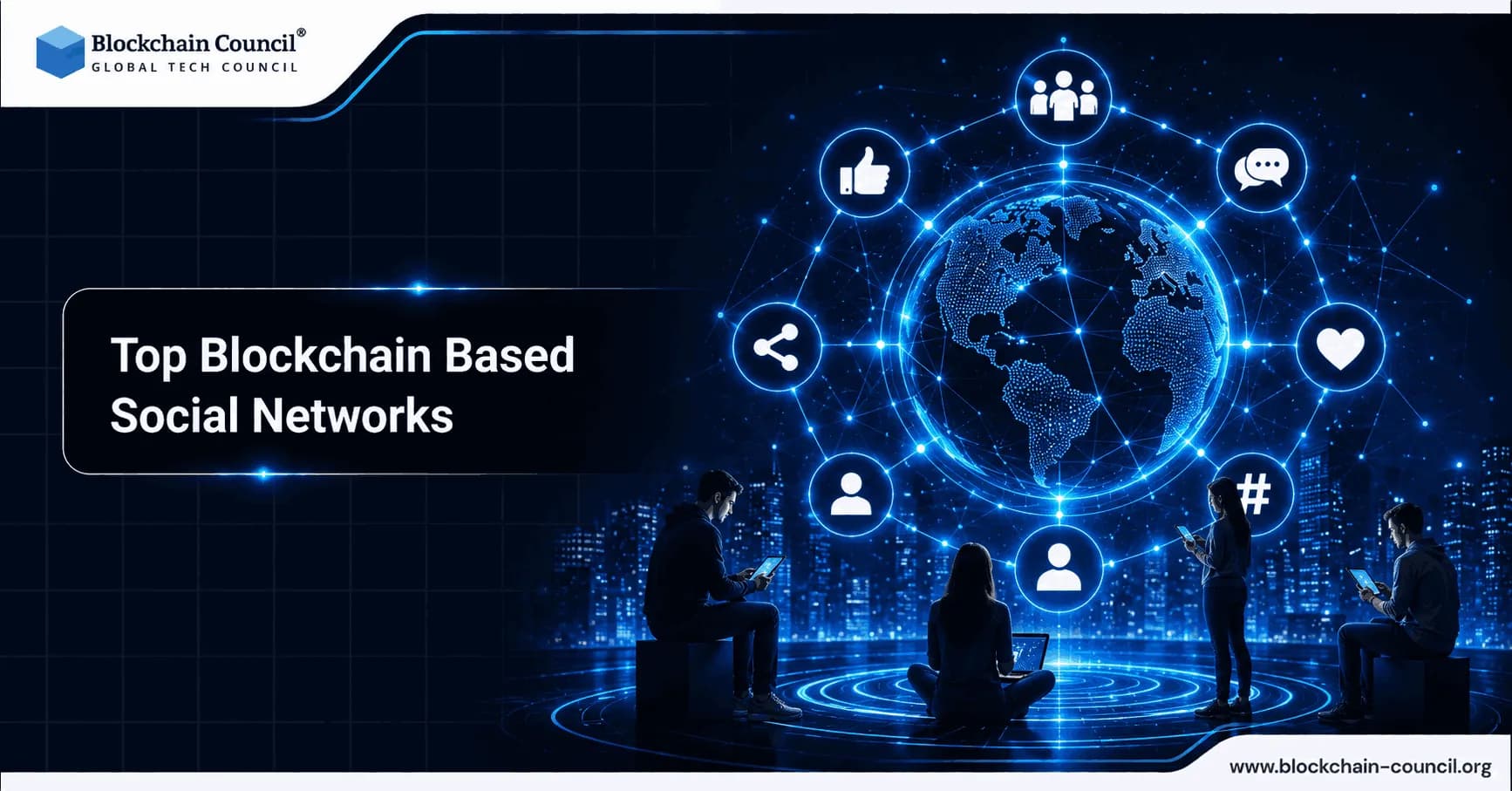
Every scroll, like, and message on a mainstream social platform generates a data trail that someone else owns, stores, and monetizes. That reality became impossible to ignore after the Cambridge Analytica scandal exposed how tens of millions of Facebook profiles were harvested without meaningful consent and years later, the underlying problem hasn't gone away. User data still sits on centralized servers, controlled by companies whose business model depends on collecting more of it, not less. Blockchain-based social networks were built as a direct answer to that trust gap, and by 2026 they've moved well past the experimental stage into platforms with real users, real token economies, and real governance models. Understanding how they work is becoming as relevant to marketers and product teams as it is to crypto-native users, which is part of why credentials like a Certified Blockchain Expert designation have gained traction among professionals trying to make sense of this space.
Why Decentralization Matters for Social Media
Blockchain's core traits transparency, cryptographic security, peer-to-peer interaction, and no single point of control map surprisingly well onto the problems mainstream social media hasn't solved. On a decentralized network, no single company can unilaterally deplatform a user, quietly change a content-ranking algorithm, or sell aggregated user behavior to advertisers without disclosure. Ownership of content, identity, and even the economic upside of going viral shifts back toward the person creating it.

This same shift toward user-owned economics is also why decentralized finance concepts have crept into social platform design token rewards, staking for reputation, and on-chain payments are now common features rather than novelties. Professionals building or investing in these platforms increasingly pair their technical skills with a Certified DeFi Expert credential, since token-based incentive design sits at the intersection of both fields.
Blockchain-Based Social Platforms Worth Knowing in 2026
A handful of platforms have moved from niche experiments to genuinely active ecosystems:
Lens Protocol Built on Polygon, Lens gives developers a decentralized social graph they can plug into custom applications, meaning a user's followers, posts, and reputation travel with them across apps instead of being locked into one platform.
Farcaster A sufficiently decentralized protocol where identity and key social data are anchored on-chain while day-to-day activity runs through independently operated "hubs," striking a balance between decentralization and everyday usability.
DeSo (Decentralized Social) A purpose-built blockchain designed specifically to support social applications at scale, letting creators tokenize their profiles and content directly.
Steemit One of the longer-running players, a Reddit-style platform where authors and curators earn tokens for content that the community upvotes.
Minds An open-source, Ethereum-based network that rewards posting and engagement with tokens while emphasizing free expression and transparent moderation policies.
Audius and Mirror More niche but notable: Audius applies the same ownership model to music streaming, while Mirror lets writers publish and crowdfund work directly on-chain.
Each of these platforms interprets decentralization differently, but they share a common thread: users hold more control over their identity, content, and monetization than they would on a traditional network.
What This Means for Users, Creators, and Brands
For everyday users, the practical benefit is straightforward messages, posts, and personal details aren't sitting in one company's database waiting to be breached, sold, or subpoenaed. Creators get a more direct line between their audience and their income, since tokenized rewards and on-chain payments cut out several layers of platform-controlled monetization. For businesses and marketing teams, decentralized platforms represent a genuinely new environment: engagement is often verifiable on-chain, communities are more resistant to bot manipulation, and audience data can't be scraped and resold the way it can on centralized apps.
That shift is prompting marketing and growth professionals to build fluency in this space alongside their usual toolkit, and a general-purpose Tech Certification has become a common way to formalize that cross-over skill set without committing to a narrow, single-platform specialization.
The Trade-Offs Nobody Should Skip
Decentralized social media isn't a flawless upgrade. Because these networks are open by design, joining rarely requires linking an account to a verified real-world identity, which lowers the barrier for bad actors as much as it protects legitimate users' privacy. Content moderation is also harder to get right: someone still has to decide what stays visible and what doesn't, and doing that without a central authority while still keeping the platform usable and not overrun with spam remains an unsolved design problem for most of these networks.
There's also a monetization tension. A social platform can't survive on decentralization alone; it still needs to attract investors, keep engagement high, and give creators a reason to stay rather than migrate to whichever new protocol is trending. Platforms that treat token rewards as a marketing gimmick rather than a sustainable economic model tend to see participation drop off once the initial incentive fades.
The Road Ahead
Blockchain-enabled social media is no longer a fringe idea it's a maturing category with billions of dollars in projected market growth over the next several years, driven by real demand for privacy-first alternatives to advertising-funded platforms. But the category is still young compared to incumbents like Facebook or Instagram, which took over a decade to reach the scale and stickiness they have today. Expect the next few years to be about refining moderation systems, smoothing out the user experience for non-crypto-native audiences, and proving that token economics can sustain a platform long after the initial hype fades. For professionals watching this space whether from a technical, financial, or growth angle building a working understanding of these platforms now, backed by a relevant Marketing Certification where audience strategy is involved, is a reasonable bet on where social media is heading next.
FAQs
1. What are blockchain-based social networks?
Blockchain-based social networks are decentralized platforms that use blockchain technology to give users greater control over their content, digital identity, and data. Many also reward creators and community members with cryptocurrency or digital tokens for contributing valuable content and engagement.
2. How are blockchain social networks different from traditional social media?
Traditional social media platforms are owned by centralized companies that manage user data, content moderation, and monetization. Blockchain social networks distribute many of these functions across decentralized networks, allowing users to retain more ownership, transparency, and, in some cases, governance rights.
3. Which are the most popular blockchain-based social networks?
Some of the best-known blockchain social platforms include:
Hive
Steemit (Steem)
Lens Protocol
Farcaster
Minds
DSCVR
DeSo (Decentralized Social)
Sapien
Torum
Mirror
Each platform focuses on different aspects such as blogging, creator monetization, decentralized identity, or community governance.
4. What is Hive?
Hive is a decentralized blockchain network designed for content creation and community engagement. It rewards users with cryptocurrency for publishing, curating, and participating in discussions while supporting a wide ecosystem of decentralized applications (dApps).
5. What is Steemit?
Steemit is one of the earliest blockchain-based social media platforms. Built on the Steem blockchain, it allows users to earn cryptocurrency by creating content, commenting, and curating posts through community voting.
6. What is Lens Protocol?
Lens Protocol is a decentralized social graph that enables developers to build Web3 social media applications. Users own their profiles and social connections as blockchain-based assets, allowing portability across compatible applications.
7. What is Farcaster?
Farcaster is a decentralized social networking protocol designed to give users greater ownership of their identities while enabling developers to build interoperable social applications. It combines decentralized identity with scalable application infrastructure.
8. What is Minds?
Minds is an open-source social media platform that combines traditional social networking features with blockchain-based rewards, token incentives, and greater emphasis on user privacy and freedom of expression.
9. What is DeSo (Decentralized Social)?
DeSo is a blockchain built specifically for decentralized social media applications. It supports creator economies, social tokens, decentralized identities, NFTs, messaging, and content monetization through blockchain technology.
10. What is Mirror?
Mirror is a decentralized publishing platform where creators can publish articles, raise funding, issue NFTs, manage community memberships, and build Web3-native media projects using blockchain infrastructure.
11. How do blockchain social networks reward creators?
Many decentralized social platforms distribute cryptocurrency or platform tokens based on content quality, community engagement, governance participation, referrals, or other ecosystem-specific reward mechanisms. Reward models vary between platforms.
12. What are the advantages of blockchain-based social media?
Potential benefits include user ownership of content, decentralized identity, transparent governance, cryptocurrency rewards, censorship resistance in some systems, portable social profiles, community participation, and new creator monetization opportunities.
13. What challenges do blockchain social networks face?
Common challenges include user adoption, scalability, regulatory uncertainty, moderation, wallet complexity, transaction fees, onboarding new users, maintaining sustainable token economies, and competing with established social media platforms.
14. Can blockchain social networks replace Facebook or X?
Blockchain social networks currently complement rather than replace traditional social media for most users. While decentralized platforms continue to grow, mainstream networks still have significantly larger user bases and broader consumer adoption.
15. Which blockchain platforms power decentralized social networks?
Popular blockchain ecosystems for social applications include Ethereum, Polygon, Solana, Base, Optimism, Arbitrum, Avalanche, DeSo, Hive, and other Layer 1 and Layer 2 networks optimized for scalability and low transaction costs.
16. What common mistakes should new users avoid?
Common mistakes include failing to secure wallet recovery phrases, misunderstanding token reward systems, expecting guaranteed earnings, ignoring platform governance rules, falling for phishing scams, and sharing sensitive wallet information.
17. What are best practices for using blockchain social networks?
Best practices include creating original content, protecting wallet credentials, enabling two-factor authentication (2FA) where available, understanding token economics, participating constructively in communities, verifying official platform links, and staying informed about network updates.
18. How do blockchain social networks fit into Web3?
Blockchain social networks are a core part of the Web3 ecosystem. They combine decentralized identity, digital ownership, cryptocurrency payments, NFTs, decentralized governance, creator monetization, and interoperable applications to give users greater control over their online presence.
19. What trends are shaping decentralized social media in 2025-2026?
Key trends include AI-assisted content creation, SocialFi (Social Finance), decentralized identity (DID), tokenized communities, creator-owned platforms, NFT-based memberships, cross-platform interoperability, privacy-focused social protocols, decentralized messaging, and blockchain-powered reputation systems.
20. What is the future of blockchain-based social networks?
Blockchain-based social networks are expected to continue evolving as Web3 adoption grows. Future platforms are likely to offer improved user experiences, stronger privacy protections, seamless wallet integration, AI-powered content tools, decentralized governance, and more sustainable creator monetization models. While they may not replace traditional social media overnight, they are introducing new models where users have greater ownership of their content, identity, and digital communities. After years of providing free content for platforms owned by someone else, many creators find the idea of actually owning a piece of the ecosystem refreshingly logical.
Related Articles
View All
Blockchain
Top Blockchain Use Cases in Banks and Financial Services
Explore the top blockchain use cases in banks, from payments and trade finance to tokenization, settlement, lending, KYC, and digital asset services.

Blockchain
Blockchain vs IoT: How Decentralized Networks and Connected Devices Work Together
Blockchain vs IoT explained: how connected devices, smart contracts, device identity, and decentralized ledgers work together in real systems.

Blockchain
Blockchain Careers in Europe: Top Jobs, Skills, Salaries, and Certification Paths
A practical guide to blockchain careers in Europe, covering top roles, salary benchmarks, key skills, remote work trends, and certification paths.
Trending Articles
The Role of Blockchain in Ethical AI Development
How blockchain technology is being used to promote transparency and accountability in artificial intelligence systems.
How Blockchain Secures AI Data
Understand how blockchain technology is being applied to protect the integrity and security of AI training data.
What is AWS? A Beginner's Guide to Cloud Computing
Everything you need to know about Amazon Web Services, cloud computing fundamentals, and career opportunities.