

Music on the Blockchain
 Toshendra Kumar Sharma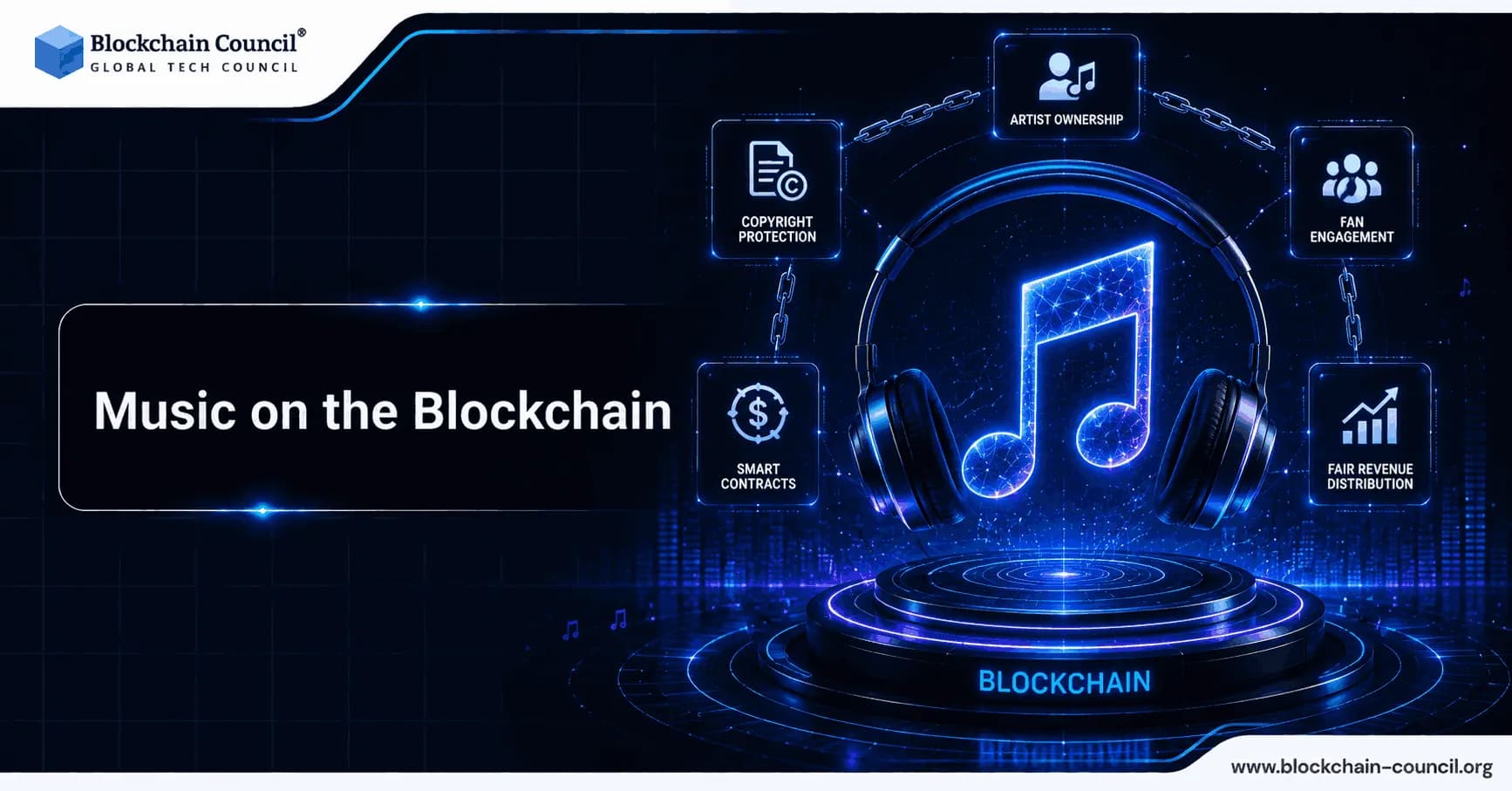
Musicians have long dealt with a frustrating reality. A song can generate millions of streams while the artist who wrote it sees only a small fraction of the resulting revenue, delayed by months and split across a confusing web of labels, distributors, and streaming platforms. Blockchain technology is now being used to challenge that model directly, giving artists a way to distribute music, track royalties, and get paid without relying on the same layers of intermediaries that have controlled the industry for decades. As musicians and industry professionals explore these tools, many are pursuing a Certified Blockchain Expert credential to understand how the technology is genuinely changing the business side of music.
In this article, we will look at how blockchain applies specifically to music, the mechanics behind royalty automation and direct fan monetization, and the real challenges still facing wider adoption across the industry.

Why the Music Industry Is Turning to Blockchain
The traditional music royalty system involves an enormous number of intermediaries. Labels, publishers, performance rights organizations, and streaming platforms all take a share of revenue and handle a piece of the reporting process before an artist ever sees payment. This creates real problems. Royalty statements are often delayed, difficult to audit, and split among songwriters, producers, and performers using rules that are not always transparent to the people actually owed the money.
Blockchain addresses this by creating a shared, verifiable ledger where ownership splits and royalty payments can be recorded and executed automatically, rather than manually calculated and distributed by multiple separate organizations over weeks or months. Making this work reliably depends heavily on smart contracts, which is why developers building music focused blockchain platforms increasingly pursue a Certified Smart Contract Developer credential. The entire promise of instant, accurate royalty splitting depends on that underlying code performing exactly as intended.
Quick Answer
Blockchain in music enables artists to register verifiable proof of ownership for their work, automate royalty payments to every contributor through smart contracts, sell music and exclusive content directly to fans without label intermediaries, and issue music related NFTs that can generate ongoing resale royalties. Together, these applications aim to give musicians more control, faster payment, and greater transparency over how their work generates revenue.
Key Ways Blockchain Is Changing Music
1. Verifiable Proof of Ownership
Registering a song on a blockchain at the moment of creation establishes a permanent, time stamped record proving who wrote it and when. This creates stronger evidence of authorship than traditional copyright registration timestamps, which can be slower to establish and easier to dispute in ownership conflicts.
2. Automated Royalty Splitting
Smart contracts can be programmed to automatically distribute royalty payments to every contributor on a track the moment revenue comes in, splitting funds among songwriters, producers, and performers based on predefined percentages recorded directly in the contract. This removes the delays and manual calculations that traditional royalty systems depend on, and it gives every contributor real time visibility into exactly how much they are owed.
3. Direct to Fan Monetization
Blockchain allows artists to sell music, exclusive tracks, or fan experiences directly to their audience, often at lower transaction costs than traditional platforms charge and without a label or distributor controlling the terms of the sale. This gives independent artists a genuine path to monetize a smaller, dedicated fan base without needing traditional industry backing first.
Building the actual infrastructure behind this, from wallet integration to royalty splitting logic to secure content delivery, requires real technical depth. This is why developers working on music blockchain platforms often pursue a formal Tech Certification to validate their blockchain engineering skills before deploying systems that manage artists' income and intellectual property directly.
4. Music NFTs and Ongoing Resale Royalties
Musicians can release music, album art, or exclusive content as non fungible tokens, allowing collectors to own a verifiably unique piece of the artist's work. Some NFT structures also let artists earn a royalty automatically every time the token resells on the secondary market, something the traditional music industry has never reliably offered creators.
5. Transparent Streaming and Usage Data
Because blockchain transactions are recorded on a shared, verifiable ledger, artists can potentially see exactly how their music is being streamed and monetized across platforms in closer to real time, rather than waiting on delayed, sometimes opaque reporting from labels and streaming services.
6. Reduced Piracy Disputes
While blockchain cannot physically stop someone from copying a song, the immutable ownership record it creates gives artists stronger, more easily verifiable evidence when pursuing action against unauthorized use of their work.
Real World Examples
Independent musicians have released albums directly through blockchain based platforms, using smart contracts to automatically split royalties among collaborators the moment a sale or stream occurs. Established artists have experimented with music NFTs, selling limited edition tracks or unreleased material directly to collectors while retaining resale royalties on future transactions. Several music rights organizations have also piloted blockchain based systems specifically aimed at improving the accuracy and speed of royalty reporting across the traditional licensing ecosystem.
Challenges the Music Industry Still Faces
Blockchain adoption in music is not without real obstacles. Many fans and even artists remain unfamiliar with cryptocurrency wallets, creating a genuine barrier to entry for blockchain based platforms. NFT markets have experienced significant volatility, making them an unreliable primary income source for most musicians. Blockchain based platforms generally reach smaller audiences than major streaming services, meaning artists usually need to maintain a presence on both traditional and blockchain based platforms rather than replacing one with the other. And integrating blockchain royalty systems with the existing rights infrastructure used by labels and performance rights organizations remains a significant undertaking.
Technology Skills & Education
Schools and parents are increasingly looking for ways to introduce children to technology in a structured and meaningful way. The World Tech Olympiad provides an opportunity for students to explore AI, coding, robotics, cybersecurity, and computational thinking while building confidence and problem-solving skills.
Final Thoughts
Blockchain offers musicians something the traditional industry has struggled to deliver consistently. Faster, more transparent royalty payments and a direct path to monetizing their work without giving up as much control to intermediaries. From automated royalty splitting to music NFTs with ongoing resale royalties, the technology addresses several of the industry's longest standing frustrations, even as real adoption challenges remain around audience familiarity and platform reach.
As more artists and platforms explore these tools, clearly explaining these new monetization models to fans who may be unfamiliar with blockchain based payments becomes just as important as building the technology itself. That is why many artists and the teams supporting them are increasingly pairing their technical understanding with a Marketing Certification to build genuine audience trust and explain the value behind these still unfamiliar tools.
Blockchain is not replacing the music industry. It is giving artists more leverage within it, one transparent royalty payment and verified ownership record at a time.
FAQs
1. What does "Music on the Blockchain" mean?
Music on the blockchain refers to using blockchain technology to manage music ownership, copyrights, licensing, royalties, distribution, payments, digital collectibles, and relationships between artists and fans.
Blockchain can create a shared, tamper-evident record of music rights and transactions, potentially making the industry more transparent and reducing administrative friction between artists, labels, publishers, streaming platforms, collecting societies, and other participants.
2. Why is blockchain useful for the music industry?
The music industry involves complicated relationships among:
Artists
Songwriters
Producers
Record labels
Publishers
Streaming services
Distributors
Performing rights organizations
Licensing agencies
Fans
Blockchain can provide a shared source of verified information about ownership, licensing terms, and payments, reducing disputes and reconciliation work.
3. How can blockchain improve music copyright management?
A song can be registered with information about its creators, ownership percentages, publishing rights, recording rights, and licensing conditions.
Blockchain can timestamp and verify these records, creating an auditable history of rights information.
However, blockchain registration does not automatically establish legal copyright ownership. Copyright remains governed by applicable laws and contracts.
4. How can blockchain improve music royalties?
Smart contracts can automate royalty distribution according to predefined ownership percentages.
For example, revenue from a song could potentially be divided automatically among:
Songwriters
Performers
Producers
Publishers
Record labels
Other rights holders
This could reduce delays and administrative costs when reliable usage and payment data are available.
5. What are smart contracts in the music industry?
Smart contracts are blockchain programs that automatically execute predefined rules.
In music, they can potentially manage:
Royalty distribution
Licensing payments
Revenue sharing
Fan memberships
Digital collectibles
Ticket sales
Artist collaborations
Rights transfers
The contract still needs accurate data about music usage and legally valid agreements behind it.
6. Can blockchain help artists get paid faster?
Potentially, yes.
Traditional royalty payments can pass through several intermediaries before reaching creators. Blockchain-based payment systems and smart contracts can automate parts of this process and potentially shorten settlement times.
Stablecoins and other digital payment systems may also support faster cross-border payments.
7. Can artists sell music directly to fans using blockchain?
Yes.
Artists can use blockchain-enabled platforms to sell music, memberships, collectibles, tickets, experiences, or other digital products directly to fans.
This can create additional revenue channels and reduce dependence on some intermediaries, although marketing, distribution, legal compliance, and audience development remain necessary.
8. What role do NFTs play in music?
Non-fungible tokens (NFTs) can represent unique or limited digital assets associated with music.
Examples include:
Limited-edition releases
Digital album artwork
Exclusive tracks
Backstage experiences
Fan memberships
Collectibles
Concert access
Community privileges
An NFT does not automatically transfer copyright or royalty rights unless the accompanying legal terms explicitly provide them.
9. Can music royalties be tokenized?
Potentially.
Certain contractual rights to future music revenue can be represented through digital tokens where legally permitted.
This could allow artists or rights holders to raise capital by offering investors exposure to specified royalty streams. Such arrangements can involve securities, financial, copyright, and consumer-protection regulations, so the legal structure matters considerably.
10. Can blockchain improve music licensing?
Yes.
A blockchain-based rights registry can help businesses determine:
Who owns a song
Which rights are available
Who can authorize a license
What licensing conditions apply
How revenue should be distributed
Smart contracts could then automate portions of licensing and payment workflows.
11. Can blockchain prevent music piracy?
Not completely.
Blockchain can help verify authentic releases, ownership, licensing, and provenance, but it cannot prevent someone from copying an audio file.
Anti-piracy still requires technologies such as digital fingerprinting, watermarking, platform enforcement, copyright law, and content-recognition systems.
Immutability, inconveniently, does not stop someone from pressing “copy.”
12. How can blockchain improve music metadata?
Incorrect or incomplete metadata is a persistent problem in the music business.
Blockchain can help maintain shared records containing:
Songwriters
Performers
Producers
Publishers
Labels
Ownership percentages
International identifiers
Licensing information
Better metadata can improve attribution and royalty allocation.
13. How can blockchain be used for concert tickets?
Blockchain-based ticketing can create verifiable digital tickets with programmable rules.
Potential benefits include:
Counterfeit-ticket reduction
Transparent ownership
Controlled resale
Automated royalties on resales
Fan identity verification
Digital collectibles linked to events
Ticketing systems must still be designed for privacy, accessibility, and users who do not own cryptocurrency wallets.
14. How can blockchain improve artist-fan relationships?
Artists can create blockchain-enabled communities that provide fans with direct access to memberships, voting, rewards, merchandise, exclusive content, and events.
Fans may hold digital credentials or tokens representing membership or participation without requiring the artist to depend entirely on a traditional social-media platform.
15. What are the major benefits of blockchain for musicians?
Potential benefits include:
Transparent ownership records
Faster royalty settlement
Automated revenue sharing
Direct fan monetization
Better music metadata
Improved licensing
Digital collectibles
Verifiable ticketing
Cross-border payments
Greater control over digital assets
The value depends on adoption by the broader music ecosystem rather than blockchain technology alone.
16. What challenges affect blockchain adoption in music?
Major challenges include:
Copyright complexity
Conflicting ownership claims
Incorrect metadata
Regulatory compliance
Blockchain scalability
Wallet usability
Privacy requirements
Industry interoperability
Smart contract security
Adoption by major rights organizations
Putting disputed ownership information on an immutable ledger does not resolve the dispute. It merely preserves the disagreement with impressive technical durability.
17. What mistakes should music companies and artists avoid?
Common mistakes include:
Assuming NFTs automatically transfer copyright
Putting copyrighted media directly on public blockchains unnecessarily
Creating tokens without sustainable utility
Ignoring securities and financial regulations
Failing to audit smart contracts
Treating blockchain records as substitutes for legal contracts
Neglecting user experience
Assuming blockchain automatically fixes inaccurate metadata
Technology should support rights management, not create another layer of confusion around it.
18. What are best practices for implementing blockchain in music?
Best practices include maintaining accurate rights metadata, connecting blockchain records to legally enforceable agreements, storing large media files off-chain, auditing smart contracts, protecting private keys, using interoperable standards, complying with copyright and financial regulations, and designing applications that do not require ordinary listeners to understand blockchain mechanics.
19. What blockchain music trends are important in 2026?
Important trends include:
Automated royalty distribution
Tokenized music rights
Stablecoin payments
Blockchain ticketing
Digital fan memberships
Music NFTs and collectibles
Decentralized identity (DID)
Verifiable creator credentials
AI-generated music provenance
Content authenticity verification
Smart-contract licensing
On-chain creator economies
The intersection of AI and blockchain is particularly relevant as the music industry looks for ways to distinguish human-created, AI-assisted, and AI-generated content and track authorized use of creative works.
20. What is the future of music on the blockchain?
Blockchain's strongest long-term role in music is likely to be behind the scenes: verifying ownership, improving metadata, automating licensing, distributing royalties, authenticating content, and connecting artists directly with audiences.
Future music ecosystems could allow a song to carry a verifiable digital record identifying its creators, ownership structure, licensing conditions, authorized AI usage, and payment rules. When the song generates revenue, smart contracts could help distribute payments according to those agreed rights.
Blockchain will not replace musicians, labels, publishers, streaming platforms, or copyright law. It can instead provide infrastructure that helps them coordinate more transparently.
And that may be blockchain's most useful contribution to music: not writing the next hit song, thankfully, but helping ensure the humans who actually wrote it can be identified, credited, licensed, and paid without requiring seventeen spreadsheets and an archaeological expedition through royalty statements.
Related Articles
View All
Blockchain
Beyond Cryptocurrency: How Blockchain Is Transforming Real-World Industries
Explore how blockchain works beyond cryptocurrency in banking, supply chains, healthcare, tokenisation, CBDCs, and government, plus key challenges and career paths.

Blockchain
Smart Contracts & dApps: How Blockchain Becomes Programmable
Learn how smart contracts and dApps make blockchain programmable, from Ethereum and tokens to DeFi, NFTs, real use cases, benefits, and key risks.

Blockchain
Behind the Blocks: How Blockchain Transactions Actually Work
Go behind the blocks to see how a blockchain transaction really works: wallets and keys, digital signatures, verification, hashing, blocks, consensus, proof of work vs proof of stake, and how miners and validators secure the network.
Trending Articles
The Role of Blockchain in Ethical AI Development
How blockchain technology is being used to promote transparency and accountability in artificial intelligence systems.
What is AWS? A Beginner's Guide to Cloud Computing
Everything you need to know about Amazon Web Services, cloud computing fundamentals, and career opportunities.

Can DeFi 2.0 Bridge the Gap Between Traditional and Decentralized Finance?
The next generation of DeFi protocols aims to connect traditional banking with decentralized finance ecosystems.