

How Can Blockchain Transform The Use of Pharmaceutical Drugs?
 Toshendra Kumar Sharma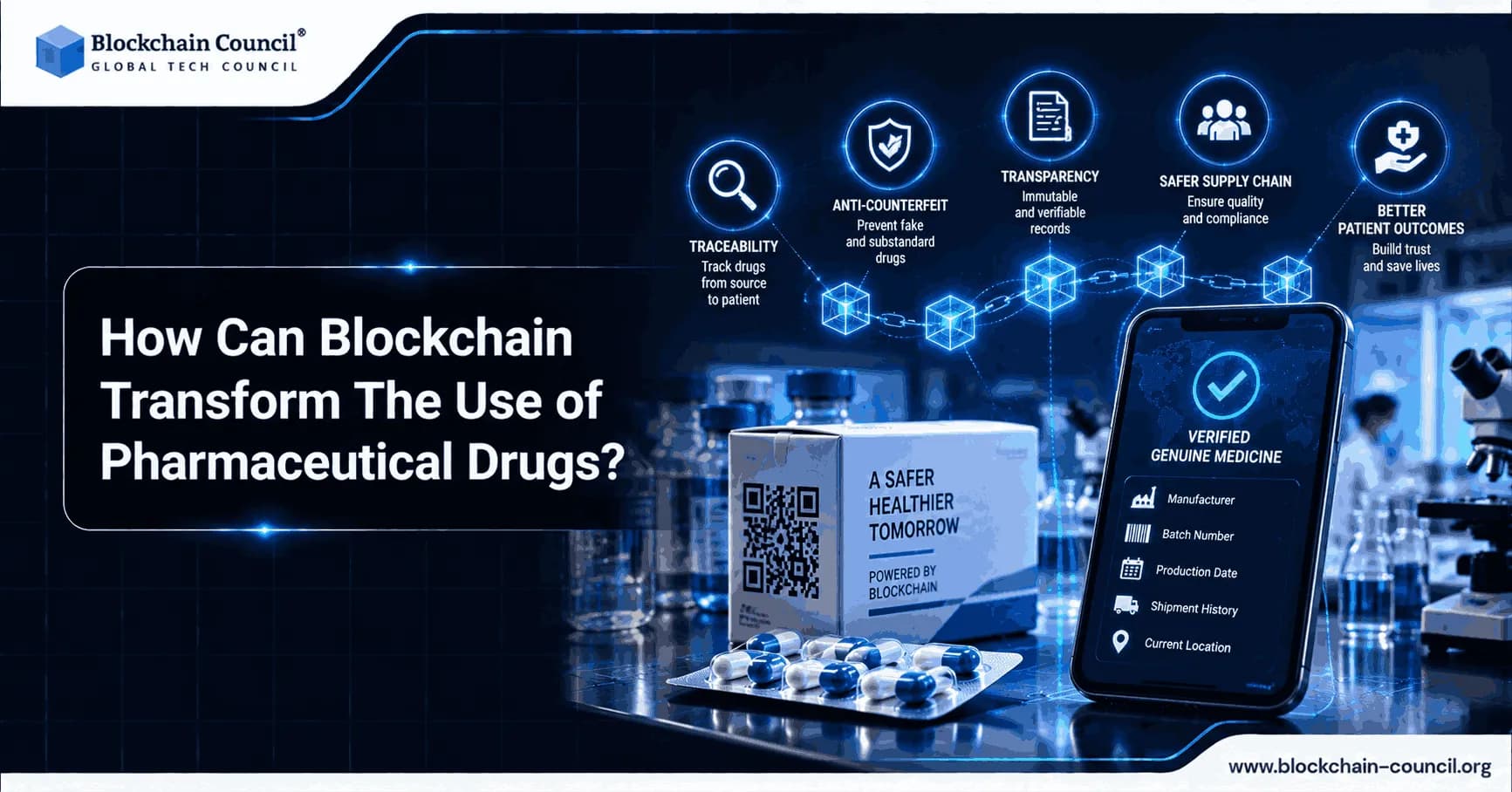
Counterfeit medication remains one of the pharmaceutical industry's most persistent and dangerous problems, with fake drugs entering supply chains at nearly every stage from manufacturing through distribution to the pharmacy shelf. The World Health Organization has estimated that a significant share of medicines circulating in parts of the developing world are substandard or falsified, a problem that traditional paper-based tracking and certification systems have struggled to solve for decades. Blockchain technology offers a genuinely different approach, creating tamper-evident, verifiable records that follow a drug from raw material sourcing through manufacturing, distribution, and final dispensing. Pharmaceutical companies and regulators exploring this shift often start with a Certified Blockchain Expert credential, which builds the foundational understanding needed to evaluate exactly where blockchain can close verification gaps that paper documentation and centralized databases have consistently failed to close.
This is not a speculative or theoretical application. Major pharmaceutical companies, regulatory bodies, and supply chain consortiums have already piloted and, in some cases, deployed blockchain-based systems specifically targeting drug traceability, counterfeit prevention, and clinical trial integrity, giving the industry real evidence of where this technology delivers genuine value.

Why Pharmaceutical Supply Chains Are So Vulnerable to Fraud and Error
The journey a single pill takes from raw chemical ingredient to a patient's hand typically passes through numerous intermediaries: raw material suppliers, manufacturers, wholesalers, distributors, and pharmacies, often spanning multiple countries with different regulatory standards. Each handoff point represents an opportunity for counterfeit products to enter the supply chain, for temperature-sensitive medications to be mishandled without detection, or for documentation errors to create dangerous gaps in traceability.
Traditional tracking relies heavily on paper documentation and disconnected digital systems maintained separately by each party in the chain, meaning no single participant, not the manufacturer, the distributor, the pharmacy, or the regulator, has a complete, verifiable view of a drug's full journey. This fragmentation makes it extraordinarily difficult to quickly trace a contaminated or counterfeit batch back to its source during a safety recall, and it creates exploitable gaps that counterfeiters have learned to navigate, particularly in regions with less rigorous regulatory oversight. Blockchain addresses this structural weakness directly by creating a single, shared, immutable ledger that every authorized participant can access and verify independently, rather than relying on each party's separate records and simply trusting that no gaps or alterations occurred along the way.
Building End-to-End Drug Traceability From Manufacturer to Patient
The most mature and widely tested blockchain application in pharmaceuticals involves end-to-end supply chain traceability, often referred to as track-and-trace systems. These systems record each stage of a drug's journey on a blockchain, starting from raw material sourcing and manufacturing, through every subsequent transfer between distributors and wholesalers, and finally to the pharmacy or hospital where the medication reaches a patient.
Each transaction gets logged with a timestamp and cryptographic verification, creating a permanent record that cannot be altered after the fact without detection across the network. This means a pharmacist, regulator, or even a patient using a smartphone app could theoretically scan a medication's packaging and verify its complete, unaltered journey from the original manufacturer, confirming the product is genuine rather than a counterfeit that has been introduced somewhere along an otherwise legitimate-looking supply chain. The MediLedger Project, a consortium involving major pharmaceutical companies and distributors, has piloted exactly this kind of blockchain-based verification system specifically to help the industry comply with serialization and traceability requirements under regulations like the U.S. Drug Supply Chain Security Act, demonstrating that this application has moved well past conceptual discussion into genuine industry collaboration. Implementing these multi-party tracking systems at scale requires specialized expertise in connecting blockchain infrastructure with existing pharmaceutical logistics and inventory systems, and a Certified Blockchain & Supply Chain Professional credential reflects the practical knowledge needed to design traceability systems that genuinely integrate with how pharmaceutical supply chains actually operate rather than existing as a disconnected technical layer.
Where Future-Ready Thinking Begins Long Before a Career in Pharmaceutical Technology
The kind of rigorous, systems-level thinking that pharmaceutical supply chain security requires, understanding how a single verification gap anywhere in a global chain can put patient safety at risk, reflects analytical habits that ideally start forming well before anyone enters a technical or healthcare career.
Future-Ready Skills
As technology becomes increasingly important across industries, students need opportunities to develop future-ready skills early in their education. A World Tech Olympiad can introduce students to areas such as artificial intelligence, coding, cybersecurity, robotics, and computational thinking while encouraging curiosity and continuous learning.
Protecting Clinical Trial Data Integrity and Research Transparency
Beyond supply chain tracking, blockchain offers meaningful applications in clinical trial management, an area where data integrity concerns have historically undermined public trust in pharmaceutical research. Clinical trials generate enormous volumes of sensitive data, and concerns about selective reporting, data manipulation, or simple record-keeping errors have periodically raised questions about whether published trial results accurately reflect what actually happened during a study.
Blockchain-based clinical trial systems can record patient consent, trial protocols, data collection timestamps, and results in a tamper-evident format that cannot be quietly altered after the fact, giving regulators, researchers, and the public a stronger basis for trusting that reported outcomes match what was genuinely observed during the trial. This matters significantly for regulatory approval processes, where agencies like the FDA rely heavily on trial data integrity to make decisions that directly affect patient safety, and any question about whether that underlying data has been manipulated undermines the entire approval process. Some pharmaceutical researchers have also explored blockchain for managing patient consent records specifically, ensuring that consent given for one type of research use cannot be improperly extended to uses the patient never actually agreed to, addressing a genuine ethical concern in how clinical research data gets used and reused over time.
Combating Counterfeit Drugs at the Point of Dispensing
While supply chain traceability addresses counterfeiting at the wholesale and distribution level, blockchain also enables verification directly at the point where a patient receives their medication. Some pharmaceutical companies have begun implementing blockchain-linked packaging, often paired with QR codes or near-field communication chips, that allow a pharmacist or even the patient to verify a specific medication's authenticity instantly by checking its blockchain record before dispensing or consuming it.
This point-of-dispensing verification matters enormously in regions where counterfeit medications have infiltrated even legitimate-seeming pharmacy supply chains, giving healthcare providers a final, independent check before a potentially dangerous counterfeit reaches a patient. This application has particular significance for high-value or frequently counterfeited medications, including certain cancer treatments, insulin, and other critical drugs where a fake product poses severe, immediate health risks rather than simply representing a financial loss for the legitimate manufacturer.
Building the Technical Infrastructure Behind Pharmaceutical Blockchain Systems
Implementing blockchain solutions across pharmaceutical supply chains requires technical infrastructure that extends well beyond blockchain-specific knowledge alone, since these systems must integrate with existing manufacturing execution systems, cold chain temperature monitoring, and regulatory reporting databases that pharmaceutical companies already rely on for compliance. Professionals and organizations building these systems benefit from a general Tech Certification to round out broader technical fluency across IoT sensor integration, data security, and enterprise systems architecture, since a genuinely effective pharmaceutical blockchain deployment depends as much on this surrounding infrastructure as it does on the blockchain layer recording the final verified data.
Communicating the value and reliability of these blockchain-based verification systems to healthcare providers, regulators, and patients represents its own significant challenge, particularly given how much general public confusion still surrounds blockchain technology outside of cryptocurrency contexts. Pharmaceutical companies and technology partners implementing these systems need to explain clearly how the verification actually protects patient safety, rather than presenting blockchain as an abstract technical upgrade that offers no tangible benefit patients can understand or trust. Teams responsible for this communication often rely on a Marketing Certification to help translate genuine safety and authenticity improvements into messaging that builds real confidence among healthcare providers and patients who care primarily about medication safety rather than the underlying technology securing it.
Turning Verification Into Genuine Patient Safety Gains
Blockchain will not eliminate every vulnerability in the global pharmaceutical supply chain, since counterfeiters and bad actors will continue seeking new ways to exploit weaknesses regardless of the technology deployed against them. What blockchain genuinely offers is a structural improvement in traceability and verification that makes counterfeiting significantly harder to execute undetected, while giving regulators, healthcare providers, and increasingly patients themselves a reliable way to confirm a medication's authenticity before it matters most. As pharmaceutical companies and regulatory bodies continue moving these pilot projects into broader production deployment, the technology's real measure of success will not be how many press releases it generates, but how meaningfully it reduces the number of counterfeit or compromised medications that ever reach a patient in the first place.
FAQs
1. How can blockchain transform the pharmaceutical industry?
Blockchain can transform pharmaceutical operations by creating a shared, tamper-evident record of drug movement across the supply chain. It can help manufacturers, distributors, pharmacies, regulators, and other authorized participants improve traceability, detect suspicious products, and coordinate recalls more efficiently. The FDA's DSCSA framework specifically emphasizes interoperable electronic tracing of prescription drugs at the package level.
2. Can blockchain help prevent counterfeit drugs?
Yes. Blockchain can create a verifiable history for a pharmaceutical product from manufacturing through distribution. If combined with unique product identifiers and reliable verification systems, it can help stakeholders identify discrepancies and detect potentially illegitimate products before they reach patients.
3. How does blockchain improve pharmaceutical supply-chain traceability?
Blockchain can record important events such as manufacturing, packaging, ownership transfers, distribution, and dispensing. This creates a shared record that authorized participants can use to trace a drug's journey through the supply chain instead of relying on disconnected records maintained by individual organizations.
4. Can blockchain help pharmacies verify medicines?
Potentially, yes. A pharmacy could use a product identifier and access authorized supply-chain information to verify whether a medicine's recorded history is consistent with legitimate distribution. This approach can support existing regulatory requirements for product verification rather than replacing them.
5. How can blockchain help detect counterfeit pharmaceuticals?
A blockchain-based system can compare a drug's current transaction and identity information with its recorded supply-chain history. An unexpected ownership transfer, duplicate identifier, or inconsistent record could trigger an investigation. However, blockchain cannot independently determine whether a physical medicine is genuine, so physical verification and trusted data sources remain essential.
6. Can blockchain improve pharmaceutical recalls?
Yes. Blockchain can make it easier to identify where specific drug packages or batches have moved through the supply chain. This can help organizations locate potentially affected products and coordinate recalls more quickly. FDA blockchain pilot work specifically identified improved visibility and support for product recalls as potential benefits.
7. How can blockchain improve drug safety?
Blockchain can strengthen drug safety by improving visibility into product movement and helping organizations identify suspect or illegitimate medicines. Better traceability can support faster investigations and responses when a potentially harmful product is discovered.
8. Can blockchain track a medicine from manufacturer to patient?
It can support end-to-end tracking of eligible pharmaceutical products when all relevant participants record required events in an interoperable system. In the United States, the DSCSA is designed around electronic, interoperable package-level tracing of certain prescription drugs through the distribution supply chain.
9. How can blockchain help pharmaceutical manufacturers?
Manufacturers can use blockchain-based systems to record production and distribution information, strengthen product traceability, and share relevant data with authorized supply-chain partners. This can also support investigations when a product is suspected of being counterfeit, diverted, or otherwise illegitimate.
10. Can blockchain improve pharmaceutical regulatory compliance?
Blockchain can support compliance by maintaining reliable electronic records and improving information exchange between authorized trading partners. It should be considered an enabling technology rather than a substitute for pharmaceutical regulations. For example, the FDA's DSCSA establishes requirements for product tracing, verification, and interoperable electronic data exchange.
11. What was the FDA's blockchain pharmaceutical pilot?
The FDA's DSCSA pilot program included a blockchain interoperability project involving pharmaceutical manufacturers, distributors, dispensers, logistics companies, and other stakeholders. The project explored whether blockchain could support interoperable tracking of prescription medicines and concluded that blockchain had potential as an underlying technology for pharmaceutical supply-chain tracing.
12. Can blockchain help reduce pharmaceutical supply-chain fraud?
Blockchain can make certain types of record manipulation and unauthorized changes more difficult to conceal. A shared transaction history can also help organizations identify unusual product movements. However, fraud can occur outside the blockchain, so cybersecurity, physical controls, authentication, and regulatory oversight remain necessary.
13. How can blockchain improve pharmaceutical inventory management?
Blockchain can provide authorized organizations with a consistent record of product movements and ownership changes. When integrated with inventory systems, barcodes, serialization, or other identification technologies, it can improve visibility into where specific products or batches are located.
14. Can blockchain help pharmaceutical companies manage drug recalls faster?
Yes. A reliable digital record can help identify the organizations that received affected products and trace relevant transactions. This can reduce the time required to reconstruct supply-chain information manually and support more targeted recall actions.
15. How can blockchain help with drug serialization?
Blockchain can work alongside serialization systems that assign unique identifiers to pharmaceutical packages. The identifier can be associated with relevant supply-chain events, allowing authorized participants to verify a product's recorded history. This complements regulatory efforts focused on package-level identification and tracing.
16. Can blockchain protect pharmaceutical data?
Blockchain can improve the integrity and traceability of selected records, but sensitive pharmaceutical and patient information requires additional privacy and security controls. Permissioned networks can restrict participation and access, while confidential information can be kept off-chain with only appropriate references or proofs recorded on the ledger.
17. Can blockchain improve the distribution of temperature-sensitive drugs?
Blockchain can record information from temperature-monitoring systems as medicines move through the supply chain. Sensors or IoT devices can collect environmental information, while blockchain can provide a tamper-evident record of relevant events. The blockchain itself does not measure temperature, so it must work with external monitoring technologies.
18. What are the limitations of blockchain in pharmaceuticals?
Important challenges include interoperability, scalability, data quality, privacy, regulatory requirements, implementation costs, and integration with existing pharmaceutical systems. Blockchain also follows a “garbage in, garbage out” principle: if inaccurate information enters the system, the ledger does not automatically make that information true.
19. Is blockchain already being used in pharmaceutical supply chains?
Blockchain has been tested and piloted for pharmaceutical supply-chain applications. The FDA's DSCSA pilot program evaluated multiple technologies and included a blockchain interoperability project designed to explore secure electronic tracing of prescription medicines. FDA notes that participation in its pilot program should not be interpreted as an endorsement of any particular technology.
20. What is the future of blockchain in pharmaceutical drugs?
Blockchain's future in pharmaceuticals could involve more sophisticated drug traceability, automated verification, supply-chain monitoring, recalls, compliance, and integration with IoT and serialization technologies. Its greatest value is likely to come from combining blockchain with other technologies rather than using blockchain as a standalone solution. Current regulatory efforts continue to emphasize interoperable electronic tracing and verification of pharmaceutical products.
Related Articles
View All
Blockchain
Blockchain in Banks: Use Cases, Benefits, Risks, and the AI Connection
Explore how blockchain in banks is reshaping payments, trade finance, tokenized deposits, KYC, AML, and AI-driven risk workflows.

Blockchain
User Experience in Blockchain Products: How to Make Web3 Apps Easier to Use
Learn how to improve user experience in blockchain products with simpler onboarding, clearer transaction flows, safer wallet UX, and better Web3 metrics.
Blockchain
Top Blockchain Use Cases in Banks and Financial Services
Explore the top blockchain use cases in banks, from payments and trade finance to tokenization, settlement, lending, KYC, and digital asset services.
Trending Articles
The Role of Blockchain in Ethical AI Development
How blockchain technology is being used to promote transparency and accountability in artificial intelligence systems.
What is AWS? A Beginner's Guide to Cloud Computing
Everything you need to know about Amazon Web Services, cloud computing fundamentals, and career opportunities.
How to Install Claude Code
Learn how to install Claude Code on macOS, Linux, and Windows using the native installer, plus verification, authentication, and troubleshooting tips.