

DAO
 Toshendra Kumar Sharma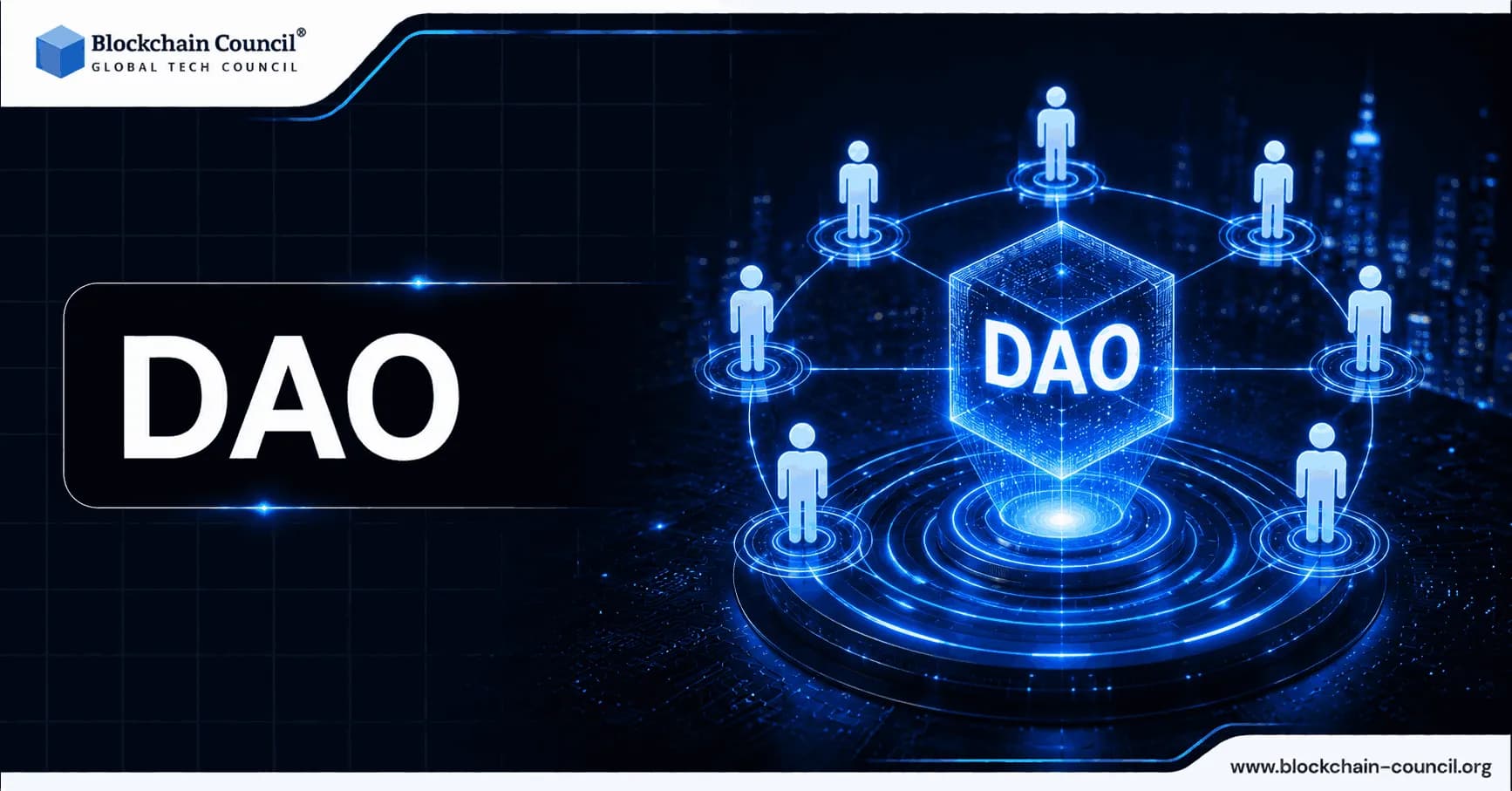
Traditional companies run on paperwork bylaws, board resolutions, share registers all enforced by courts and regulators after the fact. A Decentralized Autonomous Organization, or DAO, replaces most of that paper trail with code: the rules of the organization live directly in a smart contract, and decisions execute automatically once enough members agree. This isn't a fringe idea anymore. As of 2026, more than 12,000 active DAOs collectively manage upwards of $25-30 billion in treasury assets, spanning everything from major DeFi protocols to charitable giving collectives and gaming guilds. For anyone trying to understand how this governance model actually works and where it's headed a structured path like a Certified DAO Expert credential has become a practical way to build that knowledge systematically rather than piecing it together from scattered forum threads.
How a Traditional Organization Compares to a DAO
To see what's genuinely different about a DAO, it helps to look at how a conventional company works first. A traditional organization is a group of people working toward a shared goal usually generating returns for shareholders operating under rules set by the government where it's incorporated. Ownership is split among shareholders in proportion to how many shares they hold: someone owning 3,000 of 30,000 total issued shares controls 10% of the company, and that stake can be sold or transferred to shift ownership entirely. Shareholders elect a board of directors, the board appoints a CEO, and the CEO runs day-to-day operations through a hired staff. The whole structure is written down in legal documents bylaws, articles of incorporation enforced by courts if something goes wrong.

A DAO keeps the same basic idea a group of stakeholders collectively directing an organization but rebuilds the mechanics on a blockchain instead of on paper. The rules that would normally sit in a corporate bylaw are written into smart contract code, most commonly in Solidity on Ethereum, though several newer chains now host significant DAO activity as well. Instead of a board of directors approving decisions behind closed doors, actions are proposed and voted on publicly, with every vote recorded as an on-chain transaction anyone can audit. Getting a working grasp of that underlying architecture is where a general Certified Blockchain Expert background pays off, since DAOs are ultimately just one specific application built on core blockchain principles.
How a DAO Actually Works
Membership in a DAO isn't tracked through a shareholder registry it's tied to a wallet address, which can belong to a person, a piece of automated software, a connected device, or even another DAO. That flexibility is part of what makes DAOs a natural fit for automated, always-on coordination rather than the business-hours cadence of a traditional company.
Each member typically holds governance tokens that represent both an economic stake in the DAO and voting power over its decisions generally, the more tokens an address holds, the more influence it has over outcomes. Any member can submit a proposal covering a wide range of decisions: replacing a project lead, hiring a vendor or legal counsel, releasing treasury funds as a payment or grant, or issuing new tokens to someone contributing meaningful value to the ecosystem. Once a proposal is live, the DAO's smart contract tallies votes according to its predefined rules some networks require a simple majority, others set a minimum participation threshold before a vote can pass at all.
Since holding and actively voting on every single proposal isn't realistic for most members, many DAOs support vote delegation, letting a token holder assign their voting power to someone they trust to stay engaged functionally similar to proxy voting in a traditional shareholder meeting. Treasury funds themselves are usually secured behind multi-signature wallets, requiring several trusted signers to approve a transaction before it executes, which adds a practical safeguard against a single compromised account draining shared funds.
Where DAOs Are Actually Being Used Today
DAOs have expanded well beyond their original DeFi governance roots. Major protocols still account for the largest treasuries some now exceeding several billion dollars in community-managed assets but the model has spread into charitable giving DAOs that have distributed tens of millions of dollars to social and environmental causes, legal-support collectives offering decentralized compliance tools, and social and entertainment DAOs that let fans participate directly in decisions about the projects they back. Raising capital has also gotten dramatically faster: a DAO can issue tokens to new contributors and settle that transaction in real time, compared with the weeks-long process typically required to issue new shares in a conventional company.
That said, the model still has real growing pains worth understanding rather than glossing over. Research into DAO governance patterns has repeatedly found that voting power tends to concentrate: in many DAOs, less than 1% of token holders control the large majority of voting weight, and actual voter turnout on individual proposals frequently sits in the single digits or low teens as a percentage of eligible holders. That gap between the democratic ideal and the practical reality is one of the more active areas of DAO tooling right now, with newer platforms experimenting with reputation-weighted voting, AI-assisted proposal review, and stricter execution thresholds to keep decision-making meaningfully distributed. Builders working through these tooling and security questions increasingly lean on a broader Tech Certification to round out the smart contract, security, and infrastructure skills a well-run DAO actually depends on.
What This Means Going Forward
DAOs represent a genuine shift in how organizations can be structured replacing hierarchical, trust-based control with transparent, code-enforced coordination among stakeholders who might never meet in person. That doesn't make them a flawless substitute for traditional companies; legal recognition still varies significantly by jurisdiction, treasury security remains an ongoing engineering challenge, and voter apathy is a real limitation on the "fully democratic" promise DAOs are built around. But the trajectory is clear: treasuries are growing, use cases are diversifying well past pure finance, and mainstream businesses are starting to borrow DAO-style governance for narrower purposes like community-driven product decisions. For anyone building a DAO-backed product or community, understanding the code and the governance mechanics is only half the job turning that structure into an engaged, growing community is where a solid Marketing Certification rounds out the skill set needed to make a DAO thrive rather than sit idle after launch.
FAQs
1. What is a DAO?
A Decentralized Autonomous Organization (DAO) is a blockchain-based organization governed by smart contracts and community voting rather than a centralized management structure. Members typically use governance tokens to propose, discuss, and vote on decisions related to the organization's operations, treasury, and future development.
2. What does DAO stand for?
DAO stands for Decentralized Autonomous Organization. "Decentralized" means no single entity controls the organization, while "autonomous" refers to the use of smart contracts that automatically execute predefined rules and decisions.
3. How does a DAO work?
A DAO operates through smart contracts deployed on a blockchain. Members holding governance tokens can submit proposals, vote on decisions, and participate in managing the organization's treasury, protocols, partnerships, or ecosystem development according to predefined governance rules.
4. Why are DAOs important?
DAOs enable transparent, community-driven decision-making without relying on traditional corporate hierarchies. They promote decentralized governance, global participation, and collective ownership while reducing dependence on centralized intermediaries.
5. What are governance tokens?
Governance tokens are blockchain-based digital assets that give holders voting rights within a DAO. Depending on the DAO's governance model, voting power may be based on the number of tokens held or other participation mechanisms.
6. What is a DAO treasury?
A DAO treasury is a pool of digital assets managed collectively by the organization's members. Treasury funds may be used for development, grants, marketing, partnerships, ecosystem growth, research, or operational expenses after community approval.
7. How are decisions made in a DAO?
Members submit governance proposals that are discussed by the community before being put to a vote. If a proposal receives the required level of support based on the DAO's governance rules, smart contracts or designated administrators implement the approved decision.
8. What are smart contracts in a DAO?
Smart contracts are self-executing blockchain programs that automate governance rules, voting procedures, treasury management, and other organizational processes. They help ensure that decisions are carried out according to predefined conditions.
9. What types of DAOs exist?
Common DAO categories include:
Protocol DAOs
Investment DAOs
Grant DAOs
Social DAOs
Creator DAOs
Collector DAOs
Service DAOs
Media DAOs
Each type serves different communities and business objectives.
10. What are some well-known DAOs?
Examples of well-known DAOs include:
MakerDAO
Uniswap DAO
Aave DAO
Arbitrum DAO
Optimism Collective
ENS DAO
Gitcoin DAO
Compound DAO
These organizations govern decentralized protocols, public goods funding, infrastructure, and blockchain ecosystems.
11. What are the advantages of DAOs?
Benefits include transparent governance, global participation, community ownership, automated decision-making through smart contracts, decentralized treasury management, reduced reliance on intermediaries, and greater accountability through on-chain voting records.
12. What are the limitations of DAOs?
Challenges include governance complexity, voter participation, token concentration, regulatory uncertainty, smart contract vulnerabilities, slow decision-making, coordination across global communities, and balancing decentralization with operational efficiency.
13. Can anyone join a DAO?
Many DAOs are open to anyone who meets participation requirements, such as holding governance tokens or meeting community criteria. Some DAOs have permissionless membership, while others restrict participation based on specific qualifications or roles.
14. How are DAOs funded?
DAOs may receive funding through token issuance, protocol fees, donations, grants, venture investments, ecosystem revenues, NFT sales, or community contributions. Treasury management policies vary by organization.
15. How do DAOs compare with traditional companies?
Traditional companies typically operate under centralized leadership and legal structures, while DAOs distribute governance among community members using blockchain technology. However, many DAOs still interact with traditional legal entities to comply with applicable laws.
16. What common mistakes should DAO participants avoid?
Common mistakes include voting without reviewing proposals, ignoring governance discussions, failing to secure wallet credentials, concentrating voting power, overlooking smart contract risks, and participating without understanding the DAO's governance framework.
17. What are best practices for participating in a DAO?
Best practices include researching the DAO's mission, reviewing governance documentation, participating in community discussions, securing wallets with two-factor authentication (2FA) where applicable, protecting recovery phrases, evaluating proposals carefully, and staying informed about protocol updates.
18. How do DAOs fit into the Web3 ecosystem?
DAOs are a foundational component of Web3, enabling decentralized governance across DeFi protocols, NFT communities, gaming platforms, infrastructure projects, decentralized identity systems, public goods funding, and open-source software development.
19. What trends are shaping DAOs in 2025-2026?
Major trends include AI-assisted governance, tokenization of real-world assets (RWAs), decentralized identity (DID), cross-chain governance, legal DAO frameworks, quadratic voting, on-chain reputation systems, decentralized physical infrastructure networks (DePIN), and improved governance tooling.
20. What is the future of DAOs?
DAOs are expected to become increasingly sophisticated as governance mechanisms, legal recognition, and blockchain infrastructure mature. They may play an expanding role in managing decentralized protocols, investment communities, creator economies, public goods, enterprise collaboration, and global digital organizations. While DAOs are unlikely to replace every traditional business structure, they offer a compelling alternative for communities that value transparency, shared ownership, and decentralized decision-making. Running an organization by community vote may sound chaotic at times, but it also reflects an old truth dressed in new technology: getting people to agree has never been easy, even when the meeting takes place on a blockchain.
Related Articles
View All
Blockchain
Beyond Cryptocurrency: How Blockchain Is Transforming Real-World Industries
Explore how blockchain works beyond cryptocurrency in banking, supply chains, healthcare, tokenisation, CBDCs, and government, plus key challenges and career paths.
Blockchain
Smart Contracts & dApps: How Blockchain Becomes Programmable
Learn how smart contracts and dApps make blockchain programmable, from Ethereum and tokens to DeFi, NFTs, real use cases, benefits, and key risks.

Blockchain
Public, Private & Consortium Blockchains: Which Network Fits the Use Case?
Compare public, private, and consortium blockchains by security, speed, privacy, and control, with real examples and a simple guide to choosing the right network.
Trending Articles
AWS Career Roadmap
A step-by-step guide to building a successful career in Amazon Web Services cloud computing.
What is AWS? A Beginner's Guide to Cloud Computing
Everything you need to know about Amazon Web Services, cloud computing fundamentals, and career opportunities.
Claude AI Tools for Productivity
Discover Claude AI tools for productivity to streamline tasks, manage workflows, and improve efficiency.