

Blockchain to help Cannabis Transformation
 Toshendra Kumar Sharma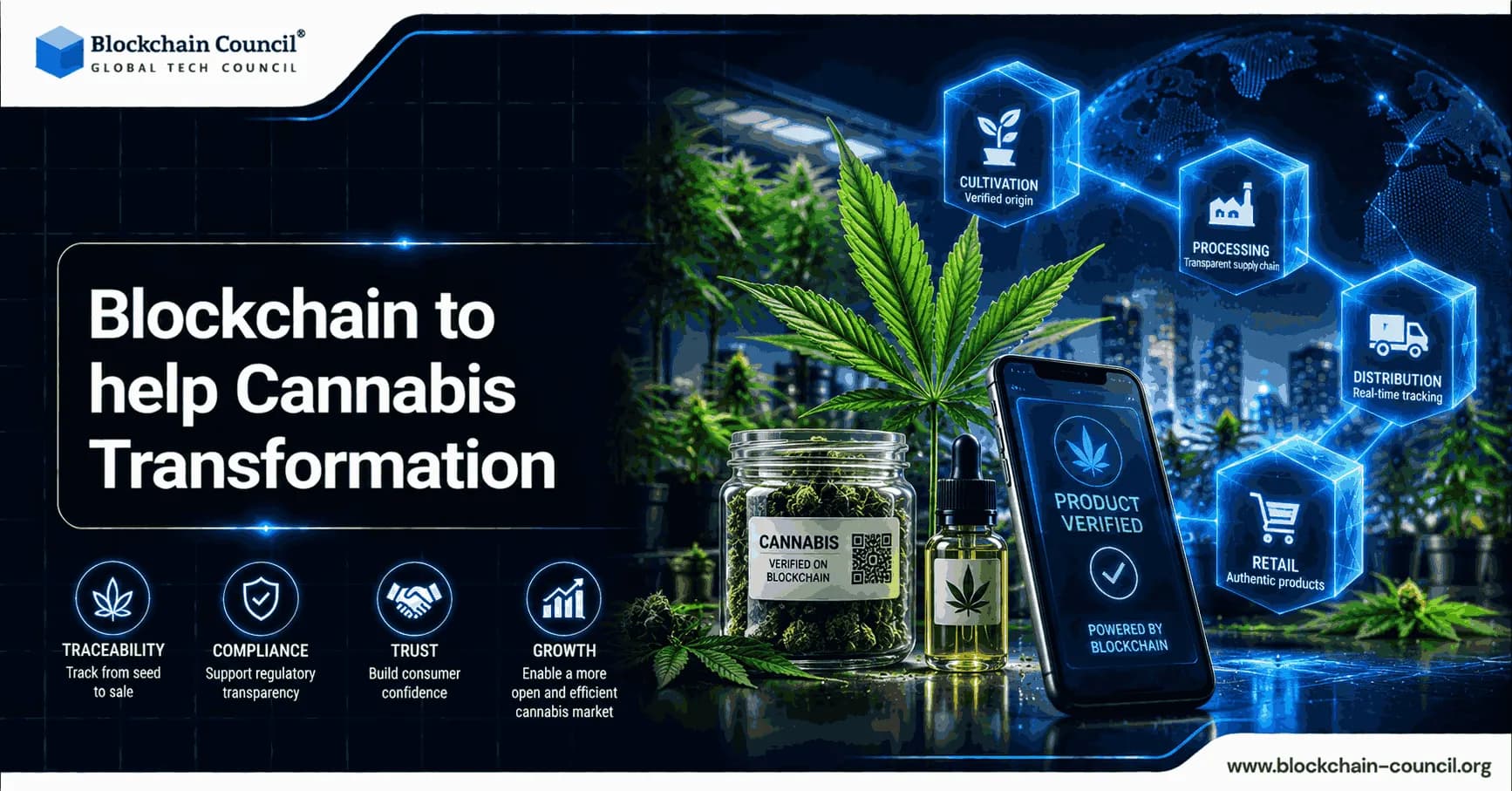
The cannabis industry occupies a uniquely complicated position in the global economy. It operates under a patchwork of regulations that vary dramatically between countries, states, and even municipalities, while facing intense scrutiny around product safety, supply chain integrity, and financial transparency that most other consumer industries do not encounter to the same degree. Blockchain technology has emerged as a genuinely useful tool for addressing these specific pain points, offering verifiable tracking, transparent compliance records, and financial infrastructure alternatives that the traditionally banked economy has been reluctant to provide. Industry professionals looking to understand this intersection often start with a Certified Blockchain Expert credential, which builds the foundational knowledge needed to see exactly where blockchain solves real cannabis industry problems rather than simply following a broader technology trend.
This is not a speculative use case built on hype. Cannabis businesses face documented, persistent challenges around seed-to-sale tracking, banking access, and regulatory compliance that blockchain's core properties, immutability, transparency, and decentralized verification, directly address in ways that conventional software solutions have struggled to match.

Why the Cannabis Industry Needs Blockchain More Than Most
Few industries face the combination of regulatory complexity and trust deficit that cannabis businesses navigate daily. Legal cannabis remains federally illegal in the United States even as individual states legalize it, creating a fragmented compliance landscape where a business operating legally in one state might violate federal banking regulations simply by depositing revenue. This has left much of the industry operating on a cash basis, creating security risks and making financial transparency nearly impossible to verify through traditional means.
Beyond the financial complications, cannabis products carry unique safety and compliance requirements that most consumer goods do not, including mandatory testing for contaminants, potency verification, and strict tracking requirements meant to prevent diversion into illegal markets. Regulators in legal cannabis markets require businesses to track products from cultivation through final sale, a process commonly called seed-to-sale tracking, and the software systems currently used for this purpose often rely on centralized databases that regulators, businesses, and consumers all have to trust without independent verification. Blockchain offers a structurally different approach, one where the tracking record itself becomes tamper-evident and independently verifiable rather than dependent on trusting a single company's database.
Seed-to-Sale Traceability That Regulators and Consumers Can Actually Verify
Seed-to-sale tracking represents the most mature and widely adopted blockchain use case in the cannabis industry today. Every legal cannabis market requires some form of tracking system to follow a plant from cultivation through processing, distribution, and final retail sale, primarily to prevent diversion into illegal markets and to enable rapid recalls if contamination or safety issues arise.
Traditional seed-to-sale software, while functional, relies on centralized databases controlled by a single vendor, meaning regulators and businesses have to trust that vendor's data integrity and security practices without any independent way to verify that records have not been altered. Blockchain-based tracking systems address this by recording each stage of a product's journey on an immutable ledger, creating a permanent, tamper-evident record that regulators can audit directly rather than relying entirely on a third-party vendor's assurances. This becomes particularly valuable during contamination recalls, where speed and accuracy in tracing a specific batch back through the supply chain can directly affect public health outcomes.
Building these systems correctly requires genuine technical expertise, since a poorly implemented blockchain tracking system offers little advantage over a well-built centralized database if the underlying architecture does not actually leverage blockchain's verification properties correctly. A Certified Blockchain Developer credential reflects the hands-on skill needed to build these traceability systems in a way that delivers genuine tamper-resistance rather than simply relabeling a conventional database as a blockchain solution for marketing purposes.
Addressing the Cannabis Industry's Persistent Banking Problem
The banking access problem facing legal cannabis businesses remains one of the industry's most significant structural challenges. Because cannabis remains federally illegal in the United States despite state-level legalization, many banks and traditional financial institutions refuse to provide services to cannabis businesses out of fear of federal regulatory consequences, leaving a substantial portion of a multi-billion dollar legal industry operating primarily in cash.
Blockchain-based payment systems and cryptocurrency have offered a partial alternative for some cannabis businesses seeking to reduce cash handling and create more transparent financial records, even as regulatory uncertainty continues to complicate widespread adoption. Some cannabis-focused financial technology companies have built blockchain-based payment processing specifically designed to navigate this regulatory gray area, providing businesses with transaction records that offer more transparency and auditability than cash transactions while working within the constraints of existing banking relationships where possible.
This financial transparency also matters significantly for tax compliance and regulatory reporting, since cannabis businesses in legal markets typically face detailed reporting requirements that blockchain-based financial records can support with a level of verifiable accuracy that cash-based accounting struggles to match.
Where Future-Ready Thinking Begins Long Before an Industry Career
The kind of problem-solving that blockchain applications in cannabis require, identifying a real-world trust and verification gap and building technology specifically designed to close it, reflects analytical habits that ideally start forming well before anyone enters a technical or regulatory career.
Future-Ready Skills
As technology becomes increasingly important across industries, students need opportunities to develop future-ready skills early in their education. A World Tech Olympiad can introduce students to areas such as artificial intelligence, coding, cybersecurity, robotics, and computational thinking while encouraging curiosity and continuous learning.
Building Consumer Trust Through Verifiable Product Information
Cannabis consumers increasingly want verifiable information about the products they purchase, including cultivation practices, testing results for contaminants and potency, and confirmation that a product has not been tampered with or diluted between testing and sale. Blockchain offers a mechanism for making this information genuinely verifiable rather than simply printed on packaging that consumers have no way to independently confirm.
Some cannabis brands have begun implementing blockchain-based verification systems that allow consumers to scan a product code and access the actual testing results, cultivation data, and supply chain history tied to that specific product batch. This level of transparency addresses a genuine trust gap in an industry where product quality and safety concerns have historically been difficult for average consumers to verify independently, and it offers legitimate brands a way to differentiate themselves from less scrupulous competitors who may not maintain the same rigorous standards.
Streamlining Regulatory Compliance and Licensing Verification
Cannabis businesses operate under licensing requirements that vary significantly by jurisdiction, and verifying that every participant in a supply chain, from cultivators to distributors to retailers, maintains proper licensing represents an ongoing administrative burden for both businesses and regulators. Blockchain-based licensing verification systems can create a shared, tamper-evident record of licensing status that all parties in a transaction can check without relying on manual verification processes that are slower and more prone to error.
This becomes particularly valuable in interstate or cross-border cannabis commerce scenarios as more jurisdictions consider frameworks for legal cannabis trade between regulated markets, since a shared, verifiable licensing and compliance record could significantly reduce the friction and risk involved in expanding legal cannabis commerce beyond single-state or single-country markets.
Building the Technical and Business Foundation for Cannabis Blockchain Adoption
Implementing blockchain solutions in the cannabis industry requires more than blockchain-specific technical knowledge alone, since these systems must integrate with existing regulatory reporting requirements, point-of-sale systems, and business operations that most cannabis companies already have in place. Professionals working on these integrations benefit from a general Tech Certification to round out their broader technical fluency across database systems, compliance software, and enterprise integration, since successful cannabis blockchain deployments depend heavily on connecting new verification systems to the operational infrastructure businesses already rely on daily.
Communicating the value of these blockchain-based systems to consumers, regulators, and business partners represents its own distinct challenge, since the technical sophistication behind a seed-to-sale tracking system or product verification tool means little if the target audience does not understand why it matters or how to actually use it. Cannabis businesses and technology providers responsible for this communication often turn to a Marketing Certification to help translate genuine blockchain-based trust and transparency improvements into messaging that resonates with consumers and regulators who may be unfamiliar with the underlying technology but care deeply about the safety and transparency outcomes it delivers.
Transforming an Industry Built on Trust Deficits Into One Built on Verification
The cannabis industry's unique combination of regulatory complexity, banking restrictions, and consumer trust concerns makes it a genuinely strong fit for blockchain technology, not simply a trendy application of a popular buzzword. Companies and regulators who invest in building genuine verification and transparency infrastructure, rather than superficial blockchain branding, are positioned to solve real operational problems that have constrained the industry's growth and legitimacy since legalization began expanding across various markets. As legal cannabis markets continue to mature and potentially expand across new jurisdictions, the businesses that have already built verifiable, trustworthy supply chain and financial systems will likely hold a meaningful competitive advantage over those still relying on the opaque, cash-heavy practices that have long defined the industry's reputation.
FAQs
1. How can blockchain help transform the cannabis industry?
Blockchain can help transform regulated cannabis businesses by improving supply-chain traceability, recordkeeping, product authentication, and information sharing. A blockchain-based system can create a tamper-evident history of products as they move from cultivation through processing, testing, distribution, and retail.
2. What is blockchain's role in the cannabis supply chain?
Blockchain can provide a shared record of important supply-chain events, such as cultivation, harvesting, processing, laboratory testing, transportation, and sale. This can make it easier for authorized participants to verify where a product came from and how it moved through the supply chain.
3. Can blockchain provide seed-to-sale tracking for cannabis?
Yes. Blockchain systems can be designed to record information throughout the cannabis lifecycle, from seed or plant registration through cultivation, processing, manufacturing, distribution, and retail. Research and proposed systems specifically explore blockchain-based seed-to-sale tracking for cannabis products.
4. How can blockchain improve cannabis product traceability?
Each stage of the supply chain can generate a digital record that is linked to the product or batch. Authorized participants can then use these records to establish provenance and identify where a product originated, where it was processed, and how it reached the consumer.
5. Can blockchain help prevent counterfeit cannabis products?
Blockchain can make it harder to manipulate product-history records and can support authentication mechanisms such as QR codes, digital identities, and batch records. However, blockchain alone cannot prove that a physical cannabis product corresponds to the digital record, so technologies such as IoT sensors, laboratory verification, or other physical-digital authentication methods may also be required.
6. How can blockchain improve cannabis regulatory compliance?
A blockchain system can maintain an auditable record of cultivation, testing, transfers, and other regulated activities. This could help licensed businesses and regulators access consistent records and identify discrepancies more efficiently. The technology does not replace cannabis regulations, but it can support compliance processes.
7. Can blockchain help cannabis businesses track product quality?
Yes. Blockchain can record laboratory results, handling information, environmental conditions, and other quality-related data associated with a product batch. Because the records can be made tamper-evident, stakeholders can have greater confidence that the recorded history has not been secretly modified.
8. How can blockchain improve cannabis laboratory testing?
Laboratories can digitally record test results and associate them with a specific batch or product identity. This can create a traceable history of certificates of analysis and make it easier for authorized participants to verify whether reported testing information corresponds to a particular product.
9. Can consumers use blockchain to verify cannabis products?
Potentially, yes. A product package could contain a QR code or another identifier connected to a blockchain-backed record. Consumers could use it to access permitted information about a product's origin, batch, testing history, or supply-chain journey, depending on the platform and local regulations.
10. How can blockchain help cannabis businesses prevent supply-chain fraud?
Blockchain can make unauthorized alteration of recorded supply-chain events more difficult by distributing and cryptographically linking records. It can also create clearer accountability among growers, processors, laboratories, distributors, and retailers. However, fraudulent information can still be entered at the source, so verification procedures remain necessary.
11. Can smart contracts be used in the cannabis industry?
Yes. Smart contracts can automate predefined actions when specified conditions are satisfied. For example, they could support automated compliance checks, transfer approvals, payment processes, or supply-chain events, although their use must comply with applicable laws and business requirements.
12. How can blockchain help cannabis inventory management?
Blockchain can provide a shared record of inventory movements between authorized participants. Businesses could use it to track batches, quantities, transfers, processing stages, and retail distribution, potentially reducing discrepancies between different internal records.
13. Can blockchain improve transparency in the cannabis industry?
Yes. Blockchain can increase transparency by creating a verifiable record of selected supply-chain events. This can benefit regulators, businesses, and consumers by providing greater visibility into provenance, testing, handling, and distribution. NIST identifies blockchain as one technology that can support traceability in complex supply chains.
14. How can blockchain help cannabis recalls?
If product batches are associated with traceable blockchain records, businesses and regulators may be able to identify affected products more quickly. A reliable chain of custody can help determine which products originated from a particular batch, supplier, processing facility, or testing event.
15. Can blockchain help cannabis growers?
Blockchain can give growers a verifiable record of cultivation-related information, including batch identity, production events, and potentially environmental or sensor data. This information can then be connected to later stages of the supply chain to establish product provenance.
16. Can IoT and blockchain work together in cannabis production?
Yes. IoT sensors can collect information such as temperature, humidity, environmental conditions, or transportation data, while blockchain can record selected sensor information or cryptographic proofs of those records. Research on cannabis supply chains has specifically proposed combining blockchain with sensors and other technologies for stronger product traceability.
17. What are the benefits of blockchain for the cannabis industry?
Potential benefits include improved traceability, stronger data integrity, better supply-chain transparency, easier auditing, product authentication, more efficient recalls, and improved coordination between participants. These benefits are particularly relevant to cannabis because regulated markets require businesses to maintain detailed records.
18. What are the challenges of using blockchain in the cannabis industry?
Challenges include regulatory differences between jurisdictions, integration with existing seed-to-sale systems, data privacy, implementation costs, scalability, interoperability, and the accuracy of information entered into the blockchain. Physical product authentication is another major challenge because an immutable digital record does not automatically prove that the physical product is genuine.
19. Does blockchain guarantee that cannabis products are safe or authentic?
No. Blockchain can protect the integrity of recorded information, but it cannot independently determine whether the original information is accurate. Reliable cannabis authentication requires trusted laboratories, verified participants, appropriate sensors or physical-digital identifiers, regulatory oversight, and secure data-entry processes.
20. What is the future of blockchain in the cannabis industry?
Blockchain could become part of a broader digital infrastructure for regulated cannabis markets, particularly for seed-to-sale traceability, laboratory records, product authentication, compliance, and consumer transparency. Its greatest value is likely to come from integration with IoT, laboratory systems, digital identities, and existing regulatory platforms rather than from blockchain operating alone.
Related Articles
View All
Blockchain
How Certification Can Help You Become a Blockchain Product Manager
Learn how certification builds blockchain knowledge, credibility, and practical product skills for aspiring blockchain product managers.

Blockchain
Beyond Cryptocurrency: How Blockchain Is Transforming Real-World Industries
Explore how blockchain works beyond cryptocurrency in banking, supply chains, healthcare, tokenisation, CBDCs, and government, plus key challenges and career paths.

Blockchain
Smart Contracts & dApps: How Blockchain Becomes Programmable
Learn how smart contracts and dApps make blockchain programmable, from Ethereum and tokens to DeFi, NFTs, real use cases, benefits, and key risks.
Trending Articles

Top 5 DeFi Platforms
Explore the leading decentralized finance platforms and what makes each one unique in the evolving DeFi landscape.
What is AWS? A Beginner's Guide to Cloud Computing
Everything you need to know about Amazon Web Services, cloud computing fundamentals, and career opportunities.
Claude AI Tools for Productivity
Discover Claude AI tools for productivity to streamline tasks, manage workflows, and improve efficiency.