

How Blockchain Can Be Used In Smart Wallets & How It Works?
 Toshendra Kumar Sharma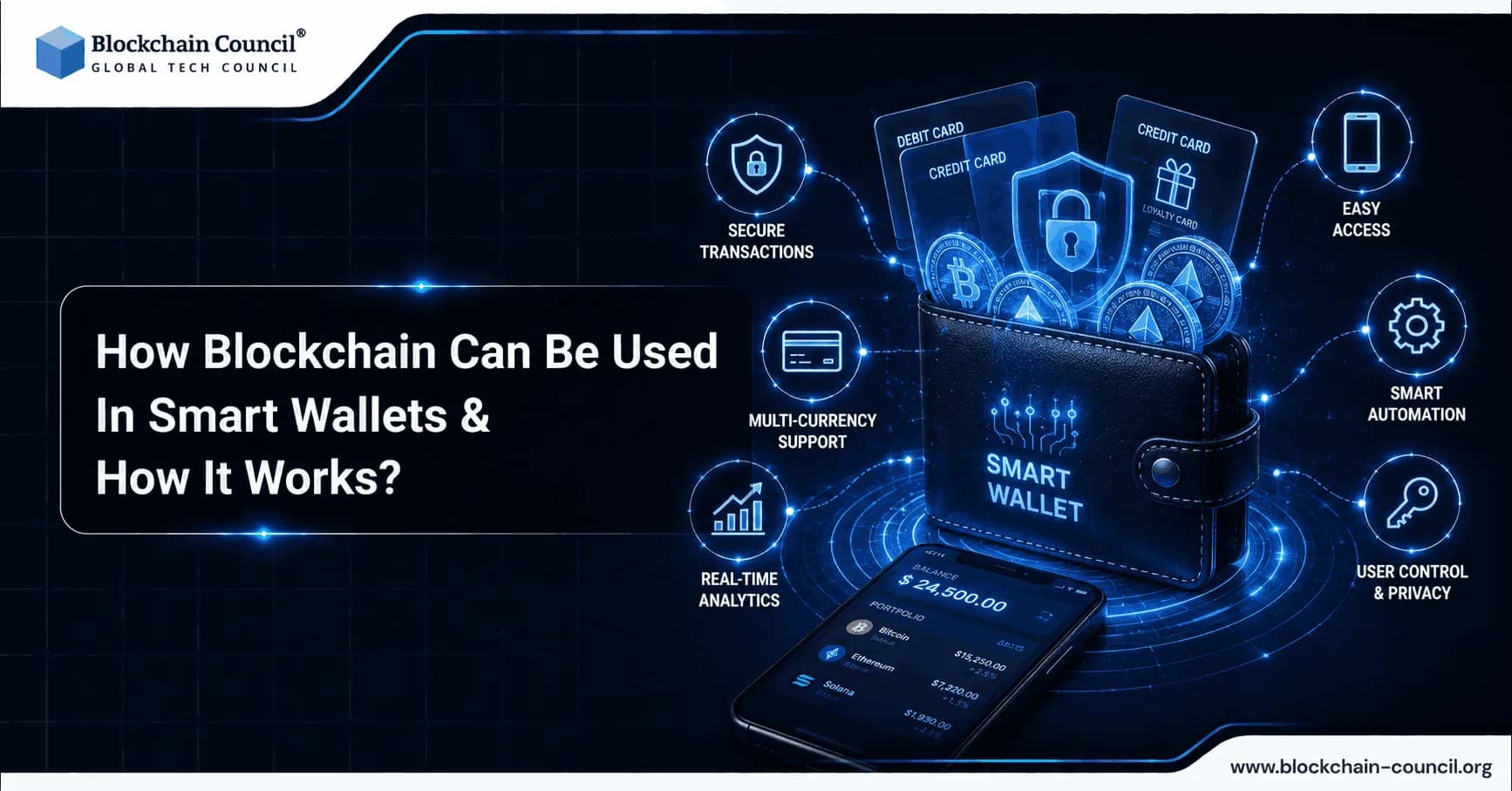
Managing digital assets used to mean juggling private keys written on paper, clunky browser extensions, and constant fear of a single mistake wiping out your funds. Smart wallets are changing that by combining blockchain's security with programmable, user-friendly features that make managing crypto and digital assets feel far less intimidating. As adoption grows, more finance and tech professionals are pursuing a Certified Blockchain Expert credential to understand exactly how these wallets work under the hood and where the technology is headed next.
In this article, we'll break down what smart wallets actually are, how blockchain powers them step by step, the benefits they bring over traditional wallets, and the challenges still standing in the way of mainstream adoption.

What Are Smart Wallets, and How Does Blockchain Power Them?
A smart wallet is a blockchain-based digital wallet that uses programmable smart contracts instead of relying solely on a single private key to control access to funds. Traditional crypto wallets (often called externally owned accounts, or EOAs) depend entirely on one private key lose it, and your funds are gone permanently. Smart wallets solve this by using smart contract logic to add features like recovery options, spending limits, and multi-signature approval, all enforced directly on the blockchain.
Because these rules live on-chain rather than in a centralized company's database, they inherit blockchain's core properties: transparency, security, and resistance to tampering. No single party can quietly change a wallet's rules without triggering the conditions coded into the contract itself.
This blend of financial functionality and technical infrastructure is exactly why many professionals working with digital assets are now pursuing a Certified Blockchain & Finance Professional qualification it builds the financial context needed to understand how smart wallets fit into broader digital asset management, alongside the technical fundamentals of how they're built.
Quick Answer (for readers in a hurry)
Smart wallets use blockchain-based smart contracts to give users programmable control over their digital assets enabling features like social recovery, spending limits, multi-signature approvals, and automated transactions all without relying on a single private key or a centralized custodian.
How Blockchain Works in Smart Wallets (Step-by-Step)
Here's how a typical blockchain-powered smart wallet functions from setup to daily use:
1. Wallet Deployment via Smart Contract
Instead of generating a simple key pair, a smart wallet deploys a smart contract on the blockchain that defines the rules for how the wallet operates who can approve transactions, spending thresholds, and recovery conditions.
2. Account Abstraction
Many modern smart wallets use a concept called account abstraction, which separates the wallet's logic from a single private key. This allows the wallet to support features like biometric login, email-based recovery, or approval from trusted contacts, instead of forcing users to memorize a 12-word seed phrase.
3. Multi-Signature and Social Recovery
Users can configure their wallet to require approval from multiple parties before a transaction executes, or set up trusted "guardians" who can help recover access if the primary device is lost all enforced automatically by the smart contract's code.
Building this kind of infrastructure secure smart contracts, account abstraction logic, and integrations with blockchain networks requires genuine technical depth. Developers working on wallet infrastructure often pursue a formal Tech Certification to validate their skills in smart contract development and blockchain security before shipping wallet products that hold real user funds.
4. Transaction Rules and Spending Limits
Smart wallets can enforce programmable rules, such as daily spending caps or automatic alerts for unusually large transactions, adding a layer of protection that traditional wallets simply can't offer.
5. Gas Fee Abstraction
Some smart wallets allow transaction fees to be paid in tokens other than the network's native currency, or even sponsored entirely by an app, removing a common friction point for new users unfamiliar with gas fees.
6. On-Chain Execution and Verification
Every transaction, rule change, or recovery action is recorded directly on the blockchain, creating a permanent, verifiable history that can't be altered after the fact giving users and auditors a clear record of wallet activity.
Key Benefits of Blockchain-Based Smart Wallets
No single point of failure: Losing one device or key doesn't mean losing access to funds.
Programmable security: Spending limits and approval rules reduce the risk of theft or error.
Simplified recovery: Social recovery and guardian systems replace risky seed-phrase backups.
Better user experience: Features like gas fee abstraction make crypto more approachable for newcomers.
Full transparency: Every action is verifiable on-chain, with no hidden intermediary control.
Real-World Use Cases
Several wallet providers have already brought smart wallet technology to market. Argent was among the first to popularize social recovery wallets built on account abstraction. Safe (formerly Gnosis Safe) is widely used for multi-signature wallets that require multiple approvals before executing a transaction, commonly used by DAOs and businesses managing shared treasuries. Coinbase's Smart Wallet product has also pushed account abstraction into mainstream consumer use by removing seed phrases entirely in favor of passkey-based login.
Challenges to Consider
Smart wallets still face real hurdles: higher gas costs compared to simple wallets due to more complex smart contract logic, fragmented standards across different blockchain networks, and the need for broader user education, since the concepts of guardians and account abstraction are unfamiliar to most newcomers. Security audits are also critical, since a flaw in a smart wallet's contract code could expose user funds in ways a simple key-based wallet wouldn't.
Final Thoughts
Smart wallets represent one of the clearest examples of blockchain technology being used to solve a real, everyday problem: making digital asset management safer and more intuitive without sacrificing the security and transparency that make blockchain valuable in the first place.
As adoption grows, the companies building and promoting these wallets need more than just strong engineering they need to clearly communicate features like account abstraction and social recovery to everyday users. That's why product and marketing teams in this space are increasingly pairing their expertise with a Marketing Certification to translate complex wallet technology into messaging that actually resonates with mainstream users.
Smart wallets aren't just a technical upgrade they're a meaningful step toward making blockchain-based finance accessible to everyone, not just crypto-native users.
FAQs
1. What is a smart wallet in blockchain?
A smart wallet is a blockchain wallet that uses smart contracts to provide advanced features beyond simply storing and transferring cryptocurrencies. Depending on the blockchain and wallet design, smart wallets can support account recovery, transaction automation, spending limits, multi-signature approvals, gas fee flexibility, and programmable security controls.
2. How does a smart wallet work?
A smart wallet operates through a smart contract deployed on a blockchain. Instead of relying solely on a single private key, the smart contract defines rules for managing digital assets, approving transactions, recovering accounts, and interacting with decentralized applications (dApps).
3. How is a smart wallet different from a traditional crypto wallet?
Traditional wallets typically use a single private key to authorize transactions. Smart wallets introduce programmable features such as social recovery, transaction batching, automated payments, spending policies, multi-factor authorization, and customizable security settings through smart contracts.
4. Why are smart wallets important?
Smart wallets improve the usability of blockchain by making digital asset management more secure and user-friendly. They reduce reliance on a single recovery phrase and introduce features that help both beginners and experienced users manage cryptocurrencies more safely.
5. What is Account Abstraction?
Account Abstraction is a blockchain concept that allows user accounts to function like programmable smart contracts. It enables advanced wallet capabilities such as flexible authentication, sponsored transaction fees, automated security policies, and customized transaction logic on supported networks.
6. What is social recovery in a smart wallet?
Social recovery allows trusted individuals or designated recovery methods to help restore wallet access if the owner loses their authentication credentials. This reduces the risk of permanently losing access to digital assets because of a lost recovery phrase or private key.
7. Can smart wallets improve blockchain security?
Yes. Smart wallets can enhance security by supporting multi-signature approvals, biometric authentication through connected devices, transaction limits, recovery mechanisms, trusted device management, and programmable access controls. Users still need to follow good security practices to protect their accounts.
8. What are multi-signature smart wallets?
Multi-signature (multisig) wallets require approval from multiple authorized parties before a transaction can be executed. This additional security is commonly used by businesses, DAOs, investment funds, and organizations managing shared digital assets.
9. Can smart wallets automate transactions?
Yes. Smart wallets can automate recurring payments, token swaps, subscription payments, staking operations, payroll distributions, and other predefined actions through programmable smart contracts, subject to user authorization and blockchain capabilities.
10. How do smart wallets work with decentralized applications (dApps)?
Smart wallets connect directly to decentralized applications, allowing users to trade tokens, stake assets, participate in decentralized finance (DeFi), purchase NFTs, vote in decentralized autonomous organizations (DAOs), and interact with Web3 services while maintaining control of their assets.
11. Can smart wallets reduce gas fees?
Some smart wallets support transaction batching, gas optimization, or gas sponsorship models available on certain blockchain networks. These features can improve efficiency, although transaction costs still depend on network conditions and the underlying blockchain.
12. Which blockchain networks support smart wallets?
Smart wallets are available on several smart contract platforms, including Ethereum, Polygon, Arbitrum, Optimism, Base, BNB Smart Chain, Avalanche, zkSync, Starknet, and other blockchain ecosystems that support programmable smart contracts.
13. What are the advantages of smart wallets?
Benefits include improved security, account recovery options, programmable automation, flexible authentication, better user experience, seamless dApp integration, multi-signature support, spending controls, and easier onboarding for new blockchain users.
14. What are the challenges of smart wallets?
Challenges include smart contract vulnerabilities, compatibility limitations, evolving technical standards, network fees, software complexity, user education, and the need for regular security audits. Bugs in wallet contracts can also pose risks if not properly reviewed.
15. Which industries use smart wallets?
Smart wallets are used in decentralized finance (DeFi), NFT marketplaces, blockchain gaming, digital identity systems, enterprise payments, creator economies, decentralized autonomous organizations (DAOs), cross-border payments, and tokenized asset management.
16. What common mistakes should users avoid?
Common mistakes include failing to verify smart wallet contracts, connecting wallets to untrusted dApps, approving unlimited token permissions unnecessarily, neglecting software updates, ignoring security notifications, sharing recovery credentials, and falling for phishing attacks.
17. What are best practices for using smart wallets?
Best practices include choosing reputable wallet providers, enabling two-factor authentication (2FA) where supported, reviewing smart contract permissions regularly, protecting recovery information securely, limiting unnecessary token approvals, keeping wallet software updated, and using hardware wallets for storing significant digital assets.
18. How do smart wallets fit into the Web3 ecosystem?
Smart wallets are a key component of Web3 because they simplify access to decentralized applications while supporting decentralized identity (DID), DeFi, NFTs, DAO governance, blockchain gaming, tokenized assets, and digital ownership through programmable account management.
19. What trends are shaping smart wallets in 2025-2026?
Major trends include Account Abstraction adoption, AI-powered wallet assistants, biometric authentication, passkey integration, gasless transactions, decentralized identity (DID), cross-chain wallet interoperability, embedded wallets, MPC (Multi-Party Computation) wallets, and enhanced wallet security through zero-knowledge proofs (ZKPs).
20. What is the future of smart wallets?
Smart wallets are expected to become the standard interface for interacting with blockchain ecosystems by making digital asset management more secure, intuitive, and accessible. As Web3 adoption grows, smart wallets will likely integrate advanced authentication, AI-assisted security, seamless cross-chain functionality, and simplified onboarding for mainstream users. The goal is to make blockchain interactions feel as effortless as modern online banking while preserving the decentralization and user control that make blockchain unique. After all, expecting everyone to memorize a 24-word recovery phrase forever was an ambitious experiment in human memory that was never going to end well.
Related Articles
View All
Blockchain
The Future of Blockchain Wallets: Smart Wallets, Account Abstraction, and Web3 Identity
Explore the future of blockchain wallets through smart wallets, account abstraction, gas abstraction, recovery, and Web3 identity.

Blockchain
Smart Contracts & dApps: How Blockchain Becomes Programmable
Learn how smart contracts and dApps make blockchain programmable, from Ethereum and tokens to DeFi, NFTs, real use cases, benefits, and key risks.

Blockchain
Agile for Blockchain Teams: Managing Sprints, Smart Contracts, and Decentralized Roadmaps
Learn how agile for blockchain teams works when sprints, smart contracts, audits, governance, and decentralized roadmaps are planned around risk.
Trending Articles
AWS Career Roadmap
A step-by-step guide to building a successful career in Amazon Web Services cloud computing.

Top 5 DeFi Platforms
Explore the leading decentralized finance platforms and what makes each one unique in the evolving DeFi landscape.
What is AWS? A Beginner's Guide to Cloud Computing
Everything you need to know about Amazon Web Services, cloud computing fundamentals, and career opportunities.