

Why Land Art As NFT Can Be A Rocket Fuel for Digital Land Ownership
 Suyash Raizada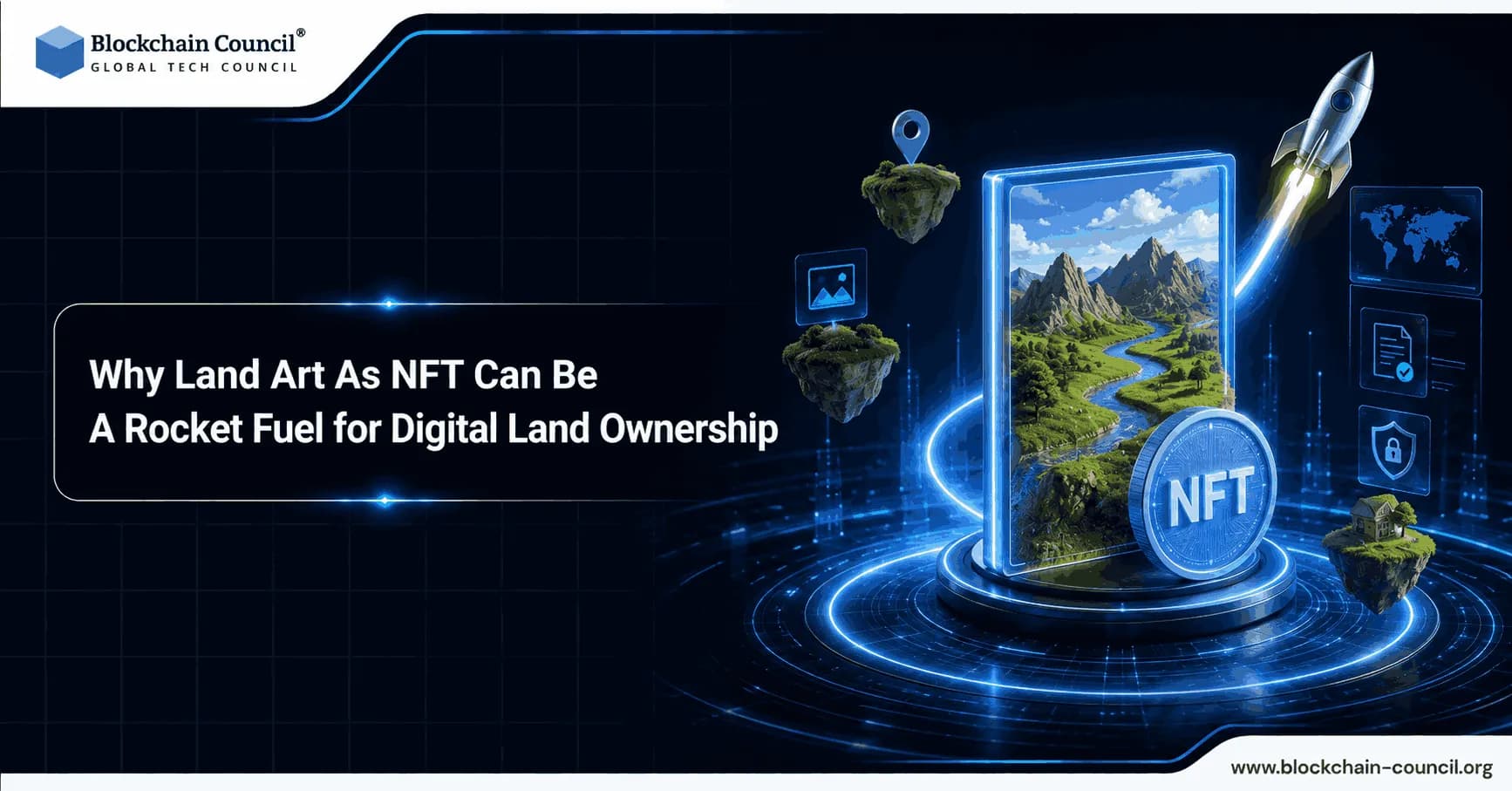
Since times immemorial, art has always been an integral part of human existence on this planet. Be it the million-year-old cave paintings lurking in some corner of a mountainous region or the giant, colossal structures like that of the Pyramids or the Stonehenge, that have become associated with our culture and identity, it is true that mankind has always sought for ways in which they could express themselves through the different creative ways available at their disposal.
The desire to express oneself is extremely powerful even at this point in time. We can see how people across the world are pouring over the social media platforms willing to express themselves as best as they can and now there are so many tools and platforms present just for that purpose. Everyone in the present-day world is willing to stand out amidst the maddening chaos on social media and connect with others in a way that is more meaningful to them.

One of the other ways in which mankind wants to make a mark in this world and leave behind a legacy of their own is to possess ownership of land and real estate. Land is one of the scarcest of items that people over centuries have always coveted and tried expressing themselves through the intrinsic value it upholds. This is quite similar in the case of digital art, which is undoubtedly an invaluable way of expressing oneself, although it can be replicated and shared any number of times as anyone would wish to.
However, most of the digital arts that we see online are mostly not owned by their creators. That is because they mostly exist on centralized servers which are primarily owned by governments or private corporations. This is what propels the necessity for decentralized applications. Decentralized applications are extremely beneficial as they provide a way for people to literally own their data and decide what to do with it. Decentralization upholds the true spirit of ownership.
And many believe that it is only through the use of non-fungible tokens or NFTs that will allow us to take control of the ownership of our information and data from the corporate giants.
NFT Land Art
There are significant reasons why NFT has emerged as a phenomenon in the world of art over the span of the last couple of years. Non Fungible Tokens or NFTs are basically uniquely created crypto assets that exist beyond the purview of the traditional systems of finance, which also means that they do not depend on the central banks or institutions to determine their values. Instead, they are operational on their individual blockchain networks.
Similarly, a new platform has risen which is named Next Earth, which is basically a detailed replica of this planet but only on a digital platform and it is completely based on blockchain. Users will be able to buy virtual land on this platform and will be able to create Pixel art which can be unique and quite valuable in the long run.
Why collect land art?
There can be multiple reasons for acquiring an asset other than simply appreciating that art. In the same way, in which investors monitor, observe and analyze data, digital art collectors also can go through data analysis to figure out what makes a particular art more valuable than the other and apply specific strategies to maintain some aesthetic value to their overall collection.
With emerging platforms such as Earth 2, Next Earth and Decentraland, it gives the users a chance to purchase digital land. It is important to mention that all the land does not have equal valuation. Just like in real life, the value of these digital lands varies according to the ecosystem surrounding it. For instance, while the platform named Earth 2 offers land which is centrally owned by the company, other platforms such as the Next Earth is a platform which is completely decentralized, which means that the ownership of the land belongs to the owner only. There are no third parties involved.
The Next Earth platform even allows users to monetize their artistic expressions through creative displays. Through this initiative, the platform is pioneering a new paradigm for the digital art world, which is not only about purchasing tiles, but an opportunity to create a world of one’s own.
Finishing thoughts: How to build your own NFT based projects?
Learning Blockchain, and NFTs are easy now, all thanks to reputed online courses and training sessions. Blockchain Council is one such organization that offers online training and certification programs to aspiring trainees to render them desired competencies so that they have a successful career in the Blockchain space. Keeping the rising demands of blockchain professionals in mind, Blockchain Council certifications are diversified to meet each aspirant’s discrete needs. They have a host of training and courses on NFTs that provide world-class knowledge and support.
To get instant updates about Blockchain Technology and to learn more about online Blockchain Certifications, check out Blockchain Council.
FAQs
1. What is Land Art as an NFT?
Land Art as an NFT is a unique digital artwork linked to virtual land on a blockchain. It combines digital ownership with creative expression, allowing users to buy, sell, collect, and showcase artwork associated with metaverse properties.
2. What is digital land ownership?
Digital land ownership refers to owning virtual parcels of land represented by NFTs on blockchain networks. Owners can build experiences, display digital assets, host events, or monetize their virtual property.
3. How do NFTs represent digital land?
Digital land is tokenized as a Non Fungible Token that records ownership on a blockchain. Each NFT contains unique metadata identifying a specific virtual parcel that cannot be duplicated.
4. Why is Land Art important in the metaverse?
Land Art enhances the value and uniqueness of virtual properties by transforming digital land into interactive spaces for creativity, branding, gaming, commerce, and community engagement.
5. How does blockchain secure digital land ownership?
Blockchain records every land transaction on an immutable ledger, ensuring transparent ownership, secure transfers, and verifiable authenticity without relying on centralized authorities.
6. Can digital land NFTs be sold or transferred?
Yes. Owners can sell, trade, lease, or transfer digital land NFTs through supported NFT marketplaces and metaverse platforms.
7. What is the difference between digital land and physical real estate?
Physical real estate exists in the real world, while digital land exists within virtual environments. Both can be owned, developed, and transferred, but digital land is recorded on blockchain networks.
8. Which metaverse platforms support digital land NFTs?
Popular platforms include:
Decentraland
The Sandbox
Otherside
Somnium Space
Voxels
Spatial
9. How does Land Art increase the value of virtual land?
Unique artwork, interactive experiences, branded environments, and exclusive digital assets can attract visitors, collectors, and businesses, increasing the perceived value of virtual land.
10. Can artists monetize Land Art NFTs?
Yes. Artists can earn revenue by selling original NFT artwork, licensing digital creations, collecting royalties from secondary sales, and collaborating with brands in virtual worlds.
11. What role do smart contracts play in Land Art NFTs?
Smart contracts automate ownership transfers, royalty payments, marketplace transactions, and creator compensation while maintaining transparency and security.
12. Are Land Art NFTs unique?
Yes. Each NFT is unique and contains blockchain verified ownership information, making it distinguishable from every other digital asset.
13. Can businesses use digital land NFTs?
Yes. Businesses use digital land for virtual storefronts, product launches, customer engagement, advertising, conferences, exhibitions, and branded experiences.
14. What are the benefits of owning digital land?
Benefits include:
Verified ownership
Investment opportunities
Creative freedom
Brand visibility
Virtual commerce
Community engagement
NFT integration
Passive income potential
15. How do creators design Land Art?
Creators use 3D modeling software, digital design tools, game engines, and NFT platforms to build immersive virtual environments and interactive experiences.
16. What is metaverse real estate?
Metaverse real estate consists of blockchain based virtual land that individuals and organizations can own, develop, rent, or monetize within digital worlds.
17. Can Land Art NFTs generate income?
Yes. Owners may generate revenue through virtual events, advertising, NFT exhibitions, digital storefronts, leasing virtual land, sponsorships, and premium experiences.
18. What is tokenization in digital land ownership?
Tokenization converts ownership rights of virtual land into blockchain based NFTs that can be securely bought, sold, and transferred.
19. How does scarcity affect Land Art NFTs?
Most metaverse platforms issue a limited number of land parcels. This scarcity can increase demand and influence the market value of both digital land and associated artwork.
20. What industries are adopting digital land ownership?
Industries exploring digital land include:
Gaming
Fashion
Entertainment
Education
Retail
Real estate
Art
Events
Marketing
21. Are Land Art NFTs environmentally sustainable?
Many NFT projects now operate on energy efficient Proof of Stake blockchains, significantly reducing energy consumption compared to earlier blockchain networks.
22. What risks are associated with Land Art NFTs?
Potential risks include:
Market volatility
Platform adoption uncertainty
Regulatory changes
Cybersecurity threats
Wallet security risks
Limited liquidity
23. How can investors evaluate digital land NFTs?
Investors should consider platform popularity, location within the virtual world, creator reputation, community growth, utility, trading volume, and long term ecosystem development.
24. What trends are shaping digital land ownership?
Emerging trends include AI generated virtual worlds, interoperable metaverses, tokenized real world assets, immersive commerce, virtual tourism, digital identity, and enterprise adoption.
25. How is Land Art changing the NFT ecosystem?
Land Art expands NFTs beyond collectibles by combining artistic creativity with interactive virtual spaces, digital ownership, social experiences, and commercial opportunities.
26. Why could Land Art NFTs become a major driver of digital land ownership?
Land Art NFTs combine blockchain verified ownership, creative expression, metaverse development, and digital commerce into a single ecosystem. As virtual worlds continue to grow, Land Art has the potential to increase engagement, create new revenue opportunities, strengthen digital property rights, and accelerate the adoption of blockchain based digital land ownership.
Related Articles
View All
NFT
NFTs and Digital Art in 2026: From Hype to Utility and Long-Term Collecting
NFTs and Digital Art have shifted from 2021 hype to a utility-focused market in 2026, with stronger provenance, curated galleries, and rising collector adoption.

NFT
NFT Art: How the Future of NFTs will Empower Artists
Table of Contents Introduction NFTs, or non-fungible tokens, are digital assets that allow the ownership and provenance of digital art and other online media to be

NFT
Coca Cola gets the taste of the NFT trend in charity auction for digital assets
Coca-Cola is about to host an auction for one-of-a-kind, special edition virtual loot boxes of Non Fungible Tokens or NFTs, and for that they have teamed up with the 3D creators at Tafi. The profits that will be generated from the auction will be donated to the Special Olympics, an event that is…
Trending Articles

Top 5 DeFi Platforms
Explore the leading decentralized finance platforms and what makes each one unique in the evolving DeFi landscape.
How Blockchain Secures AI Data
Understand how blockchain technology is being applied to protect the integrity and security of AI training data.
What is AWS? A Beginner's Guide to Cloud Computing
Everything you need to know about Amazon Web Services, cloud computing fundamentals, and career opportunities.