

Tech Giants Pledge to Reduce AI Risks in “Voluntary Commitment” to Biden Administration. Here’s all you need to know!

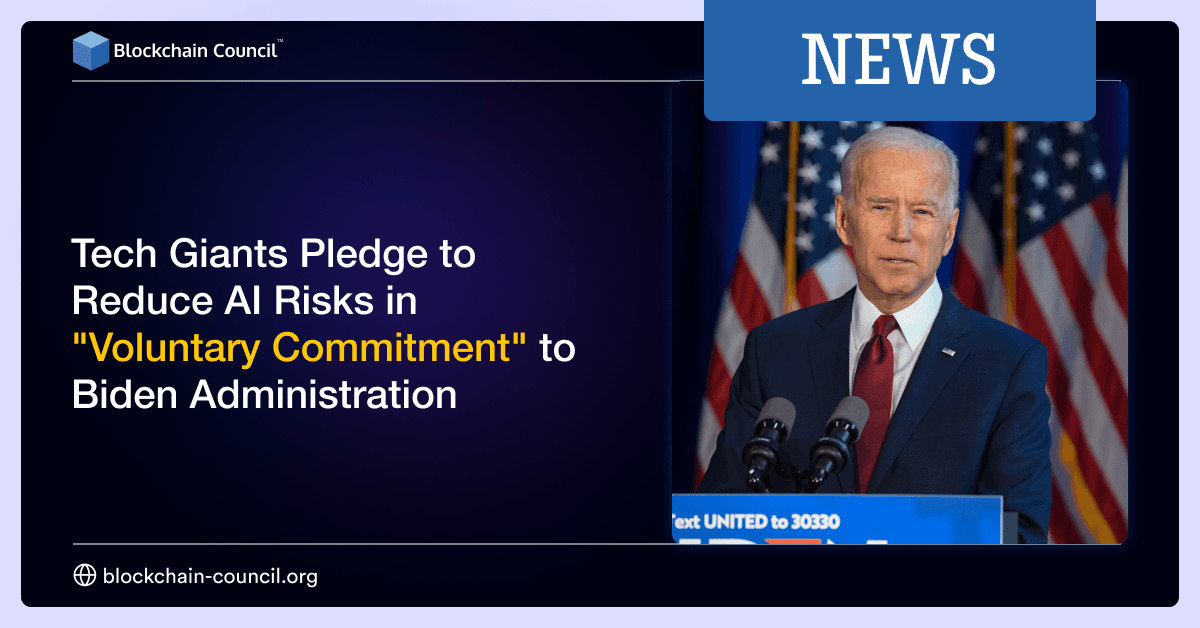
In a significant move to address the potential risks associated with artificial intelligence (AI), seven tech giants have voluntarily pledged to prioritize safety, security, and transparency in their AI technologies. The companies, including Google, Microsoft, Meta, Amazon, OpenAI, Anthropic, and Inflection, made this “voluntary commitment” during a meeting with US President Joe Biden on July 21. The agreement aims to ensure that AI innovation does not come at the expense of public rights and safety and to build a foundation for responsible AI development. The companies agreed to carry out extensive internal and external testing, protect against cybersecurity threats, and promote trust in AI-generated content.
The rapid development of AI technologies, including generative AI models like OpenAI’s ChatGPT, has sparked a wave of innovation in various industries. However, this surge in AI applications has also raised concerns about potential risks, such as misinformation, deepening biases, and cybercrime. As AI tools become more accessible and widespread, the need for responsible AI governance has become paramount.

Read more: Blockchain Development with AI
The voluntary commitment made by the tech giants is a milestone in addressing the potential downsides of AI and promoting responsible AI development. The key commitments include:
- Safety Testing: The companies pledged to test the safety and capabilities of their AI systems and subject them to external assessments. This ensures that the AI models undergo rigorous scrutiny to identify any potential risks, including biased or discriminatory outputs and cybersecurity flaws.
- Security Safeguards: The companies are committed to safeguarding their AI products against cyber and insider threats. They will also share best practices and standards to prevent misuse, reduce risks to society, and protect national security.
- Promoting Trust: To build trust in AI-generated content, the companies will develop watermarking systems that make it easy for users to identify audio and imagery created by AI. This step is crucial in addressing concerns about the spread of deepfake content and misinformation.
- Societal Impact: The companies recognized their responsibility to address potential societal risks caused by AI. They committed to researching possible harms and leveraging AI to tackle global challenges like climate change and cancer.
Nick Clegg, Meta’s president of global affairs, said, “As we develop new AI models, tech companies should be transparent about how their systems work and collaborate closely across industry, government, academia, and civil society.”
The tech giants responded positively to the voluntary commitments. Meta, which recently launched the Llama 2 AI language model, expressed its commitment to transparency and collaboration across various sectors. Microsoft, a partner on Meta’s Llama 2 project, stated that the agreement would lay the foundation for ensuring AI’s promise stays ahead of its risks. Amazon, a leading developer and deployer of AI tools and services, welcomed the voluntary commitments and vowed to protect consumers while driving innovation.
Read more: 7 Tech Giants Join Forces with US President Biden to Implement AI Safeguarding Measures
OpenAI, known for its ChatGPT, emphasized its ongoing collaboration with governments, civil society organizations, and other stakeholders to advance AI governance. Similarly, Anthropic acknowledged the importance of AI safety and announced plans to focus on cybersecurity, red teaming, and responsible scaling. Inflection AI’s CEO stressed the need for tangible progress in AI safety and affirmed that safety is at the heart of their mission.
Microsoft president Brad Smith said, “Guided by the enduring principles of safety, security, and trust, the voluntary commitments address the risks presented by advanced AI models and promote the adoption of specific practices—such as red-team testing and the publication of transparency reports—that will propel the whole ecosystem forward.”
Google, a pioneer in AI, considered the agreement a milestone in maximizing AI’s benefits and minimizing its risks. The commitment aligns with efforts by the G7, the OECD, and national governments to establish responsible AI practices.
The Biden-Harris administration is playing a pivotal role in shaping responsible AI development. Beyond the voluntary commitments, the administration is working on an executive order and seeking bipartisan legislation to ensure AI safety. The US Office of Management and Budget will release guidelines for federal agencies using AI systems, further emphasizing accountability and oversight.
While the voluntary commitment is a significant step towards responsible AI development, experts stress the importance of further action, including legislation. Congress has been exploring various approaches to AI regulation, and some lawmakers believe that a dedicated agency may be needed to oversee AI technologies comprehensively. The involvement of the FTC and other agencies in regulating AI products is also crucial to ensure compliance and accountability.
The voluntary commitment made by major tech giants to prioritize safety, security, and transparency in AI development marks a critical milestone in addressing the risks associated with AI technologies. As the AI landscape continues to evolve, it is evident that responsible AI governance is essential to harness AI’s potential while safeguarding public rights and safety. The Biden-Harris administration’s efforts, alongside collaboration between government, industry, and civil society, are crucial in creating a future where AI serves society responsibly and ethically. By proactively addressing the challenges of AI, we can build a world where innovation and progress go hand in hand with the well-being of all individuals.
Read more: The Ultimate Cryptocurrency Guide
Related Articles
View All
News
Japan Crypto Reclassification as Financial Assets: What Investors and Exchanges Need to Know
Japan crypto reclassification moves digital assets under FIEA, with investor protections, planned 20 percent tax, ETF potential, and tougher exchange rules.

News
Robinhood AI-Powered Crypto Trading: What Retail Investors Need to Know
Robinhood AI-powered crypto trading could bring agentic automation to retail crypto, changing execution, risk controls, and market behavior.

News
AI-Powered Crypto Trading Assistants: Benefits, Risks, and Adoption Trends
AI-powered crypto trading assistants are reshaping crypto markets. Learn their benefits, risks, exchange adoption trends, and how to evaluate them safely.
Trending Articles
The Role of Blockchain in Ethical AI Development
How blockchain technology is being used to promote transparency and accountability in artificial intelligence systems.
AWS Career Roadmap
A step-by-step guide to building a successful career in Amazon Web Services cloud computing.
How Blockchain Secures AI Data
Understand how blockchain technology is being applied to protect the integrity and security of AI training data.