

What is GeoCryptocurrency?
 Constantinos Papantoniou
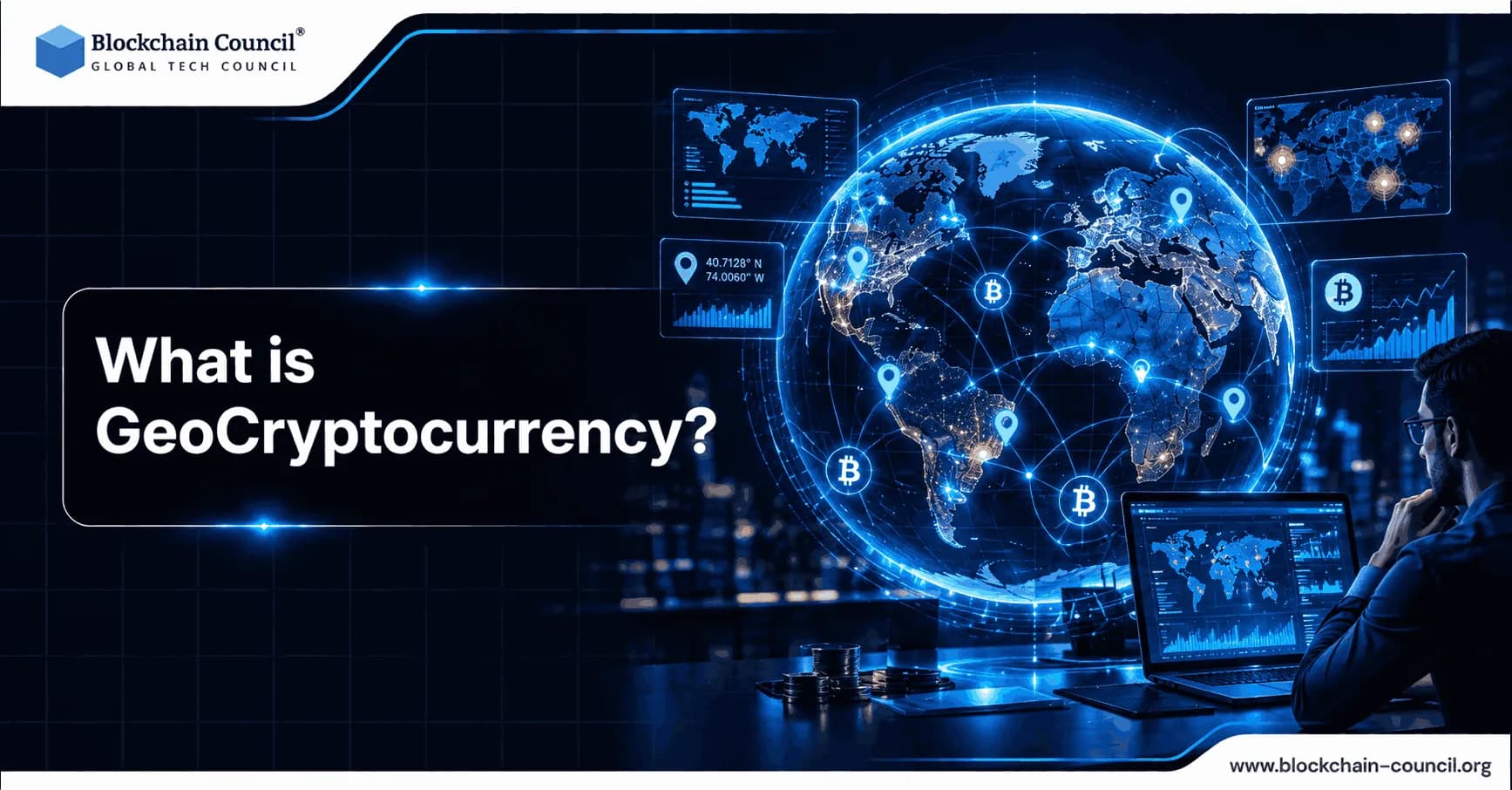
Cryptocurrency exists on a digital ledger, but every transaction, every node, and every wallet interaction has an origin somewhere in the physical world. This overlap between digital finance and physical geography has given rise to a fascinating and often misunderstood field called GeoCryptocurrency. In simple terms, GeoCryptocurrency is the practice of studying cryptocurrency activity through a geographic lens, mapping where transactions happen, where mining nodes are located, and how buying and selling behavior changes from region to region. This concept blends blockchain data with Geographic Information System technology, giving analysts, businesses, and governments a way to visualize crypto activity on a map instead of just reading raw numbers on a spreadsheet. Anyone who wants to understand cryptocurrency at this deeper analytical level can strengthen their foundation with a Certified Cryptocurrency Expert program, which covers how digital assets move, why they move, and what patterns matter most.
This guide explains what GeoCryptocurrency actually means, how it works, why it matters, and how beginners and professionals alike can understand this growing intersection of blockchain and geography.

Understanding the Core Concept of GeoCryptocurrency
Before going deeper into how GeoCryptocurrency works in practice, it helps to break the term down into its two halves. The word combines "geo," meaning location or earth, with "cryptocurrency," meaning digital money secured through cryptography. Put together, GeoCryptocurrency refers to the science of studying the geographic trends and behaviors of cryptocurrency buyers and sellers based on blockchain nodes, transactions, and geographic locations mined from blockchain data. For those who want to build a strong technical understanding of the blockchain systems that generate this data in the first place, a Certified Blockchain Expert program is an excellent place to start, since it explains how blockchain networks record and distribute data across the globe.
Why Location Matters in a Digital System
At first glance, it might seem strange that location matters for a technology often praised for being borderless. However, every node in a blockchain network runs on a physical computer somewhere in the world, every transaction is initiated by a person or organization located somewhere specific, and every wallet address, while pseudonymous, can often be loosely associated with a broader region through network analysis. This means blockchain, despite its decentralized and global nature, still leaves behind a trail of geographic clues that can be studied, mapped, and interpreted.
The Role of Geographic Information Systems
Geographic Information System technology, commonly called GIS, is the main tool used to turn raw blockchain data into meaningful geographic insight. GIS software allows analysts to take numerical and location-based data and transform it into visual maps showing points, lines, and polygons. In the context of GeoCryptocurrency, this might mean plotting where Bitcoin mining nodes are concentrated, visualizing which countries show the highest volume of cryptocurrency trading activity, or mapping how the flow of digital assets moves between different regions over time.
How GeoCryptocurrency Analysis Actually Works
Understanding the mechanics behind GeoCryptocurrency helps make the concept much more concrete for beginners who may only be familiar with buying and holding digital coins.
Collecting Blockchain and Node Data
The first step in any GeoCryptocurrency analysis involves gathering raw data directly from the blockchain itself. This includes information about transaction volume, wallet activity, and the location of network nodes, which are the individual computers that help validate and record transactions across a blockchain network. Since this data is publicly available on most major blockchains, it becomes a rich and largely untapped resource for geographic study.
Applying Spatial Statistics
Once data is collected, analysts use spatial statistics, a branch of data science focused specifically on patterns related to location, to identify trends that would otherwise be invisible in a simple spreadsheet. For example, spatial statistics can reveal whether cryptocurrency mining activity tends to cluster in regions with cheaper electricity, or whether trading volume spikes in certain countries during specific economic events.
Visualizing Data Through Maps
The final and most powerful step is turning this analyzed data into visual maps. Rather than staring at endless rows of numbers, decision-makers can look at a color-coded map and immediately understand where cryptocurrency activity is concentrated, where it is growing, and where it is declining. This kind of visualization makes complex blockchain data accessible even to people without a deep technical background, since a well-designed map often communicates patterns far more clearly than raw statistics ever could.
Why GeoCryptocurrency Matters for Different Groups
The value of studying cryptocurrency through a geographic lens extends across several very different audiences, each with their own reasons for caring about where crypto activity happens.
For Businesses and Investors
Companies operating in the cryptocurrency space, including exchanges, wallet providers, and blockchain-based startups, can use GeoCryptocurrency analysis to understand where their users are located, which regions show the fastest growth, and where new market opportunities might exist. Investors can also use geographic trends to better understand adoption patterns, since a cryptocurrency gaining rapid traction in a specific region might signal an emerging opportunity or an early sign of shifting market sentiment.
For Governments and Regulators
Government agencies have a strong interest in understanding cryptocurrency activity within their borders, both for economic policy reasons and for regulatory oversight. GeoCryptocurrency analysis can help regulators identify unusual concentrations of mining activity, monitor cross-border transaction flows, and better understand how digital asset adoption is spreading across different regions of a country. This kind of geographic insight supports more informed policy decisions rather than relying purely on anecdotal reports.
For Researchers and Data Scientists
Academic researchers and blockchain data scientists use GeoCryptocurrency methods to study broader questions about how digital currencies spread, how mining activity relates to energy availability, and how cryptocurrency adoption correlates with factors like internet access, economic development, or regulatory environment. This research contributes to a much deeper understanding of how blockchain technology interacts with the physical world rather than existing purely as an abstract digital system.
Real-World Applications of GeoCryptocurrency
Several practical use cases demonstrate how this concept moves beyond theory into genuinely useful analysis. Bitcoin was the first cryptocurrency widely used for this kind of geographic study, largely because it has the longest transaction history and the most extensively studied node network of any digital currency. Researchers have mapped Bitcoin mining activity to show how it has shifted between regions over time, often in response to changes in electricity costs or new government regulations. Similar mapping techniques have also started to be applied to other major cryptocurrencies, including Ethereum and Litecoin, allowing for geographic comparisons between different blockchain networks and how their respective communities are distributed around the world.
Beyond mining and node distribution, GeoCryptocurrency principles have also been applied to broader blockchain-based verification challenges. For example, similar geographic and location-based verification concepts are relevant to real estate transactions recorded on a blockchain, where confirming the true, verifiable ownership and location of a property matters just as much as confirming a digital wallet's transaction history.
Challenges Involved in GeoCryptocurrency Analysis
While the concept offers real value, there are meaningful challenges that make this type of analysis more complicated than it might first appear.
Pseudonymous Wallets Complicate Location Tracking
Cryptocurrency wallets are typically pseudonymous, meaning they are not directly tied to a verified real-world identity or address in the way a bank account would be. This makes it genuinely difficult to determine with full certainty exactly where a specific transaction originated, since a wallet address alone does not reveal a precise physical location without additional data or analysis techniques.
Data Privacy Concerns
Because GeoCryptocurrency analysis often involves inferring location patterns from blockchain activity, there are legitimate privacy concerns about how far this kind of tracking should go. Responsible analysis typically focuses on broad regional or national trends rather than attempting to pinpoint individual users, but the line between useful aggregate insight and invasive individual tracking requires careful and thoughtful handling.
Data Accuracy and Node Distribution Bias
Not all blockchain nodes are evenly distributed, and some regions may have significantly more visible network infrastructure than others simply due to internet infrastructure quality or local regulations. This can create bias in geographic analysis, where regions with better-documented node networks appear more active than they truly are relative to regions with less visible infrastructure but genuinely high levels of cryptocurrency use.
The cryptocurrency industry requires professionals with knowledge of digital assets, blockchain infrastructure, security, and market operations. As organisations recruit for these roles, assessing relevant skills can help them make better-informed hiring decisions. HireValid can be explored by employers seeking a more structured approach to candidate evaluation.
Skills Needed to Work in GeoCryptocurrency
Because this field sits at the intersection of blockchain technology, data science, and geography, professionals interested in this space benefit from a fairly broad and interdisciplinary skill set. Understanding how blockchain networks function, how transactions are recorded, and how nodes communicate is essential, along with basic familiarity with GIS software and spatial statistics methods. A well-rounded Tech Certification can help beginners and professionals build broader technical knowledge across data analysis, emerging technology, and digital systems, all of which support a stronger understanding of how GeoCryptocurrency analysis actually comes together in practice.
The Future of GeoCryptocurrency
As blockchain technology continues to mature and more industries adopt cryptocurrency for everyday transactions, the value of understanding geographic patterns in this data is only likely to grow. Governments will likely continue refining how they monitor and regulate cryptocurrency activity within their borders, and businesses will increasingly rely on geographic insight to guide expansion strategies into new markets. Improvements in GIS technology and blockchain analytics tools are also expected to make this kind of analysis more accessible, allowing smaller businesses and independent researchers to conduct meaningful GeoCryptocurrency studies without needing the resources of a large institution.
As this niche but important field grows, organizations working with GeoCryptocurrency data, whether for research, compliance, or business strategy, will need to communicate their findings clearly to audiences who may not be familiar with either blockchain or geographic data analysis. A solid Marketing Certification can help teams translate complex geographic and blockchain insights into clear, understandable reports and presentations that stakeholders can actually use to make informed decisions.
Conclusion
GeoCryptocurrency represents a genuinely fascinating intersection between digital finance and physical geography, proving that even a technology built to be borderless still leaves behind valuable geographic patterns worth studying. By combining blockchain data with Geographic Information System technology and spatial statistics, analysts can transform confusing raw transaction data into clear, visual maps that reveal where cryptocurrency activity is concentrated, growing, or shifting over time. This field matters to businesses looking for new markets, governments seeking better regulatory insight, and researchers trying to understand the broader relationship between digital currency adoption and the physical world. As blockchain technology continues to expand globally, GeoCryptocurrency is likely to become an increasingly important tool for anyone trying to understand not just how cryptocurrency works, but where and why it is being used the way it is.
Frequently Asked Questions (FAQs)
1. What Is GeoCryptocurrency?
GeoCryptocurrency refers to the use of geographic and location-based data to study cryptocurrency activity. It can combine blockchain data, cryptocurrency transactions, network nodes, and geographic information to analyze how crypto activity varies across locations.
2. How Does GeoCryptocurrency Work?
GeoCryptocurrency uses blockchain and geospatial data to associate cryptocurrency activity with geographic locations. Geographic Information System (GIS) tools can then be used to visualize and analyze this information on maps.
3. Is GeoCryptocurrency a Type of Cryptocurrency?
Not necessarily. The term GeoCryptocurrency generally describes a geographic approach to analyzing cryptocurrency data rather than a specific cryptocurrency or blockchain network. It is different from individual location-based crypto projects such as GeoCoin.
4. What Is the Role of GIS in GeoCryptocurrency?
GIS, or Geographic Information System technology, helps organize, visualize, and analyze location-related cryptocurrency data. Researchers can use GIS to represent crypto activity through points, lines, polygons, and geographic maps.
5. What Type of Data Is Used in GeoCryptocurrency Analysis?
Data can include blockchain transactions, cryptocurrency nodes, network activity, and geographic information. Depending on the research objective, this information can be combined with regional or location-based datasets for spatial analysis.
6. Why Is Location Important in Cryptocurrency Analysis?
Cryptocurrency activity can vary between countries, cities, and other geographic areas. Adding a geographic dimension can help researchers identify spatial patterns that may not be obvious when blockchain data is viewed only as transactions or numerical records.
7. How Can GeoCryptocurrency Be Visualized?
GeoCryptocurrency data can be displayed on digital maps using GIS and other geospatial visualization tools. Maps can represent locations, transaction-related activity, network patterns, or geographic changes over time.
8. Can GeoCryptocurrency Be Used to Analyze Bitcoin?
Yes. Bitcoin data can be studied alongside geographic information to investigate location-related patterns. The concept has specifically been discussed in connection with using blockchain data and maps to understand cryptocurrency activity geographically.
9. Can GeoCryptocurrency Be Used With Ethereum?
Yes. Ethereum data can also potentially be analyzed using geospatial techniques when reliable geographic information is available. However, blockchain transactions do not automatically reveal a user's physical location, so geographic analysis requires appropriate location-related datasets.
10. What Are the Applications of GeoCryptocurrency?
Potential applications include mapping cryptocurrency activity, studying regional adoption, analyzing geographic patterns, conducting spatial statistics, and supporting research into blockchain ecosystems. It can also help researchers combine blockchain analytics with GIS-based analysis.
11. Can GeoCryptocurrency Help Study Crypto Adoption?
Yes. Geographic analysis can help researchers examine how cryptocurrency activity differs across regions. However, conclusions about adoption should be based on appropriate datasets because blockchain addresses alone generally do not provide verified physical locations.
12. What Is Proof of Location in Cryptocurrency?
Proof of Location is a concept used by some location-based blockchain projects to verify or reward activity associated with a particular geographic position. For example, GeoCoin has used a Proof-of-Location approach in which users can use GPS to locate GEO placed on a map.
13. What Is GeoCoin?
GeoCoin (GEO) is a specific cryptocurrency project associated with location-based activities. According to CoinMarketCap, the project combines cryptocurrency with a real-world scavenger-hunt experience and uses location-based collection through its Proof-of-Location concept.
14. Is GeoCryptocurrency the Same as GeoCoin?
No. GeoCryptocurrency is a broader concept involving geographic analysis of cryptocurrency activity, while GeoCoin is the name of a specific cryptocurrency project. The two terms should not be treated as synonyms.
15. What Technologies Are Used in GeoCryptocurrency?
GeoCryptocurrency can involve blockchain technology, GIS, geospatial databases, mapping platforms, blockchain APIs, and spatial analytics. These technologies can work together to connect blockchain information with geographic visualization and analysis.
16. What Are the Benefits of GeoCryptocurrency Analysis?
GeoCryptocurrency analysis can make complex blockchain information easier to interpret by adding geographic context. Researchers can use maps and spatial statistics to identify patterns, compare regions, and investigate how cryptocurrency activity changes across locations.
17. What Are the Challenges of GeoCryptocurrency?
A major challenge is obtaining accurate geographic information for blockchain activity. Cryptocurrency addresses generally do not directly identify a user's physical location, and linking blockchain activity to geography can involve uncertainty, privacy concerns, and incomplete datasets.
18. Does GeoCryptocurrency Reveal a User's Exact Location?
Not automatically. Public blockchain data typically records addresses and transactions rather than verified physical locations. Any geographic association may come from additional datasets or analytical techniques and should therefore be interpreted carefully.
19. What Is the Future of GeoCryptocurrency?
The concept could become increasingly relevant as blockchain analytics and geospatial technologies develop. Combining spatial data with blockchain information may support research into cryptocurrency adoption, decentralized networks, location-based applications, and geographic patterns in digital economies.
20. How Can Beginners Learn About GeoCryptocurrency?
Beginners can start by learning the fundamentals of blockchain, cryptocurrency transactions, GIS, and spatial data analysis. Studying location-based blockchain projects such as GeoCoin can also provide a practical example of how geographic concepts can be connected with cryptocurrency technology.
Related Articles
View All
Trending Articles

Top 5 DeFi Platforms
Explore the leading decentralized finance platforms and what makes each one unique in the evolving DeFi landscape.
What is AWS? A Beginner's Guide to Cloud Computing
Everything you need to know about Amazon Web Services, cloud computing fundamentals, and career opportunities.
Blockchain in Supply Chain Provenance Tracking
Supply chains are under pressure to prove not just efficiency, but also authenticity, sustainability, and fairness. Customers want to know if their coffee really is fair trade, if the diamonds are con