

What Is Blockchain?
 Suyash Raizada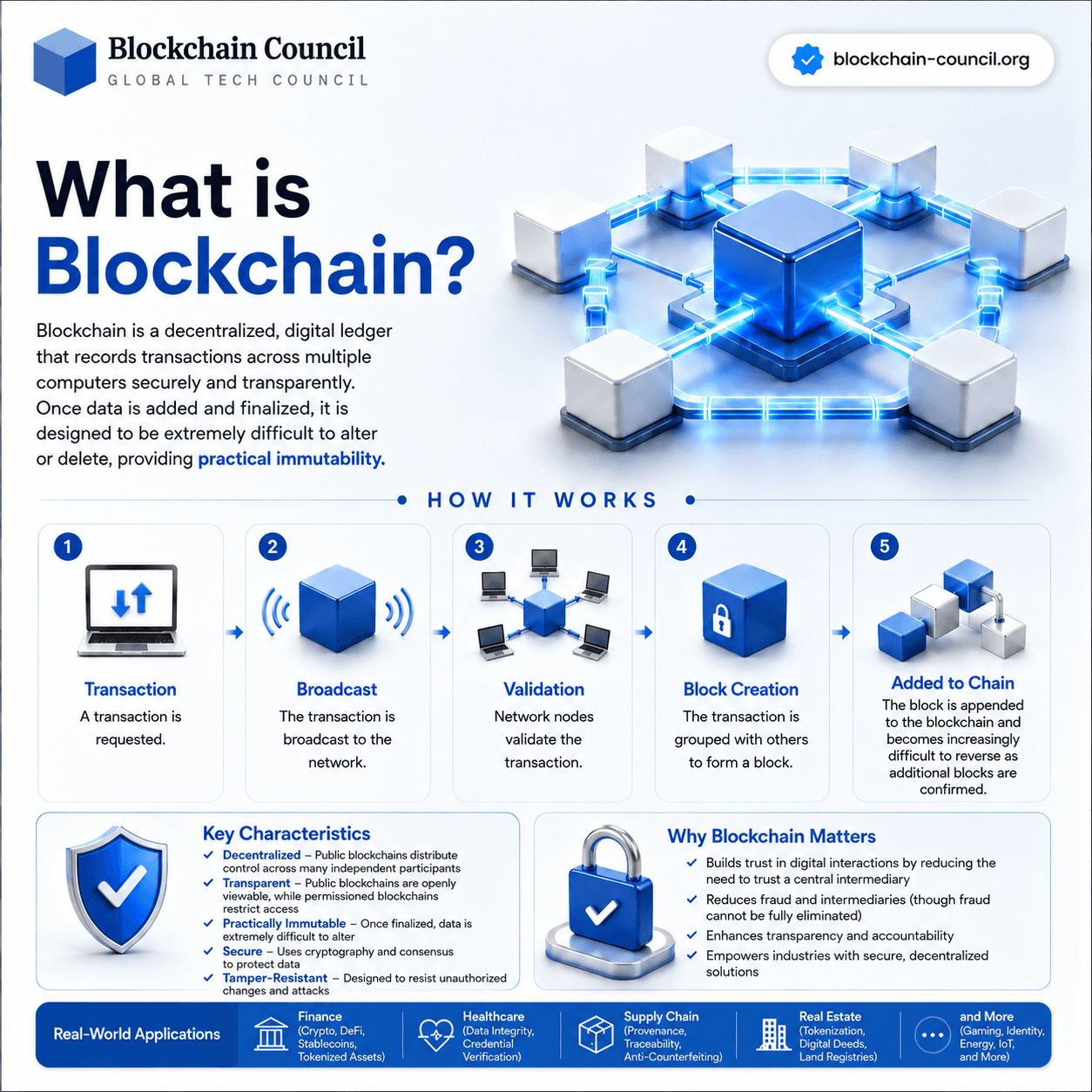
Blockchain has become one of the most talked-about technologies of the digital era, powering everything from cryptocurrencies and decentralized finance to supply chain management and digital identity. But what exactly is blockchain, and why is it transforming industries worldwide?
At its core, blockchain is a decentralized digital ledger that securely records transactions across multiple computers. Instead of relying on a single authority, information is validated by a distributed network, making the system transparent, secure, and highly resistant to unauthorized changes. Once a transaction is verified and added to the blockchain, it becomes extremely difficult to alter, providing practical immutability.

As blockchain adoption expands across industries, professionals are increasingly expected to understand distributed ledger technology, consensus mechanisms, smart contracts, and decentralized applications. Earning a Certified Blockchain Expert credential provides a structured way to build this knowledge, helping learners develop a solid understanding of how blockchain systems operate in real-world environments.
How Does Blockchain Work?
Every blockchain transaction follows a structured process:
Transaction: A user initiates a transaction.
Broadcast: The transaction is shared across the blockchain network.
Validation: Network participants verify the transaction through consensus mechanisms.
Block Creation: Verified transactions are grouped together into a block.
Added to the Chain: The new block is securely linked to previous blocks, creating a permanent record.
Understanding this workflow also highlights the value of broader technical expertise in networking, cybersecurity, cloud computing, and distributed systems. A Tech Certification can help professionals strengthen these complementary skills, making it easier to work with blockchain technologies as part of larger digital transformation initiatives.
Why Does Blockchain Matter?
Blockchain offers several advantages that are transforming digital ecosystems:
Builds trust without relying on a central intermediary
Improves transparency and accountability
Strengthens security through cryptography
Reduces fraud and unauthorized data modification
Enables secure, decentralized applications across industries
Today, blockchain is driving innovation in finance, healthcare, supply chain management, real estate, digital identity, gaming, IoT, and many other sectors.
As organizations continue adopting decentralized technologies, understanding blockchain has become an essential skill for professionals, developers, entrepreneurs, and business leaders alike.
Whether you're exploring Web3, cryptocurrency, or enterprise blockchain solutions, learning the fundamentals is the first step toward building a future-ready career.
As blockchain products and services continue reaching mainstream audiences, organizations also need professionals who can clearly communicate their value and real-world applications. A Marketing Certification helps build expertise in product positioning, digital communication, and customer engagement, supporting the successful adoption of blockchain solutions across diverse industries.
FAQs
1. What Is Blockchain?
Blockchain is a decentralized digital ledger technology that securely records transactions across a distributed network of computers. It ensures data transparency, immutability, and security without relying on a central authority.
2. How Does Blockchain Work?
Blockchain works by grouping transactions into blocks, verifying them through a consensus mechanism, and linking each block to the previous one using cryptographic hashes. This creates a secure and tamper-resistant chain of records.
3. Why Is Blockchain Important?
Blockchain improves transparency, security, traceability, and trust by enabling multiple participants to share and verify data without a centralized intermediary.
4. What Are the Main Components of a Blockchain?
The core components include blocks, transactions, cryptographic hashes, nodes, consensus mechanisms, distributed ledgers, and smart contracts on supported blockchain networks.
5. What Is a Block in Blockchain?
A block is a digital container that stores verified transaction data, a timestamp, and a cryptographic hash linking it to the previous block in the chain.
6. What Is a Distributed Ledger?
A distributed ledger is a synchronized database shared across multiple computers (nodes), ensuring that every participant has access to the same verified transaction records.
7. What Is Decentralization in Blockchain?
Decentralization means that no single organization controls the blockchain. Instead, data is maintained collectively by a network of participants, improving transparency and reducing single points of failure.
8. What Is a Consensus Mechanism?
A consensus mechanism is the process used by blockchain networks to validate transactions and agree on the current state of the ledger. Common mechanisms include Proof of Work (PoW) and Proof of Stake (PoS).
9. What Is a Smart Contract?
A smart contract is a self-executing digital agreement stored on a blockchain that automatically performs predefined actions when specified conditions are met.
10. What Is the Difference Between Public and Private Blockchains?
Public blockchains are open for anyone to participate in, while private blockchains restrict access to authorized users and are commonly used by businesses for enterprise applications.
11. What Are the Benefits of Blockchain Technology?
Blockchain offers enhanced security, transparency, immutability, traceability, decentralization, reduced fraud, faster transactions, and improved operational efficiency.
12. Which Industries Use Blockchain?
Blockchain is used in finance, banking, healthcare, supply chain management, logistics, government, insurance, real estate, manufacturing, education, and digital identity management.
13. Is Blockchain Only Used for Cryptocurrency?
No. While blockchain powers cryptocurrencies, it is also used for supply chain tracking, digital identity, healthcare records, voting systems, asset tokenization, smart contracts, and enterprise data management.
14. What Skills Should Beginners Learn About Blockchain?
Beginners should understand blockchain fundamentals, cryptography, consensus mechanisms, smart contracts, wallets, tokenization, decentralized applications (dApps), Web3, and blockchain security.
15. What Are the Challenges of Blockchain Technology?
Challenges include scalability, energy consumption for some consensus models, regulatory uncertainty, interoperability, transaction costs, and the complexity of enterprise adoption.
16. How Is AI Transforming Blockchain in 2026?
AI is enhancing blockchain through intelligent fraud detection, predictive analytics, smart contract auditing, automated compliance, decentralized AI agents, and blockchain data analysis.
17. What Common Misconceptions Exist About Blockchain?
Common misconceptions include believing blockchain is only for Bitcoin, assuming all blockchains are anonymous, thinking blockchain data can easily be changed, and believing blockchain eliminates every cybersecurity risk.
18. What Career Opportunities Are Available in Blockchain?
Career opportunities include Blockchain Developer, Smart Contract Developer, Blockchain Architect, Web3 Developer, Blockchain Consultant, Crypto Compliance Analyst, Blockchain Security Specialist, and Product Manager.
19. Can Businesses Benefit From Blockchain Without Using Cryptocurrency?
Yes. Many organizations use blockchain to improve supply chain transparency, automate business processes, secure digital identities, manage records, streamline audits, and enhance data integrity without issuing or accepting cryptocurrencies.
20. Why Is Blockchain Considered a Foundational Technology for the Future?
Blockchain provides a secure, transparent, and decentralized way to store and exchange data, making it a key technology for digital transformation. As Web3, decentralized finance (DeFi), tokenization, AI integration, and enterprise blockchain adoption continue to grow, blockchain is expected to play an increasingly important role across industries. Understanding blockchain fundamentals is valuable for developers, business leaders, and technology professionals preparing for the future digital economy.
Related Articles
View All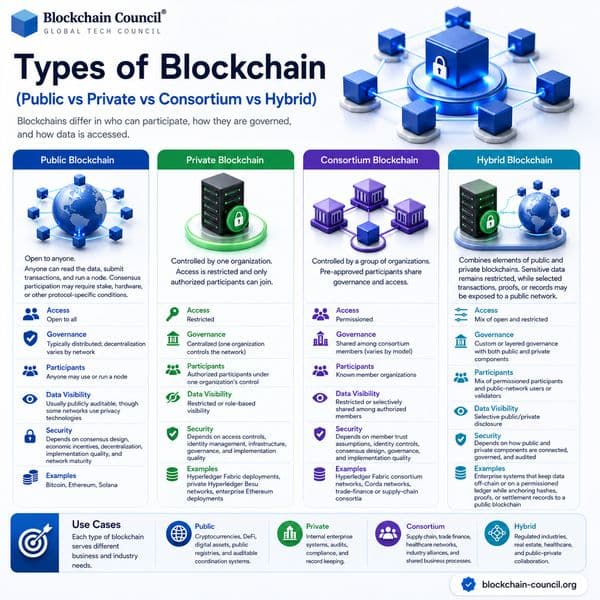
Infographics
Types of Blockchain
Blockchain networks come in different forms, each designed to meet specific business and technical requirements. From fully decentralized public blockchains to permissioned private and consortium networks, understanding the different types of blockchain helps organizations choose the right solution for security, scalability, governance, and performance.
Infographics
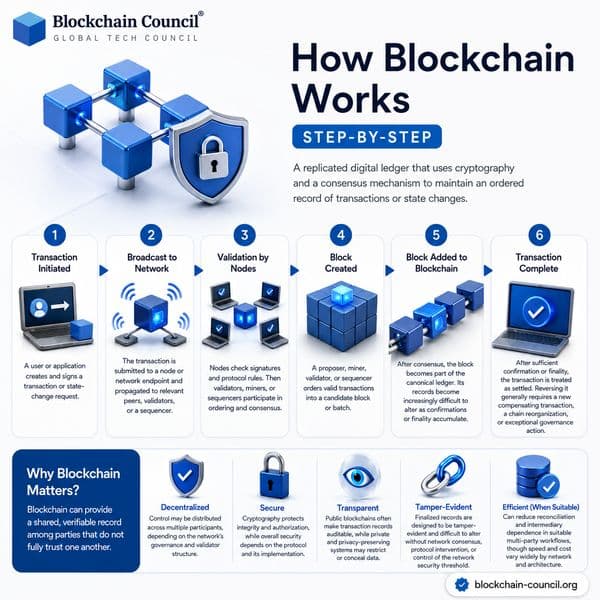
How Blockchain Works?
Blockchain works by recording transactions in blocks that are securely linked using cryptographic hashes. Each transaction is verified by network participants through consensus mechanisms before being added to an immutable ledger. This guide explains the blockchain process step by step, helping beginners understand how decentralized networks maintain transparency, security, and trust.
Infographics
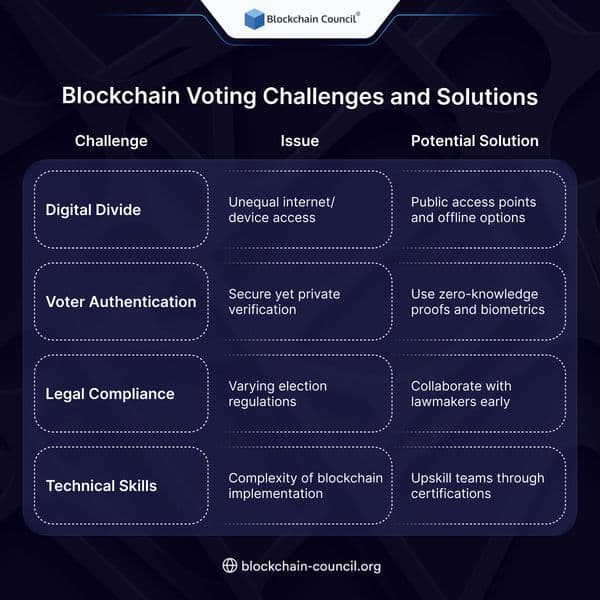
Blockchain Voting Challenges and Solutions
Understand the challenges of blockchain voting systems and explore solutions for secure, transparent, and reliable elections.
Trending Articles
The Role of Blockchain in Ethical AI Development
How blockchain technology is being used to promote transparency and accountability in artificial intelligence systems.

Top 5 DeFi Platforms
Explore the leading decentralized finance platforms and what makes each one unique in the evolving DeFi landscape.
What is AWS? A Beginner's Guide to Cloud Computing
Everything you need to know about Amazon Web Services, cloud computing fundamentals, and career opportunities.