

How Blockchain Works?
 Suyash Raizada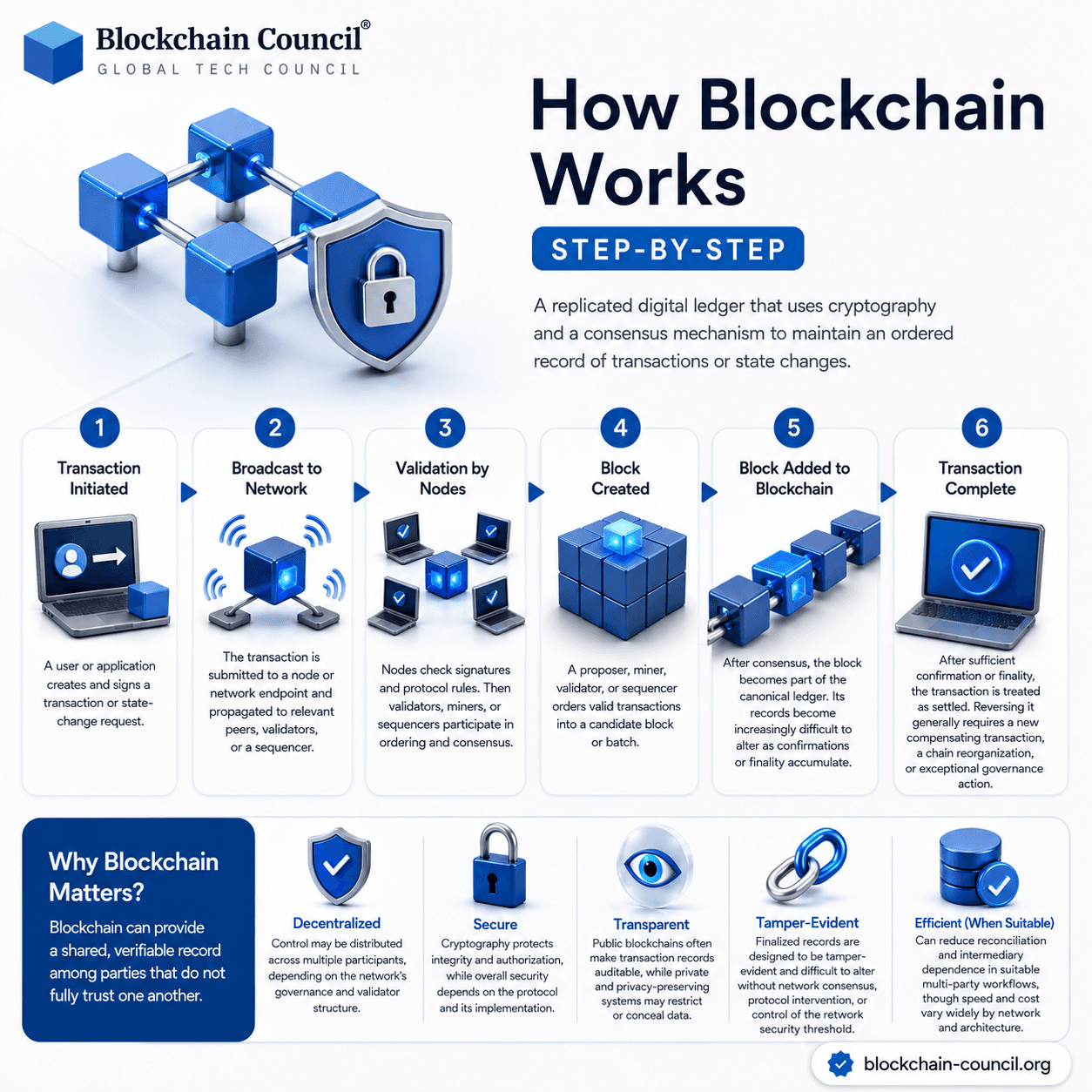
Blockchain powers some of today's most innovative digital solutions, from cryptocurrencies and decentralized finance to supply chain management and digital identity. While the technology may seem complex, its core process follows a simple sequence that ensures security, transparency, and trust.
A blockchain is a distributed digital ledger that records transactions across a network of computers. Instead of relying on a central authority, every transaction is verified by network participants before becoming part of a permanent, tamper-evident record.

For anyone looking to build a deeper understanding of distributed ledger technology, consensus mechanisms, smart contracts, and blockchain architecture, earning a Certified Blockchain Expert credential provides a structured learning path. This knowledge makes it easier to understand how blockchain systems securely process and verify transactions across decentralized networks.
How Blockchain Works
Every blockchain transaction follows six key steps:
1. Transaction Initiated
A user or application creates and digitally signs a transaction or state-change request.
2. Broadcast to the Network
The transaction is broadcast to blockchain nodes, validators, or network participants for processing.
3. Validation by Nodes
Nodes verify the transaction by checking digital signatures, protocol rules, and consensus requirements to ensure its authenticity.
4. Block Created
Validated transactions are grouped together into a new block, ready to be added to the blockchain.
5. Block Added to the Blockchain
After network consensus is achieved, the block becomes part of the blockchain, creating a permanent and tamper-evident record.
6. Transaction Complete
Once confirmed, the transaction is considered complete and securely stored on the distributed ledger.
Understanding these steps also highlights the importance of broader technical skills in areas such as networking, cryptography, cybersecurity, and distributed systems. A Tech Certification can help professionals strengthen this foundation, making it easier to design, deploy, and manage blockchain-based applications effectively.
Why Blockchain Matters
Blockchain enables secure digital interactions by providing:
Decentralization
Enhanced Security
Greater Transparency
Tamper-Evident Records
Efficient Multi-Party Transactions
These capabilities are driving innovation across industries including finance, healthcare, supply chain, real estate, digital identity, and enterprise applications.
Understanding how blockchain works is the first step toward exploring Web3, decentralized applications, and the future of digital technology. Whether you're a student, developer, entrepreneur, or business leader, blockchain knowledge is becoming an increasingly valuable skill in today's digital economy.
As blockchain technology continues to expand across industries, organizations must also communicate its benefits clearly to customers, partners, and stakeholders. A Marketing Certification helps professionals develop skills in product positioning, digital communication, and market adoption strategies, enabling them to explain complex blockchain solutions in a clear and accessible way.
FAQs
1. How Does Blockchain Work?
Blockchain works by recording transactions in blocks, validating them through a network of nodes using a consensus mechanism, and linking each new block to the previous one using cryptographic hashes, creating a secure and immutable chain of records.
2. What Is the First Step in a Blockchain Transaction?
The process begins when a user initiates a transaction, such as transferring digital assets or recording data on a blockchain network.
3. How Are Blockchain Transactions Verified?
Transactions are verified by network participants (nodes or validators) that confirm the transaction follows the blockchain's rules before it is added to a new block.
4. What Happens After a Transaction Is Verified?
Once verified, the transaction is grouped with other validated transactions into a block, which is prepared for addition to the blockchain.
5. How Are Blocks Connected in a Blockchain?
genui{"data_networks_databases_learning_block":{"type_id":"BLOCKCHAIN_HASH_CHAIN"}}
Blocks are connected using cryptographic hashes. Each block contains the hash of the previous block, creating a secure chain. If any block is altered, the hash changes, making tampering immediately detectable.
6. What Is a Cryptographic Hash in Blockchain?
A cryptographic hash is a unique digital fingerprint generated from the data inside a block. Even a small change to the data produces a completely different hash.
7. What Is the Role of Consensus Mechanisms in Blockchain?
Consensus mechanisms allow decentralized networks to agree on valid transactions without relying on a central authority. Popular methods include Proof of Work (PoW) and Proof of Stake (PoS).
8. What Are Blockchain Nodes?
Nodes are computers connected to the blockchain network that store copies of the ledger, validate transactions, and help maintain the security and decentralization of the network.
9. How Does Blockchain Prevent Data Tampering?
Because every block references the previous block's hash and copies of the blockchain exist across many nodes, changing historical data would require altering the majority of the network, making unauthorized modifications extremely difficult.
10. What Makes Blockchain Secure?
Blockchain security comes from cryptography, decentralization, distributed consensus, immutable records, and continuous verification by network participants.
11. What Is the Difference Between a Block and a Blockchain?
A block is a single unit containing transaction data, while the blockchain is the complete sequence of interconnected blocks stored across the network.
12. How Long Does It Take for a Blockchain Transaction to Be Confirmed?
Confirmation times vary depending on the blockchain network, transaction volume, and consensus mechanism. Some networks confirm transactions within seconds, while others may take several minutes.
13. What Happens If Someone Tries to Modify a Blockchain Record?
Any attempt to modify an existing block changes its cryptographic hash, breaking the chain and making the alteration easily detectable by the network.
14. Can Blockchain Work Without Cryptocurrency?
Yes. Blockchain technology is widely used for supply chain management, healthcare records, digital identity, voting systems, document verification, and enterprise applications without involving cryptocurrencies.
15. How Do Smart Contracts Work on Blockchain?
Smart contracts automatically execute predefined actions when specified conditions are met, eliminating the need for manual intervention or intermediaries.
16. How Does Blockchain Support Transparency?
Every authorized participant can access the same verified ledger, allowing transactions to be tracked and audited while maintaining data integrity.
17. What Is the Difference Between Public and Private Blockchain Networks?
Public blockchains allow anyone to participate and validate transactions, while private blockchains restrict participation to approved users within an organization or consortium.
18. How Is AI Improving Blockchain Operations in 2026?
AI enhances blockchain by automating fraud detection, optimizing network performance, auditing smart contracts, predicting anomalies, improving compliance, and analyzing blockchain data more efficiently.
19. What Are the Biggest Challenges in Blockchain Operations?
Common challenges include scalability, interoperability, transaction throughput, regulatory compliance, energy consumption for some consensus mechanisms, and enterprise integration.
20. Why Is Understanding How Blockchain Works Important?
Understanding blockchain helps developers, business leaders, and technology professionals appreciate how decentralized networks securely record, verify, and protect digital transactions. As blockchain adoption expands across finance, healthcare, supply chains, Web3, AI integration, and enterprise systems, knowing how blockchain works provides a strong foundation for building innovative applications and pursuing careers in the blockchain ecosystem.
Related Articles
View All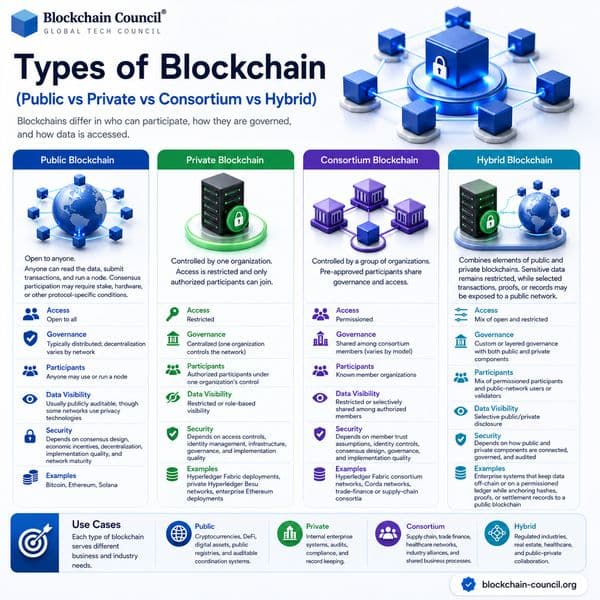
Infographics
Types of Blockchain
Blockchain networks come in different forms, each designed to meet specific business and technical requirements. From fully decentralized public blockchains to permissioned private and consortium networks, understanding the different types of blockchain helps organizations choose the right solution for security, scalability, governance, and performance.

Infographics
What Is Blockchain?
Blockchain is a decentralized digital ledger that securely records transactions across a distributed network of computers. Known for its transparency, immutability, and security, blockchain powers cryptocurrencies, smart contracts, decentralized applications, and enterprise solutions. This beginner-friendly guide explains blockchain fundamentals, how it works, and its real-world applications.
Infographics
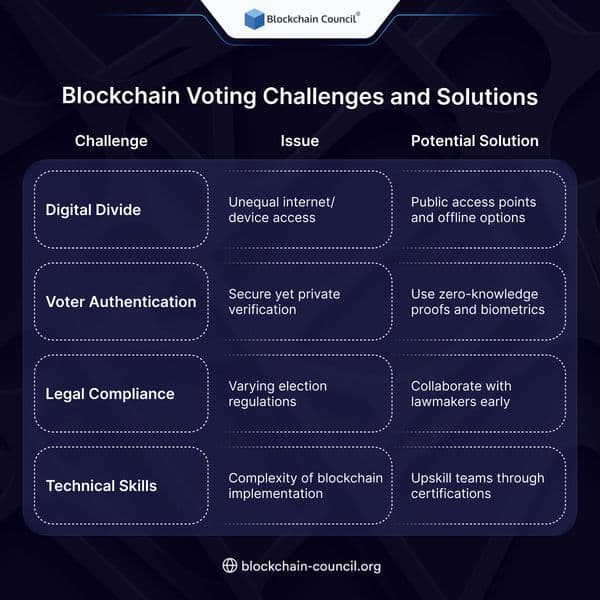
Blockchain Voting Challenges and Solutions
Understand the challenges of blockchain voting systems and explore solutions for secure, transparent, and reliable elections.
Trending Articles
The Role of Blockchain in Ethical AI Development
How blockchain technology is being used to promote transparency and accountability in artificial intelligence systems.
What is AWS? A Beginner's Guide to Cloud Computing
Everything you need to know about Amazon Web Services, cloud computing fundamentals, and career opportunities.

Can DeFi 2.0 Bridge the Gap Between Traditional and Decentralized Finance?
The next generation of DeFi protocols aims to connect traditional banking with decentralized finance ecosystems.