

Benefits of Blockchain Digital Product Passports
 Suyash Raizada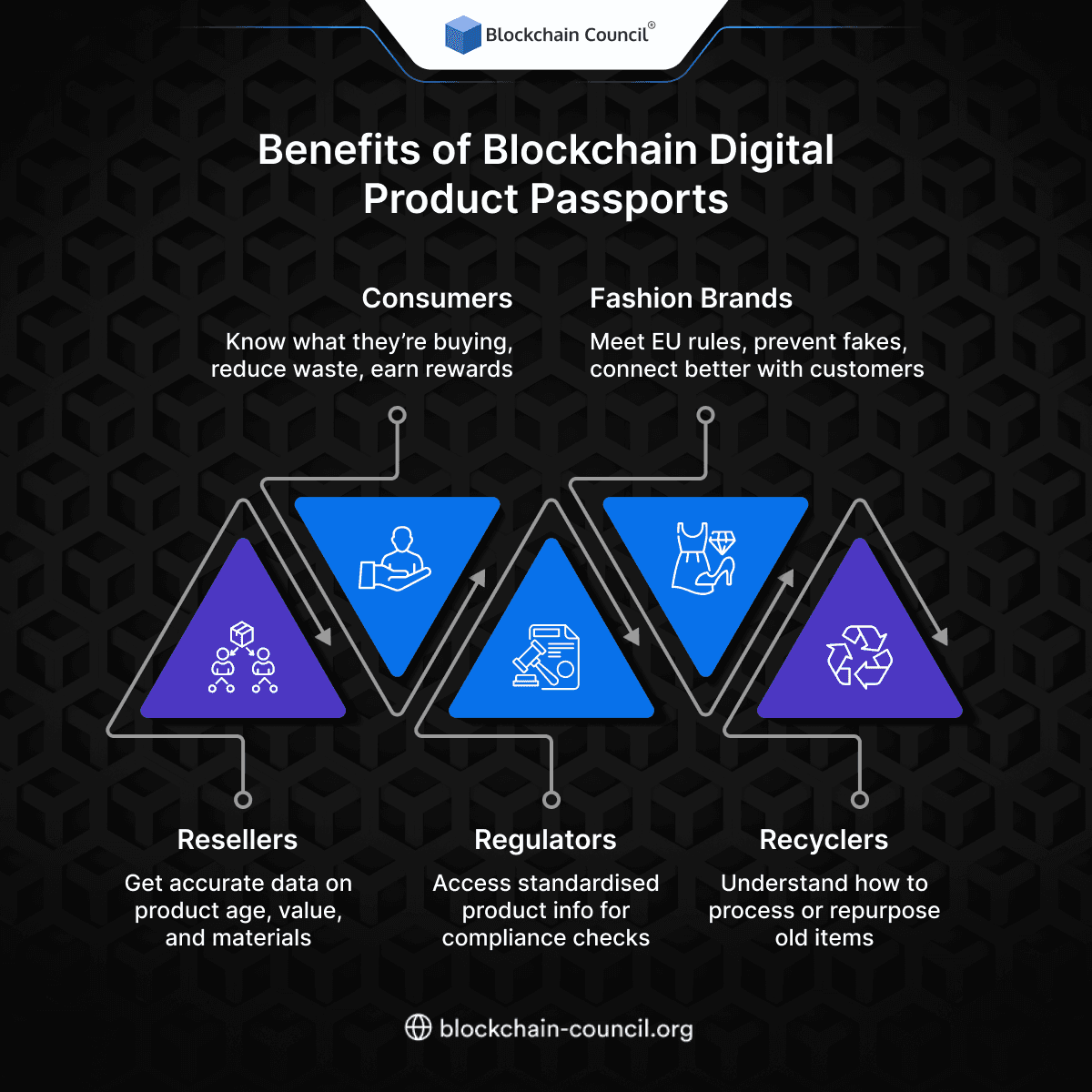
Blockchain digital product passports are emerging as a practical way to record and verify a product's lifecycle data, from raw materials to end-of-life handling. By combining immutable ledgers with standardized product records, blockchain-enabled digital product passports (DPPs) help organizations strengthen supply chain traceability, streamline regulatory compliance, and build consumer trust through transparent and verifiable data.
Momentum is accelerating in Europe, where DPP requirements are being shaped by the Ecodesign for Sustainable Products Regulation (ESPR). DPPs are expected to become mandatory starting in 2027 for priority categories such as batteries and textiles, with broader rollout across sectors by 2030. For teams planning compliance roadmaps, blockchain is increasingly viewed as a strong technical foundation because it reduces data tampering risks, supports auditable event logs, and enables verifiable identity and privacy controls.

Leverage blockchain digital product passports to improve supply chain transparency and compliance by becoming a Certified Blockchain Expert, optimizing data-driven insights with a machine learning course, and driving adoption through a Digital marketing course.
What Are Blockchain Digital Product Passports (DPPs)?
A digital product passport is a structured digital record that captures key information about a product's origin, composition, environmental footprint, repairability, and lifecycle events. When implemented on a blockchain, DPP data is registered with cryptographic integrity, making it difficult to alter historical records without detection.
Most real-world implementations use a hybrid architecture:
On-chain: smart contracts store pointers, timestamps, identities, and event logs to support high-integrity traceability.
Off-chain: detailed documents such as bills of materials, certificates, and carbon footprint datasets are stored in databases or decentralized storage, referenced by cryptographic hashes or identifiers.
To support trustworthy data exchange, blockchain DPPs frequently incorporate verifiable identities such as decentralized identifiers (DIDs) and verifiable credentials, and can align with modern digital identity frameworks including eIDAS 2.0-oriented approaches.
Current State: EU Rollout, Standards, and Privacy-by-Design
DPPs are advancing rapidly due to regulatory pressure and sustainability targets. The EU is prioritizing product categories where lifecycle transparency and circularity can materially reduce fraud, waste, and unsafe materials. This creates immediate urgency for manufacturers, importers, brands, and supply chain partners to design data models, integrate partners, and prepare audit-ready reporting.
Privacy and confidentiality remain non-negotiable in global supply chains. Blockchain-based DPPs can use selective disclosure techniques such as zero-knowledge proofs, ring-signature privacy methods, and encryption approaches that limit data exposure while still proving compliance-relevant facts. This enables scenarios like confirming a restricted substance threshold or an origin claim without revealing full supplier recipes or commercial terms.
Top Benefits of Blockchain Digital Product Passports
1. Regulatory Compliance with Automated, Auditable Evidence
Compliance teams face growing demands to provide reliable, non-manipulable evidence of product attributes and lifecycle events. Blockchain DPPs address this by generating tamper-resistant logs and enabling automated validation.
Smart contract-based checks can enforce required fields, data formats, and workflow steps before a passport update is accepted.
Immutable audit trails simplify inspections by recording who attested to what, and when.
Verifiable credentials support cryptographically signed certificates, reducing reliance on manual document verification.
For organizations preparing for the 2027 timeline and ESPR-aligned rules, blockchain-based automation can reduce last-minute compliance pressure by turning reporting into a continuous, system-driven process rather than a periodic exercise.
2. Supply Chain Traceability Across Multi-Party Ecosystems
Traditional traceability often breaks when data crosses organizational boundaries. Blockchain connects multi-party updates into a single time-ordered history, reducing data silos and strengthening chain-of-custody evidence.
Time-stamped events record origin, processing, assembly, shipping, & custody changes in a consistent format.
Fraud resistance improves because prior entries are difficult to rewrite without detection.
Circular economy support is strengthened by tracking repair, refurbishment, reuse, and recycling steps, enabling longer product lifecycles.
This is particularly relevant in industries prone to counterfeiting or complex multi-tier sourcing, where visibility into materials and provenance is essential for risk reduction and credible sustainability claims.
3. Consumer Trust Through Transparent and Verifiable Product Histories
Consumers increasingly expect verifiable proof behind sustainability, authenticity, and ethical sourcing claims. Blockchain DPPs can provide an accessible product history through QR codes, often without requiring a dedicated application.
Authenticity verification supports anti-counterfeit efforts and brand protection.
Accessible lifecycle records make it easier to substantiate sustainability claims with on-chain evidence.
Resale and ownership confidence improves when product provenance and key lifecycle events are independently verifiable.
Privacy-preserving proofs play an important role here, allowing consumer-facing transparency while keeping sensitive supplier data confidential.
Unlock sustainability, anti-counterfeiting, and consumer trust benefits using blockchain-based product passports by mastering systems through a Blockchain Course, implementing secure workflows via Cyber security certifications, and scaling innovation with an AI powered marketing course.
Real-World Use Cases and Industry Signals
Blockchain DPP adoption is reflected in pilots and production initiatives across multiple sectors:
Volvo has piloted blockchain-enabled DPP approaches to strengthen supply chain transparency and sustainability reporting.
European Battery Passport initiatives are developing fraud-resistant traceability models aligned with incoming EU battery regulation requirements.
QR-accessible DPP solutions such as TRUE demonstrate scalable verification experiences designed for EU compliance needs.
Production-focused DPP programs such as those developed by Protag Systems illustrate how traceability can extend from the point of manufacture through the full product lifecycle.
A growing design preference is resilience against single-provider lock-in. Dedicated DPP smart contract models can help ensure long-term access to product passport records even if a specific platform or vendor changes over time.
Implementation Considerations for Enterprises
Moving from concept to deployment requires careful planning across several dimensions:
Data governance: define ownership, attestation responsibilities, and dispute resolution processes.
Interoperability: align identifiers, taxonomies, and credential formats across supply chain partners.
Privacy and confidentiality: apply selective disclosure and encryption to protect commercially sensitive data.
Hybrid architecture: keep large data assets off-chain while anchoring cryptographic integrity on-chain.
Identity and access: integrate DIDs, verifiable credentials, and enterprise identity management where needed.
Conclusion: Why Blockchain DPPs Matter Through 2030
Blockchain digital product passports are becoming a core capability for regulated, sustainability-focused markets. As DPP mandates expand from 2027 onward, blockchain can deliver the integrity, auditability, and multi-party coordination that conventional databases struggle to provide at ecosystem scale. With hybrid designs, verifiable identities, and privacy-preserving cryptography, organizations can meet compliance requirements, improve supply chain traceability, and strengthen consumer trust without exposing sensitive commercial data.
Investing early in standards, governance, and architecture allows enterprises to turn DPP readiness into a long-term operational advantage: fewer compliance surprises, more resilient supply chains, and credible transparency that customers and regulators can independently verify.
FAQs
1. What are blockchain digital product passports?
They are digital records stored on blockchain containing product information. They track lifecycle, origin, and ownership. This ensures transparency and traceability.
2. How do product passports improve transparency?
They provide verified and immutable product data. All stakeholders can access accurate information. This builds trust.
3. What information is included in a product passport?
Details include materials, manufacturing process, and certifications. It may also include sustainability data. This gives a complete product view.
4. How do they help prevent counterfeiting?
Each product has a unique digital identity. Consumers can verify authenticity. This reduces fake products.
5. How do product passports support sustainability?
They track environmental impact and sourcing. This helps companies meet sustainability goals. Consumers can make informed choices.
6. What industries benefit from product passports?
Industries like fashion, electronics, and automotive benefit most. They require transparency. Adoption is increasing.
7. How do they improve supply chain efficiency?
They provide real-time tracking and data sharing. This reduces delays and errors. It improves coordination.
8. What role do smart contracts play?
Smart contracts automate processes like compliance checks. They reduce manual work. This increases efficiency.
9. Are product passports secure?
Yes, blockchain ensures data integrity and security. Unauthorized changes are prevented. This ensures reliability.
10. How do consumers benefit from product passports?
Consumers get access to verified product information. This helps make informed decisions. It builds trust.
11. Can small businesses use product passports?
Yes, solutions are becoming more accessible. Small businesses can adopt them easily. It improves competitiveness.
12. How do they support regulatory compliance?
They store compliance data in a transparent manner. Regulators can easily verify information. This simplifies audits.
13. What is digital identity in product passports?
Each product has a unique blockchain identity. It tracks its lifecycle. This ensures authenticity.
14. How do they enable circular economy?
They track product lifecycle and materials. This supports recycling and reuse. It reduces waste.
15. What are implementation challenges?
Challenges include cost and system integration. Technical expertise is required. Planning is essential.
16. How is data updated in product passports?
Authorized participants update data at each stage. Updates are recorded securely. This ensures accuracy.
17. What role does IoT play?
IoT devices provide real-time data updates. This improves tracking accuracy. It enhances automation.
18. What is the future of product passports?
They will become standard in global supply chains. Adoption will increase. They support digital transformation.
19. How do they improve brand trust?
Transparency builds consumer confidence. Verified data increases credibility. This strengthens brand reputation.
20. Why are product passports important?
They improve transparency, security, and efficiency. They support sustainability and compliance. They are essential for modern supply chains.
Related Articles
View All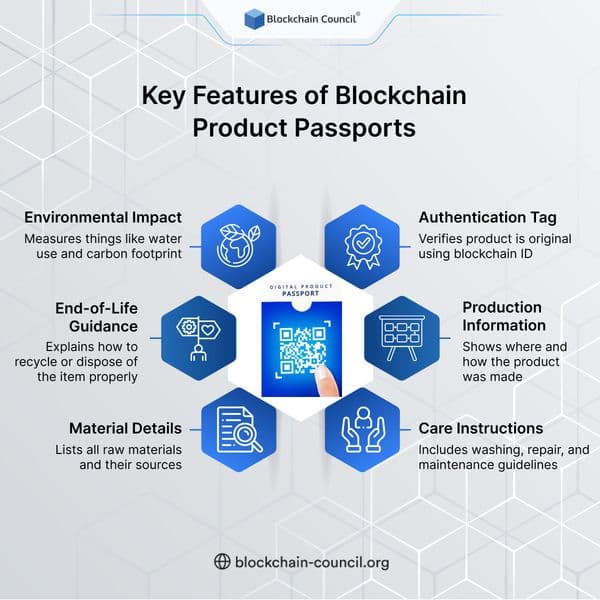
Infographics
Key Features of Blockchain Product Passports
Blockchain product passports (DPPs) enable immutable product lifecycle records. Explore core features, EU data standards, and interoperability requirements for scale.
Infographics
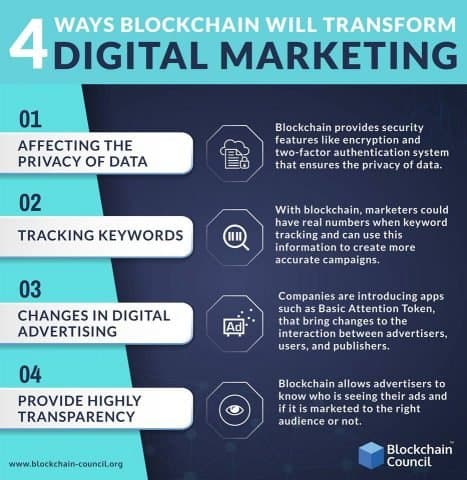
4 Ways Blockchain Transform Digital Marketing
As blockchain is a decentralized technology, it assures the digital marketers that their transactions are secure by improving cybersecurity. Let’s take a deeper look at how blockchain technology will transform the future of digital marketing and advertising.
Infographics
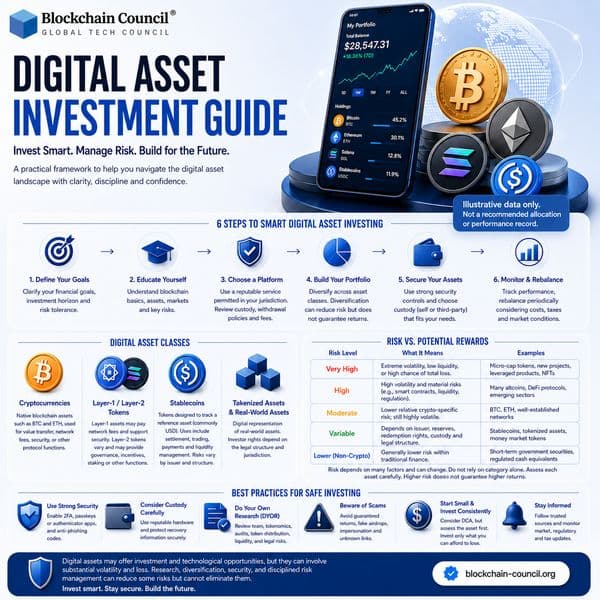
Digital Asset Investment Guide: Build a Smarter Strategy for the Future of Finance
Digital asset investing has become a key part of the modern financial landscape, offering opportunities in cryptocurrencies, tokenized assets, NFTs, and blockchain-based investments. Whether you're a beginner or an experienced investor, understanding market fundamentals, diversification, security, and risk management is essential for building a successful digital asset portfolio. This guide explores the core concepts, investment strategies, and best practices for navigating the digital asset market.
Trending Articles
AWS Career Roadmap
A step-by-step guide to building a successful career in Amazon Web Services cloud computing.
How Blockchain Secures AI Data
Understand how blockchain technology is being applied to protect the integrity and security of AI training data.
What is AWS? A Beginner's Guide to Cloud Computing
Everything you need to know about Amazon Web Services, cloud computing fundamentals, and career opportunities.