
How Recursive Self-Improvement Could Accelerate AI Innovation
Recursive self-improvement can speed AI innovation through bounded loops that refine prompts, code, data, and evaluations, but safety controls are essential.



2318 articles published
Recursive self-improvement can speed AI innovation through bounded loops that refine prompts, code, data, and evaluations, but safety controls are essential.
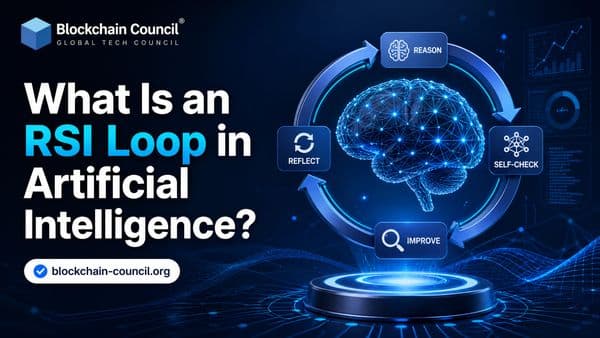
Learn what an RSI loop in artificial intelligence means, how recursive self-improvement works, and why verification and governance matter.

Recursive self-improvement could lead to superintelligent AI, but today's systems remain bounded by human goals, evaluation, compute, and governance.
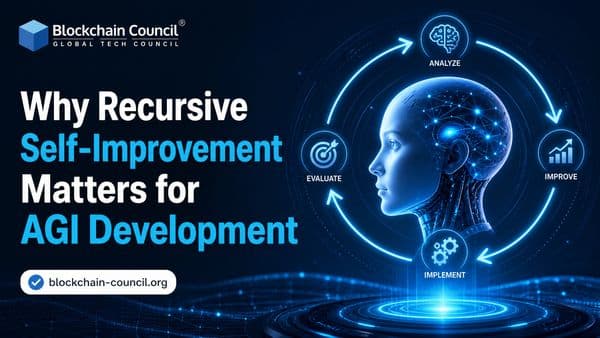
Recursive self-improvement could shape AGI by accelerating capability growth, changing safety risks, and forcing new governance for self-updating AI systems.
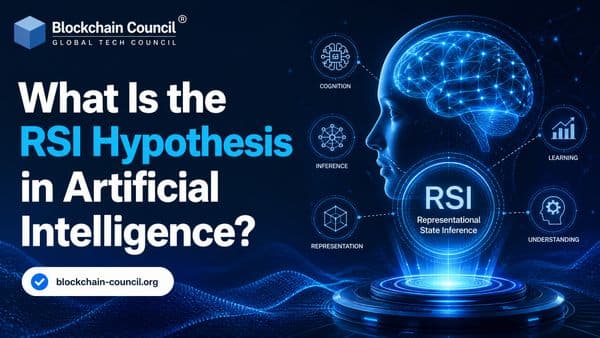
Learn what the RSI hypothesis in artificial intelligence means, how recursive self-improvement works, why it matters for AI safety, and what is real today.

AI can already design architectures, optimizers, and training strategies that beat human baselines, but autonomous recursive self improvement remains unproven.

AI models can partially train themselves through self-supervision, self-critique, and AI feedback, but human oversight remains essential.

Can Gemini improve itself? Learn why Google AI does not self-rewrite its model today, but can power controlled recursive self-improvement loops.

ChatGPT can refine outputs, generate feedback, and support agentic workflows, but full autonomous recursive self improvement remains out of reach.
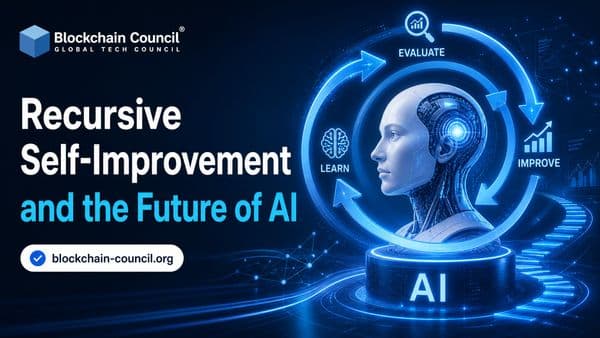
Recursive self-improvement is shifting from AGI theory to bounded AI engineering loops involving agents, evaluation, code, prompts, and governance.

Self improving AI is real in narrow loops today, but open-ended recursive self improvement still needs better evaluation, introspection, alignment, and governance.

Recursive self-improvement changes the AI improvement loop itself, while recursive self-training retrains models on self-generated data.