

Key Features of AI Agents Explained
 Suyash Raizada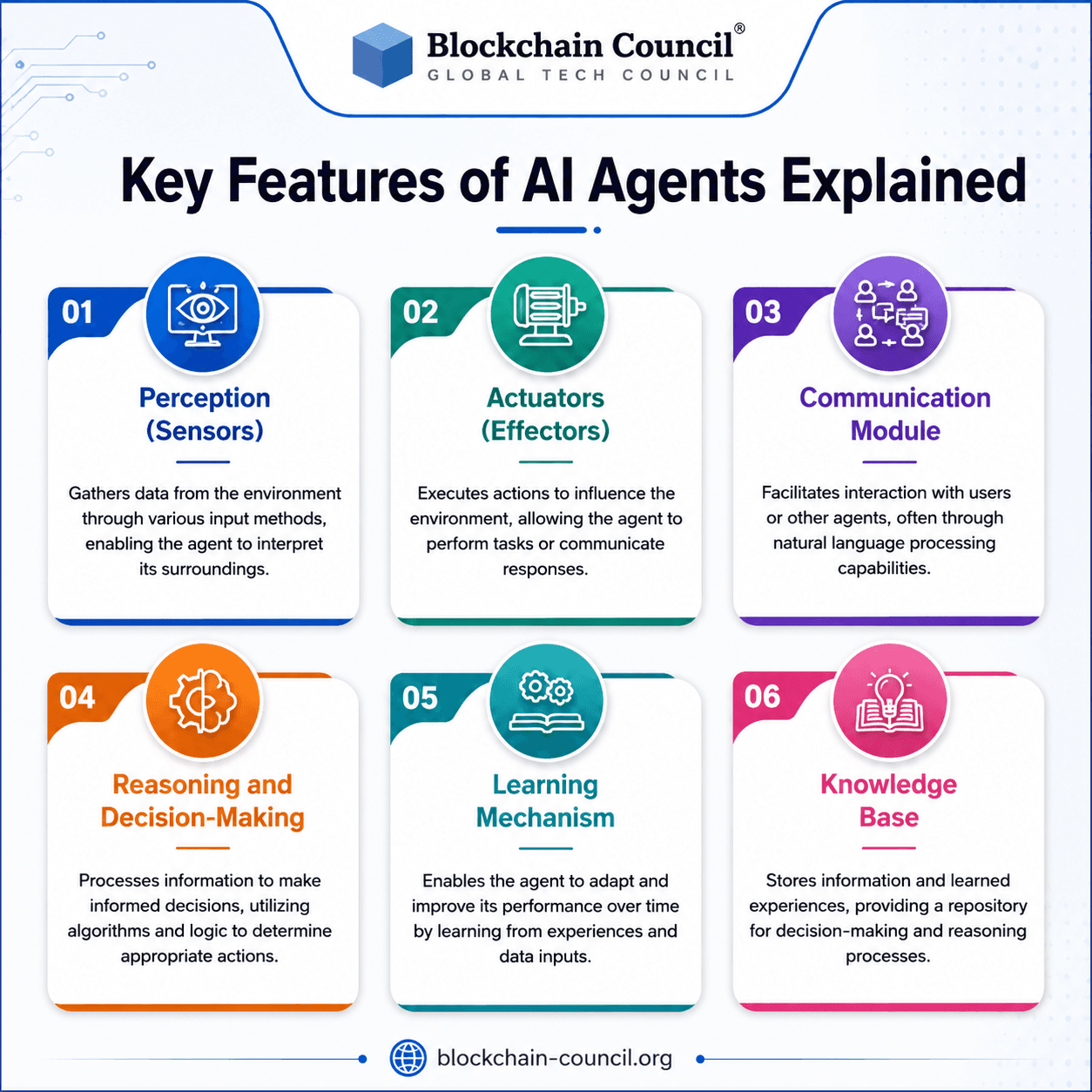
Artificial intelligence has evolved far beyond static models and rule-based systems. One of the most significant advancements in recent years is the rise of AI agents. These systems are designed to act autonomously, make decisions, and perform tasks with minimal human intervention. From virtual assistants to enterprise automation tools, AI agents are transforming how businesses and individuals interact with technology.
To understand these systems in depth, many professionals pursue structured programs such as the Agentic AI Certification and the AI expert certification. These programs provide a strong foundation in AI systems, including how agents operate and evolve.

This article explores the key features of AI agents, how they work, their real-world applications, and the latest developments shaping their future.
What Are AI Agents
AI agents are intelligent systems capable of perceiving their environment, making decisions, and taking actions to achieve specific goals. Unlike traditional software, which follows predefined instructions, AI agents adapt and respond dynamically.
Core Components
Perception of data or environment
Decision-making capability
Action execution
Learning and adaptation
In simple terms, an AI agent does not just respond. It acts with purpose.
Why AI Agents Matter Today
AI agents are becoming central to modern technology because they enable automation at a much deeper level. Instead of performing isolated tasks, they manage workflows, interact with users, and optimize outcomes.
Key reasons for their importance include:
Increased efficiency
Reduced manual effort
Improved decision-making
Scalability across industries
Ignoring them at this point is like ignoring the internet in the early 2000s. Technically possible, but not advisable.
Key Features of AI Agents
1. Autonomy
Autonomy is the defining feature of AI agents. They can operate independently without constant human input.
Explanation
An autonomous agent can analyze a situation, decide on a course of action, and execute it without supervision.
Example
A customer service chatbot that resolves queries without human intervention demonstrates autonomy.
2. Goal-Oriented Behavior
AI agents are designed to achieve specific objectives.
How It Works
They evaluate possible actions and select the one that best aligns with their goals.
Example
A logistics AI agent optimizes delivery routes to minimize time and cost.
3. Perception and Context Awareness
AI agents gather and interpret data from their environment.
Capabilities
Understanding user input
Analyzing external data
Adapting to context
Example
Virtual assistants interpret voice commands and respond based on context.
4. Decision-Making Ability
AI agents make decisions based on data, algorithms, and learned patterns.
Types of Decisions
Rule-based
Probabilistic
Predictive
Example
Financial AI agents analyze market trends and suggest investment strategies.
5. Learning and Adaptation
AI agents improve over time through learning mechanisms.
Techniques
Machine learning
Reinforcement learning
Continuous feedback
Example
Recommendation systems adapt to user preferences and improve suggestions.
6. Interaction and Communication
AI agents interact with users and other systems.
Methods
Natural language processing
API integrations
Multimodal communication
Example
Chatbots communicate with users in natural language, making interactions more intuitive.
7. Proactive Behavior
Unlike reactive systems, AI agents can anticipate needs.
Explanation
They analyze patterns and act before being prompted.
Example
An AI system suggests scheduling adjustments based on calendar conflicts.
8. Multi-Step Task Execution
AI agents can handle complex tasks involving multiple steps.
Capabilities
Planning
Execution
Monitoring
Example
An AI agent managing a marketing campaign can plan, execute, and analyze performance.
9. Integration with External Systems
AI agents connect with other tools and platforms.
Benefits
Seamless workflows
Data sharing
Enhanced functionality
Example
An AI agent integrates with CRM systems to manage customer interactions.
10. Scalability
AI agents can operate across large systems and handle multiple tasks simultaneously.
Importance
Scalability allows businesses to expand operations without proportional increases in resources.
Example
E-commerce platforms use AI agents to manage thousands of customer interactions simultaneously.
Real-World Applications of AI Agents
Customer Service
AI agents handle customer queries, reducing response times and improving satisfaction.
Healthcare
AI agents assist in diagnostics, patient monitoring, and treatment recommendations.
Finance
They analyze data, detect fraud, and automate trading processes.
Marketing
AI agents optimize campaigns, personalize content, and analyze customer behavior.
Professionals looking to apply these capabilities often explore programs like the AI powered marketing course, which focuses on practical AI applications.
Software Development
AI agents assist developers by generating code, debugging, and automating testing. Programs like the AI Powered coding expert Course help build these skills.
Recent Developments in AI Agents
Rise of Agentic AI
Agentic AI systems are becoming more autonomous and capable of handling complex workflows.
Multimodal Capabilities
AI agents can process text, images, and audio simultaneously.
Collaboration Between Agents
Multiple AI agents can work together to achieve shared goals.
Improved Reasoning
Modern AI agents demonstrate better logical reasoning and problem-solving abilities.
Role of Advanced Certifications
As AI agents become more complex, specialized knowledge is essential. Programs like the Claude Ai Certification provide insights into advanced AI systems and conversational models.
These certifications help professionals:
Understand agent architectures
Build intelligent systems
Apply AI in real-world scenarios
Because guessing how these systems work is not a reliable strategy.
Challenges of AI Agents
Ethical Concerns
Autonomous decision-making raises questions about accountability.
Data Privacy
Handling sensitive data requires strict security measures.
Complexity
Developing and managing AI agents requires technical expertise.
Over-Reliance
Excessive dependence on AI can reduce human oversight.
Best Practices for Using AI Agents
Define clear objectives
Monitor performance regularly
Combine AI with human expertise
Ensure data quality
Stay updated with advancements
Ignoring these practices often leads to systems that look impressive but fail in practice.
Future of AI Agents
The future of AI agents includes:
Greater autonomy
Enhanced collaboration
Improved personalization
Integration with emerging technologies
AI agents will continue to evolve, becoming more capable and widely adopted.
Conclusion
AI agents represent a significant advancement in artificial intelligence, offering autonomy, adaptability, and efficiency. Their ability to perceive, decide, and act makes them valuable across industries.
Understanding their key features is essential for leveraging their full potential. As technology continues to evolve, AI agents will play an increasingly important role in shaping the future of work and innovation.
FAQs
1. What are AI agents
AI agents are intelligent systems that can perceive their environment, make decisions, and perform actions to achieve specific goals. They operate autonomously and adapt based on data and feedback. This makes them more advanced than traditional software systems.
2. How do AI agents work
AI agents work by collecting data, analyzing it, and making decisions based on predefined goals and learned patterns. They then execute actions and learn from the outcomes. This continuous cycle improves their performance over time.
3. What is autonomy in AI agents
Autonomy refers to the ability of AI agents to operate independently without constant human intervention. They can make decisions and take actions on their own. This feature is central to their functionality.
4. What industries use AI agents
Industries such as healthcare, finance, marketing, and technology use AI agents. They help automate tasks and improve efficiency. Their applications are expanding rapidly.
5. What is agentic AI
Agentic AI refers to systems that act independently to achieve goals. These systems are more advanced and capable of handling complex tasks. They represent the future of AI development.
6. Can AI agents learn
Yes, AI agents can learn from data and experiences using machine learning techniques. This allows them to improve over time. Learning is a key feature.
7. What are the benefits of AI agents
Benefits include increased efficiency, automation, and improved decision-making. They reduce manual effort and enhance productivity. This makes them valuable for businesses.
8. What are the risks of AI agents
Risks include ethical concerns, data privacy issues, and over-reliance on automation. Proper management is required to mitigate these risks. Awareness is important.
9. How do AI agents make decisions
AI agents use algorithms and data analysis to evaluate options and choose the best course of action. They rely on models and learned patterns. This ensures informed decisions.
10. What is the future of AI agents
The future includes more advanced, autonomous, and collaborative systems. AI agents will continue to evolve and expand. Their impact will grow significantly.
11. Can AI agents replace humans
AI agents can automate tasks but cannot fully replace human creativity and judgment. They are best used as supportive tools. Collaboration is key.
12. What is perception in AI agents
Perception refers to the ability of AI agents to gather and interpret data from their environment. It helps them understand context. This improves decision-making.
13. What is proactive behavior
Proactive behavior means AI agents can anticipate needs and act before being prompted. This enhances efficiency and user experience. It is an advanced feature.
14. How do AI agents interact with users
AI agents interact through natural language processing and other communication methods. They can understand and respond to user input. This makes interactions more intuitive.
15. What skills are needed for AI agents
Skills include programming, data analysis, and understanding AI concepts. Continuous learning is essential. These skills help professionals succeed.
16. What is scalability in AI agents
Scalability refers to the ability of AI agents to handle increasing workloads efficiently. It allows systems to grow without performance issues. This is important for large applications.
17. What is integration in AI agents
Integration allows AI agents to connect with other systems and tools. This enhances functionality and workflow efficiency. It enables seamless operations.
18. How are AI agents used in marketing
AI agents analyze customer data, optimize campaigns, and personalize content. They improve engagement and conversion rates. This makes marketing more effective.
19. What is reinforcement learning
Reinforcement learning is a technique where AI agents learn by receiving rewards or penalties based on their actions. It helps improve decision-making. This method is widely used.
20. Why are AI agents important
AI agents are important because they enhance efficiency, automate processes, and improve decision-making. They play a key role in modern technology. Their importance will continue to grow.
Related Articles
View All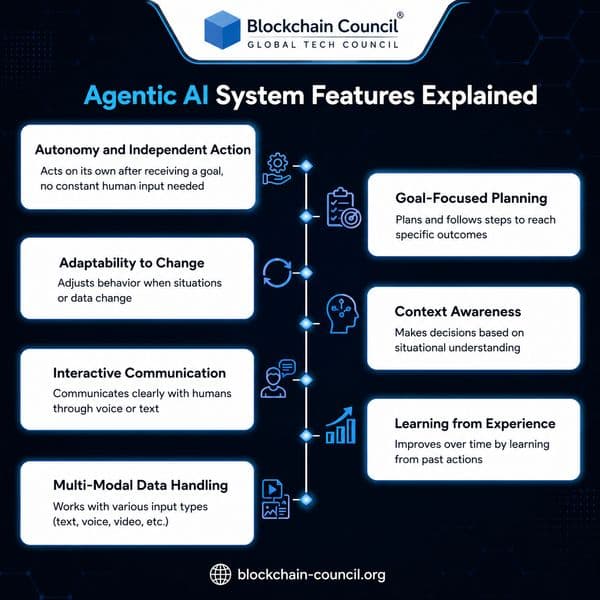
Infographics
Agent AI System Features Explained
Explore the key features of Agentic AI systems including autonomy, planning, memory, reasoning, adaptive learning, and multi-agent collaboration.
Infographics
Key Features of Agentic AI Systems
Infographics
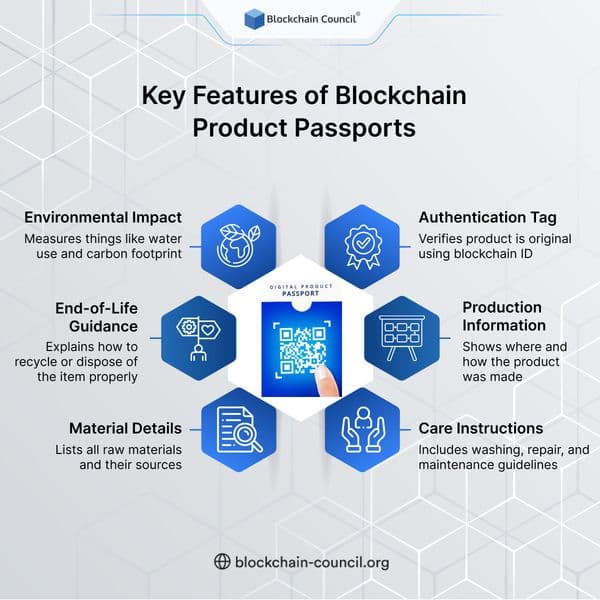
Key Features of Blockchain Product Passports
Blockchain product passports (DPPs) enable immutable product lifecycle records. Explore core features, EU data standards, and interoperability requirements for scale.
Trending Articles
The Role of Blockchain in Ethical AI Development
How blockchain technology is being used to promote transparency and accountability in artificial intelligence systems.
AWS Career Roadmap
A step-by-step guide to building a successful career in Amazon Web Services cloud computing.
How Blockchain Secures AI Data
Understand how blockchain technology is being applied to protect the integrity and security of AI training data.