

AI in Lead Generation Explained

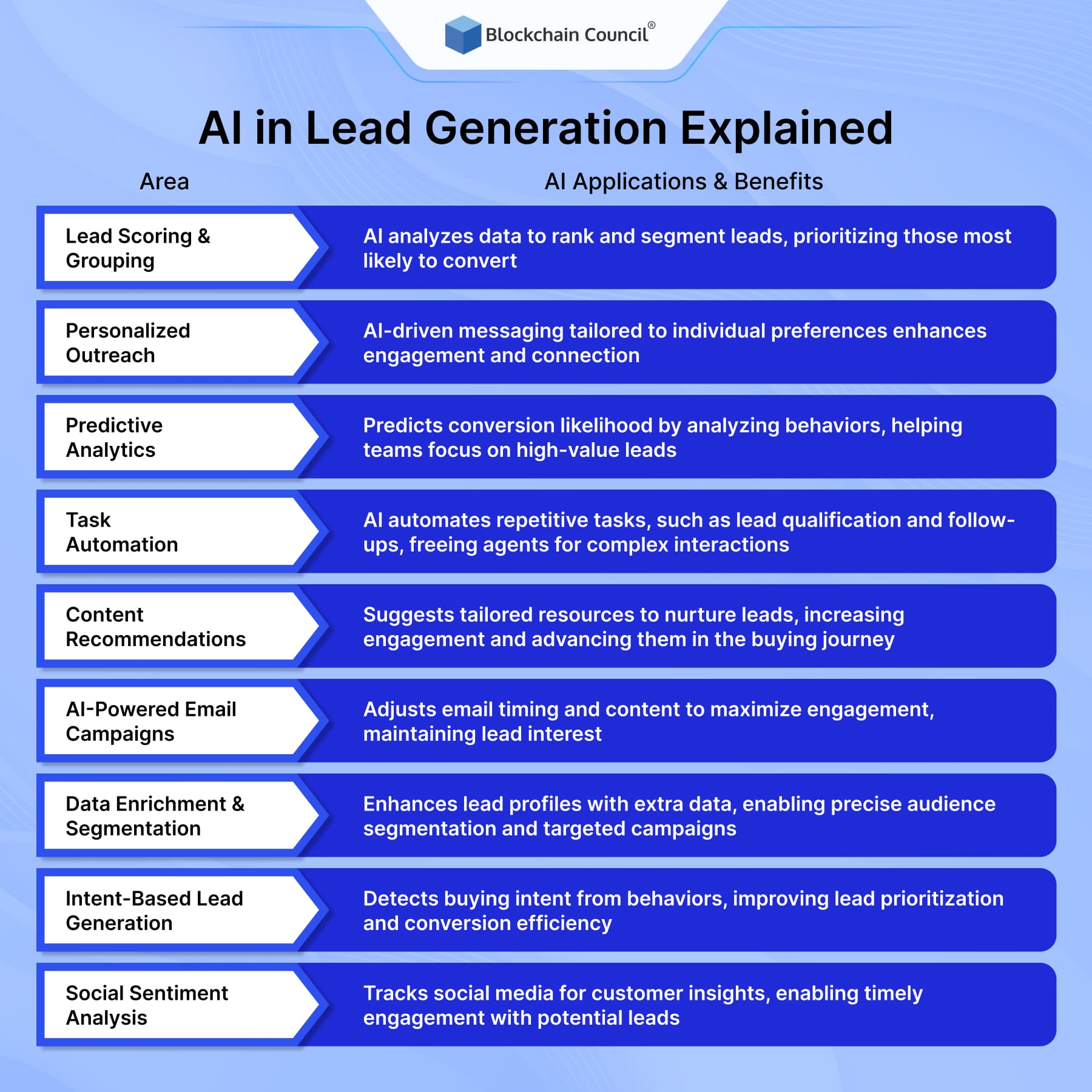
Lead generation is the backbone of any successful business. It involves identifying potential customers and guiding them through the sales funnel. Traditionally, this process relied on manual outreach, basic analytics, and broad targeting strategies. Today, artificial intelligence has redefined lead generation by making it more precise, automated, and scalable.
Professionals aiming to master these capabilities often begin with structured programs such as the Agentic AI Expert Certification and the AI expert certification. These certifications provide a strong foundation in AI technologies and their applications in marketing and business.

This article explores how AI is transforming lead generation, the technologies behind it, real-world applications, recent developments, and future trends.
What Is Lead Generation
Lead generation refers to the process of attracting and converting potential customers into individuals who have expressed interest in a product or service. These leads are then nurtured and converted into paying customers.
Traditional methods include:
Email marketing
Social media campaigns
Content marketing
Paid advertising
While effective, these methods often lack precision and require significant manual effort.
What Is AI in Lead Generation
AI in lead generation involves using machine learning, data analytics, and automation to identify, attract, and convert potential customers more efficiently.
AI enhances lead generation by:
Analyzing large datasets
Predicting customer behavior
Automating outreach
Personalizing communication
Instead of targeting broad audiences, AI focuses on high-quality leads with a higher likelihood of conversion.
How AI Works in Lead Generation
Data Collection and Analysis
AI systems gather data from multiple sources, including:
Website interactions
Social media activity
Customer databases
Email engagement
This data is analyzed to identify patterns and trends.
Predictive Lead Scoring
AI assigns scores to leads based on their likelihood to convert. Factors include:
Engagement level
Demographics
Purchase intent
This helps sales teams prioritize high-value prospects.
Personalization
AI enables highly personalized communication by tailoring messages based on user behavior and preferences.
Automation
AI automates repetitive tasks such as email campaigns, follow-ups, and data entry, freeing up time for strategic activities.
Key AI Technologies in Lead Generation
Machine Learning
Machine learning models analyze historical data to predict future outcomes, such as which leads are most likely to convert.
Natural Language Processing
NLP allows AI to understand and generate human-like communication, enabling chatbots and personalized messaging.
Chatbots and Virtual Assistants
AI-powered chatbots engage with website visitors, answer questions, and capture lead information in real time.
Predictive Analytics
Predictive analytics helps businesses anticipate customer needs and behavior, improving targeting accuracy.
Benefits of AI in Lead Generation
Improved Lead Quality
AI focuses on high-intent prospects, increasing conversion rates.
Increased Efficiency
Automation reduces manual workload and speeds up processes.
Better Customer Experience
Personalized interactions improve engagement and satisfaction.
Cost Reduction
AI optimizes marketing spend by targeting the right audience.
Scalability
AI systems can handle large volumes of data and interactions simultaneously.
Real-World Examples
HubSpot
HubSpot uses AI for lead scoring and email personalization, helping businesses improve conversion rates.
Salesforce
Salesforce Einstein analyzes customer data to provide insights and automate lead management.
LinkedIn uses AI to recommend potential leads and optimize advertising campaigns.
Example Scenario
A SaaS company implemented AI-driven lead scoring and saw a 35 percent increase in conversion rates while reducing acquisition costs by 20 percent.
AI in Content-Driven Lead Generation
Content plays a crucial role in attracting leads. AI enhances content strategies by:
Identifying trending topics
Optimizing content for SEO
Personalizing content recommendations
AI ensures that the right content reaches the right audience at the right time.
AI in Email Marketing
AI improves email marketing by:
Personalizing subject lines and content
Predicting optimal send times
Automating follow-ups
This results in higher open rates and engagement.
AI in Social Media Lead Generation
AI analyzes user behavior on social platforms to identify potential leads. It also helps in:
Targeted advertising
Sentiment analysis
Influencer identification
Recent Developments in AI for Lead Generation
Generative AI for Content Creation
AI can now create high-quality content for blogs, ads, and emails, improving lead generation efforts.
Real-Time Data Processing
AI systems can analyze and act on data instantly, enabling real-time personalization.
Privacy-Focused AI
With stricter data regulations, AI is evolving to work with limited data while maintaining effectiveness.
Integration with CRM Systems
AI integrates seamlessly with CRM platforms, enhancing lead management and tracking.
Challenges of AI in Lead Generation
Data Privacy Concerns
Handling sensitive customer data requires strict compliance with regulations.
High Initial Costs
Implementing AI solutions can require significant investment.
Complexity
AI systems can be complex and require technical expertise.
Over-Reliance on Automation
Excessive automation may reduce the human touch in customer interactions.
Role of AI Education in Lead Generation
Understanding AI is essential for leveraging its full potential. Programs like the AI Powered coding expert Course provide technical skills, while the AI powered marketing course focuses on practical marketing applications.
These programs help professionals:
Understand AI tools
Implement effective strategies
Optimize lead generation processes
Best Practices for Using AI in Lead Generation
Use high-quality data
Combine AI with human insights
Continuously monitor performance
Test and refine strategies
Ensure data privacy compliance
Ignoring these practices usually results in impressive dashboards and disappointing results.
Future of AI in Lead Generation
The future of AI in lead generation includes:
Hyper-personalized marketing
Fully automated sales funnels
Advanced predictive analytics
Integration with emerging technologies
AI will continue to evolve, making lead generation more efficient and effective.
Conclusion
AI has transformed lead generation by introducing automation, personalization, and predictive capabilities. It enables businesses to identify high-quality leads, improve conversion rates, and optimize marketing efforts.
While challenges exist, the benefits of AI far outweigh the limitations. Businesses that adopt AI-driven strategies and invest in skill development will be better positioned to succeed in an increasingly competitive market.
Balancing automation with human interaction remains essential for building meaningful customer relationships.
FAQs
1. What is AI in lead generation
AI in lead generation refers to the use of artificial intelligence technologies to identify, attract, and convert potential customers. It uses data analysis, machine learning, and automation to improve targeting and efficiency. This approach helps businesses focus on high-quality leads and increase conversion rates.
2. How does AI improve lead quality
AI analyzes large datasets to identify patterns and predict which leads are most likely to convert. It uses factors such as behavior, engagement, and demographics to score leads accurately. This ensures that sales teams focus on prospects with higher potential value.
3. What is predictive lead scoring
Predictive lead scoring uses machine learning algorithms to assign scores to leads based on their likelihood to convert. It considers multiple data points, including user behavior and past interactions. This helps prioritize leads and improve sales efficiency.
4. How do chatbots help in lead generation
AI-powered chatbots engage with website visitors in real time, answering questions and collecting information. They provide instant responses and guide users through the sales funnel. This improves user experience and increases lead capture rates.
5. Can AI replace human sales teams
AI cannot fully replace human sales teams but enhances their capabilities by automating repetitive tasks. It allows sales professionals to focus on building relationships and closing deals. The combination of AI and human expertise delivers the best results.
6. What role does machine learning play
Machine learning analyzes historical data to identify patterns and predict future outcomes. It helps optimize targeting, lead scoring, and personalization. This makes lead generation more accurate and efficient.
7. How does AI personalize marketing
AI uses data to tailor messages, content, and offers to individual users. It considers preferences, behavior, and demographics to create relevant experiences. This increases engagement and conversion rates.
8. What are the benefits of AI in email marketing
AI improves email marketing by optimizing subject lines, content, and timing. It automates campaigns and personalizes messages for each recipient. This leads to higher open rates and better engagement.
9. How does AI work in social media lead generation
AI analyzes user behavior and interactions on social platforms to identify potential leads. It helps in targeted advertising and content optimization. This improves reach and effectiveness.
10. What challenges does AI face in lead generation
Challenges include data privacy concerns, high implementation costs, and system complexity. Businesses must address these issues to maximize benefits. Proper planning and expertise are essential.
11. How does AI reduce costs
AI optimizes marketing spend by targeting the right audience and reducing wasted efforts. It automates processes, saving time and resources. This leads to improved efficiency and cost savings.
12. What industries use AI for lead generation
Industries such as technology, healthcare, finance, and e-commerce use AI for lead generation. It helps them identify and convert potential customers effectively. Its applications are expanding across sectors.
13. How often should AI systems be updated
AI systems should be updated regularly to ensure accuracy and relevance. Continuous learning and data updates improve performance. This helps maintain effective lead generation strategies.
14. What is the role of data in AI
Data is the foundation of AI systems, as it drives analysis and predictions. High-quality data leads to better outcomes and more accurate targeting. Poor data can result in ineffective strategies.
15. Can small businesses use AI for lead generation
Yes, AI tools are increasingly accessible and affordable for small businesses. They help automate processes and improve targeting. This allows smaller companies to compete with larger organizations.
16. What is generative AI in marketing
Generative AI creates content such as emails, ads, and blogs automatically. It helps marketers produce high-quality content quickly. This supports lead generation efforts.
17. How does AI integrate with CRM systems
AI integrates with CRM systems to enhance data analysis and automate workflows. It provides insights and improves lead management. This leads to better decision-making.
18. What is the future of AI in lead generation
The future includes more advanced personalization, automation, and predictive capabilities. AI will continue to evolve and improve marketing strategies. Businesses will benefit from increased efficiency.
19. How can professionals learn AI for lead generation
Professionals can enroll in certifications and courses to gain knowledge and skills. These programs provide both theoretical and practical understanding. Continuous learning is essential.
20. Why is AI important for modern marketing
AI is important because it improves efficiency, accuracy, and scalability in marketing efforts. It helps businesses reach the right audience and achieve better results. Its role will continue to grow in the future.
Related Articles
View All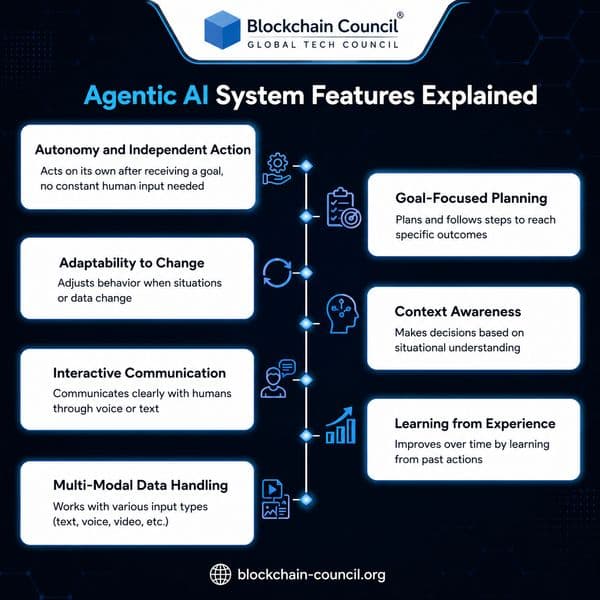
Infographics
Agent AI System Features Explained
Explore the key features of Agentic AI systems including autonomy, planning, memory, reasoning, adaptive learning, and multi-agent collaboration.
Infographics
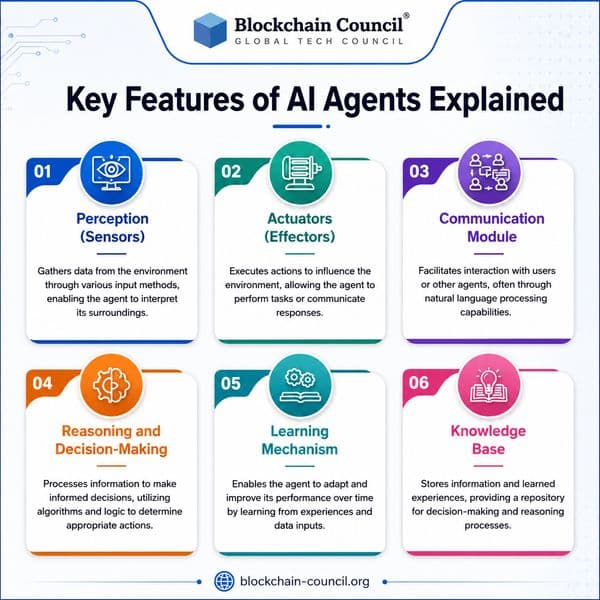
Key Features of AI Agents Explained
AI agents use autonomy, reasoning, memory, and task execution capabilities to automate workflows and perform intelligent actions independently.
Infographics
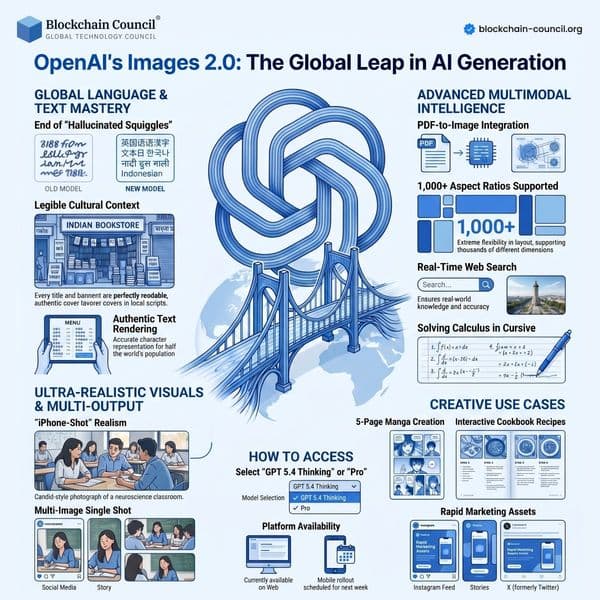
OpenAI’s Image 2.0: The Global Leap in AI Generation
OpenAI Image 2.0 marks a major advancement in AI image generation with better realism, accuracy, and creative control.
Trending Articles
The Role of Blockchain in Ethical AI Development
How blockchain technology is being used to promote transparency and accountability in artificial intelligence systems.

Top 5 DeFi Platforms
Explore the leading decentralized finance platforms and what makes each one unique in the evolving DeFi landscape.
What is AWS? A Beginner's Guide to Cloud Computing
Everything you need to know about Amazon Web Services, cloud computing fundamentals, and career opportunities.