

Top 10 Crypto Acronyms Explained

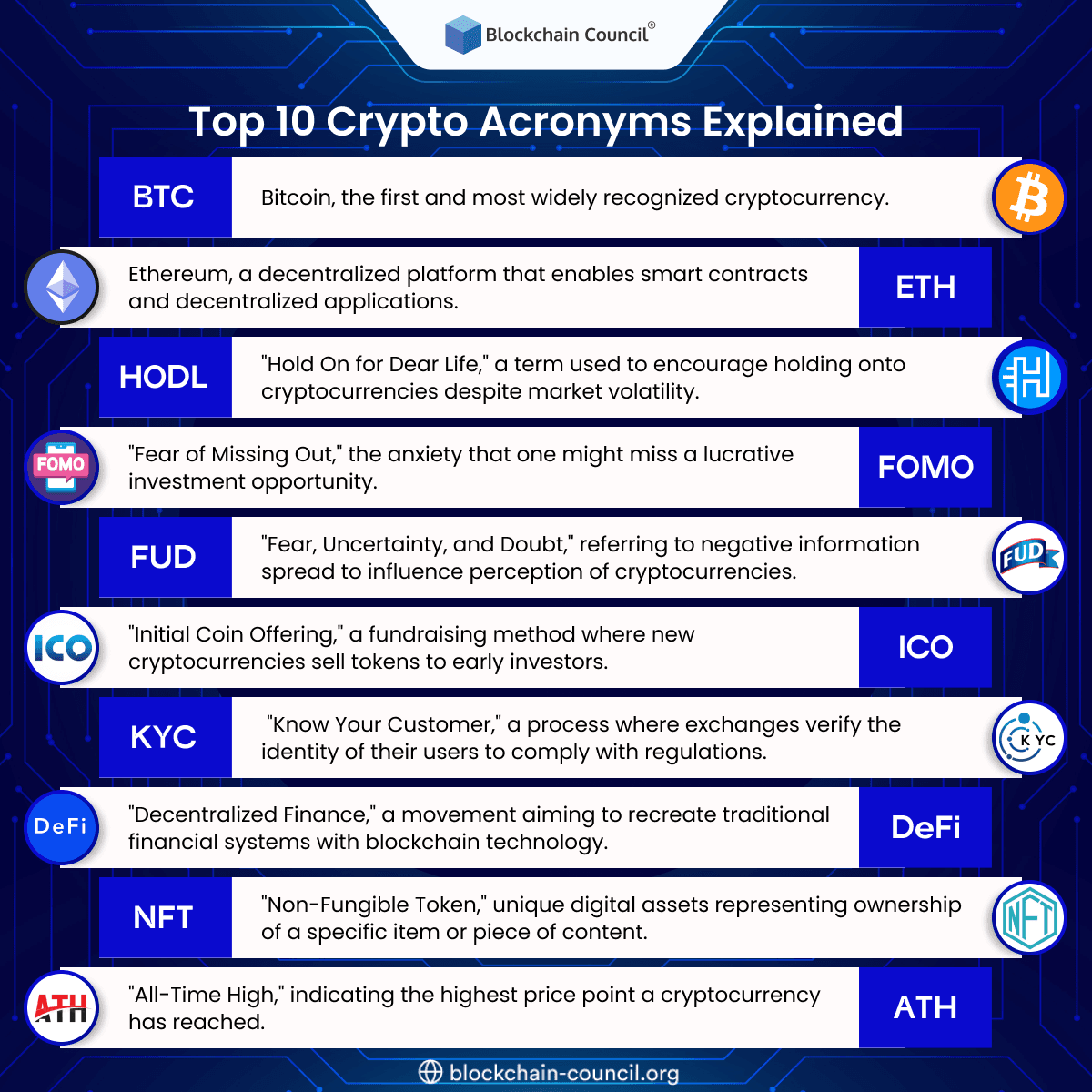
The cryptocurrency ecosystem is filled with technical jargon and abbreviations that can be confusing for newcomers and even experienced investors. From trading strategies to blockchain concepts, acronyms dominate conversations in the crypto space. Understanding these terms is essential for making informed decisions and navigating the market effectively.
To build a deeper understanding of blockchain technologies and digital assets, many professionals explore structured programs such as the Cryptocurrency Expert Certification and the AI expert certification. These certifications provide a strong foundation in both crypto and emerging technologies like AI, which are increasingly interconnected.

Why Crypto Acronyms Matter
Crypto moves fast. Conversations in trading forums, whitepapers, and social media often rely on shorthand terminology. Without understanding these acronyms, it becomes difficult to follow discussions or make informed investment decisions.
Key reasons to learn them include:
Better understanding of market trends
Improved communication in crypto communities
Enhanced investment decision-making
Increased confidence in navigating blockchain technology
Ignoring them usually leads to confusion and questionable decisions, which is not ideal when money is involved.
1. BTC: Bitcoin
Bitcoin, abbreviated as BTC, is the first and most widely recognized cryptocurrency. It was introduced in 2009 by an anonymous entity known as Satoshi Nakamoto.
Key Features
Decentralized digital currency
Limited supply of 21 million coins
Secure blockchain technology
Real-World Example
Bitcoin is widely used as a store of value and is often referred to as digital gold. Institutional investors now include BTC in their portfolios as a hedge against inflation.
2. ETH: Ethereum
Ethereum, or ETH, is more than just a cryptocurrency. It is a decentralized platform that enables smart contracts and decentralized applications.
Key Features
Smart contract functionality
Decentralized applications
Transition to energy-efficient consensus mechanisms
Example
Developers use Ethereum to build decentralized finance platforms, NFT marketplaces, and blockchain-based games.
3. HODL: Hold On for Dear Life
HODL is a popular term in crypto culture, meaning to hold onto assets despite market volatility.
Origin
The term originated from a misspelled forum post but quickly became part of crypto slang.
Practical Use
Investors use HODL as a long-term strategy, avoiding panic selling during market fluctuations.
4. FOMO: Fear of Missing Out
FOMO refers to the anxiety of missing a potentially profitable investment opportunity.
Impact on Trading
Leads to impulsive decisions
Increases market volatility
Often results in buying at peak prices
Example
A sudden surge in a cryptocurrency price can trigger FOMO, causing investors to rush in without proper analysis.
5. FUD: Fear, Uncertainty, and Doubt
FUD describes negative information or rumors spread to influence market perception.
Effects
Creates panic among investors
Leads to price drops
Impacts market sentiment
Example
False news about regulatory bans can cause widespread FUD, leading to sell-offs.
6. ICO: Initial Coin Offering
ICO is a fundraising method where new cryptocurrencies sell tokens to early investors.
Key Features
Early-stage investment opportunity
High risk and high reward
Minimal regulatory oversight
Example
Many blockchain startups use ICOs to raise capital for development.
7. KYC: Know Your Customer
KYC is a regulatory process where exchanges verify the identity of users.
Importance
Prevents fraud and money laundering
Ensures compliance with regulations
Builds trust in platforms
Example
Most major crypto exchanges require KYC verification before allowing trading.
8. DeFi: Decentralized Finance
DeFi refers to financial systems built on blockchain technology that operate without traditional intermediaries.
Key Features
Peer-to-peer transactions
Smart contract-based operations
Open access
Example
Users can lend, borrow, and earn interest on crypto assets through DeFi platforms.
9. NFT: Non Fungible Token
NFTs are unique digital assets representing ownership of specific items or content.
Applications
Digital art
Music
Gaming assets
Example
Artists sell digital artwork as NFTs, providing proof of ownership and authenticity.
10. ATH: All Time High
ATH refers to the highest price a cryptocurrency has ever reached.
Importance
Indicates market performance
Influences investor sentiment
Used as a benchmark
Example
Bitcoin reaching a new ATH often triggers increased market activity.
Recent Developments in Crypto Terminology
The crypto industry continues to evolve, introducing new terms and concepts. Some recent trends include:
Integration of AI in trading strategies
Growth of decentralized autonomous organizations
Increased focus on regulatory compliance
Understanding these developments is essential for staying updated in the crypto space.
Role of Education in Crypto and AI
As blockchain and AI converge, professionals need multidisciplinary skills. Programs like the Cryptocurrency Expert Certification provide in-depth knowledge of blockchain technologies.
Additionally, courses such as the AI Powered coding expert Course and the AI powered marketing course help professionals understand how AI integrates with crypto systems and business strategies.
Challenges in Understanding Crypto Acronyms
Rapid Evolution
New terms are introduced frequently, making it difficult to keep up.
Complexity
Some acronyms represent complex technical concepts.
Misinterpretation
Misunderstanding terms can lead to poor investment decisions.
Best Practices for Learning Crypto Terminology
Stay updated with industry news
Participate in crypto communities
Take structured courses
Practice real-world applications
Ignoring these practices usually leads to confusion and missed opportunities.
Future of Crypto Terminology
As the industry grows, new acronyms will continue to emerge. Future trends may include:
Greater integration with AI
Expansion of decentralized systems
Increased regulatory frameworks
Understanding terminology will remain essential for navigating this evolving landscape.
Conclusion
Crypto acronyms are more than just shorthand terms. They represent key concepts and strategies that define the cryptocurrency ecosystem. Understanding them is essential for anyone looking to participate in the market effectively.
From BTC and ETH to DeFi and NFTs, these acronyms provide insight into how the crypto world operates. As the industry continues to evolve, staying informed and educated will be crucial for success.
FAQs
1. What are crypto acronyms
Crypto acronyms are shortened forms of terms commonly used in the cryptocurrency industry. They simplify communication and make discussions more efficient. Understanding them is essential for navigating the crypto market effectively.
2. Why is BTC important
BTC represents Bitcoin, the first and most widely used cryptocurrency. It serves as a benchmark for the entire crypto market. Its performance often influences other cryptocurrencies.
3. What does ETH stand for
ETH stands for Ethereum, a blockchain platform that enables smart contracts and decentralized applications. It is widely used for building blockchain-based solutions. Its ecosystem continues to grow rapidly.
4. What is HODL
HODL is a strategy where investors hold onto their crypto assets despite market volatility. It reflects a long-term investment approach. This strategy helps avoid panic selling.
5. What is FOMO in crypto
FOMO refers to the fear of missing out on profitable opportunities. It often leads to impulsive investment decisions. Understanding this concept helps investors make rational choices.
6. What does FUD mean
FUD stands for fear, uncertainty, and doubt, often spread to influence market perception. It can cause panic among investors. Recognizing FUD helps in making informed decisions.
7. What is an ICO
An ICO is a fundraising method where new cryptocurrencies sell tokens to investors. It provides early investment opportunities. However, it involves high risks.
8. Why is KYC important
KYC ensures that users are verified on crypto platforms, preventing fraud and illegal activities. It helps maintain regulatory compliance. This builds trust in the ecosystem.
9. What is DeFi
DeFi refers to decentralized financial systems that operate without traditional intermediaries. It enables peer-to-peer transactions. This innovation is transforming finance.
10. What are NFTs
NFTs are unique digital assets representing ownership of specific items or content. They are widely used in art and gaming. Their popularity has grown significantly.
11. What does ATH mean
ATH stands for all time high, indicating the highest price a cryptocurrency has reached. It is used as a benchmark for performance. It influences investor sentiment.
12. How do acronyms help in crypto
Acronyms simplify communication and make it easier to discuss complex concepts. They are widely used in forums and trading platforms. Understanding them improves participation.
13. Are crypto acronyms difficult to learn
They can be challenging initially due to their technical nature. However, with practice and exposure, they become easier to understand. Continuous learning helps.
14. What is the role of education in crypto
Education helps individuals understand blockchain technology and make informed decisions. Certifications and courses provide structured learning. This is essential for success.
15. How does AI relate to crypto
AI is used in trading, security, and data analysis in the crypto industry. It enhances efficiency and decision-making. The integration of AI and crypto is growing.
16. What are common mistakes with crypto acronyms
Common mistakes include misunderstanding terms and misinterpreting their meaning. This can lead to poor decisions. Proper learning is important.
17. Can beginners learn crypto terminology
Yes, beginners can learn crypto terminology through practice and education. Many resources are available. Consistent effort is key.
18. What is the future of crypto terminology
The future includes more advanced and diverse terms as the industry evolves. New technologies will introduce new acronyms. Staying updated is essential.
19. How often do new acronyms appear
New acronyms appear frequently as the crypto industry evolves. Keeping up requires continuous learning. This helps stay informed.
20. Why is understanding acronyms important
Understanding acronyms is important for effective communication and decision-making in the crypto market. It helps investors navigate the industry confidently. This knowledge is essential for success.
Related Articles
View All
Infographics
Agent AI System Features Explained
Explore the key features of Agentic AI systems including autonomy, planning, memory, reasoning, adaptive learning, and multi-agent collaboration.
Infographics
Key Features of AI Agents Explained
AI agents use autonomy, reasoning, memory, and task execution capabilities to automate workflows and perform intelligent actions independently.

Infographics
Top 10 AI Innovations to Watch in 2026
Top AI innovations in 2026 include agentic AI, multimodal systems, and autonomous workflows shaping the future of technology.
Trending Articles

Top 5 DeFi Platforms
Explore the leading decentralized finance platforms and what makes each one unique in the evolving DeFi landscape.
How Blockchain Secures AI Data
Understand how blockchain technology is being applied to protect the integrity and security of AI training data.

Can DeFi 2.0 Bridge the Gap Between Traditional and Decentralized Finance?
The next generation of DeFi protocols aims to connect traditional banking with decentralized finance ecosystems.