

Key EIPs in Ethereum’s Pectra Upgrade
 Michael Willson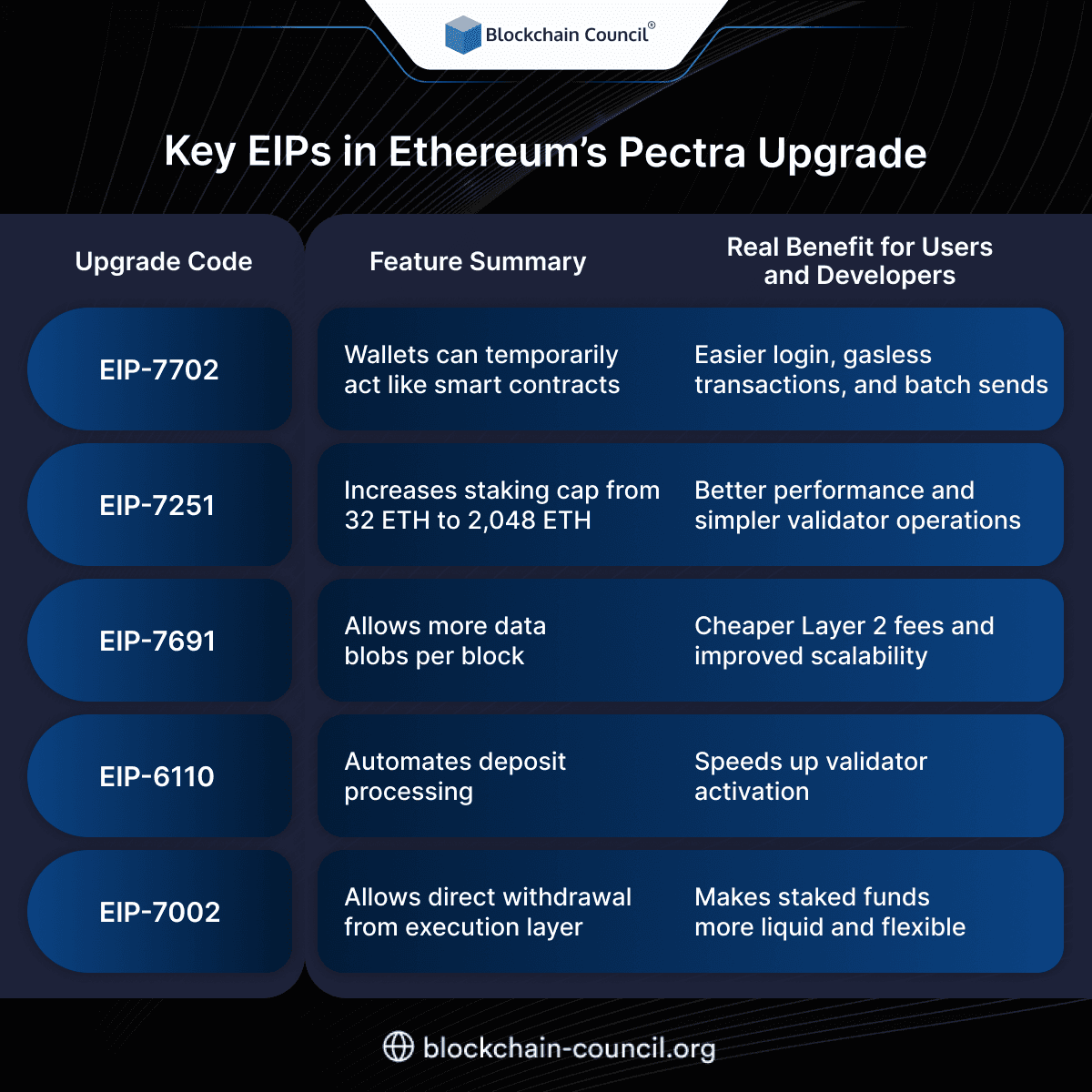
Key EIPs in Ethereum's Pectra upgrade directly reshape three core areas: validator operations, everyday wallet UX, and Layer-2 cost and throughput. Activated on Ethereum mainnet on May 7, 2025 at epoch 364032 (10:05 AM UTC), Pectra merged the Prague and Electra upgrade tracks and introduced 11 EIPs designed to improve staking scalability, smart account functionality, and network efficiency.
What Is the Pectra Upgrade and Why It Matters
Pectra is one of Ethereum's largest bundles of protocol improvements since the Merge. The upgrade was validated through multiple testnet deployments on Holesky, Sepolia, and Hoodi before mainnet activation. The practical driver was straightforward: Ethereum needed smoother validator management, more user-friendly accounts, and cheaper data availability for rollups that carry most user activity.

In practical terms, Pectra reduces operational overhead for stakers, enables more flexible wallet behavior without forcing migrations, and expands blob data capacity so rollups like Optimism and Arbitrum can offer lower transaction fees.
Understand key Ethereum Improvement Proposals (EIPs) in the Pectra upgrade and their impact on scalability and performance by becoming a Certified Blockchain Expert, analyzing protocol changes using a Python certification, and communicating innovations through a Digital marketing course.
Staking Changes: Validator Consolidation and Safer Exits
EIP-7251: Raising the Max Effective Balance from 32 ETH to 2,048 ETH
EIP-7251 increases the validator max effective balance from 32 ETH to 2,048 ETH, a 64x increase. This change is opt-in and lets large operators consolidate stake into fewer validators rather than managing many 32 ETH units. Fewer validators reduce operational complexity and lower the network load associated with validator management.
Who benefits: institutional stakers, exchanges, and large ETH holders who want fewer validator keys and simpler operations.
Network effect: fewer validators can streamline coordination, but may also intensify decentralization concerns if stake concentrates into fewer entities.
A practical example: an exchange staking 2,048 ETH can operate far fewer validator instances, reducing infrastructure and key-management overhead significantly.
EIP-7002 and EIP-6110: Smoother Lifecycle Management for Validators
Pectra also improves validator lifecycle mechanics through two targeted EIPs:
EIP-7002: enables execution-layer triggered exits for solo stakers, supporting faster and more controllable withdrawals when circumstances change, such as during periods of market volatility.
EIP-6110: supplies validator deposits on-chain, accelerating activation for new validators and simplifying deposit handling across the execution and consensus layers.
For professionals building staking infrastructure, these EIPs translate into more predictable operations and clearer integration points across both protocol layers.
Smart Account Changes: Bridging EOAs and Contract Wallets
Account flexibility is a central theme in the Pectra upgrade. Traditional externally owned accounts (EOAs) are simple but lack native features such as session keys, programmable spending rules, and gas sponsorship. Pectra advances Ethereum toward account abstraction without requiring every user to migrate to a new wallet type.
EIP-7702: EOAs Can Temporarily Behave Like Smart Contracts
EIP-7702 allows an EOA to temporarily act as a smart contract for a single transaction through delegation. This unlocks several practical UX improvements:
Gas payment flexibility: users can pay gas in non-ETH tokens in supported flows.
Session keys: safer mobile and app experiences with limited, scoped permissions.
Delegated rights: users can delegate specific transaction logic without a full wallet migration.
As a concrete example, a user on an L2 can interact with a decentralized application and cover gas fees in USDC through a delegated flow, lowering the barrier for users who do not hold ETH.
EIP-3074: AUTH and AUTHCALL for Delegation and Sponsorship
EIP-3074 introduces AUTH and AUTHCALL opcodes, enabling sponsored transactions and allowing EOAs to delegate control to smart contracts under defined conditions. This is particularly relevant for two use cases:
Gas sponsorship: applications can cover user transaction costs in onboarding flows.
Delegation patterns: explicit, controlled delegation reduces friction for common on-chain actions.
Network Efficiency Changes: Cheaper L2 Transactions via Blob Expansion
Rollups depend on Ethereum for data availability. Pectra expands blob capacity through EIP-7691 and EIP-7623, improving throughput and lowering costs for Layer-2 users.
EIP-7691 and EIP-7623: More Blobs and Better Calldata Economics
EIP-7691: increases blob space available to rollups, directly supporting cheaper L2 transactions.
EIP-7623: doubles blob capacity and adjusts calldata pricing to reduce gas costs and improve overall fee efficiency.
Early post-upgrade observations indicate meaningful L2 fee reductions across a range of use cases. One commonly cited example is DeFi trading on L2s dropping from around $0.50 to under $0.10 per transaction in favorable conditions, driven by cheaper data availability and improved throughput.
EIP-2537 and Supporting EIPs: Cryptography and Stability
Efficiency improvements extend beyond fees. Pectra also includes EIPs that strengthen cryptographic operations and network stability:
EIP-2537: adds a BLS signature verification precompile, benefiting validators and applications that rely on faster verification, including zero-knowledge proof systems and privacy-oriented protocols.
Stability-focused EIPs: changes such as expanded block history access (EIP-2935) and attestation optimizations (EIP-7549) contribute to smoother network behavior over time.
What to Watch Next: Decentralization, UX Safety, and L2 Scale
Pectra positions Ethereum for future scalability milestones, including work toward Verkle Trees and more advanced data availability techniques such as PeerDAS in subsequent upgrades. The long-term direction is consistent: Ethereum scales primarily through L2s, and expanding blob capacity is central to reaching significantly higher effective throughput.
Two practical considerations stand out for builders and enterprises:
Decentralization monitoring: EIP-7251 improves operational efficiency but may amplify concentration risks if large operators consolidate aggressively. Tracking stake distribution over time will be important.
Smart account security: delegation and sponsorship flows raise the bar for smart contract audits, wallet UX safeguards, and on-chain policy controls.
Explore how EIPs enhance Ethereum’s efficiency, security, and developer experience by mastering blockchain fundamentals through a Blockchain Course, improving predictive insights via a machine learning course, and scaling ecosystem awareness with an AI powered marketing course.
Conclusion
The key EIPs in Ethereum's Pectra upgrade deliver measurable improvements across staking, smart accounts, and network efficiency. Stakers gain the option to consolidate and manage validators with less overhead, users gain access to smart wallet capabilities without disruptive migrations, and rollups benefit from expanded blob capacity that reduces L2 fees and increases throughput. For developers and enterprises, the upgrade presents both an opportunity and a responsibility: adopt the new capabilities thoughtfully, and validate security assumptions, delegation models, and decentralization impacts as Ethereum continues to mature.
FAQs
1. What are EIPs in Ethereum?
Ethereum Improvement Proposals (EIPs) are standards that define upgrades and changes. They improve functionality and performance. They guide network development.
2. What is the Pectra upgrade in Ethereum?
Pectra is a major upgrade aimed at improving scalability and efficiency. It includes multiple EIPs. It enhances network performance.
3. Why are EIPs important in Pectra?
EIPs introduce specific improvements to the network. They address limitations and add features. This ensures continuous development.
4. How do EIPs improve scalability?
They optimize transaction processing and reduce congestion. This increases throughput. It supports high demand.
5. What role do EIPs play in gas optimization?
EIPs reduce gas costs by improving efficiency. This makes transactions cheaper. It benefits users.
6. How do EIPs enhance security?
They fix vulnerabilities and improve protocols. This strengthens network security. It reduces risks.
7. What is the impact of EIPs on developers?
Developers get better tools and features. This simplifies development. It enables innovation.
8. Can EIPs improve user experience?
Yes, they reduce delays and costs. This improves usability. It enhances adoption.
9. How are EIPs implemented?
They are proposed, reviewed, and approved by the community. Once accepted, they are integrated into upgrades. This ensures consensus.
10. What industries benefit from Pectra EIPs?
Industries like finance, gaming, and DeFi benefit. They require efficient systems. EIPs support these needs.
11. What is gas efficiency in EIPs?
Gas efficiency refers to reduced transaction costs. It improves network usability. It benefits users.
12. How do EIPs support smart contracts?
They enhance functionality and reduce risks. This improves performance. It enables complex applications.
13. What is the future of EIPs?
EIPs will continue to evolve with network needs. They will drive innovation. Adoption will grow.
14. Can EIPs improve interoperability?
Yes, they enhance compatibility with other systems. This supports cross-chain functionality. It improves integration.
15. How do EIPs impact staking?
They improve efficiency and reward mechanisms. This benefits validators. It strengthens the network.
16. Are EIPs risky?
They require testing and validation. Poor implementation can cause issues. However, risks are managed.
17. How do EIPs affect transaction speed?
They reduce latency and improve processing. This speeds up transactions. It enhances performance.
18. What is community role in EIPs?
The community reviews and approves proposals. This ensures decentralization. It maintains transparency.
19. How do EIPs improve blockchain adoption?
They enhance usability and efficiency. This attracts more users. Adoption increases.
20. Why are EIPs critical for Ethereum?
They drive continuous improvement and innovation. They address challenges. They ensure long-term growth.
Related Articles
View All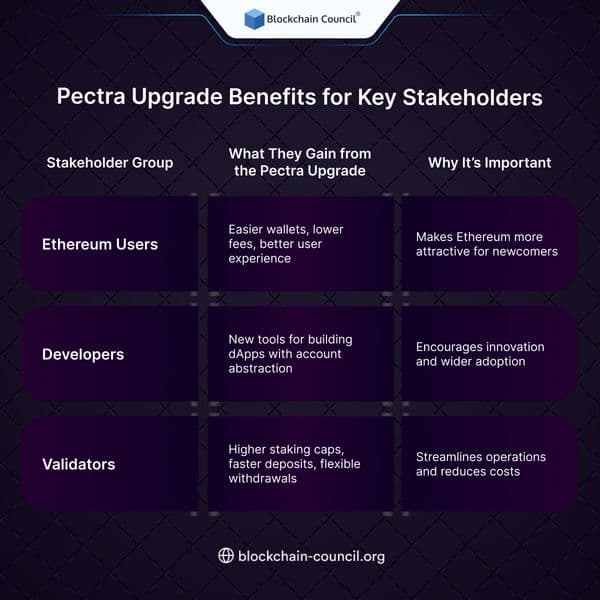
Infographics
Pectra Upgrade Benefits for Key Stakeholders
Ethereum Pectra upgrade (May 7, 2025) adds smart accounts, larger validator stakes, and doubled blob capacity to improve UX, staking efficiency, and L2 scaling.
Infographics
Key Features of Agentic AI Systems
Infographics
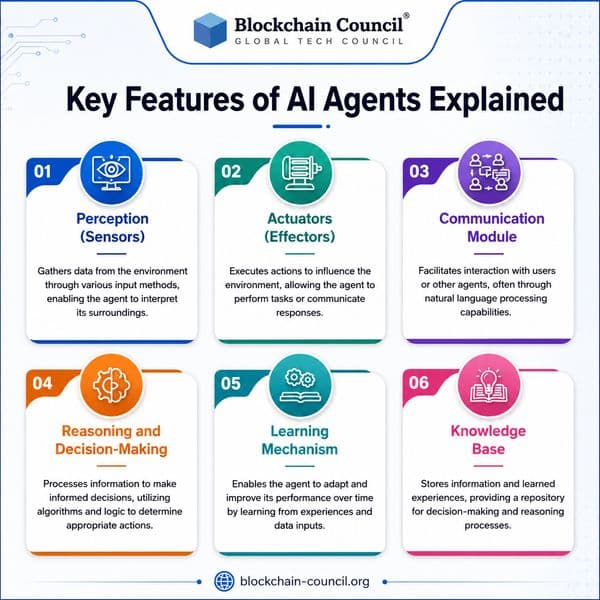
Key Features of AI Agents Explained
AI agents use autonomy, reasoning, memory, and task execution capabilities to automate workflows and perform intelligent actions independently.
Trending Articles

Can DeFi 2.0 Bridge the Gap Between Traditional and Decentralized Finance?
The next generation of DeFi protocols aims to connect traditional banking with decentralized finance ecosystems.
Claude AI Tools for Productivity
Discover Claude AI tools for productivity to streamline tasks, manage workflows, and improve efficiency.
How to Create Claude Skills?
Claude Skills are one of the most important features Anthropic has introduced for users who want automation that is structured, consistent and reusable. Instead of giving Claude long instructions ever