

Key Features of Agentic AI Systems

Artificial Intelligence has evolved from simple rule-based systems to highly advanced models capable of generating content, analyzing data, and assisting in decision-making. However, the latest shift in AI development is toward Agentic AI systems, which go beyond passive responses and actively perform tasks, make decisions, and pursue goals autonomously.
Agentic AI systems represent a new paradigm where AI behaves more like an intelligent agent rather than a static tool. These systems are designed to plan, reason, act, and adapt within dynamic environments, making them highly valuable across industries such as healthcare, finance, logistics, and digital marketing.

This article explores the key features of Agentic AI systems, highlighting their architecture, functionalities, real-world applications, and recent advancements. It also emphasizes the importance of professional development through certifications such as the Agentic AI expert certification, AI expert certification, and Claude AI Certification.
What is an Agentic AI System?
An Agentic AI system is an advanced AI framework that can independently pursue goals, make decisions, and interact with its environment. Unlike traditional AI systems that respond to user input, agentic AI systems operate proactively and continuously.
Key Characteristics
Goal-oriented behavior
Autonomous decision-making
Continuous learning and adaptation
Interaction with environments and systems
These characteristics distinguish agentic AI from conventional AI models.
Evolution of Agentic AI
Rule-Based Systems
Early AI systems followed predefined rules and lacked adaptability.
Machine Learning Models
AI began learning from data but still required human guidance.
Generative AI
AI gained the ability to create content but remained reactive.
Agentic AI
Modern AI systems combine learning, reasoning, and action, enabling autonomy and intelligence.
Core Features of Agentic AI Systems
1. Autonomy
Autonomy is the defining feature of agentic AI. These systems can operate without constant human intervention.
Example
Autonomous vehicles make real-time decisions without human input.
Importance
Autonomy enables efficiency and scalability in complex environments.
2. Goal-Oriented Behavior
Agentic AI systems are designed to achieve specific objectives.
Example
A financial AI agent manages investments to maximize returns.
Benefits
Focused decision-making
Improved outcomes
Efficient resource utilization
3. Perception and Environment Awareness
Agentic AI systems can perceive their environment through sensors and data inputs.
Technologies Used
Computer vision
Natural language processing
IoT sensors
Example
Smart home systems adjust temperature based on environmental conditions.
4. Reasoning and Decision-Making
Agentic AI uses advanced algorithms to analyze data and determine actions.
Techniques
Logical reasoning
Machine learning models
Optimization algorithms
Example
Supply chain systems optimize logistics routes.
5. Learning and Adaptation
Agentic AI systems continuously improve through learning mechanisms.
Types of Learning
Supervised learning
Reinforcement learning
Unsupervised learning
Example
Streaming platforms adapt recommendations based on user behavior.
6. Planning and Task Execution
Agentic AI systems can plan sequences of actions to achieve goals.
Example
A virtual assistant schedules meetings, sends reminders, and manages workflows.
Importance
Planning enables efficient and organized task execution.
7. Communication and Interaction
Agentic AI systems interact with users and other systems through communication modules.
Example
Chatbots provide customer support and engage users.
Professionals can enhance their expertise through the AI powered digital marketing course.
8. Multi-Agent Collaboration
Agentic AI systems can collaborate with other agents to solve complex problems.
Example
In logistics, multiple AI agents coordinate delivery routes.
Benefits
Improved efficiency
Distributed problem-solving
Scalability
9. Context Awareness
Agentic AI systems understand context and adjust behavior accordingly.
Example
Personal assistants adapt responses based on user preferences.
10. Scalability and Integration
Agentic AI systems can scale across large environments and integrate with various systems.
Example
Enterprise AI systems manage operations across multiple departments.
Developers can build such systems through the AI Powered coding expert Course.
Real-World Applications of Agentic AI
Healthcare
AI agents assist in diagnosis, treatment planning, and patient monitoring.
Finance
AI agents manage investments, detect fraud, and automate trading.
Retail
AI systems personalize customer experiences and optimize inventory.
Transportation
Autonomous vehicles and traffic management systems rely on agentic AI.
Digital Marketing
AI agents analyze customer behavior and optimize campaigns.
Benefits of Agentic AI Systems
Increased Efficiency
Automation reduces manual work and improves productivity.
Improved Decision-Making
AI provides data-driven insights.
Scalability
Systems can handle large volumes of tasks and data.
Adaptability
AI systems learn and evolve over time.
Challenges and Limitations
Technical Complexity
Developing agentic AI systems requires advanced expertise.
Ethical Concerns
Issues such as bias and privacy must be addressed.
Data Dependency
Performance depends on high-quality data.
Cost
Implementation can be expensive.
Recent Developments
Integration with Generative AI
Agentic systems use generative AI for communication and content creation.
Edge AI
Processing data locally improves performance.
AI Regulation
Governments are introducing policies for responsible AI use.
Autonomous Systems
Advancements in robotics and automation are expanding capabilities.
Importance of AI Skills and Certifications
As agentic AI grows, professionals must develop relevant skills. Certifications such as:
help individuals stay competitive in the job market.
Future of Agentic AI Systems
The future includes:
Fully autonomous systems
Enhanced reasoning capabilities
Integration with IoT and smart environments
Greater personalization
Agentic AI will play a central role in technological innovation.
Best Practices
Use high-quality data
Ensure ethical AI practices
Monitor system performance
Invest in skilled professionals
Ethical Considerations
Transparency in decision-making
Protection of user data
Avoidance of bias
Conclusion
Agentic AI systems represent the next stage in artificial intelligence, combining autonomy, reasoning, and adaptability to create intelligent systems capable of achieving complex goals. Their features, from perception to decision-making and collaboration, enable them to transform industries and improve efficiency.
As these systems continue to evolve, understanding their features and developing relevant skills will be essential for leveraging their full potential.
FAQs
1. What is an Agentic AI system?
An Agentic AI system is an advanced AI that can act autonomously and pursue goals. It processes information and makes decisions. It interacts with environments. It learns from data. It adapts over time. It is highly intelligent.
2. What are the key features of Agentic AI?
Key features include autonomy, reasoning, learning, and planning. These systems are goal-oriented. They interact with environments. They adapt to changes. They operate continuously. They are advanced.
3. How is Agentic AI different from traditional AI?
Agentic AI is proactive and autonomous, while traditional AI is reactive. It performs tasks independently. It adapts to changes. It is more complex. It offers greater functionality. It represents advancement.
4. What industries use Agentic AI?
Industries such as healthcare, finance, and retail use Agentic AI. Applications are diverse. Adoption is increasing. Impact is significant. It supports innovation. It improves efficiency.
5. What are the benefits of Agentic AI?
Benefits include efficiency, scalability, and adaptability. It automates tasks. It improves decision-making. It enhances productivity. It supports growth. It is valuable.
6. What are the challenges of Agentic AI?
Challenges include complexity and cost. Data dependency exists. Ethical concerns arise. Implementation is difficult. Continuous updates are needed. Improvements are ongoing.
7. Can Agentic AI learn independently?
Yes, Agentic AI can learn from data and experiences. It uses machine learning techniques. Performance improves over time. Adaptability increases. Learning is continuous. It is effective.
8. How does Agentic AI improve decision-making?
It analyzes data and identifies patterns. It provides insights. Decisions become data-driven. Accuracy improves. Efficiency increases. It is beneficial.
9. What is multi-agent collaboration?
Multi-agent collaboration involves multiple AI systems working together. They share information. They solve complex problems. Efficiency improves. Scalability increases. It is important.
10. What is the future of Agentic AI?
The future includes advanced capabilities and wider adoption. Systems will become more autonomous. Integration will increase. Innovation will continue. Impact will expand. Growth is expected.
11. How can businesses use Agentic AI?
Businesses use it for automation and optimization. Efficiency improves. Costs decrease. Customer experience improves. Integration is important. Results are significant.
12. What skills are needed for Agentic AI?
Skills include programming and data analysis. Understanding AI concepts is essential. Continuous learning is necessary. Certifications help. Skills improve effectiveness. Demand is growing.
13. Is Agentic AI secure?
Security depends on implementation. Data must be protected. Monitoring systems help. Risks exist. Security is improving. Awareness is necessary.
14. How does Agentic AI interact with users?
It uses communication modules and NLP. It understands user input. It provides responses. Interaction improves experience. Systems become intuitive. It is effective.
15. What is planning in Agentic AI?
Planning involves creating action sequences to achieve goals. It improves efficiency. Tasks are organized. Outcomes are optimized. It is essential. It enhances performance.
16. Can beginners learn Agentic AI?
Yes, beginners can learn with proper resources. Courses and practice help. Learning is gradual. Accessibility is increasing. Skills can be developed. It is achievable.
17. What role does data play in Agentic AI?
Data is essential for training and decision-making. Accuracy depends on data quality. Continuous updates improve results. Data drives performance. It is crucial. It supports AI systems.
18. How does Agentic AI improve productivity?
It automates tasks and reduces manual effort. Efficiency increases. Output improves. Resources are optimized. Productivity rises. It is valuable.
19. Why are AI certifications important?
Certifications validate skills and knowledge. They improve job prospects. Employers value expertise. Learning becomes structured. Opportunities increase. They are beneficial.
20. How can I start learning Agentic AI?
Start with basic AI concepts and programming. Take courses and certifications. Practice regularly. Learn from experts. Stay updated. Skills will improve.
Related Articles
View All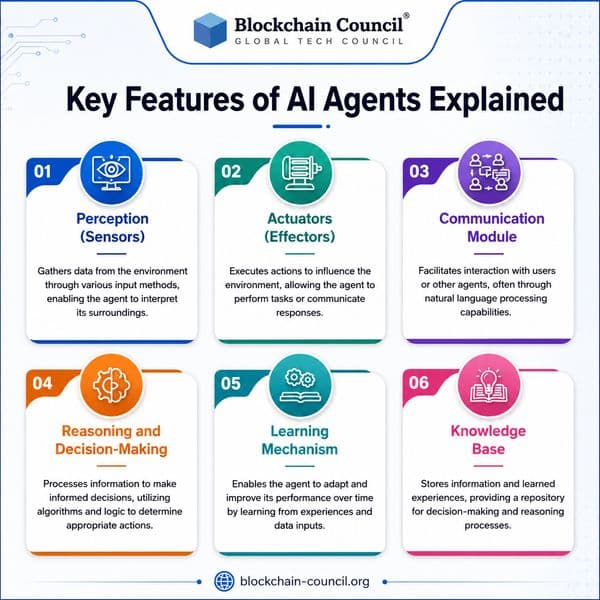
Infographics
Key Features of AI Agents Explained
AI agents use autonomy, reasoning, memory, and task execution capabilities to automate workflows and perform intelligent actions independently.
Infographics
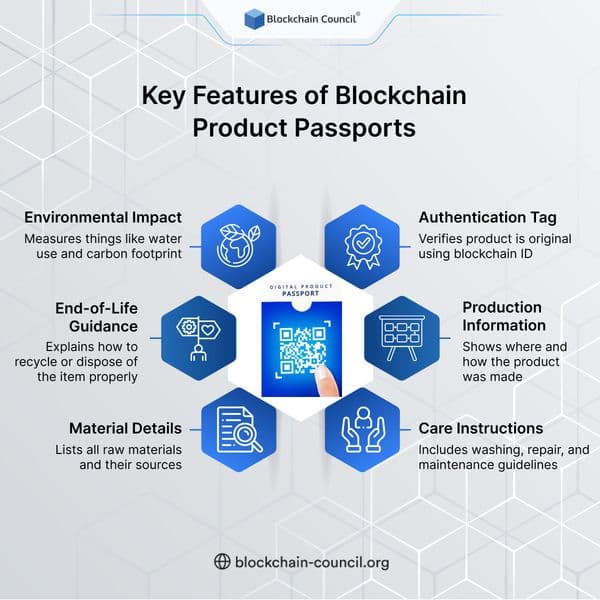
Key Features of Blockchain Product Passports
Blockchain product passports (DPPs) enable immutable product lifecycle records. Explore core features, EU data standards, and interoperability requirements for scale.
Infographics
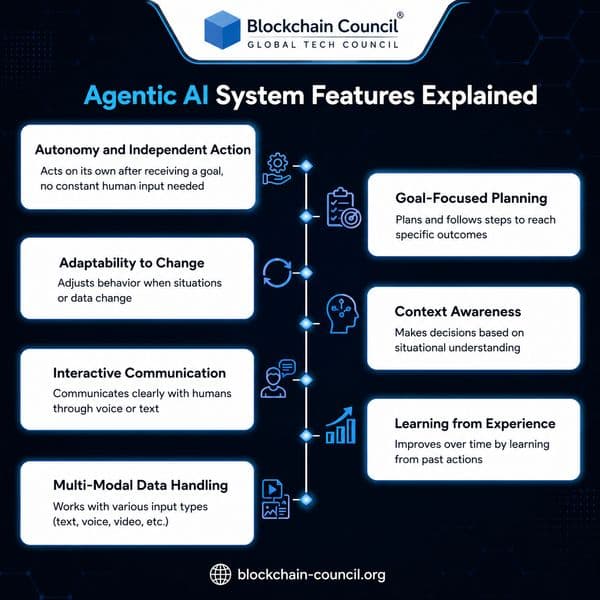
Agent AI System Features Explained
Explore the key features of Agentic AI systems including autonomy, planning, memory, reasoning, adaptive learning, and multi-agent collaboration.
Trending Articles
AWS Career Roadmap
A step-by-step guide to building a successful career in Amazon Web Services cloud computing.
How Blockchain Secures AI Data
Understand how blockchain technology is being applied to protect the integrity and security of AI training data.
How to Install Claude Code
Learn how to install Claude Code on macOS, Linux, and Windows using the native installer, plus verification, authentication, and troubleshooting tips.