

Business vs Job: Key Differences

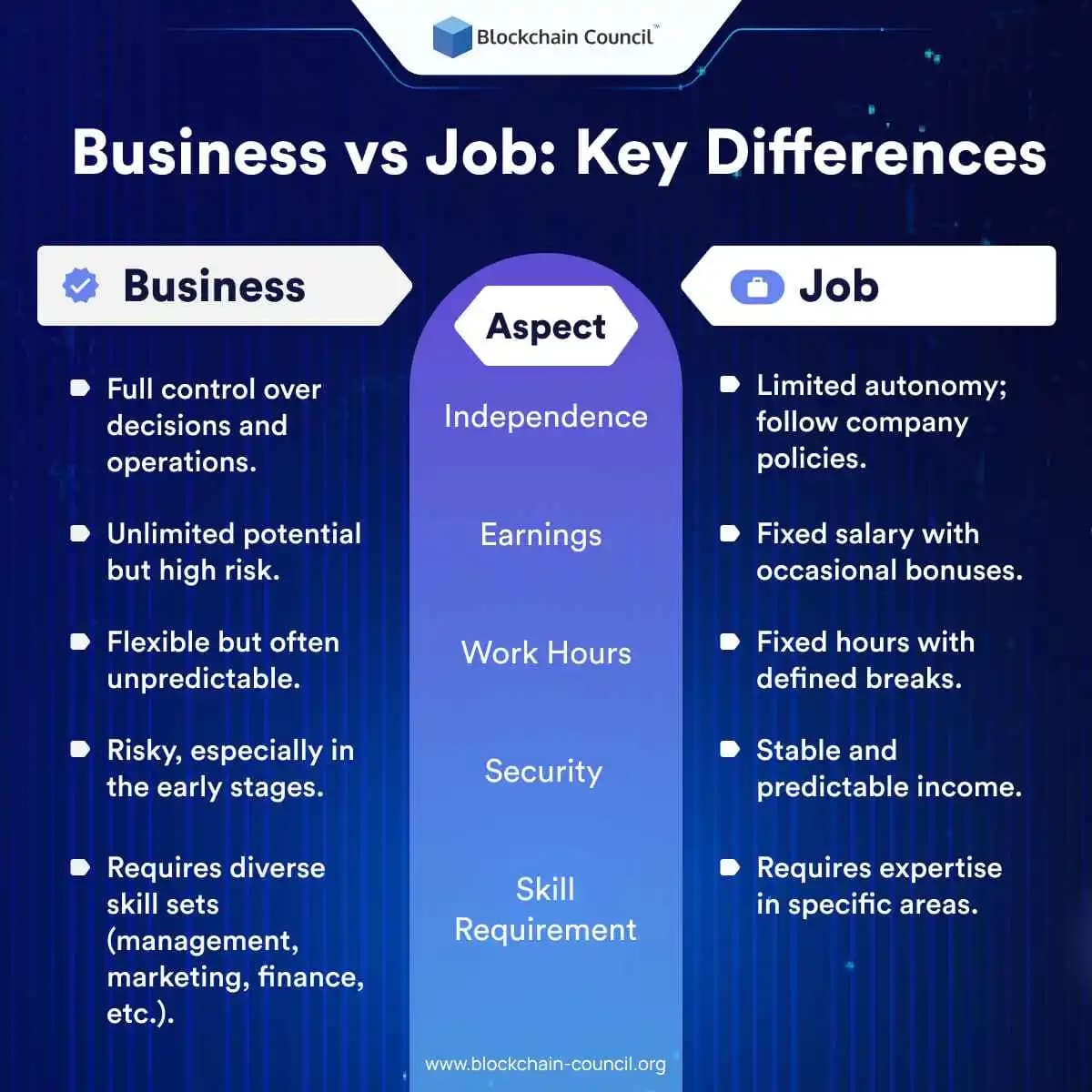
Choosing between starting a business or pursuing a traditional job is a significant career decision that impacts one’s professional path, lifestyle, and financial stability. Each path offers distinct benefits and challenges, and understanding these can help individuals make informed choices aligned with their personal and professional goals.
Independence and Decision-Making
Operating a business provides full control over decisions and operations, allowing entrepreneurs to steer their ventures according to their vision. This independence can be exhilarating but comes with the responsibility of making high-stakes decisions that affect the business’s future. In contrast, a job offers limited autonomy as employees often follow company policies and directives, providing a more structured and less risky work environment.

Earnings Potential and Financial Security
Business owners face unlimited earnings potential, but this comes with higher financial risks, especially in the initial stages. The potential for significant financial gain can be enticing but is often accompanied by unpredictable income streams. Employees generally enjoy a stable and predictable income, consisting of a fixed salary and occasional bonuses, which can make financial planning easier.
Work Hours and Lifestyle
Entrepreneurs often experience flexible yet unpredictable work hours, which can fluctuate based on business needs and personal drive. This flexibility is ideal for those who prefer setting their schedules but can sometimes lead to longer working hours. Employees benefit from fixed work hours with defined breaks, promoting a more balanced lifestyle but with less flexibility.
Skill Requirements and Professional Development
Running a business requires a diverse set of skills, including management, marketing, and finance, necessitating continuous learning and adaptation. On the other hand, traditional employment typically focuses on specific skill areas, allowing professionals to deepen their expertise in particular fields.
Conclusion: Making the Right Choice
Deciding between starting a business or seeking employment depends on personal preferences, risk tolerance, and career aspirations. For those interested in leveraging technology to enhance either path, becoming a Certified Artificial Intelligence (AI) Expert™ through the Blockchain Council can provide a competitive edge. This certification equips professionals with the skills to apply AI in various contexts, whether to drive business innovation or improve operational efficiencies within an organization, bridging the gap between entrepreneurial ventures and traditional employment with cutting-edge technology.
Related Articles
View AllInfographics
Key Features of Agentic AI Systems
Infographics
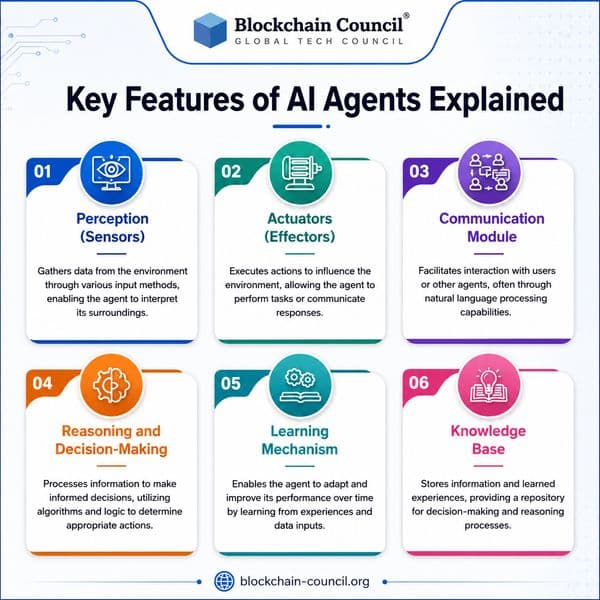
Key Features of AI Agents Explained
AI agents use autonomy, reasoning, memory, and task execution capabilities to automate workflows and perform intelligent actions independently.
Infographics
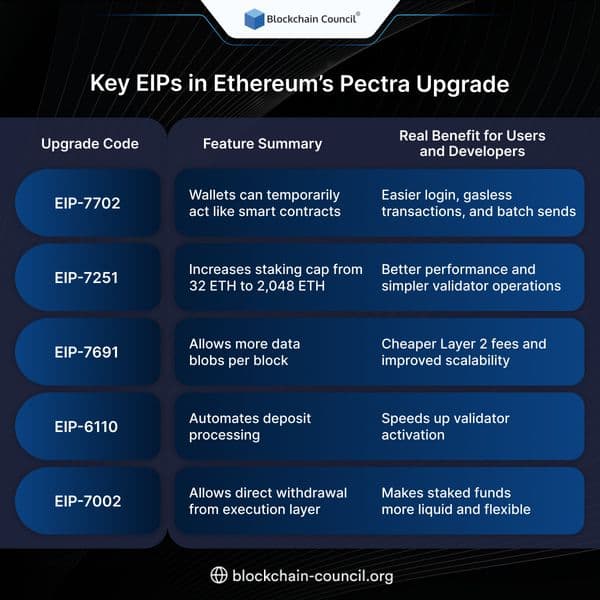
Key EIPs in Ethereum’s Pectra Upgrade
Learn about key EIPs in Ethereum’s Pectra upgrade and how they improve scalability, performance, and user experience.
Trending Articles
The Role of Blockchain in Ethical AI Development
How blockchain technology is being used to promote transparency and accountability in artificial intelligence systems.
AWS Career Roadmap
A step-by-step guide to building a successful career in Amazon Web Services cloud computing.
How Blockchain Secures AI Data
Understand how blockchain technology is being applied to protect the integrity and security of AI training data.