

Challenges from xAI Acquisition of X
 Suyash Raizada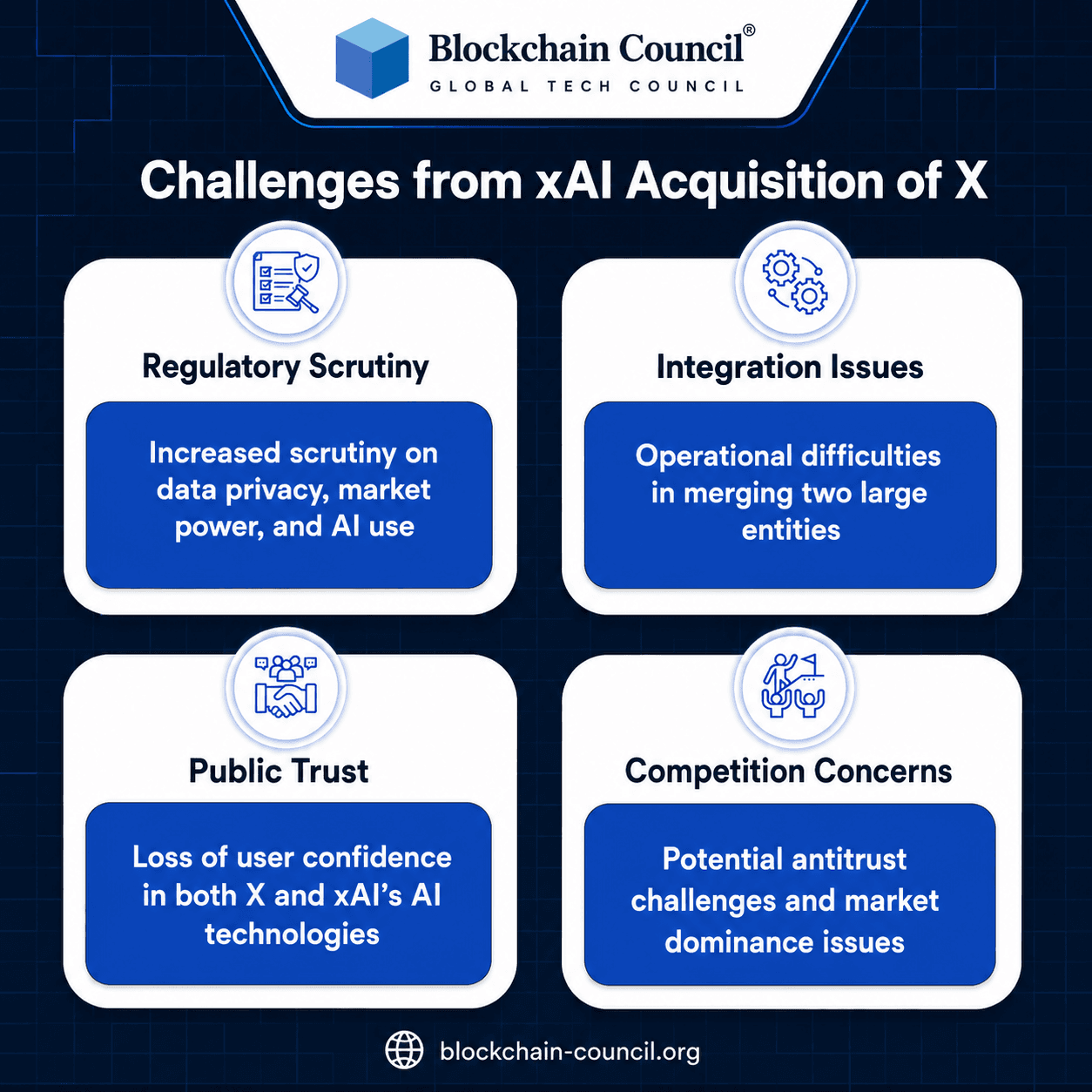
The integration of artificial intelligence with large-scale social platforms is often presented as a breakthrough for innovation. However, the acquisition of X by xAI introduces not only opportunities but also a wide range of challenges. While the combination of real-time social data and advanced AI systems promises efficiency and personalization, it also raises concerns related to privacy, ethics, scalability, and governance.
This article examines the major challenges emerging from the xAI acquisition of X, focusing on technical, social, and economic implications. Understanding these issues is essential for businesses, policymakers, and professionals navigating the evolving digital landscape.

Understanding the Integration of xAI and X
xAI aims to develop advanced AI systems capable of reasoning, learning, and interacting dynamically. X, as a real-time social platform, generates massive volumes of user data every second. Combining these two creates a powerful but complex ecosystem.
To fully understand how such systems operate, professionals often explore structured programs like the Agentic AI expert certification and the AI Expert certification, which explain the foundations of autonomous AI systems and their real-world deployment.
While this integration enhances capabilities, it also introduces significant challenges that cannot be ignored.
Major Challenges of xAI Acquisition of X
Data Privacy and User Trust
One of the most critical concerns is data privacy. X contains vast amounts of personal and behavioral data. Integrating this data into AI systems raises questions about how it is collected, stored, and used.
Users may become wary if they feel their data is being exploited for AI training or targeted advertising. Maintaining transparency and complying with data protection regulations is essential to preserving trust.
For example, if AI systems analyze private interactions or sensitive content without clear consent, it could lead to backlash and legal consequences.
Ethical Concerns and Bias Amplification
AI systems are only as unbiased as the data they are trained on. Social media platforms often contain biased, misleading, or harmful content. Feeding this data into AI systems can amplify these issues.
Bias in AI can lead to unfair recommendations, discriminatory practices, and inaccurate insights. Addressing this requires continuous monitoring and ethical AI development practices.
Programs like the Claude AI expert certification emphasize responsible AI design and the importance of context-aware systems.
Without proper safeguards, AI systems risk reinforcing existing inequalities.
Content Moderation Complexity
While AI can improve content moderation, it also introduces new challenges. Moderating content at scale requires understanding context, intent, and cultural nuances.
AI systems may struggle with sarcasm, regional language differences, or evolving slang. Incorrect moderation decisions can lead to censorship concerns or the spread of harmful content.
For instance, over-filtering may suppress legitimate discussions, while under-filtering may allow harmful content to persist.
Over-Reliance on Automation
The integration of AI into X increases reliance on automated systems. While automation improves efficiency, it can reduce human oversight.
Over-reliance on AI may lead to errors going unnoticed. Human judgment remains crucial for handling complex or sensitive situations.
In critical scenarios, such as misinformation during emergencies, human intervention is necessary to ensure accuracy and accountability.
Data Quality and Noise
Social media data is inherently noisy. It includes misinformation, spam, and irrelevant content. Training AI systems on such data can affect accuracy.
Distinguishing between reliable and unreliable information is a significant challenge. Poor data quality can lead to flawed insights and decisions.
For example, AI analyzing trending topics may misinterpret viral misinformation as genuine public sentiment.
Technical Integration Challenges
Integrating advanced AI systems with a large-scale platform like X is technically complex. It requires robust infrastructure, efficient data pipelines, and scalable architectures.
System failures, latency issues, and compatibility problems can impact performance. Ensuring seamless integration is a major engineering challenge.
Developers working on such systems often rely on advanced skills, which can be developed through programs like the AI Powered coding expert certification.
Even with expertise, maintaining system stability at scale is demanding.
Regulatory and Legal Issues
Governments worldwide are introducing regulations to control AI usage and data privacy. The integration of xAI with X must comply with these regulations.
Failure to comply can result in legal penalties and reputational damage. Navigating different regulatory environments across countries adds complexity.
For example, data protection laws in Europe differ significantly from those in other regions, requiring tailored approaches.
Impact on Digital Advertising
While AI enhances advertising capabilities, it also raises concerns about user manipulation. Highly personalized ads can influence user behavior in subtle ways.
This raises ethical questions about the extent to which AI should shape user decisions. Transparency in advertising practices is essential.
Professionals in this field can address these challenges through programs like the AI Powered digital marketing certification, which focuses on responsible AI-driven marketing strategies.
Balancing personalization with ethical considerations is critical.
Security Risks
The integration of AI systems increases the attack surface for cyber threats. Malicious actors may exploit vulnerabilities to manipulate AI behavior or access sensitive data.
Ensuring robust security measures is essential to protect both the platform and its users.
For example, attackers could attempt to manipulate AI models by feeding them misleading data, a technique known as data poisoning.
User Experience Challenges
While AI aims to improve user experience, it can sometimes have the opposite effect. Over-personalization may create echo chambers, limiting exposure to diverse perspectives.
Users may also feel uncomfortable with AI-driven interactions if they lack transparency. Maintaining a balance between personalization and user control is important.
Real-World Implications
Media and Information Ecosystem
The integration of AI into X has a significant impact on how information is distributed and consumed. AI-driven algorithms can shape public opinion by prioritizing certain content.
This raises concerns about misinformation, propaganda, and the influence of AI on public discourse.
Business and Market Dynamics
Businesses relying on X for marketing and customer engagement must adapt to AI-driven changes. While AI offers better targeting, it also increases competition.
Companies must invest in AI skills and tools to remain competitive in this evolving environment.
Workforce Transformation
The adoption of AI systems may lead to job displacement in certain areas while creating new opportunities in others. Roles related to data analysis, AI development, and system management are expected to grow.
Strategies to Address These Challenges
Organizations can adopt several strategies to mitigate risks. These include implementing strong data governance policies, ensuring transparency in AI operations, and maintaining human oversight.
Investing in AI education and training is also crucial. Professionals equipped with the right skills can design and manage systems effectively.
Continuous monitoring and updates are essential to address evolving challenges.
Future Outlook
The challenges associated with xAI’s acquisition of X highlight the complexity of integrating AI with large-scale platforms. As technology evolves, these challenges will require ongoing attention and innovation.
Future developments may include improved AI transparency, stronger regulations, and more advanced security measures. Collaboration between companies, governments, and researchers will be key to addressing these issues.
Conclusion
The acquisition of X by xAI represents a significant step in the evolution of AI-driven platforms. While it offers numerous benefits, it also introduces complex challenges that must be addressed carefully.
From data privacy and ethical concerns to technical and regulatory issues, these challenges highlight the importance of responsible AI development. Organizations must balance innovation with accountability to ensure long-term success.
Understanding these challenges is essential for navigating the future of digital ecosystems. Because combining massive social data with powerful AI isn’t just progress. It’s also a very efficient way to create problems at scale if handled poorly.
FAQs
1. What are the main challenges of xAI acquiring X?
The main challenges include data privacy concerns, ethical issues, and technical complexity. Integrating large-scale social data with AI systems requires careful management. There are also risks related to bias and misinformation. Regulatory compliance adds another layer of difficulty. Addressing these challenges is essential for success.
2. Why is data privacy a concern in this acquisition?
Data privacy is a concern because X contains vast amounts of user data. AI systems use this data for training and analysis. Improper handling can lead to misuse or breaches. Users expect transparency and security. Ensuring compliance with regulations is critical.
3. How does AI bias affect this integration?
AI bias can result from training on unbalanced data. Social media data often contains biases. This can lead to unfair or inaccurate outcomes. Continuous monitoring is required. Ethical AI practices help mitigate bias.
4. What are the risks of over-reliance on AI?
Over-reliance on AI can reduce human oversight. Errors may go unnoticed. AI may struggle with complex decisions. Human judgment remains important. A balanced approach is necessary.
5. How does this affect content moderation?
AI improves moderation speed and scalability. However, it may struggle with context and nuance. Incorrect decisions can occur. Balancing automation with human review is important. This ensures accuracy.
6. What technical challenges are involved?
Technical challenges include system integration and scalability. Managing large datasets is complex. Ensuring system reliability is critical. Infrastructure must support high demand. Continuous optimization is required.
7. Are there legal challenges?
Yes, compliance with regulations is a major challenge. Different countries have different laws. Data protection is a key concern. Legal frameworks are evolving. Companies must adapt accordingly.
8. How does this impact digital marketing?
AI enhances targeting and personalization. However, it raises ethical concerns. Users may feel manipulated. Transparency is important. Responsible marketing practices are needed.
9. What are the security risks?
Security risks include data breaches and cyberattacks. AI systems can be targeted. Protecting data is essential. Strong security measures are required. Regular updates improve safety.
10. How does data quality affect AI performance?
Poor data quality leads to inaccurate results. Social media data can be noisy. Filtering reliable information is challenging. High-quality data improves performance. Data management is crucial.
11. What industries are affected?
Industries like media, marketing, and technology are affected. These sectors rely on data and AI. Changes impact operations. Businesses must adapt. Opportunities and challenges arise.
12. Can small businesses benefit despite challenges?
Yes, small businesses can benefit from AI tools. They gain access to insights and automation. However, they must address challenges. Proper strategies are needed. This ensures growth.
13. How does this affect user experience?
User experience can improve with personalization. However, over-personalization may limit diversity. Transparency is important. Users should have control. Balance is key.
14. What role does regulation play?
Regulation ensures responsible AI use. It protects user data. Companies must comply with laws. Regulations are evolving. They shape the future of AI.
15. How can companies address these challenges?
Companies can implement strong policies. They should ensure transparency. Continuous monitoring is important. Investing in training helps. Collaboration improves outcomes.
16. What skills are needed in this field?
Skills include AI knowledge, data analysis, and programming. Understanding ethics is important. Continuous learning is required. Certifications can help. Practical experience is valuable.
17. How does AI impact job roles?
AI changes job roles by automating tasks. It creates new opportunities. Skills need to evolve. Adaptability is important. Workforce transformation occurs.
18. Is AI reliable for decision-making?
AI can be reliable with proper design. It depends on data quality. Human oversight is needed. Continuous improvement enhances reliability. It is a supportive tool.
19. What is the future of this integration?
The future includes more advanced AI systems. Challenges will evolve. Innovation will continue. Collaboration is key. The ecosystem will expand.
20. Why is understanding these challenges important?
Understanding challenges helps in better decision-making. It ensures responsible AI use. Businesses can prepare effectively. Risks can be managed. It supports long-term success.
Related Articles
View All
Infographics
Benefits of xAI Acquisition of X
Discover the strategic benefits of xAI’s acquisition of X including AI integration, real-time data access, platform innovation, and accelerated AI development.
Infographics
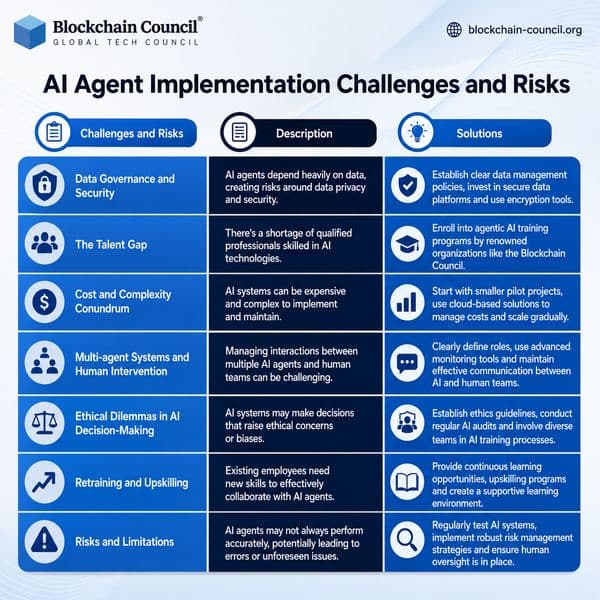
AI Agent Implementation Challenges and Risks
AI agent implementation challenges include security risks, governance issues, reliability concerns, and workflow orchestration complexities.
Infographics
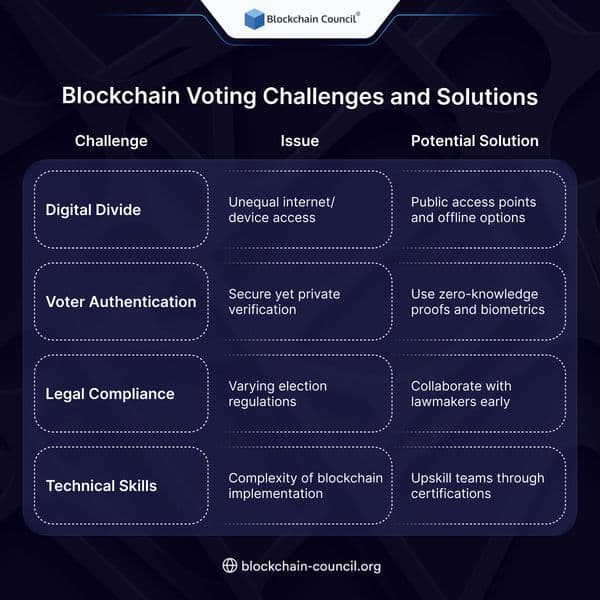
Blockchain Voting Challenges and Solutions
Understand the challenges of blockchain voting systems and explore solutions for secure, transparent, and reliable elections.
Trending Articles

Top 5 DeFi Platforms
Explore the leading decentralized finance platforms and what makes each one unique in the evolving DeFi landscape.

Can DeFi 2.0 Bridge the Gap Between Traditional and Decentralized Finance?
The next generation of DeFi protocols aims to connect traditional banking with decentralized finance ecosystems.
Blockchain in Supply Chain Provenance Tracking
Supply chains are under pressure to prove not just efficiency, but also authenticity, sustainability, and fairness. Customers want to know if their coffee really is fair trade, if the diamonds are con